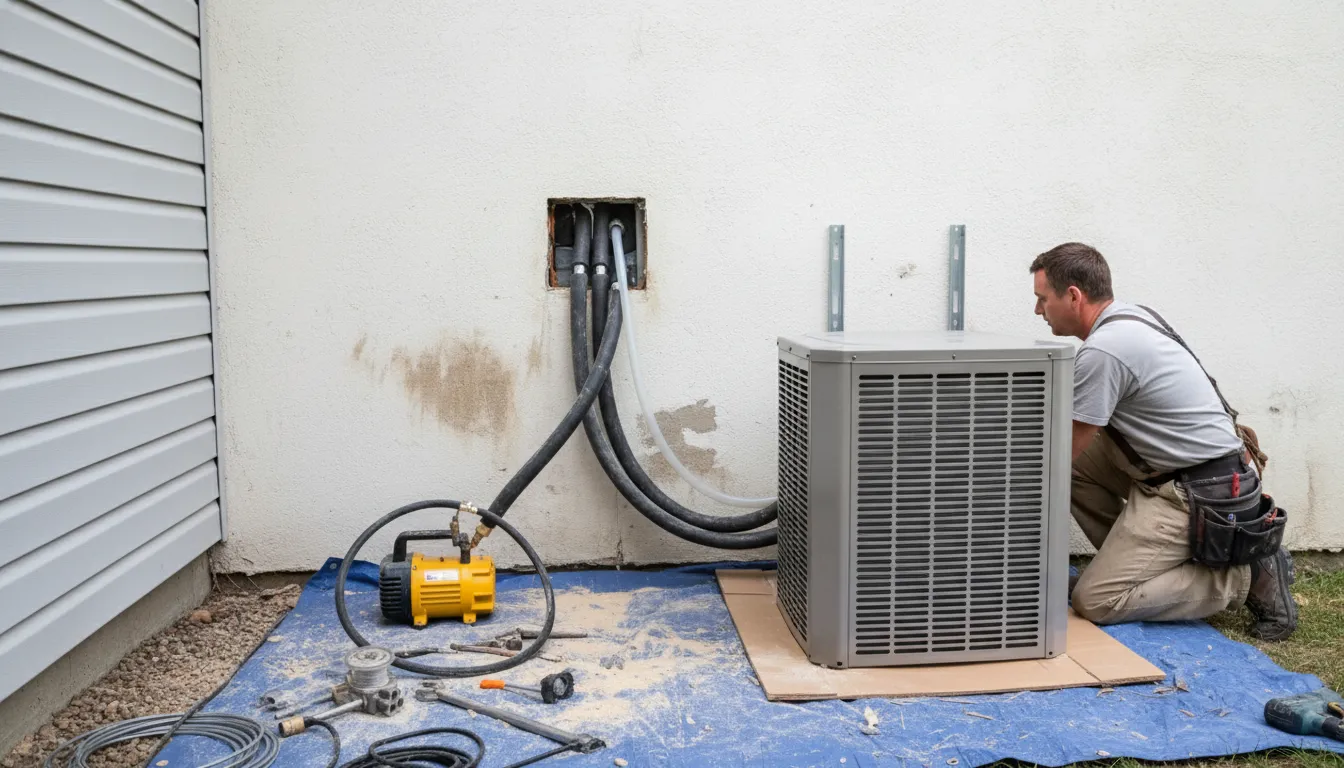
Find the Best Heat Pump Installation & Replacement Contractors for Your Business
No obligation • Fast responses • Nationwide coverage

Why you can trust HVAC Firms
HVAC Firms is a leading United States resource for evaluating HVAC service providers. Our team researches companies, checks credentials, and reviews customer feedback to present clear, unbiased information. Listings and rankings are based on merit, and companies cannot pay to change our editorial content.
Search providers near you
Best Heat Pump Installation & Replacement Contractors in Arizona Ranked
Upgrading your home's heating and cooling with a modern heat pump is a smart investment in Arizona's climate. These efficient systems provide both cooling and heating from a single unit, offering year-round comfort and significant energy savings. Finding the right local professional for your installation or replacement project is crucial for ensuring optimal performance, accessing available financial incentives, and achieving long-term reliability.
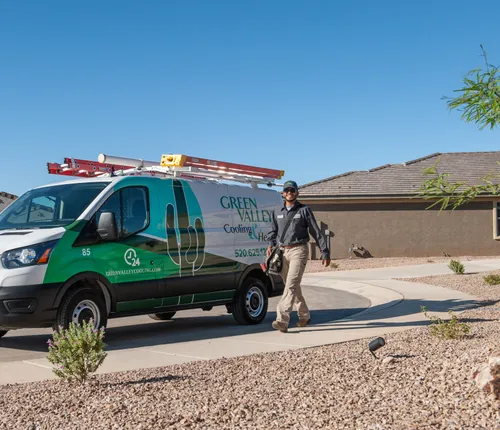
Green Valley Cooling & Heating
645 W Ward Ln, Green Valley, AZ 85614
Green Valley Cooling & Heating is an HVAC company serving Tucson, AZ, and surrounding communities including Green Valley, Sahuarita, and Vail. They provide a wide range of services including air conditioning and heating installation, repair, and maintenance, as well as duct cleaning and indoor air quality solutions. The company is a Certified Daikin Comfort Pro Dealer and offers expertise in energy-efficient upgrades and whole-home comfort systems. Established in 1968, Green Valley Cooling & Heating has over fifty years of experience in the industry. Their licensed and insured technicians are available 24/7 for emergency repair services.
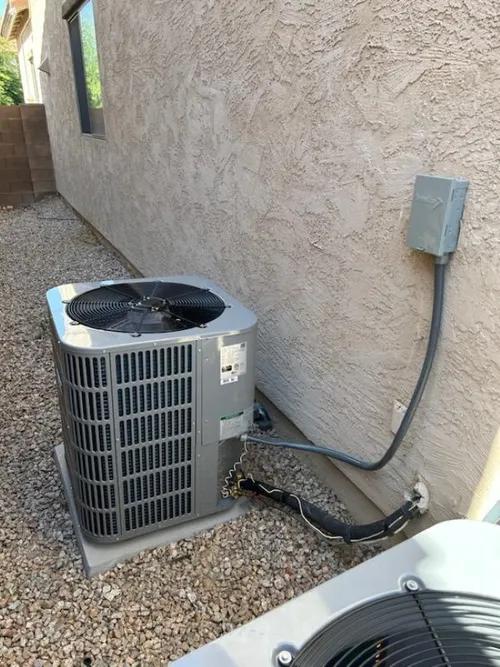
AZ Home Services Group of Queen Creek
23010 S 208th St, Queen Creek, AZ 85142
AZ Home Services Group of Queen Creek is a full-service HVAC and plumbing company serving the Queen Creek, AZ area. They provide air conditioning repair and installation, furnace and heat pump installation, mini-split systems, thermostat installation, and HVAC tune-ups. The company works with major brands like Goodman, Carrier, Trane, and Rheem, offering tailored HVAC solutions based on home size and insulation. They also handle plumbing services including leak detection, water softener installation, and water heater replacement. AZ Home Services Group offers 24/7 emergency AC repair to address urgent cooling needs in the hot Arizona climate.
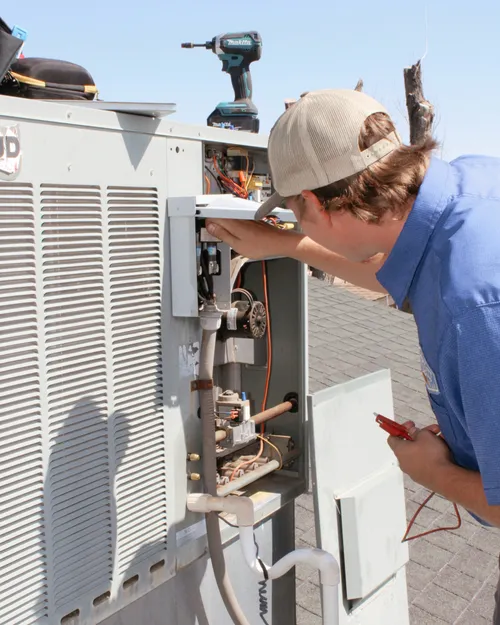
Reliance Heating and Air Conditioning
302 W Lone Cactus Dr, Phoenix, AZ 85027
Reliance Heating and Air Conditioning is a family-owned HVAC company serving Phoenix, AZ, and the surrounding areas. They offer a range of services including air conditioning, furnace, and heat pump repair and installation, as well as HVAC tune-ups and thermostat installation. As a Trane Comfort Specialist, they provide expertise with Trane systems known for reliability and quality. With over 40 years of experience as a third-generation family business, Reliance Heating and Air Conditioning emphasizes treating customers' homes with care and professionalism.

Island Breeze Air Conditioning & Heating LLC
809 E Fairmount Ave, Phoenix, AZ 85014
Island Breeze Air Conditioning & Heating LLC is a firefighter-owned HVAC company serving Phoenix, AZ, and surrounding areas including Gilbert, Mesa, Peoria, and Surprise. They provide residential and light commercial services such as air conditioning, furnace, heat pump, and ductless HVAC installation, repair, and maintenance. Their NATE-certified technicians focus on energy-efficient solutions and indoor air quality improvements. The company emphasizes integrity, accountability, and continuous improvement in their work. Island Breeze also offers after-hours service to address urgent HVAC needs.

HVAC Near Me
947 W Redwood Dr, Chandler, AZ 85248
HVAC Near Me is an HVAC repair and installation company serving Phoenix, AZ, and the surrounding metro area. They offer a wide range of services including air conditioner, heat pump, furnace, and ductless system repair and installation, as well as thermostat installation and duct cleaning. The company provides 24/7 same-day and emergency HVAC services and works with most major air conditioner brands. Their technicians are licensed, bonded, insured, and receive ongoing training to maintain service quality. HVAC Near Me serves numerous cities across the Phoenix valley, ensuring comprehensive coverage for residential and commercial customers.
Understanding Heat Pump Options for Arizona Homes
Arizona's unique climate, with its intense summer heat and mild winters, makes certain types of heat pumps particularly well-suited. The two primary systems you'll encounter are central heat pumps and ductless mini-splits.
Central Heat Pumps are the whole-home solution, ideal for replacing an existing central air conditioner and furnace system. They utilize the home's existing ductwork to distribute conditioned air. This is often the most straightforward replacement path for homes with a traditional forced-air system already in place.
Ductless Mini-Split Heat Pumps consist of an outdoor compressor unit connected to one or more indoor air handlers mounted on walls or ceilings. They are excellent for homes without existing ducts, for room additions, or for creating "zones" with independent temperature control. Installation can be less invasive and sometimes less expensive than a central system since no ductwork is required.
Financial Incentives: Rebates and Tax Credits
One of the most compelling reasons for Arizona homeowners to consider a heat pump upgrade now is the substantial financial assistance available from both state and federal programs. These incentives can dramatically reduce your net cost.
Federal Tax Credit: The Energy Efficient Home Improvement Credit (25C) offers a tax credit of 30% of the project cost, up to $2,000 per year, for qualifying heat pump installations. This credit is available through 2033 1 2.
Arizona State Rebates (Efficiency Arizona HEAR Program): Administered by the Governor's Office of Resiliency, this program provides powerful, income-based rebates.
- Low-Income Households (<80% of Area Median Income): May qualify for up to 100% of project costs covered, with a maximum rebate of $14,000.
- Moderate-Income Households (80-150% of Area Median Income): May qualify for up to 50% of project costs covered, with a maximum rebate of $14,000.
- Heat Pump-Specific Rebate: Qualifying electric heat pumps may be eligible for a rebate of up to $8,000 3 4.
Example of Combined Savings: For a qualifying low-income household, a heat pump system costing $8,000 could be fully covered by the state HEAR rebate. Additionally, the homeowner could claim the federal tax credit on any remaining eligible costs, maximizing savings. It's essential to check your specific Area Median Income (AMI) eligibility through the Efficiency Arizona website as a first step 5 6.
Cost Expectations for Installation and Replacement
The total investment for a new heat pump system in Arizona varies widely based on several factors. A typical range for a full installation is between $5,000 and $10,000 or more 7 8 9.
Key factors influencing the final price include:
- Home Size and Layout: Larger homes require more powerful, and thus more expensive, systems.
- System Type and Efficiency: High-efficiency models (with higher SEER2 ratings) cost more upfront but save on long-term energy bills. Ductless mini-splits may have a different cost structure than central systems.
- Existing Infrastructure: Homes with modern, well-sealed ductwork in place will typically see lower installation costs compared to homes needing new ducts or significant duct modifications.
- Equipment Brand and Features: Premium brands and models with advanced features like variable-speed compressors will be at the higher end of the cost spectrum.
When evaluating quotes, remember to calculate the net cost after incentives. A higher initial quote for a top-tier, efficient system might result in a lower final out-of-pocket expense after rebates and tax credits are applied.
Find the perfect heat pump installation & replacement contractors for your needs
Get personalized recommendations and expert advice
Efficiency Standards and SEER2 Ratings
To qualify for the valuable rebates and tax credits mentioned, your new heat pump must meet specific minimum efficiency standards. In Arizona, for central heat pump systems under 45,000 BTU/h, the current minimum is a 14.3 SEER2 rating (which is equivalent to a 15.0 SEER rating under the old standard).
What is SEER2? SEER2 (Seasonal Energy Efficiency Ratio) measures the cooling efficiency of your heat pump over a typical season. A higher SEER2 number means greater efficiency and lower operating costs. Given Arizona's long cooling season, investing in a unit with a rating significantly above the minimum can lead to substantial utility bill savings over the system's lifespan 10. Always verify with your installer that the proposed equipment meets or exceeds the required thresholds for the incentives you plan to use.
The Professional Installation Process
A proper installation is just as important as the quality of the equipment itself. A reputable local professional will follow a comprehensive process:
- In-Home Consultation and Load Calculation: A technician should assess your home's size, insulation, window orientation, and existing ductwork to perform a Manual J load calculation. This determines the precise size (in BTUs) of the heat pump you need-a system that is too large or too small will be inefficient and uncomfortable.
- System Design and Proposal: Based on the assessment, the professional will recommend the best type and model of heat pump for your home and budget, providing a detailed written quote that includes equipment, labor, and any necessary ancillary work (like duct sealing or electrical upgrades).
- Verification of Incentives: A knowledgeable installer will help you understand which rebates and tax credits you are likely eligible for and may assist with the necessary documentation.
- Professional Installation: This includes proper placement of the outdoor unit, secure and leak-free connection of refrigerant lines, electrical work, integration with your thermostat, and, for central systems, inspection of the ductwork.
- Testing and Commissioning: After installation, the system should be thoroughly tested for proper refrigerant charge, airflow, and operation in both heating and cooling modes. The installer should also walk you through the basic operation of your new system and thermostat.
Maintaining Your New Heat Pump System
To protect your investment and ensure it operates at peak efficiency for years to come, regular maintenance is key. This includes simple homeowner tasks like keeping the outdoor unit clear of debris and plants, and changing the indoor air filter regularly. It is also recommended to schedule a professional maintenance check-up at least once a year, typically in the spring before the heavy cooling season begins. A technician will clean coils, check refrigerant levels, inspect electrical components, and ensure all systems are functioning correctly.
Frequently asked questions
Sources
Footnotes
-
Learn About HVAC Efficiency Rebates and Tax Credits in Arizona - https://www.chandlerair.com/blog/learn-about-hvac-efficiency-rebates-and-tax-credits-in-arizona ↩
-
Energy Efficient Home Improvement Credit 25C - https://resilient.az.gov/clean-energy-hub/households/energy-efficient-home-improvement-credit ↩
-
Home Electrification and Appliance Rebate | Governor's Office of Resiliency - https://resilient.az.gov/clean-energy-hub/households/home-electrification-and-appliance-rebate ↩
-
Households - Governor's Office of Resiliency - https://resilient.az.gov/clean-energy-hub/households ↩
-
ARIZONA HOME ENERGY REBATES - https://advantagehomeperformance.com/ira-home-energy-rebates/ ↩
-
Efficiency Arizona - Governor's Office of Resiliency - https://resilient.az.gov/resiliency-programs/energy-programs/energy-affordability/efficiency-arizona ↩
-
Efficiency Arizona | Save Money. Save Energy. - https://efficiencyarizona.com/ ↩
-
Heat Pump Installation Prices in Arizona: What to Expect - https://www.markdanielsac.com/heat-pump-installation-prices-arizona-what-to-expect/ ↩
-
Heat Pump Costs, Rebates & Savings In 2025 - https://www.russettsouthwest.com/blog/tucson-homeowners-guide-heat-pump-costs-rebates-savings-in-2025/ ↩
-
SEER Ratings 101: What Every Phoenix Homeowner Needs To Know - https://www.penguinair.com/blog/seer-ratings-101-what-every-phoenix-homeowner-needs-to-know/ ↩