
Find the Best Geothermal Heat Pump Contractors for Your Business
No obligation • Fast responses • Nationwide coverage

Why you can trust HVAC Firms
HVAC Firms is a leading United States resource for evaluating HVAC service providers. Our team researches companies, checks credentials, and reviews customer feedback to present clear, unbiased information. Listings and rankings are based on merit, and companies cannot pay to change our editorial content.
Search providers near you
Top Geothermal Heat Pump Contractors in Rock Hill, South Carolina Ranked
A geothermal heat pump is a highly efficient heating and cooling system that uses the Earth's stable underground temperature to regulate your home's climate. For Rock Hill homeowners, this technology offers a powerful way to slash energy bills and reduce environmental impact, all while providing exceptional comfort year-round. This guide explains how these systems work, what installation entails, and how you can find qualified local experts to evaluate your property for a geothermal solution.
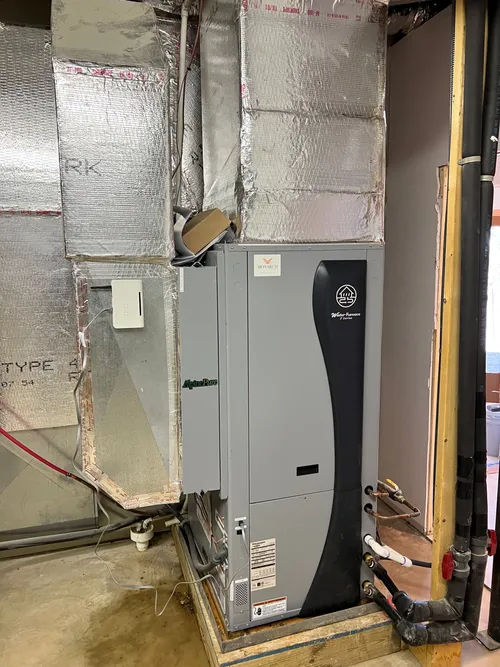
Monarch Air, Heat & Geothermal
9131 Dixie River Rd, Charlotte, NC 28278
Monarch Air, Heat & Geothermal is a locally owned HVAC company based in Charlotte, NC, specializing in heating, cooling, and geothermal systems. They provide a full range of services including installation, repair, and maintenance for air conditioners, furnaces, heat pumps, and geothermal systems. Their expertise includes designing and installing high-performance geothermal systems that use stable underground temperatures to efficiently heat and cool homes. Monarch serves both homeowners and builders with customized solutions and manages projects from system design through ongoing service. With over 20 years of experience, they focus on sustainable and energy-efficient HVAC solutions.
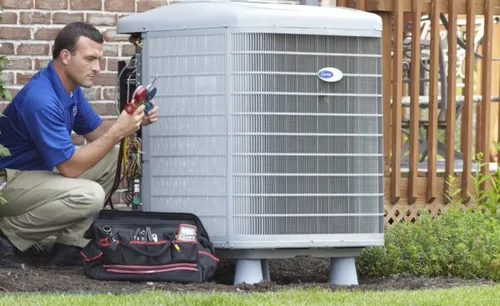
Precision Climate
45 Shadowbrook Rd, Mt Holly, NC 28120
Precision Climate is an HVAC company serving Charlotte, NC, specializing in repair and installation of air conditioning, furnaces, heat pumps, boilers, mini splits, and geothermal heat pumps. With over 25 years of experience, they provide comprehensive HVAC tune-up services to maintain system efficiency and comfort.
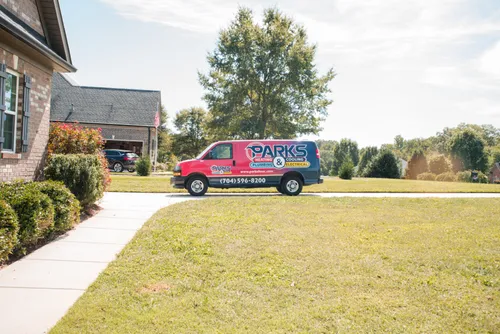
Parks Heating, Cooling, Plumbing, & Electrical
222 Unionville Indian Trail Rd, Indian Trail, NC 28079
Parks Heating, Cooling, Plumbing, & Electrical is a family-owned company serving Charlotte, NC, offering a wide range of home services including HVAC, plumbing, and electrical work. Their certified technicians handle installation, repair, and maintenance of heating and cooling systems such as central air conditioners, furnaces, heat pumps, boilers, ductless mini-splits, and geothermal systems. They also provide indoor air quality solutions and smart thermostat installations. Parks emphasizes quality workmanship and uses top materials to ensure reliable home system performance. The company offers emergency plumbing services and electrical upgrades, including generator installations and whole-home surge protection.

All-Weather Heating & Air Conditioning
Charlotte, NC
All-Weather Heating & Air Conditioning is an HVAC contractor serving Charlotte, NC, and nearby communities including Clover. They offer installation, repair, and maintenance services for air conditioners, heat pumps, furnaces, boilers, geothermal systems, and ductless split systems. As a licensed Trane dealer, they provide a range of indoor comfort equipment and specialize in indoor air quality solutions such as air cleaners and ultraviolet lights. The company also offers emergency service and service agreements to maintain system performance throughout the year.
How Geothermal Systems Work in Rock Hill's Climate
The core principle behind a geothermal system, often called a ground-source heat pump, is remarkably simple. Just a few feet below the surface, the Earth maintains a nearly constant temperature, typically between 55°F and 70°F in our region, regardless of summer heat or winter chill 1. A geothermal system taps into this stable thermal resource through a network of underground pipes, called a loop.
In the winter, the system circulates a water-based fluid through these buried loops. The fluid absorbs the Earth's natural heat and carries it to the heat pump unit inside your home. The unit then concentrates this heat and distributes it through your ductwork as warm air 2 3. In the summer, the process reverses: the system extracts heat from your home's air and transfers it into the cooler ground loop, effectively using the Earth as a heat sink to provide air conditioning 4. This efficient heat exchange process is why these systems can achieve such significant energy savings compared to conventional air conditioners and furnaces.
Types of Geothermal Loop Systems
The underground loop is the heart of the system, and its configuration depends on your property's characteristics. Local installers will assess your land to recommend the best type.
Closed-Loop Systems: This is the most common type, where a sealed loop of high-density polyethylene pipe circulates an antifreeze solution. There are two primary configurations:
- Horizontal Closed-Loop: Pipes are laid in trenches about six feet deep. This method requires a larger, open yard area but is often less expensive to install than vertical systems where land is available.
- Vertical Closed-Loop: Pipes are installed in deep boreholes, typically 150 to 450 feet deep. This is the ideal solution for homes with smaller lots, like many in Rock Hill, as it requires minimal surface area. Installation involves a drilling rig and is generally more expensive due to the specialized equipment needed.
Open-Loop Systems: This system uses groundwater from a well or aquifer as the heat exchange fluid. It pumps water directly through the heat pump unit and then discharges it back into a second well, pond, or approved drainage location 5. While often having lower installation costs, an open-loop system requires a sufficient supply of clean water and must comply with local codes regarding water discharge 6.
Pond/Lake Loop: If you have a sufficient body of water on your property, coils of pipe can be submerged at the bottom. This can be a very cost-effective loop option, but it requires a pond or lake of adequate size, depth, and quality 7.
The Installation Process: What to Expect
Installing a geothermal heating and cooling system is a significant project that transforms your home's energy infrastructure. Understanding the process can help you prepare.
- Site Evaluation and Design: A qualified contractor will visit your property to assess soil conditions, lot size, and your home's heating and cooling loads. This information is used to design the loop field and select the properly sized heat pump unit.
- Loop Installation: This is the major exterior work. For a horizontal loop, crews will use trenching machines to dig long, shallow trenches across your yard. For a vertical loop, a drilling rig will be brought in to create the deep boreholes. While this disturbs the landscape, reputable contractors focus on careful restoration.
- Indoor Unit Installation: The geothermal heat pump unit-which is typically about the size of a traditional furnace-is installed in your basement, garage, or utility closet. It is connected to your existing ductwork or to a new duct system.
- Connection and Testing: The underground loops are connected to the indoor unit, and the system is filled with fluid and pressurized. The contractor will then start up the system, check for leaks, and calibrate it for optimal performance.
- Land Restoration: The contractor will backfill trenches or boreholes and restore your yard as closely as possible to its original condition. Grass seed or sod is typically laid, with a full lawn recovering in one growing season 8.
Find the perfect geothermal heat pump contractors for your needs
Get personalized recommendations and expert advice
Energy Savings and Financial Incentives
The primary motivation for most Rock Hill residents considering geothermal is the dramatic reduction in energy costs. Geothermal heat pumps are incredibly efficient, moving heat rather than creating it by burning fuel. They can be 44% to 70% more efficient than traditional HVAC systems, which translates directly to lower monthly utility bills 9 10. Many homeowners report cutting their heating, cooling, and even hot water bills in half 11.
While the upfront installation cost is higher than a standard system-often ranging from $20,000 to $30,000 or more depending on loop type and home size-the long-term savings are substantial. The payback period, or the time it takes for energy savings to equal the initial investment, typically falls between 5 and 10 years 12 13. After that, the continued savings go straight into your pocket for the life of the system, which can exceed 25 years for the underground loops and 20+ years for the heat pump unit.
To improve affordability, South Carolina offers excellent financial incentives:
- State Tax Credit: South Carolina provides a 25% state income tax credit for the total cost of installing a geothermal system, including the loop and heat pump unit 14. This credit can significantly reduce your net cost.
- Utility Rebates: Some local utility companies may offer additional rebates for installing high-efficiency geothermal systems.
- Federal Incentives: Federal tax credits for geothermal systems may also be available, further improving the return on investment.
Is a Geothermal System Right for Your Home?
Geothermal technology offers remarkable benefits, but it's not a one-size-fits-all solution. It's an excellent long-term investment if you plan to stay in your home for many years, allowing you to realize the full payback from energy savings. Homes with high heating and cooling bills due to poor insulation or old equipment often see the fastest return. Most importantly, you need suitable property for the loop field-adequate land for horizontal trenches or good drilling conditions for vertical boreholes.
Consulting with an experienced, certified geothermal installer in the Rock Hill area is the essential first step. They can provide a detailed site assessment, accurate cost estimates, and projected savings based on your specific home and energy usage.
Frequently asked questions
Sources
Footnotes
-
Clean Energy 101: Geothermal Heat Pumps - RMI - https://rmi.org/clean-energy-101-geothermal-heat-pumps/ ↩
-
All You Need to Know About Home Geothermal Heating & ... - https://dandelionenergy.com/all-you-need-to-know-about-home-geothermal-heating-cooling ↩
-
Geothermal Systems: Stack's Energy Efficiency in Ohio - https://stackheating.com/energy-savings-2/geothermal-systems-energy-efficiency-secret-weapon/ ↩
-
Geo-Exchange District Energy System - https://storymaps.arcgis.com/stories/4c62caf2f870460fb2f063fd9e59df72 ↩
-
Geothermal Heat Pumps - EnergySmart CNY - https://www.energysmartcny.org/heat-pumps/geothermal/ ↩
-
A Beginner's Guide To Geothermal: All About Geothermal Loops - https://www.carolinaclimatecontrolsc.com/geothermal-systems/a-beginners-guide-to-geothermal-all-about-geothermal-loops ↩
-
How It Works: Ground Source Heat Pumps - Aztech Geothermal - https://aztechgeo.com/residential-geothermal/how-it-works/ ↩
-
Geothermal Heat Pump Installation: What To Expect For Your ... - https://jomory.com/geothermal-heat-pump-installation-what-to-expect-for-your-property/ ↩
-
Save with Geothermal Heating and Cooling in South Carolina - https://www.waterfurnace.com/south-carolina ↩
-
5 Things You Should Know about Geothermal Heat Pumps - https://www.energy.gov/cmei/articles/5-things-you-should-know-about-geothermal-heat-pumps ↩
-
Geothermal Heating and Cooling: Charleston's Energy Secret - https://www.hunterbakerhomes.com/geothermal-heating-and-cooling-charleston-s-energy-secret ↩
-
Geothermal Heat Pumps - Carolina Country - https://www.carolinacountry.com/story/geothermal-heat-pumps-2 ↩
-
Geothermal Heat Pumps - Department of Energy - https://www.energy.gov/energysaver/geothermal-heat-pumps ↩
-
Geothermal | Energy.SC.Gov - https://energy.sc.gov/focus-area/renewable-energy/geothermal ↩