
Find the Best Geothermal Heat Pump Contractors for Your Business
No obligation • Fast responses • Nationwide coverage

Why you can trust HVAC Firms
HVAC Firms is a leading United States resource for evaluating HVAC service providers. Our team researches companies, checks credentials, and reviews customer feedback to present clear, unbiased information. Listings and rankings are based on merit, and companies cannot pay to change our editorial content.
Search providers near you
Top Geothermal Heat Pump Contractors in Providence, Rhode Island Ranked
Geothermal heat pumps, also known as ground-source heat pumps, are a highly efficient technology for heating, cooling, and providing hot water for your home. By leveraging the earth's stable, moderate temperature just below the surface, these systems can provide exceptional comfort and significant energy savings year-round. This guide will help you understand how geothermal systems work in Providence, the installation process, and how to find qualified local specialists to assess your property.
How Geothermal Systems Work in Rhode Island
A geothermal heat pump system doesn't create heat by burning fuel; instead, it moves heat from one place to another. This is the key to its remarkable efficiency. The system consists of three main parts: the ground loop (a network of pipes buried in your yard), the heat pump unit (installed inside your home), and the distribution system (your existing ductwork or radiant floors).
In winter, a water-based fluid circulating through the buried pipes absorbs the earth's consistent warmth-typically between 50-60°F in Rhode Island's climate 1. This mildly warmed fluid is brought to the indoor heat pump unit, which uses an electrically driven compressor to concentrate that low-grade heat into higher temperatures suitable for warming your home 2. In summer, the process reverses: the system extracts heat and humidity from your indoor air and transfers it into the cooler ground loop, effectively providing air conditioning.
This exchange with the stable ground temperature, as opposed to the wildly fluctuating outdoor air temperature, is what makes a ground-source system so much more efficient than a standard air-source heat pump or conventional furnace.
Common Ground Loop Configurations for Providence Properties
The type of ground loop installed depends heavily on your property's characteristics, including lot size, soil composition, and geology. Local installers will conduct a detailed site assessment to determine the best option.
Horizontal Closed Loops: This is often the most cost-effective method if space allows. Contractors dig trenches four to six feet deep across your yard, laying pipes in a series of loops 3. This approach requires a significant amount of available land but involves less specialized drilling equipment.
Vertical Closed Loops: For homes with smaller lots or where preserving landscaping is a priority, vertical loops are the standard solution. Contractors drill boreholes 150 to 400 feet deep and insert U-shaped pipe loops into each one 4. While the drilling cost is higher, this method minimizes surface disruption and is well-suited for the varied terrain found in and around Providence.
Open Loop Systems: This configuration is less common and requires a suitable water source. It uses groundwater from a well as the heat exchange fluid, circulating it directly through the heat pump before discharging it to a second well or a safe surface location. It can be highly efficient but depends on having an adequate, consistent supply of acceptable water quality.
The Local Installation Process: What to Expect
Understanding the installation timeline can help you plan. A professional geothermal installation is a significant project but is typically completed within a week or two for a standard residential property.
- Initial Consultation and Load Calculation: A qualified installer will evaluate your home's heating and cooling needs, examine your property, and discuss your goals. They will perform a Manual J load calculation to properly size the system.
- Site Survey and Loop Design: The installer will assess your soil conditions, available space, and any underground utilities to finalize the loop field design-whether horizontal trenches or vertical boreholes are best 5.
- Loop Field Installation: This is the major excavation phase. For horizontal loops, a backhoe digs the trench network. For vertical loops, a drilling rig creates the boreholes. The high-density polyethylene pipes are then placed, connected, and pressure-tested.
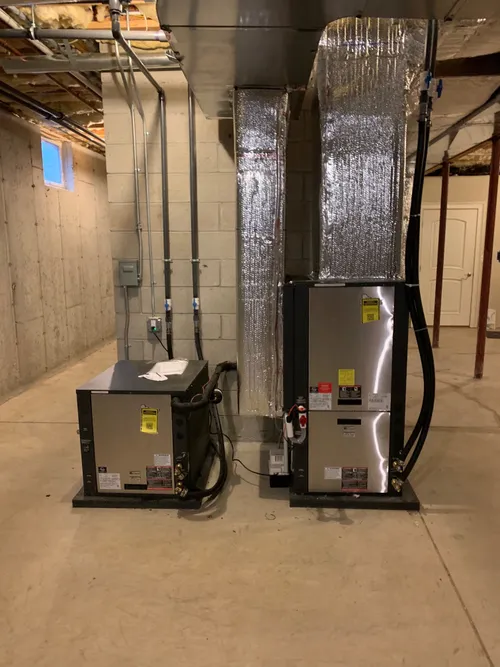
- Indoor Unit and Connection: The geothermal heat pump unit, which is about the size of a traditional furnace, is installed in your basement, utility room, or garage. It is connected to the ground loop and to your home's existing ductwork or hydronic distribution system.
- System Startup and Restoration: Once the mechanical work is complete, the system is charged, powered, and tested for optimal operation. Finally, the excavation areas are backfilled, and your yard is restored as closely as possible to its original condition.
Find the perfect geothermal heat pump contractors for your needs
Get personalized recommendations and expert advice
Benefits and Considerations for Providence Homeowners
Choosing a geothermal system is a long-term investment in your home's comfort, efficiency, and value.
Key Advantages:
- Substantial Energy Savings: By moving heat instead of generating it through combustion, geothermal heat pumps can reduce energy use for heating by 25% to 65% compared to conventional systems 6 7. This translates to significantly lower utility bills.
- Year-Round Comfort: The system provides both highly efficient heating and cooling from a single unit, with excellent dehumidification in summer.
- Durability and Longevity: The indoor heat pump components typically last 20 years or more, while the underground polyethylene piping often carries warranties of 50+ years, as it is protected from the elements.
- Quiet and Clean Operation: With no noisy outdoor condenser unit (like an air-source heat pump) and no on-site combustion, the system operates very quietly and produces no direct emissions.
- Independence from Fossil Fuels: A geothermal system runs on electricity, allowing you to heat and cool your home without natural gas or oil, which can be appealing for both environmental and energy security reasons.
Important Considerations:
- Higher Upfront Cost: The initial investment for a geothermal system, primarily due to the ground loop excavation, is higher than for a conventional HVAC system. However, this is mitigated by lower operating costs and available financial incentives 8 9.
- Site Suitability: Not every property is ideal. A qualified installer must assess land availability, soil conditions, and accessibility for drilling or trenching equipment.
- Incentives are Crucial: The economics of geothermal are greatly improved by federal tax credits, state rebates, and potential utility incentives. Rhode Island homeowners should actively investigate current programs from the Rhode Island Office of Energy Resources and Eversource.
Maximizing Value with Incentives and Professional Selection
The financial landscape for geothermal in Rhode Island is favorable, helping to bridge the gap in upfront costs. The federal Residential Clean Energy Credit provides a significant tax credit for qualified systems. Additionally, local programs like the Eversource Geothermal Pilot may offer further incentives or favorable financing 10 11. It's essential to consult with your installer and check the latest resources from the Rhode Island Office of Energy Resources for the most current incentive information.
Selecting the right installer is the most critical step. Look for a contractor with specific, proven experience in geothermal system design and installation. They should be licensed, insured, and ideally certified by organizations like the International Ground Source Heat Pump Association (IGSHPA). Ask for references from local projects, detailed proposals that include a Manual J load calculation, and a clear explanation of warranties for both equipment and the ground loop.
Frequently asked questions
Sources
Footnotes
-
Geothermal (Ground Source) Heat Pumps - NY.gov - https://cleanheat.ny.gov/geothermal-heat-pumps/ ↩
-
Geothermal and radiant: An energy-efficient powerhouse - https://www.pmmag.com/articles/106687-geothermal-and-radiant-an-energy-efficient-powerhouse ↩
-
How Do Geothermal Systems Work for Residential Homes? - https://www.davisheat.com/blog/how-do-geothermal-systems-work-for-residential-homes/ ↩
-
How Does a Geothermal System Work? - ClimateMaster - https://www.climatemaster.com/homeowner/side-links/how-it-works ↩
-
Clean Energy 101: Geothermal Heat Pumps - RMI - https://rmi.org/clean-energy-101-geothermal-heat-pumps/ ↩
-
5 Things You Should Know about Geothermal Heat Pumps - https://www.energy.gov/cmei/articles/5-things-you-should-know-about-geothermal-heat-pumps ↩
-
Guide to Geothermal Heat Pumps - https://www.energy.gov/sites/prod/files/guide_to_geothermal_heat_pumps.pdf ↩
-
Geothermal Heat Pump Installation: What To Expect For Your ... - https://jomory.com/geothermal-heat-pump-installation-what-to-expect-for-your-property/ ↩
-
The Ultimate Guide to Heat Pumps: Are They Right for Your Rhode Island Home? - https://www.martelplumbingri.com/blog/ultimate-guide-rhode-island-heat-pumps/ ↩
-
Ground-Source Heat Pumps | Rhode Island Office of Energy Resources - https://energy.ri.gov/heating-cooling/renewables/ground-source-heat-pumps-geothermal ↩
-
Geothermal Pilot Reference Guide - Eversource - https://www.eversource.com/residential/save-money-energy/clean-energy-options/geothermal-energy/geothermal-pilot-reference-guide ↩