Find the Best Geothermal Heat Pump Contractors for Your Business
No obligation • Fast responses • Nationwide coverage

Why you can trust HVAC Firms
HVAC Firms is a leading United States resource for evaluating HVAC service providers. Our team researches companies, checks credentials, and reviews customer feedback to present clear, unbiased information. Listings and rankings are based on merit, and companies cannot pay to change our editorial content.
Search providers near you
Best Geothermal Heat Pump Contractors in Rhode Island Ranked
Geothermal heat pumps, also known as ground-source heat pumps (GSHPs), are a highly efficient method for heating and cooling homes and businesses by leveraging the earth's stable underground temperature. In Rhode Island, this technology is particularly valuable for reducing energy bills and fossil fuel dependence. This guide provides essential information on how these systems work, their suitability for the Ocean State, and how to connect with qualified local professionals for installation and service.
Why Consider a Geothermal System in Rhode Island?
Rhode Island's climate, with its cold winters and warm, humid summers, is ideally suited for geothermal heat pump technology. Unlike air-source heat pumps that struggle with efficiency in extreme cold, ground-source systems tap into the earth's consistent temperature-typically around 50°F in Rhode Island-to provide reliable and efficient heating and cooling year-round 1. This results in significant energy savings, often cutting heating and cooling costs by 30% to 60% compared to conventional systems.
Beyond personal savings, Rhode Island offers strong policy and financial support for clean heating technologies. State programs and federal incentives are designed to lower the upfront cost barrier, making geothermal a more accessible and financially attractive long-term investment for homeowners looking to modernize their comfort systems and reduce their carbon footprint.
Understanding How Geothermal Heat Pumps Work
A geothermal system operates on a simple but brilliant principle: it moves heat rather than creating it by burning fuel. The system has three main components:
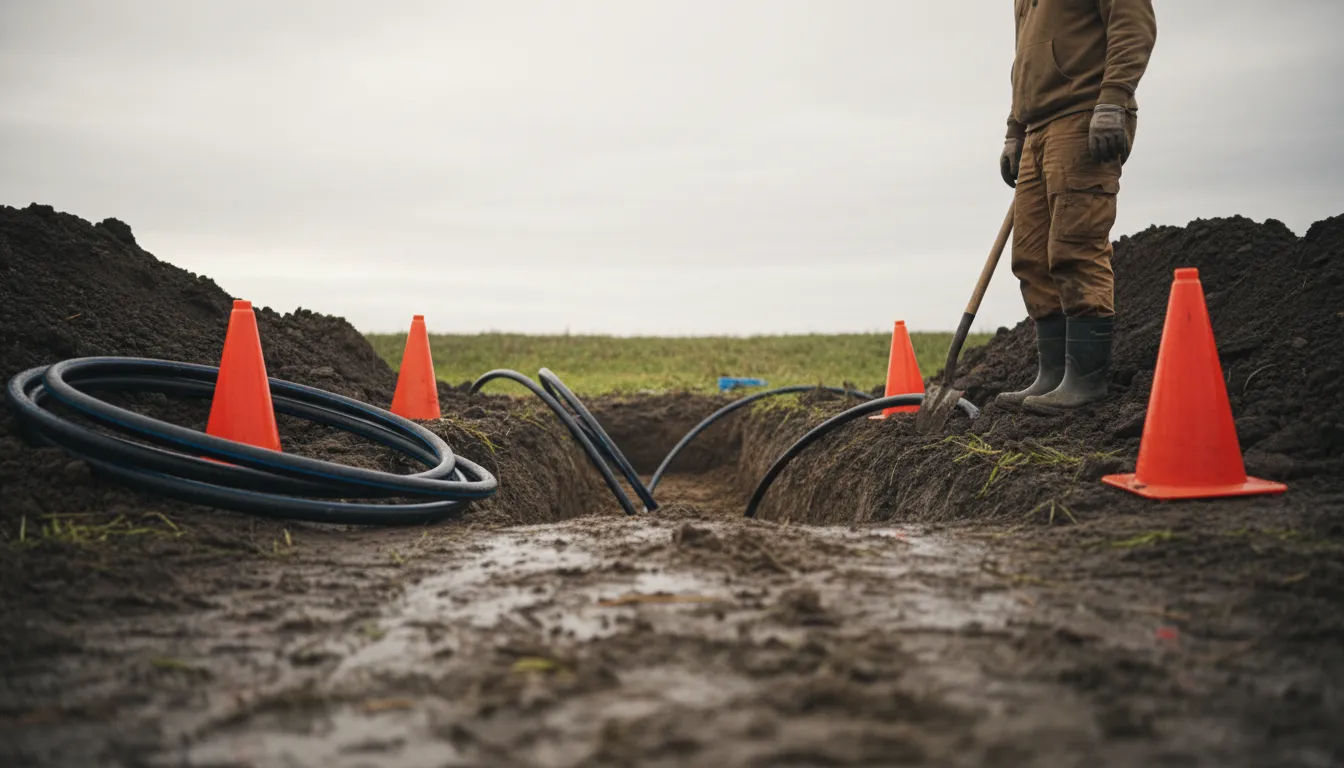
- The Ground Loop: This is a network of high-density polyethylene pipes buried underground, either horizontally in trenches or vertically in deep boreholes. A water-based solution circulates through these pipes, absorbing the earth's stable thermal energy.
- The Heat Pump Unit: Located inside the home, this unit concentrates the thermal energy gathered from the ground loop. In winter, it extracts heat from the fluid to warm your home. In summer, the process reverses, pulling heat from your home and depositing it into the cooler ground.
- The Distribution System: The conditioned air is delivered throughout your home via your existing ductwork or a complementary ductless system.
This closed-loop process is incredibly efficient. For every unit of electricity used to run the system, three to five units of heat energy are moved, achieving efficiencies of 300-500% 2.
Rhode Island's Climate and Geological Suitability
Rhode Island's geology and moderate climate are generally favorable for geothermal installations. The state's ground temperatures remain relatively constant below the frost line, providing a reliable heat source and sink.
- Soil and Rock Types: The suitability for different types of ground loops (horizontal vs. vertical) depends on your specific property's soil composition and bedrock depth. Sandy soils transfer heat well, while dense clay is less efficient but still viable. A professional site assessment is crucial to determine the best loop design for your land 3.
- Land Availability: Horizontal loop systems require a significant amount of open, unobstructed land. For smaller urban or suburban lots in Rhode Island, vertical borehole systems are often the preferred solution, as they have a much smaller surface footprint, though drilling can be more expensive.
Financial Incentives and Rebates in Rhode Island
The upfront cost of a geothermal system is an investment, but substantial federal and state incentives can dramatically reduce the net price.
- Federal Tax Credit: The Residential Clean Energy Credit offers a 30% tax credit on the total installed cost of a qualifying geothermal heat pump system, with no upper dollar limit. This credit is valid through 2032 4 5.
- Clean Heat RI: This state program offers significant rebates for replacing fossil fuel (oil or propane) heating systems with high-efficiency electric heat pumps, including geothermal. Rebate amounts are tiered and provide enhanced support for low- and moderate-income households, making the technology even more accessible 6 7.
- Combined Savings: By stacking the federal tax credit with state rebates, Rhode Island homeowners can offset a substantial portion of the installation cost, improving the return on investment and shortening the payback period.
Installation Process and Permitting
Installing a geothermal system is a major project that requires careful planning and expert execution. The process typically follows these steps:
- Initial Consultation and Load Calculation: A certified installer will assess your home's heating and cooling needs, insulation, and ductwork to properly size the system.
- Site Evaluation: The installer will evaluate your property to determine the best type of ground loop (horizontal trench, vertical borehole, or pond loop) based on soil conditions, land area, and local geology.
- System Design and Permitting: The installer designs the complete system and secures the necessary local permits. Permitting timelines can vary by municipality in Rhode Island, as local regulations govern drilling and excavation work 8.
- Ground Loop Installation: This is the most intensive phase, involving excavation or drilling to install the underground piping network.
- Indoor Unit and Connection: The heat pump unit is installed indoors (often in a basement, garage, or utility closet) and connected to the ground loop and your home's distribution system.
- System Charging and Commissioning: The loop is filled and pressurized, and the entire system is tested and balanced to ensure optimal performance.
Find the perfect geothermal heat pump contractors for your needs
Get personalized recommendations and expert advice
Long-Term Operation, Maintenance, and Repair
One of the most appealing aspects of a geothermal system is its durability and low maintenance requirements.
- Operating Costs: Homeowners typically see a dramatic reduction in monthly energy bills. While electricity is required to run the pump and fan, the energy drawn from the ground is free, leading to much lower operating costs than oil, propane, or conventional electric resistance heating 9.
- Maintenance: Annual maintenance is similar to a traditional furnace or air conditioner, focusing on the indoor components: checking filters, cleaning coils, and ensuring electrical connections are secure. The underground ground loop is designed to last for 50 years or more with virtually no maintenance.
- Repairs: Should an issue arise, repairs most commonly involve the indoor heat pump unit-components like the compressor, fan, or controls. Repairs to the buried ground loop are rare but complex and require specialized equipment and expertise 10. Choosing an installer who also provides long-term service is a critical consideration.
Costs and Payback Analysis in Rhode Island
The installed cost for a residential geothermal system in Rhode Island typically ranges from $20,000 to $40,000 or more, depending on home size, loop type, and site conditions 11 12. While this is higher than a standard furnace or air-source heat pump, the analysis must include the complete financial picture:
- Upfront Cost Minus Incentives: Apply the 30% federal tax credit and any Clean Heat RI rebates to the total installed cost to find your net investment.
- Annual Energy Savings: Calculate the difference between your old annual heating/cooling bills and your new, lower projected bills with geothermal.
- Payback Period: Divide your net investment by your annual savings to estimate the simple payback period. For many Rhode Island homes replacing oil heat, this period can be between 5 and 15 years 13.
- Long-Term Value: After the payback period, you enjoy decades of significantly reduced energy costs. The system also adds to your home's value and marketability as an energy-efficient feature.
Frequently asked questions
Sources
Footnotes
-
Geothermal Heat Pumps: Installation by Beacon Mechanical - https://beaconmechanicalservice.com/geothermal-heat-pump/ ↩
-
Ground-Source Heat Pumps | Rhode Island Office of Energy Resources - https://energy.ri.gov/heating-cooling/renewables/ground-source-heat-pumps-geothermal ↩
-
Coupling Geothermal Heat Pumps (GHP) with Underground ... - https://s3.us-gov-west-1.amazonaws.com/sepub-demo-0001-124733793621-us-gov-west-1/s3fs-public/2024-02%2FEW18-5316%20Guidance%20Document_1.pdf ↩
-
Clean Heating & Cooling Incentives | Rhode Island Office of Energy ... - https://energy.ri.gov/heating-cooling/clean-heating-cooling-incentives ↩
-
Unlocking Rebates in Rhode Island - National Refrigeration - https://nhvac.com/unlocking-rebates-in-rhode-island/ ↩
-
Clean Heat RI | Rhode Island Office of Energy Resources - https://energy.ri.gov/heating-cooling/clean-heat-ri ↩
-
HIGH-EFFICIENCY HEAT PUMP PROGRAM (HHPP) - https://energy.ri.gov/sites/g/files/xkgbur741/files/2022-07/HHPP%20DRAFT%20Program%20Design_Public%20Comment_0.pdf ↩
-
Permitting for Geothermal Power Development Projects - https://www.energy.gov/eere/geothermal/permitting-geothermal-power-development-projects ↩
-
Costs Savings with Geothermal Heat Pumps: Is the Investment Worth ... - https://morrisongeothermal.com/costs-savings-with-geothermal-heat-pumps-is-the-investment-worth-it/ ↩
-
The Ultimate Guide to Heat Pumps - https://www.martelplumbingri.com/blog/ultimate-guide-rhode-island-heat-pumps/ ↩
-
Geothermal Heat Pump Guide: Installation Costs, Types And Benefits - https://modernize.com/hvac/heating-repair-installation/heat-pump/geothermal ↩
-
Guide to Geothermal Heat Pumps - https://www.energy.gov/sites/prod/files/guide_to_geothermal_heat_pumps.pdf ↩
-
Presentation to EC4 - Climate Change - RI.gov - https://climatechange.ri.gov/media/1506/download?language=en ↩