Find the Best Geothermal Heat Pump Contractors for Your Business
No obligation • Fast responses • Nationwide coverage

Why you can trust HVAC Firms
HVAC Firms is a leading United States resource for evaluating HVAC service providers. Our team researches companies, checks credentials, and reviews customer feedback to present clear, unbiased information. Listings and rankings are based on merit, and companies cannot pay to change our editorial content.
Search providers near you
Top Geothermal Heat Pump Contractors in East Providence, Rhode Island Ranked
A geothermal heat pump, often called a ground-source heat pump, is a highly efficient system for heating and cooling your home by exchanging heat with the stable temperature of the earth. For East Providence residents, this technology offers a way to significantly reduce energy bills and environmental impact while ensuring year-round comfort. This guide explains how these systems work, what installation involves, and how you can find qualified local professionals to assess your property.
How Geothermal Heating and Cooling Works
At its core, a geothermal system doesn't create heat; it moves it. Beneath the frost line, the earth maintains a relatively constant temperature of approximately 50-60°F year-round. A geothermal heat pump leverages this stable thermal resource through a process of heat exchange.
The system consists of three main parts: a ground loop (a network of pipes buried in your yard), a heat pump unit (installed inside your home), and a distribution system (like your existing ductwork or radiant floor tubing). A water-based solution circulates through the buried pipes, absorbing the earth's warmth in the winter. This warmed fluid is carried to the indoor heat pump unit, which concentrates the thermal energy and distributes warm air throughout your home. In the summer, the process simply reverses: the system extracts heat from your indoor air and transfers it into the cooler ground loop, providing efficient air conditioning 1.
This method of transferring heat is far more efficient than generating it by burning fuel, which is why ground-source heat pumps can achieve remarkable energy savings for East Providence homeowners.
Types of Ground Loop Systems
The design of the underground loop field is critical and depends on your property's characteristics. Local installers will evaluate your land to recommend the best configuration.
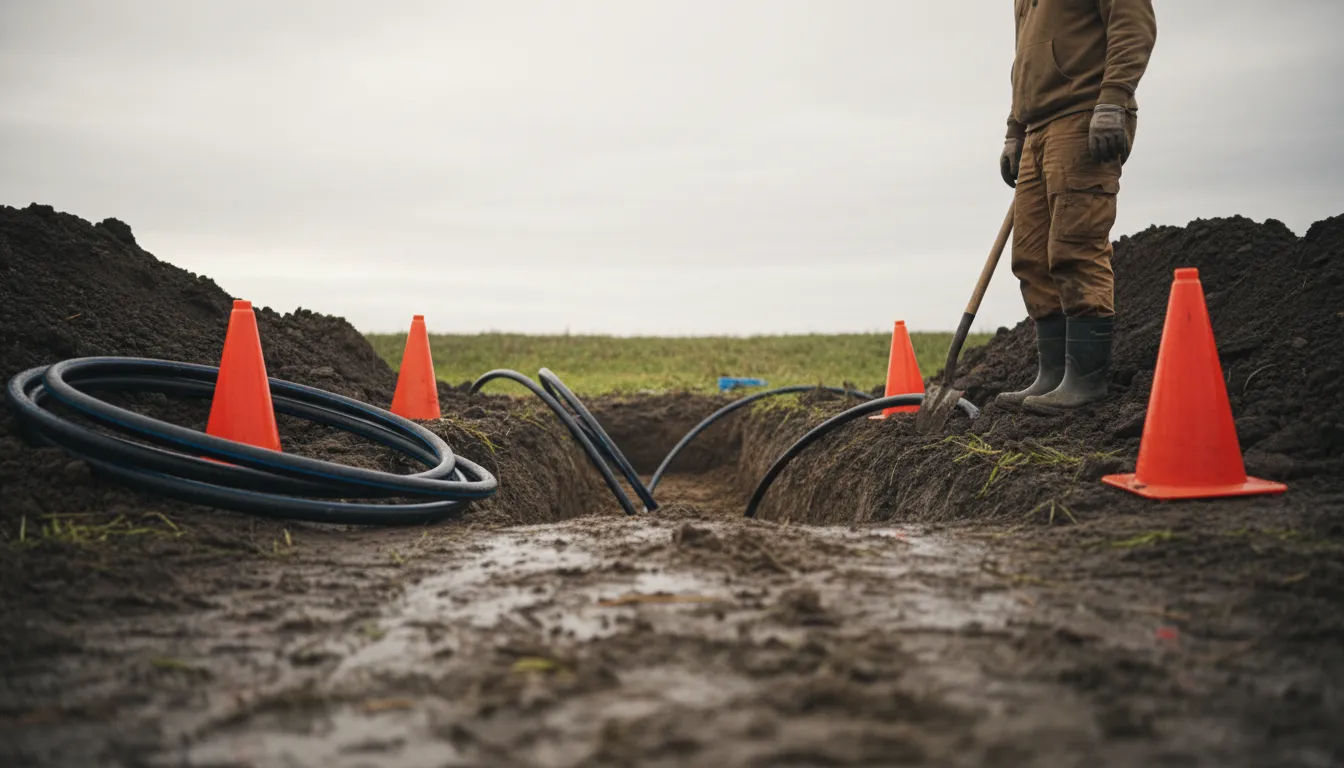
- Horizontal Ground Loops: This is often the most cost-effective option if space allows. Contractors dig trenches, typically 4 to 6 feet deep, and lay pipes in a series of loops. This design requires a larger, clear area of land but generally involves lower excavation costs than vertical drilling 2 3.
- Vertical Ground Loops: For homes in East Providence with smaller lots, vertical loops are the standard solution. Boreholes are drilled 200 to 500 feet deep, and U-shaped pipe loops are inserted into each hole. This method minimizes land use and is less affected by surface temperature fluctuations, though drilling costs can be higher 4.
- Pond/Lake Loops: If you have access to a sufficient, deep body of water, a closed loop of pipe can be coiled and submerged. This can be a very efficient and lower-cost installation option, as it avoids extensive digging or drilling 5.
- Open Loop Systems: This system uses groundwater directly from a well as the heat exchange fluid. After circulating through the heat pump, the water is discharged back into a second well or a suitable surface body. This option requires an abundant supply of clean water and compliance with local groundwater regulations.
The Installation Process: What East Providence Homeowners Can Expect
Installing a residential geothermal system is a significant project that requires professional expertise. Here's a typical step-by-step overview of what the process entails.
- Initial Site Assessment and Design: A qualified installer will visit your property to evaluate key factors: soil composition, rock content, land availability, and the location of utilities. This assessment determines the best type and size of the loop system and the right heat pump capacity for your home's heating and cooling loads.
- Loop Field Installation: For a horizontal system, excavation equipment digs the necessary trenches. For a vertical system, a drilling rig creates the boreholes. High-density polyethylene pipe is then laid in the trenches or inserted into the boreholes. The pipes are connected into a continuous loop, pressure-tested, and filled with the heat transfer fluid.
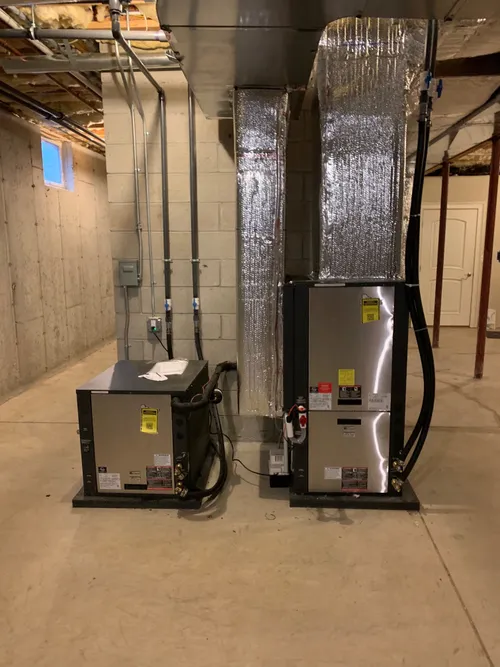
- Indoor Unit and Connection: The geothermal heat pump unit, which is typically about the size of a small furnace, is installed in your basement, utility room, or garage. It is connected to your home's existing ductwork or hydronic distribution system. The refrigerant and electrical lines are also connected during this phase 6.
- System Connection and Commissioning: The underground loops are connected to the heat pump unit inside the home. The entire system is filled, purged of air, and pressurized. Finally, the contractor starts the system, checks its operation, and calibrates it for optimal performance, ensuring you understand the basic controls 7.
Find the perfect geothermal heat pump contractors for your needs
Get personalized recommendations and expert advice
Key Considerations for East Providence Properties
Several local factors influence the design and effectiveness of a geothermal installation. Understanding these can help you have more informed discussions with contractors.
- Soil and Geology: The thermal conductivity of your soil-how well it transfers heat-directly impacts system efficiency. Sandy, clay, or rocky soils common in Rhode Island are all suitable but may affect loop length and design. A professional assessment is crucial 8.
- Available Land Area: The size and layout of your yard are the primary determinants in choosing between horizontal and vertical loops. A clear, spacious yard may accommodate a horizontal system, while a compact urban lot will likely require vertical boreholes.
- The Importance of Local Expertise: Choosing an installer familiar with East Providence and Rhode Island's specific geology, climate, and permitting requirements is vital. Local experience ensures proper system sizing, compliant installation, and knowledge of any available state or utility incentives 9.
Long-Term Benefits: Savings, Value, and Comfort
The higher upfront cost of a geothermal system is an investment that pays dividends for decades through lower operating costs and increased comfort.
- Substantial Energy Savings: By moving heat instead of creating it, geothermal heat pumps are 300-600% efficient, meaning they deliver 3 to 6 units of heat for every unit of electricity used to run them 10. Homeowners can expect 30% to 70% reductions in heating and cooling bills, with potential annual savings often exceeding $1,000 compared to conventional systems 11 12.
- Return on Investment (ROI): While installation costs are greater than for a standard furnace and air conditioner, the dramatic reduction in monthly energy bills means the payback period typically falls within 5 to 10 years. After that, the ongoing savings contribute directly to your household budget for the life of the system 13 14.
- Durability and Longevity: The underground loop system is incredibly durable, with polyethylene pipes that often carry warranties of 50 years or more and can last for generations. The indoor heat pump unit typically has a lifespan of 20 to 25 years, which is longer than most conventional air conditioners and heat pumps 15.
- Quiet Operation and Reliability: With no noisy outdoor condenser unit (like a traditional air conditioner), geothermal systems operate very quietly. They also have fewer mechanical components exposed to the weather, leading to reliable performance with less maintenance 16.
Frequently asked questions
Sources
Footnotes
-
How Does A Geothermal Heat Pump Work? Complete 2025 Guide - https://solartechonline.com/blog/how-does-geothermal-heat-pump-work/ ↩
-
Complete Guide To Geothermal Heat Pump Installation - https://coolwithbowman.com/geothermal-heat-pump-installation/ ↩
-
All You Need to Know About Home Geothermal Heating & ... - https://dandelionenergy.com/all-you-need-to-know-about-home-geothermal-heating-cooling ↩
-
5 Key Steps To Install A Residential Geothermal System - https://geo-us.com/blog/residential-geothermal-system-step-by-step/ ↩
-
How Does a Geothermal System Work? - ClimateMaster - https://www.climatemaster.com/homeowner/side-links/how-it-works ↩
-
How Do Geothermal Systems Work for Residential Homes? - https://www.davisheat.com/blog/how-do-geothermal-systems-work-for-residential-homes/ ↩
-
How Geothermal Heat Pumps Work - https://www.youtube.com/watch?v=XxlTnBukweI&t=37 ↩
-
Geothermal Heat Pump Installation: What To Expect For Your ... - https://jomory.com/geothermal-heat-pump-installation-what-to-expect-for-your-property/ ↩
-
Ground-Source Heat Pumps | Rhode Island Office of Energy Resources - https://energy.ri.gov/heating-cooling/renewables/ground-source-heat-pumps-geothermal ↩
-
Geothermal Heat Pumps - Department of Energy - https://www.energy.gov/energysaver/geothermal-heat-pumps ↩
-
Geothermal Heating and Cooling - Open Energy Information - https://openei.org/wiki/GeoBridge/Heating_and_Cooling ↩
-
Geothermal Heat Pumps: Installation by Beacon Mechanical - https://beaconmechanicalservice.com/geothermal-heat-pump/ ↩
-
Guide to Geothermal Heat Pumps - https://www.energy.gov/sites/prod/files/guide_to_geothermal_heat_pumps.pdf ↩
-
Air Source vs Ground Source Heat Pump: Which Is Best? - https://harmonmechanical.com/air-source-vs-ground-source-heat-pump/ ↩
-
Geothermal Heating, Cooling, and Hot Water Systems - https://igshpa.org/wp-content/uploads/Homeowners-Guide-to-Geothermal.pdf ↩
-
5 Things You Should Know about Geothermal Heat Pumps - https://www.energy.gov/cmei/articles/5-things-you-should-know-about-geothermal-heat-pumps ↩