Find the Best Geothermal Heat Pump Contractors for Your Business
No obligation • Fast responses • Nationwide coverage

Why you can trust HVAC Firms
HVAC Firms is a leading United States resource for evaluating HVAC service providers. Our team researches companies, checks credentials, and reviews customer feedback to present clear, unbiased information. Listings and rankings are based on merit, and companies cannot pay to change our editorial content.
Search providers near you
Top Geothermal Heat Pump Contractors in Rio Rancho, New Mexico Ranked
A geothermal heat pump, also known as a ground-source heat pump, is a highly efficient heating and cooling system that leverages the Earth's stable underground temperature. For Rio Rancho homeowners, this technology offers a powerful way to manage the region's climate while significantly reducing energy consumption and utility bills. This guide explains how these systems work, their benefits, and how you can find qualified local professionals to assess your property for a potential installation.
How Geothermal Systems Work: Tapping the Earth's Constant Energy
Unlike conventional air-source heat pumps that exchange heat with the outside air, a geothermal system uses a network of buried pipes, called a ground loop, to exchange heat with the earth. Just a few feet below the surface, the ground maintains a nearly constant temperature of 50-60°F year-round. A geothermal heat pump capitalizes on this stable resource.
Heating Mode: During Rio Rancho's cooler months, a fluid (typically water mixed with environmentally safe antifreeze) circulates through the underground loop, absorbing the Earth's stored warmth. This warmed fluid is pumped to the heat pump unit inside your home. The unit concentrates the heat and transfers it to air or water, which is then distributed through your existing ductwork or radiant floor system to heat your home 1.
Cooling Mode: In the summer, the process reverses. The system extracts heat and humidity from your home's air. This heat is transferred to the fluid in the loop, which then circulates underground to dissipate the heat into the relatively cooler earth. The now-chilled fluid returns to help cool your home efficiently2.
This elegant exchange with the stable ground, rather than the extreme and fluctuating outdoor air temperatures, is the key to a geothermal heat pump's remarkable efficiency, which can be 400-600% efficient3 4.
Types of Ground Loop Systems for Rio Rancho Properties
The design of the underground loop system is critical and depends on your property's characteristics-soil composition, lot size, and landscape. There are three primary configurations:
Vertical Loops: This is often the best choice for homes in Rio Rancho with smaller lots. Contractors use a drilling rig to bore holes 150 to 450 feet deep. U-shaped pipes are inserted into each borehole, which are then filled with a special grout to enhance heat transfer and protect groundwater5. While drilling requires specialized equipment, it minimizes surface disruption to your landscaping.
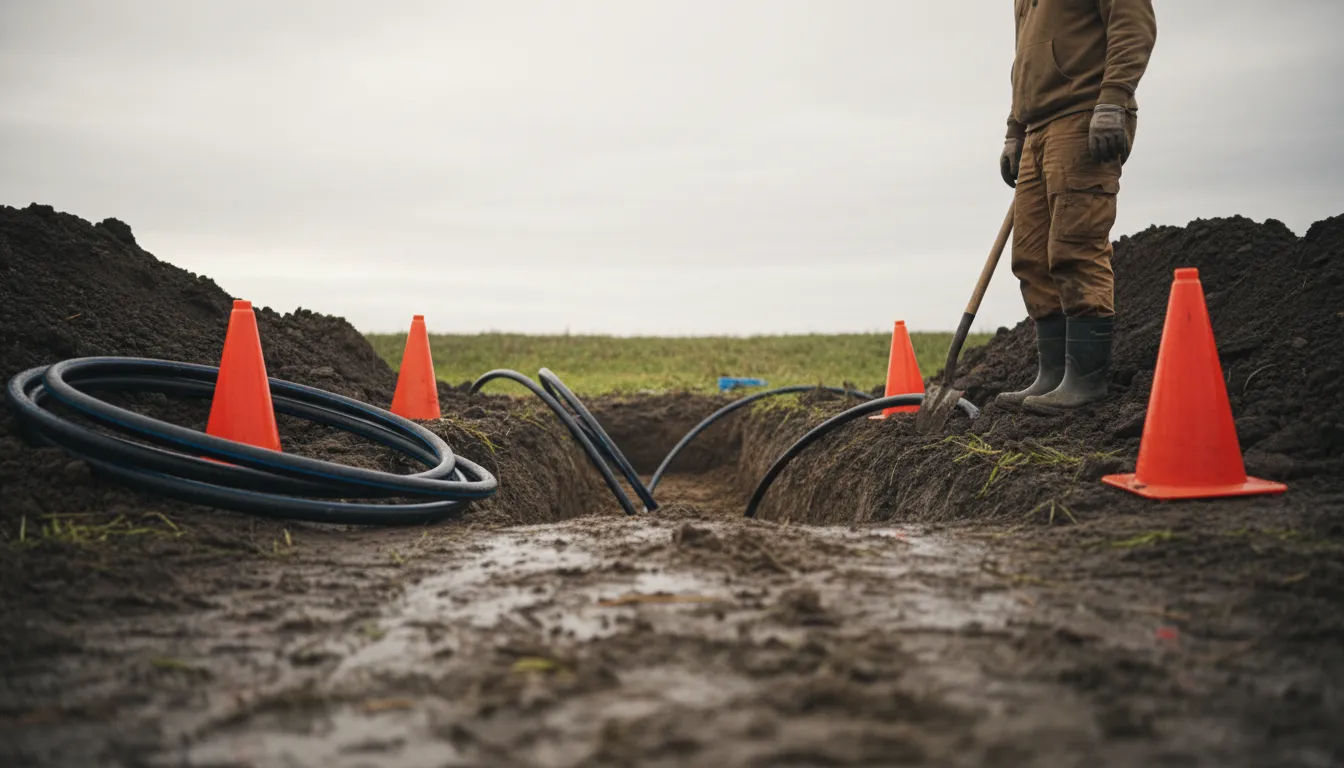
Horizontal Loops: If you have more available land, a horizontal loop can be a cost-effective option. Contractors dig trenches four to six feet deep, lay pipes in a series of parallel runs, and backfill the area6 7. This method requires more trenching and is more invasive to lawns and gardens but typically has a lower installation cost than vertical drilling.
Pond/Lake Loops: If your property has access to a sufficiently deep pond or lake, this can be an excellent option. Coils of pipe are submerged at the bottom of the water body, where temperatures remain stable. This system often has the lowest installation cost if the site conditions are suitable8.
A professional installer will conduct a detailed site assessment to determine the best loop type and sizing for your home's heating and cooling loads.
The Installation Process: What Homeowners Can Expect
Installing a ground-source heat pump is a significant project that requires careful planning and skilled execution. Understanding the steps can help you prepare.
- Site Evaluation and Design: A certified contractor will visit your property to assess soil conditions, rock content, available space, and existing utilities. They will calculate your home's heating and cooling demands to design a properly sized system, including the loop field and indoor unit.
- Loop Field Installation: This is the major exterior work. For a vertical system, a drilling rig will create the necessary boreholes. For a horizontal system, a backhoe or trencher will dig the required trenches. The high-density polyethylene pipes are then laid and connected into a continuous loop9 10.
- Indoor Unit Installation: The geothermal heat pump unit itself is installed inside your home, typically in a basement, utility closet, or garage. It connects to your home's ductwork or hydronic distribution system. This unit is usually quieter and more compact than a traditional furnace and air conditioner11.
- Connection and Commissioning: The underground loops are connected to the indoor unit. The entire system is filled with fluid, pressurized, and tested for leaks. Finally, the system is started, balanced, and the controls are set to ensure optimal performance12.
Find the perfect geothermal heat pump contractors for your needs
Get personalized recommendations and expert advice
Benefits and Long-Term Value for Rio Rancho Residents
The decision to install a geothermal system is an investment that pays dividends for decades.
- Substantial Energy Savings: By leveraging the Earth's consistent temperature, geothermal heat pumps can reduce energy use for heating, cooling, and even hot water generation by up to 70% compared to conventional systems13 14. This translates to dramatically lower monthly utility bills.
- Exceptional Longevity and Reliability: The indoor heat pump components are designed to last 20 years or more. The underground loop system, made of durable plastic piping, often comes with warranties of 50 years and can potentially last for generations with no maintenance15. There are no exposed outdoor units subject to weathering.
- Environmental Stewardship: Geothermal systems use renewable thermal energy from the ground. They emit no on-site carbon dioxide and, because they use much less electricity, they have a much lower overall carbon footprint. They also use a non-ozone-depleting refrigerant16.
- Comfort and Quiet Operation: These systems provide consistent, even heating and cooling without the drafts or hot/cold spots common with forced-air systems. The indoor unit operates very quietly, and with no loud outdoor condenser, your yard remains peaceful.
Understanding Costs, Incentives, and Payback
The upfront cost for a geothermal heating and cooling system is higher than that of a standard HVAC system, primarily due to the ground loop installation. Costs can vary widely but often start at several thousand dollars per ton of capacity, plus installation.
However, this initial investment is mitigated by several factors:
- Federal Tax Credits: Significant federal tax incentives are available for qualified geothermal heat pump installations, which can directly reduce your tax liability.
- State and Local Incentives: It's worth investigating any additional rebates or programs offered in New Mexico.
- Low Operating Costs: The dramatic reduction in monthly energy bills means the system often pays for itself through savings within 5 to 10 years.
- Increased Home Value: Studies have shown that homes with geothermal systems have higher resale values, as buyers recognize the benefit of low energy costs.
When evaluating cost, it's essential to consider the total lifecycle cost-including purchase, installation, operating expenses, and maintenance-over 20+ years. For many Rio Rancho homeowners, a ground-source heat pump represents the most cost-effective long-term solution for home comfort.
Frequently asked questions
Sources
Footnotes
-
How Geothermal Heat Pumps Work - https://www.youtube.com/watch?v=XxlTnBukweI&t=37 ↩
-
How a Geothermal Heat Pump Works | This Old House - https://www.youtube.com/watch?v=d5Tbsx3R2T8 ↩
-
Guide to Geothermal Heat Pumps - https://www.energy.gov/sites/prod/files/guide_to_geothermal_heat_pumps.pdf ↩
-
Cooling And Heating With Ground Source Heat Pumps - https://www.coolingindia.in/cooling-and-heating-with-ground-source-heat-pumps/ ↩
-
Geothermal heat pumps: The ultimate guide to ground-source ... - https://termo-plus.com/blog/geothermal-ultimate-guide-to-ground-source-heat-pumps/ ↩
-
Geothermal Heat Pumps: How They Work and Benefits for Your ... - https://www.rbiva.com/resources/geothermal-heat-pumps-how-they-work-and-benefits/ ↩
-
Geothermal Heat Pumps: How They Work | AHRI - https://www.ahrinet.org/scholarships-education/education/homeowners/how-things-work/geothermal-heat-pumps-how-they-work ↩
-
Geothermal Heat Pumps, Explained - Bosch Home Comfort - https://www.bosch-homecomfort.com/us/en/residential/connect/blog/geothermal-heat-pumps-go-green-save-green/ ↩
-
Geothermal heating & cooling, heat pumps, heat exchange ... - https://aztechgeo.com/residential-geothermal/how-it-works/ ↩
-
How Geothermal Heating and Cooling Systems Work | Belle Air - https://www.belleairservices.com/how-geothermal-heating-and-cooling-systems-work/ ↩
-
All You Need to Know About Home Geothermal Heating & Cooling - Dandelion Energy - https://dandelionenergy.com/all-you-need-to-know-about-home-geothermal-heating-cooling ↩
-
Geothermal Heat Pump Installation: What To Expect For Your ... - https://jomory.com/geothermal-heat-pump-installation-what-to-expect-for-your-property/ ↩
-
Geothermal Heat Pumps - Department of Energy - https://www.energy.gov/energysaver/geothermal-heat-pumps ↩
-
How Does a Geothermal System Work? - ClimateMaster - https://www.climatemaster.com/homeowner/side-links/how-it-works ↩
-
Geothermal Ground Loops - https://plasticpipe.org/EnergyPipingSystems/BuildingConstruction/-Applications-/Geothermal-Ground-Loops.aspx ↩
-
Clean Energy 101: Geothermal Heat Pumps - RMI - https://rmi.org/clean-energy-101-geothermal-heat-pumps/ ↩