Find the Best Geothermal Heat Pump Contractors for Your Business
No obligation • Fast responses • Nationwide coverage

Why you can trust HVAC Firms
HVAC Firms is a leading United States resource for evaluating HVAC service providers. Our team researches companies, checks credentials, and reviews customer feedback to present clear, unbiased information. Listings and rankings are based on merit, and companies cannot pay to change our editorial content.
Search providers near you
Top Geothermal Heat Pump Contractors in St Louis Park, Minnesota Ranked
Geothermal heat pumps, also known as ground-source heat pumps, are a highly efficient and renewable method for heating and cooling your home. By leveraging the earth's stable underground temperature, these systems can provide year-round comfort with significant energy savings. For St Louis Park residents, this technology offers a smart, long-term solution to manage utility costs and reduce environmental impact. This guide will help you understand how geothermal systems work, what installation involves, and how to find qualified local experts to assess your property.
Binder Heating and Air Conditioning, Inc
222 Hardman Ave N, South St Paul, MN 55075
Binder Heating and Air Conditioning, Inc is a family-owned heating and cooling company serving Minneapolis, MN, and the surrounding Twin Cities metro area. With nearly 100 years of experience, they provide a range of services including air conditioning, furnace and boiler repair and installation, geothermal heat pump systems, indoor air quality solutions, and custom commercial HVAC services. Their skilled union technicians focus on delivering tailored heating and cooling solutions without commission-based sales pressure. Binder Heating and Air Conditioning also offers 24-hour on-call emergency service for their maintenance plan customers.
ENVIROWORLD USA
Minneapolis, MN
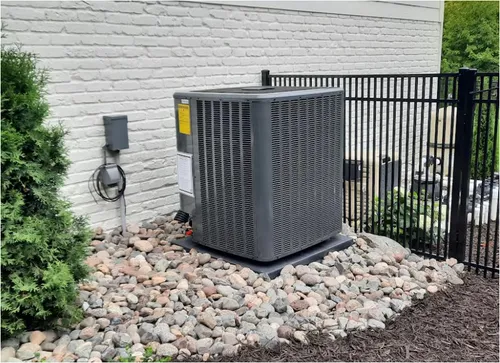
ENVIROWORLD USA is an HVAC contractor based in Minneapolis, MN, specializing in heating, air conditioning, heat pump, and geothermal system installation and repair. They focus on improving indoor air quality and home comfort through design-build solutions that address airflow, ventilation, and temperature consistency. Their services include installing steam humidifiers, air exchangers, and advanced filtration systems to enhance respiratory health and energy efficiency. With decades of industry experience and master licensing, ENVIROWORLD USA offers tailored HVAC solutions for both new construction and existing homes, aiming to resolve chronic indoor air and comfort issues effectively.
HLT Heating & Cooling LLC
244 Richmond St W, South St Paul, MN 55075
HLT Heating & Cooling LLC is a heating and cooling company based in St Paul, MN. They provide a range of services including installation and repair of air conditioners, furnaces, heat pumps, boilers, mini splits, and geothermal heat pumps. Their capabilities cover HVAC tune-ups and comprehensive HVAC system services to maintain home comfort. The company also offers flexible financing options to support their customers' needs.
How Geothermal Energy Works in Minnesota
The core principle behind a geothermal heating and cooling system is remarkably simple: it uses the earth as a giant thermal battery. In Minnesota, the ground below about 50 feet maintains a remarkably consistent temperature between 40°F and 50°F year-round, regardless of the summer heat or winter chill above ground. A geothermal system, or ground-source heat pump, taps into this stable resource.
During the winter, a fluid circulating through pipes buried in your yard absorbs the earth's gentle warmth. This warm fluid is brought to a heat pump unit inside your home, which concentrates the heat and distributes it through your ductwork as warm air. In the summer, the process reverses: the system extracts heat from your indoor air and transfers it into the cooler ground via the same loop of pipes, effectively providing air conditioning. This elegant heat exchange process is what makes geothermal technology so efficient.
Types of Geothermal Ground Loops
The underground pipe system, called a ground loop, is the critical component that exchanges heat with the earth. The right loop type for your St Louis Park home depends on your property's soil conditions, land area, and water access. The most common configuration is a closed-loop system, where a water and antifreeze solution is continuously circulated through sealed, high-density polyethylene pipes.
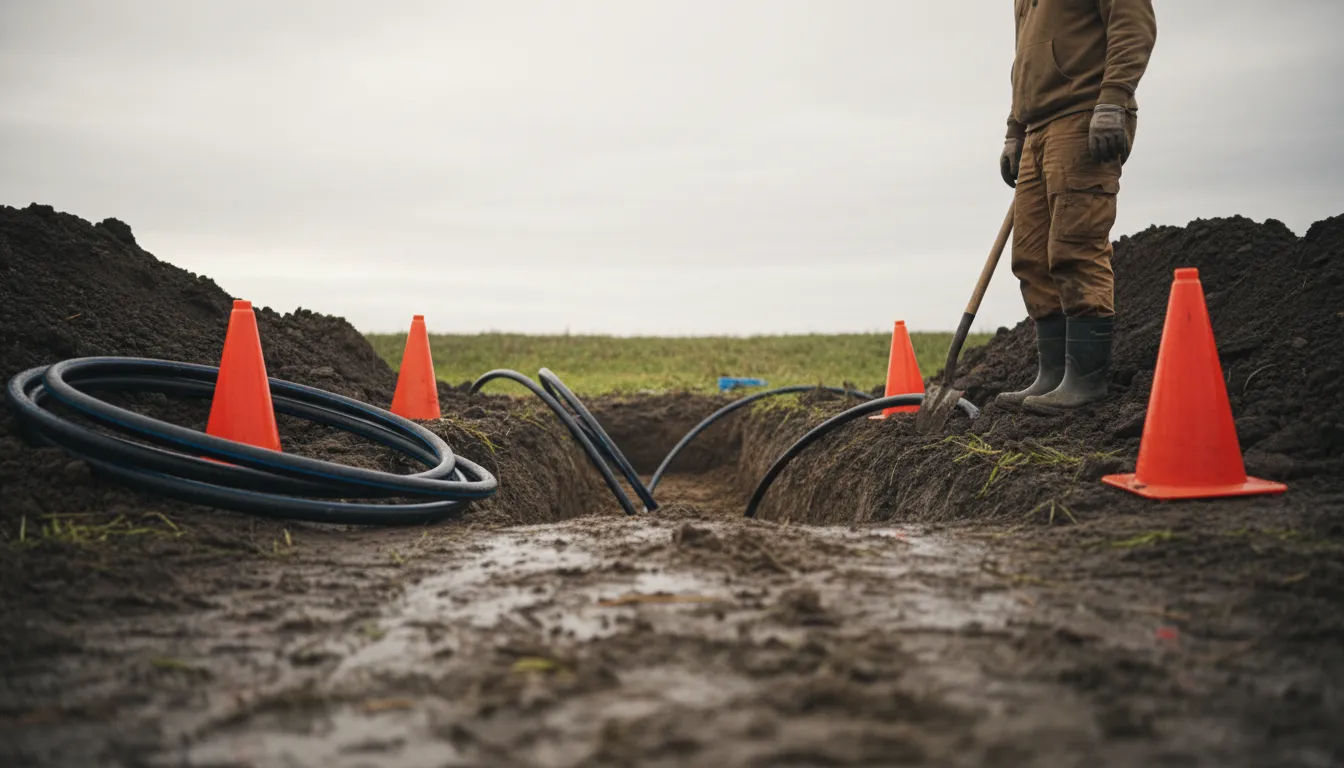
- Horizontal Closed-Loop: This installation involves excavating long, shallow trenches about five to ten feet deep. Coils of pipe are laid in these trenches before they are backfilled. This method requires a larger amount of available land but can be more cost-effective than drilling if the space is available 1 2 3.
- Vertical Closed-Loop: For properties with limited yard space, vertical loops are the ideal solution. Contractors drill boreholes typically 150 to 400 feet deep and insert U-shaped loops of pipe into each hole. While the drilling process is more specialized, a vertical ground source heat pump system has a much smaller surface footprint 4.
- Open-Loop System: This less common option uses groundwater from a well or a pond as the direct heat exchange fluid. After passing through the heat pump, the water is discharged back to a well, recharge trench, or surface body of water. This system can be highly efficient but requires an adequate supply of clean water and compliance with local codes regarding water discharge.
The Geothermal Installation Process
Installing a residential geothermal system is a significant project that requires careful planning and professional execution. Understanding the steps involved can help you prepare for the process.
- Site Analysis and System Design: A qualified installer will begin with a thorough assessment of your property, including soil composition, available land, and your home's heating and cooling load calculations. This information is used to design the most effective and efficient system for your specific needs.
- Permitting: Your installer will typically handle obtaining the necessary local permits from St Louis Park or Hennepin County authorities. Regulations ensure the installation meets safety and environmental standards 5.
- Loop Installation: This is the major excavation phase. For a horizontal system, trenching equipment will dig the necessary network of trenches. For a vertical system, a drilling rig will be brought in to create the deep boreholes. The pipes are then placed, connected, and pressure-tested to ensure there are no leaks before being buried.
- Heat Pump and Ductwork Installation: The indoor heat pump unit is installed, often in a basement, utility room, or garage. It is connected to the ground loop and to your home's existing ductwork. If you don't have ducts, the system can be adapted to use ductless mini-split handlers 6.
- Testing and Commissioning: Once everything is connected, the contractor will start up the system, check all components, and balance the airflow. They will ensure the geothermal unit is operating correctly for both heating and cooling modes and explain the basic controls to you 7.
Find the perfect geothermal heat pump contractors for your needs
Get personalized recommendations and expert advice
Cost Considerations and Long-Term Value
The upfront investment for a complete geothermal heat pump installation in St Louis Park is a primary consideration for homeowners. Typical costs can range from $20,000 to over $40,000, with the final price heavily influenced by the type of ground loop (vertical drilling is generally more expensive than horizontal trenching), the size and efficiency of the heat pump unit, and the specifics of your property and home 8.
It's crucial to view this cost through the lens of long-term value and operational savings. Geothermal systems are renowned for drastically reducing energy consumption. Homeowners can see savings of up to 65% on heating and cooling bills compared to conventional systems like furnaces and standard air conditioners 9 10 11. Because they move heat rather than generate it by burning fuel, their operating costs are low and stable, protecting you from fluctuations in natural gas or propane prices. Furthermore, these systems are incredibly durable; the underground loops often come with warranties of 50 years or more, and the indoor heat pump units can last 20 years or longer 12 10.
Benefits for St Louis Park Homeowners
Choosing a geothermal system offers a compelling array of advantages that extend beyond monthly utility bills.
- Significant Energy Savings: The dramatic reduction in energy use is the most immediate financial benefit, leading to a strong return on investment over time.
- Environmental Sustainability: By using the renewable thermal energy of the earth and electricity (which is increasingly green), you drastically reduce your home's reliance on fossil fuels and its carbon footprint.
- Quiet and Comfortable Operation: With no noisy outdoor condenser unit (like a traditional air conditioner) and no combustion process (like a furnace), geothermal systems operate very quietly. They also provide exceptionally even, draft-free heating and cooling.
- Increased Home Value: A installed geothermal system is a permanent upgrade that is attractive to future buyers, often increasing the resale value of your home due to its low operating costs and modern technology.
- Financial Incentives: The federal government offers a tax credit for qualifying geothermal heat pump installations, which can significantly offset the initial cost. It's important to consult with your installer and a tax professional about current incentives 13.
Frequently asked questions
Sources
Footnotes
-
Ground Source Heat Pumps (GSHP) - https://www.mnpower.com/ProgramsRebates/GroundSourceHeatPumps ↩
-
Geothermal Ground Loop FAQs - Dandelion Energy - https://dandelionenergy.com/geothermal-ground-loop-frequently-asked-questions ↩
-
Geothermal Loop Options | MNGHPA - https://www.minnesotageothermalheatpumpassociation.com/geothermal/earth-loop-options/ ↩
-
Geothermal Heat Pumps - Department of Energy - https://www.energy.gov/energysaver/geothermal-heat-pumps ↩
-
Residential Geo-Thermal/Ground-Source Heat Pump System ... - https://stlouiscountymo.gov/st-louis-county-departments/transportation-and-public-works/publications-and-manuals/pw-residential-guides/geo-thermal-checklist/ ↩
-
All About Geothermal Installation for Your Home - Scott-Lee Heating - https://scottleeheating.com/all-about-geothermal-installation-for-your-home/ ↩
-
How It Works: The Geothermal Installation Process - https://www.awheatingandcooling.com/blog/geothermal-service/how-it-works-the-geothermal-installation-process/ ↩
-
All You Need to Know About Home Geothermal Heating & ... - https://dandelionenergy.com/all-you-need-to-know-about-home-geothermal-heating-cooling ↩
-
5 Things You Should Know about Geothermal Heat Pumps - https://www.energy.gov/cmei/articles/5-things-you-should-know-about-geothermal-heat-pumps ↩
-
How Does A Geothermal Heat Pump Work? Complete 2025 Guide - https://solartechonline.com/blog/how-does-geothermal-heat-pump-work/ ↩ ↩2
-
Geothermal Heat Pump Guide: Installation Costs, Types And Benefits - https://modernize.com/hvac/heating-repair-installation/heat-pump/geothermal ↩
-
Geothermal Heating and Cooling Systems - MN Dept. of Health - https://www.health.state.mn.us/communities/environment/water/wells/geothermal.html ↩
-
Choosing Between Geothermal Systems in St. Louis | Scott-Lee - https://scottleeheating.com/which-of-the-four-geothermal-systems-is-best-for-you/ ↩