Find the Best Geothermal Heat Pump Contractors for Your Business
No obligation • Fast responses • Nationwide coverage

Why you can trust HVAC Firms
HVAC Firms is a leading United States resource for evaluating HVAC service providers. Our team researches companies, checks credentials, and reviews customer feedback to present clear, unbiased information. Listings and rankings are based on merit, and companies cannot pay to change our editorial content.
Search providers near you
Top Geothermal Heat Pump Contractors in Edina, Minnesota Ranked
A geothermal heat pump, or ground-source heat pump, is a highly efficient system that uses the earth's stable temperature to heat and cool your home. For Edina residents, this technology offers a reliable way to manage Minnesota's extreme temperatures while significantly reducing energy consumption. This guide explains how these systems work, the installation process, and how you can find qualified local experts to evaluate your property.
Binder Heating and Air Conditioning, Inc
222 Hardman Ave N, South St Paul, MN 55075
Binder Heating and Air Conditioning, Inc is a family-owned heating and cooling company serving Minneapolis, MN, and the surrounding Twin Cities metro area. With nearly 100 years of experience, they provide a range of services including air conditioning, furnace and boiler repair and installation, geothermal heat pump systems, indoor air quality solutions, and custom commercial HVAC services. Their skilled union technicians focus on delivering tailored heating and cooling solutions without commission-based sales pressure. Binder Heating and Air Conditioning also offers 24-hour on-call emergency service for their maintenance plan customers.
ENVIROWORLD USA
Minneapolis, MN
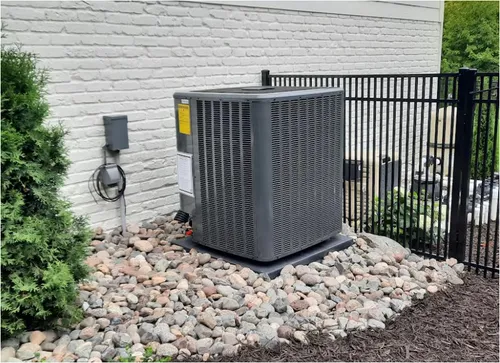
ENVIROWORLD USA is an HVAC contractor based in Minneapolis, MN, specializing in heating, air conditioning, heat pump, and geothermal system installation and repair. They focus on improving indoor air quality and home comfort through design-build solutions that address airflow, ventilation, and temperature consistency. Their services include installing steam humidifiers, air exchangers, and advanced filtration systems to enhance respiratory health and energy efficiency. With decades of industry experience and master licensing, ENVIROWORLD USA offers tailored HVAC solutions for both new construction and existing homes, aiming to resolve chronic indoor air and comfort issues effectively.
HLT Heating & Cooling LLC
244 Richmond St W, South St Paul, MN 55075
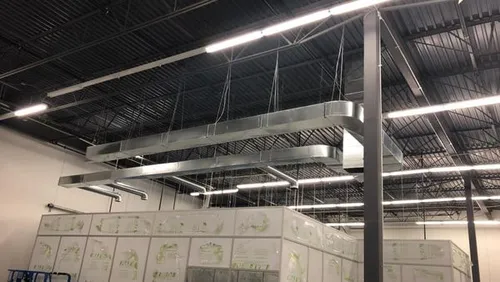
HLT Heating & Cooling LLC is a heating and cooling company based in St Paul, MN. They provide a range of services including installation and repair of air conditioners, furnaces, heat pumps, boilers, mini splits, and geothermal heat pumps. Their capabilities cover HVAC tune-ups and comprehensive HVAC system services to maintain home comfort. The company also offers flexible financing options to support their customers' needs.
How Geothermal Systems Work in Edina's Climate
The core principle behind a geothermal heating and cooling system is remarkably simple: it leverages the earth's constant underground temperature as a renewable energy source. Below the frost line-about 6 to 8 feet deep-the soil in Minnesota maintains a steady temperature between 40°F and 52°F year-round, regardless of the sweltering summer heat or bitter winter cold above ground.
This stable temperature acts as a thermal battery. In the winter, the system circulates a water-based fluid through a loop of pipes buried in the ground. This fluid absorbs the earth's natural warmth and carries it to a heat pump unit inside your home. The heat pump then concentrates this low-grade heat and distributes warm air through your ductwork or radiant floor system 1. The process reverses in the summer; the system pulls heat from your home and transfers it into the cooler ground, effectively providing air conditioning. This elegant exchange of heat, rather than the creation of it through combustion, is what makes geothermal technology so efficient.
Types of Ground Loops for Your Property
The underground pipe network, called a ground heat exchanger or ground loop, is the heart of the system. The right type for your Edina home depends on your lot size, soil composition, and access to water. There are four primary configurations:
-
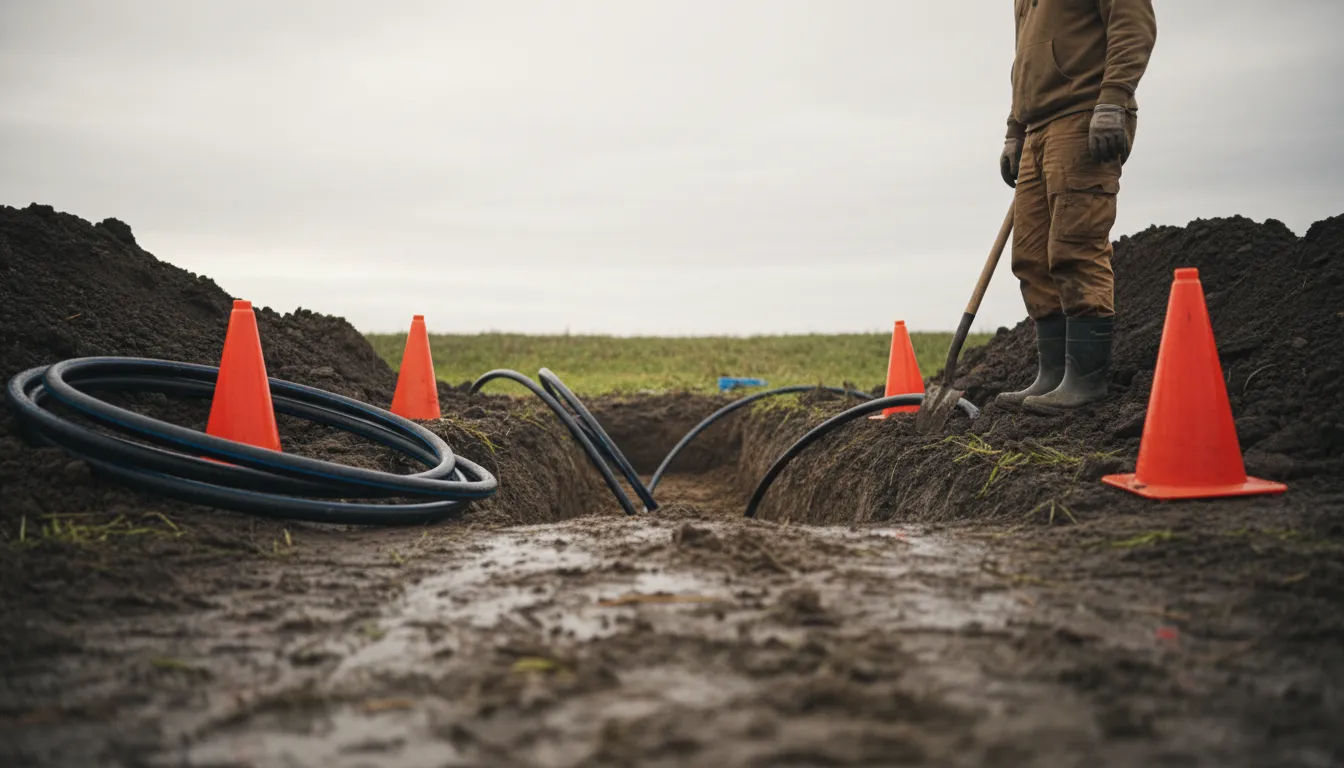
Horizontal Closed Loop: This is often the most cost-effective option if you have sufficient land. Installers dig trenches 4 to 8 feet deep across a large area of your yard and lay loops of high-density polyethylene (HDPE) pipe 2 3 4. This method requires a significant amount of open space but typically involves lower excavation costs than drilling.
-
Vertical Closed Loop: For properties with limited yard space, like many in Edina, vertical loops are the ideal solution. Contractors use a drilling rig to bore holes 150 to 400 feet deep. U-shaped pipes are inserted into each borehole, which is then filled with a special grout to ensure good thermal contact with the earth 5. While more expensive per foot than horizontal trenching, vertical systems offer superior performance in a smaller footprint and are less disruptive to existing landscaping.
-
Pond or Lake Loop: If you have a suitably sized and deep body of water on your property, coils of pipe can be submerged at the bottom. The water acts as an excellent heat exchange medium. This can be a very efficient and lower-cost installation option, but it is entirely dependent on having the right water resource available 6.
-
Open Loop System: This system uses groundwater directly from a well. Water is pumped from one well, run through the heat pump to exchange heat, and then discharged back into the ground through a second well or a approved surface discharge like a pond or stream 7. While potentially very efficient, open loops require an adequate supply of clean water and are subject to specific permitting and environmental regulations from the Minnesota Department of Health (MDH).
The Geothermal Installation Process: What to Expect
Installing a ground-source heat pump is a significant project that requires careful planning and professional execution. Here's a step-by-step overview of what a typical installation in Edina entails:
-
Site Assessment and Design: A qualified installer will evaluate your property, considering lot size, soil and rock conditions, and access. This assessment determines the most feasible and efficient loop type. An engineer then designs the loop field, specifying the layout, depth, and piping requirements.
-
Permitting: In Minnesota, the installation of the ground loop requires a license from the MDH. Your contractor will handle securing the necessary permits before any work begins.
-
Loop Field Installation: This is the major excavation phase.
- For horizontal loops, an excavator digs the long trenches.
- For vertical loops, a drilling rig is brought in to create the boreholes. The pipes are connected into a manifold system and pressure-tested to ensure there are no leaks before the trenches are backfilled or the boreholes are grouted.
-
Indoor Unit Installation: The indoor heat pump unit, which is typically about the size of a traditional furnace, is installed in your basement, utility room, or garage. It is connected to the underground loop piping and to your home's existing ductwork or hydronic distribution system 8.
-
System Startup and Commissioning: The final step involves charging the system with fluid, connecting the electrical components, and testing the entire system for proper operation, efficiency, and balance.
Find the perfect geothermal heat pump contractors for your needs
Get personalized recommendations and expert advice
Understanding Costs and Long-Term Savings
The decision to invest in a geothermal system involves weighing higher upfront costs against substantial long-term savings.
-
Installation Costs: The total installed cost for a residential geothermal heat pump system in Edina typically ranges from $25,000 to over $45,000. For example, a system for a 2,000-square-foot home might fall within the $20,000 to $40,000 range 9. This is significantly more than a standard air-source heat pump or furnace/AC combination, largely due to the cost of drilling or excavation and the specialized ground loop materials 10.
-
Operational Savings and Payback: The payoff comes from dramatically lower monthly energy bills. Geothermal heat pumps are exceptionally efficient, often achieving efficiencies of 300-600% on the heating side 11. Homeowners can expect to reduce their heating and cooling energy consumption by 30% to 70% compared to conventional systems 12 13. While the payback period varies based on system cost, your home's energy profile, and utility rates, the long-term savings make it a cost-effective investment over the system's lifespan of 20+ years for the indoor unit and 50+ years for the ground loop 13 14.
-
Incentives: It's crucial to research available federal tax credits, state rebates, and potential utility incentives. These financial incentives can substantially reduce the net installed cost and improve the return on investment 15.
Benefits Beyond Savings
While energy savings are a major draw, geothermal systems offer other compelling advantages for Edina homeowners:
- Durability and Longevity: The protected underground piping often comes with warranties of 25 to 50 years and can last generations. The indoor heat pump components also tend to have longer lifespans than outdoor AC units because they are sheltered from the elements.
- Quiet Operation: With no loud outdoor condenser unit, geothermal systems operate very quietly. The only sound is the indoor air handler moving air through your ducts.
- Comfort: These systems provide exceptionally consistent temperatures without the drafts or cold spots associated with some forced-air systems. They also excel at dehumidification in the summer, improving indoor air quality and comfort 16.
- Safety and Cleanliness: With no combustion, flame, or fuel storage, there is no risk of carbon monoxide poisoning or fuel leaks. It's a clean, safe way to heat your home.
- Environmental Impact: By using renewable thermal energy from the ground and electricity (which is increasingly from renewable sources), a geothermal system drastically reduces your home's carbon footprint associated with heating and cooling.
Frequently asked questions
Sources
Footnotes
-
Ground Source Heat Pumps (GSHP) - https://www.mnpower.com/ProgramsRebates/GroundSourceHeatPumps ↩
-
How Does it Work? | MNGHPA - https://www.minnesotageothermalheatpumpassociation.com/geothermal/how-does-it-work/ ↩
-
Geothermal Heat Pump Installation: What To Expect For Your Property - https://jomory.com/geothermal-heat-pump-installation-what-to-expect-for-your-property/ ↩
-
Geothermal Heating, Cooling, and Hot Water Systems - https://igshpa.org/wp-content/uploads/Homeowners-Guide-to-Geothermal.pdf ↩
-
A&H Drilling - Types of Geothermal Wells - https://www.ahwelldrilling.ca/uncategorized/geothermal-well-drilling/ ↩
-
Geothermal Loop Options | MNGHPA - https://www.minnesotageothermalheatpumpassociation.com/geothermal/earth-loop-options/ ↩
-
Geothermal Heating and Cooling - Open Energy Information - https://openei.org/wiki/GeoBridge/Heating_and_Cooling ↩
-
Ground Source Heat Pumps: Distribution System Types and ... - https://goclean.masscec.com/article/gshp-distribution-system-types-and-configurations/ ↩
-
What's a Geothermal Heat Pump? - https://www.youtube.com/watch?v=uU3FqM9QLSc ↩
-
Geothermal Heating and Cooling Systems - MN Dept. of Health - https://www.health.state.mn.us/communities/environment/water/wells/geothermal.html ↩
-
Geothermal Heat Pumps - Department of Energy - https://www.energy.gov/energysaver/geothermal-heat-pumps ↩
-
How Much Does a Heat Pump in Minnesota Cost? 2025 Prices - https://modernize.com/hvac/heating-repair-installation/heat-pump/minnesota ↩
-
Geothermal Heat Pump Guide: Installation Costs, Types And Benefits - https://modernize.com/hvac/heating-repair-installation/heat-pump/geothermal ↩ ↩2
-
All You Need to Know About Home Geothermal Heating & ... - https://dandelionenergy.com/all-you-need-to-know-about-home-geothermal-heating-cooling ↩
-
Ground Source Heat Pump / Minnesota Department of Commerce - Energy - https://mn.gov/commerce/energy/conserving-energy/ground-source/index.jsp ↩
-
How Does a Geothermal System Work? - ClimateMaster - https://www.climatemaster.com/homeowner/side-links/how-it-works ↩