
Find the Best Geothermal Heat Pump Contractors for Your Business
No obligation • Fast responses • Nationwide coverage

Why you can trust HVAC Firms
HVAC Firms is a leading United States resource for evaluating HVAC service providers. Our team researches companies, checks credentials, and reviews customer feedback to present clear, unbiased information. Listings and rankings are based on merit, and companies cannot pay to change our editorial content.
Search providers near you
Top Geothermal Heat Pump Contractors in Eden Prairie, Minnesota Ranked
A geothermal heat pump, also known as a ground-source heat pump, is a highly efficient heating and cooling system that leverages the earth's stable underground temperature. This technology is particularly relevant for Eden Prairie homeowners seeking to reduce energy bills and environmental impact. By connecting to a network of pipes buried in the ground, these systems provide reliable comfort year-round. This guide will help you understand how geothermal works, what installation entails, and how to connect with qualified local specialists for your project.
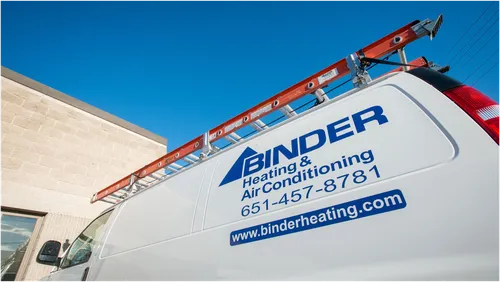
Binder Heating and Air Conditioning, Inc
222 Hardman Ave N, South St Paul, MN 55075
Binder Heating and Air Conditioning, Inc is a family-owned heating and cooling company serving Minneapolis, MN, and the surrounding Twin Cities metro area. With nearly 100 years of experience, they provide a range of services including air conditioning, furnace and boiler repair and installation, geothermal heat pump systems, indoor air quality solutions, and custom commercial HVAC services. Their skilled union technicians focus on delivering tailored heating and cooling solutions without commission-based sales pressure. Binder Heating and Air Conditioning also offers 24-hour on-call emergency service for their maintenance plan customers.
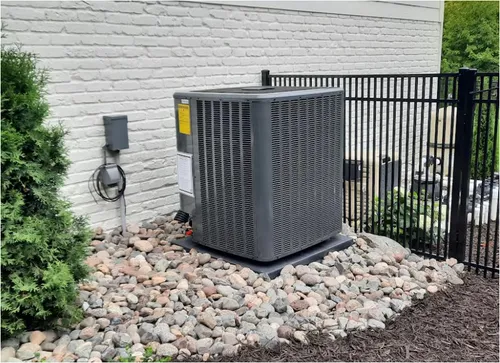
ENVIROWORLD USA
Minneapolis, MN
ENVIROWORLD USA is an HVAC contractor based in Minneapolis, MN, specializing in heating, air conditioning, heat pump, and geothermal system installation and repair. They focus on improving indoor air quality and home comfort through design-build solutions that address airflow, ventilation, and temperature consistency. Their services include installing steam humidifiers, air exchangers, and advanced filtration systems to enhance respiratory health and energy efficiency. With decades of industry experience and master licensing, ENVIROWORLD USA offers tailored HVAC solutions for both new construction and existing homes, aiming to resolve chronic indoor air and comfort issues effectively.
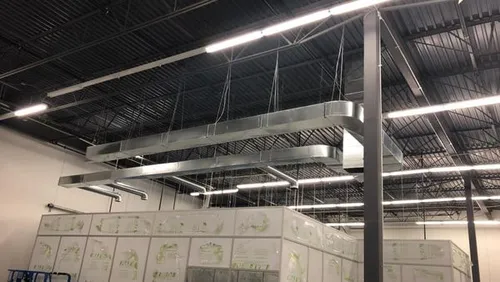
HLT Heating & Cooling LLC
244 Richmond St W, South St Paul, MN 55075
HLT Heating & Cooling LLC is a heating and cooling company based in St Paul, MN. They provide a range of services including installation and repair of air conditioners, furnaces, heat pumps, boilers, mini splits, and geothermal heat pumps. Their capabilities cover HVAC tune-ups and comprehensive HVAC system services to maintain home comfort. The company also offers flexible financing options to support their customers' needs.
How Geothermal Systems Work: Tapping into Earth's Constant Energy
The core principle behind a geothermal heating and cooling system is remarkably simple: it uses the earth as a giant thermal battery. Just a few feet below the surface, the ground maintains a nearly constant temperature between 40°F and 50°F year-round, regardless of Minnesota's extreme summer heat or winter cold. A geothermal system, or ground-source heat pump, exchanges heat with this stable reservoir.
In the winter, a fluid circulating through buried pipes absorbs the earth's natural warmth. This warmed fluid is brought to a heat pump unit inside your home, which concentrates the heat and distributes it as warm air through your ductwork 1. The process reverses in the summer. The system extracts heat from your home's air, transfers it to the fluid, and rejects it into the cooler ground, providing efficient air conditioning. This elegant exchange provides heating, cooling, and can even be configured to supply a portion of your home's hot water.
Types of Geothermal Loop Systems
The underground pipe network, called a "ground loop" or "earth loop," is the critical component that facilitates heat exchange. The right loop type for your Eden Prairie property depends on your land, soil conditions, and water access. The most common systems are closed-loop, but open-loop options exist where conditions permit.
Closed-Loop Systems
Closed-loop systems circulate a water and antifreeze mixture through a continuous, sealed loop of high-density polyethylene (HDPE) pipe. They are the most common residential installation.
- Horizontal Closed-Loop: This configuration involves digging trenches four to ten feet deep and laying pipes in a series of loops. It requires a larger amount of available land but is often less expensive than vertical drilling if the space exists.
- Vertical Closed-Loop: For properties with limited yard space, vertical loops are the ideal solution. Contractors drill boreholes typically 150 to 400 feet deep and insert U-shaped pipe loops. This method minimizes land disturbance and is well-suited for smaller lots common in many Eden Prairie neighborhoods.
- Pond/Lake Loop: If you have a sufficient body of water on your property, coils of pipe can be submerged at the bottom. This can be a cost-effective option, as it avoids extensive trenching or drilling, but it requires a pond or lake with adequate depth and volume 2 3.
Open-Loop Systems
An open-loop system uses groundwater directly from a well as the heat exchange fluid. After passing through the heat pump, the water is discharged, typically back into a second "return" well or a suitable surface drainage. This system can be very efficient but requires an abundant supply of clean groundwater and compliance with strict Minnesota Department of Health (MDH) regulations regarding well construction and water discharge.
The Geothermal Installation Process in Eden Prairie
Installing a residential geothermal system is a significant project that requires professional expertise and proper permitting. Here's what you can generally expect from the process when working with a qualified Eden Prairie installer.
- Site Assessment and Design: A certified contractor will evaluate your property, considering soil composition, lot size, landscaping, and access to water. This assessment determines the most effective and efficient loop type for your specific situation 4.
- Permitting: In Minnesota, installing a geothermal system requires specific permits. Contractors must be licensed, and the well construction for open-loop or vertical closed-loop systems must be permitted by the MDH 5. Your installer will handle this crucial regulatory step.
- Loop Installation: This is the major excavation phase. For a horizontal system, a trencher will dig the necessary network. For a vertical system, a drilling rig will create the boreholes. The HDPE pipe is then placed, connected, and pressure-tested to ensure integrity before the trenches are backfilled 6 7.
- Heat Pump and Ductwork Connection: The indoor heat pump unit is installed, typically in a basement, utility room, or garage. It is connected to the underground loop and to your home's existing ductwork or hydronic distribution system. Electrical and refrigerant lines are finalized 8 9.
- System Commissioning: Once everything is connected, the contractor will charge the system, start it up, and test all functions-heating, cooling, and hot water (if equipped). They will ensure it operates at peak efficiency and explain the system controls to you.
Find the perfect geothermal heat pump contractors for your needs
Get personalized recommendations and expert advice
Understanding Costs and Long-Term Savings
The decision to invest in a geothermal comfort system involves evaluating upfront costs against long-term operational savings.
Upfront Investment: A complete geothermal heat pump system for a typical Eden Prairie home represents a significant investment, with costs generally ranging from $25,000 to $45,000 or more. This includes the ground loop excavation/drilling, the heat pump unit, and all installation labor. The final price is highly dependent on your home's size, the chosen loop type (vertical loops are more expensive than horizontal), and the existing condition of your ductwork.
Operational Savings and Payback: Where geothermal systems shine is in dramatically reducing monthly energy bills. By harnessing free thermal energy from the earth, these systems can achieve efficiencies 30% to 70% higher than conventional furnaces and air conditioners, leading to substantial savings on heating and cooling costs 10 11 12. While electricity is needed to run the compressor and pumps, the overall energy consumption is much lower. Many homeowners find the payback period-the time it takes for energy savings to equal the initial investment-falls within 5 to 10 years 13 14. Furthermore, using electricity (which can be sourced from renewables) instead of burning fossil fuels on-site provides price stability against volatile fuel markets.
Key Benefits for Eden Prairie Homeowners
Choosing a geothermal system offers a compelling combination of financial, environmental, and practical advantages.
- Lower Utility Bills: The exceptional efficiency of ground-source heat pumps directly translates to reduced energy consumption for year-round climate control, one of the largest expenses in a Minnesota home.
- Environmental Sustainability: Geothermal systems use the renewable thermal energy of the earth, producing zero on-site emissions. They significantly reduce your household's carbon footprint compared to systems that burn natural gas, propane, or heating oil.
- Enhanced Safety and Comfort: With no combustion process, there is no risk of carbon monoxide poisoning, gas leaks, or the need for a chimney or flue. These systems also provide exceptionally even, draft-free heating and cooling 15.
- Quiet Operation and Longevity: The major mechanical components are located indoors, and the outdoor unit of a traditional air conditioner is eliminated, leading to quieter property. Furthermore, the underground piping often carries warranties of 25-50 years, and the heat pump units themselves are known for their durability.
Frequently asked questions
Sources
Footnotes
-
Geothermal Loop Options | MNGHPA - https://www.minnesotageothermalheatpumpassociation.com/geothermal/earth-loop-options/ ↩
-
Geothermal Heating and Cooling - Open Energy Information - https://openei.org/wiki/GeoBridge/Heating_and_Cooling ↩
-
Geothermal Heating, Cooling, and Hot Water Systems - https://igshpa.org/wp-content/uploads/Homeowners-Guide-to-Geothermal.pdf ↩
-
How to Choose the Right System for Your Home - Morrison Inc. - https://morrisongeothermal.com/how-to-choose-the-right-system-for-your-home/ ↩
-
Ground Source Heat Pump / Minnesota Department of Commerce - Energy - https://mn.gov/commerce/energy/conserving-energy/ground-source/index.jsp ↩
-
Clean Energy 101: Geothermal Heat Pumps - RMI - https://rmi.org/clean-energy-101-geothermal-heat-pumps/ ↩
-
Geothermal Heat Pump Installation: What To Expect For Your Property - https://jomory.com/geothermal-heat-pump-installation-what-to-expect-for-your-property/ ↩
-
Geothermal Heat Pumps - Department of Energy - https://www.energy.gov/energysaver/geothermal-heat-pumps ↩
-
How Does A Geothermal Heat Pump Work? Complete 2025 Guide - https://solartechonline.com/blog/how-does-geothermal-heat-pump-work/ ↩
-
Geothermal Heating and Cooling Systems - MN Dept. of Health - https://www.health.state.mn.us/communities/environment/water/wells/geothermal.html ↩
-
Ground Source Heat Pumps (GSHP) - https://www.mnpower.com/ProgramsRebates/GroundSourceHeatPumps ↩
-
Everything You Ever Wanted to Know About Geothermal Heating and Coolin - https://atomicfilters.com/blogs/news/everything-you-ever-wanted-to-know-about-geothermal-heating-and-cooling ↩
-
How Much Does a Heat Pump in Minnesota Cost? 2025 Prices - https://modernize.com/hvac/heating-repair-installation/heat-pump/minnesota ↩
-
What is Geothermal Heating in Michigan - https://aspenheating.com/aspen-one-hour/geothermal-heating-in-michigan/ ↩
-
All You Need to Know About Home Geothermal Heating & ... - https://dandelionenergy.com/all-you-need-to-know-about-home-geothermal-heating-cooling ↩