
Find the Best Geothermal Heat Pump Contractors for Your Business
No obligation • Fast responses • Nationwide coverage

Why you can trust HVAC Firms
HVAC Firms is a leading United States resource for evaluating HVAC service providers. Our team researches companies, checks credentials, and reviews customer feedback to present clear, unbiased information. Listings and rankings are based on merit, and companies cannot pay to change our editorial content.
Search providers near you
Top Geothermal Heat Pump Contractors in Frederick, Maryland Ranked
Geothermal heat pumps, also known as ground-source heat pumps, are a highly efficient method for heating and cooling your home by leveraging the earth's stable underground temperature. This technology matters because it can dramatically reduce your energy bills and environmental footprint while providing reliable comfort year-round. For Frederick residents, finding the right local expert for geothermal installation is key to navigating site-specific considerations like soil composition and available land, ensuring you get a system tailored to your property's unique potential.
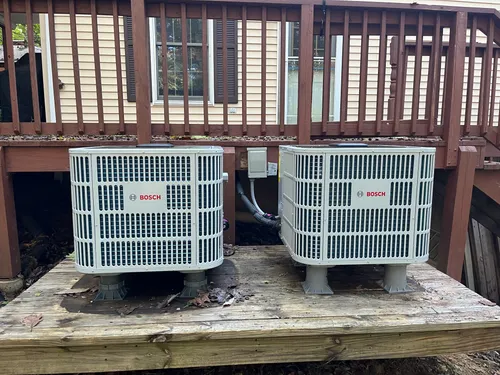
How Geothermal Systems Work in Frederick
The principle behind a geothermal heating and cooling system is elegant in its simplicity. Unlike furnaces that create heat, these systems move existing heat. Beneath the surface in Frederick, the earth maintains a nearly constant temperature of 50 to 60 degrees Fahrenheit throughout the year 1. A geothermal system uses this thermal reserve as a source of warmth in the winter and a place to dump excess heat in the summer.
The process relies on a closed loop of durable, high-density polyethylene (HDPE) piping buried in the ground. A water-based solution circulates through this loop. During the heating season, the fluid absorbs the earth's warmth and carries it to an indoor heat pump unit. The heat pump concentrates this thermal energy and distributes it throughout your home via your existing ductwork or a hydronic system. In the cooling mode, the system reverses: it extracts heat from your indoor air and transfers it into the cooler fluid, which then dissipates the heat into the ground 2 3. An added benefit is the potential for a desuperheater, which can capture excess heat to provide significant amounts of your home's hot water year-round 4.
Evaluating Your Property for a Ground-Source Heat Pump
The first step for any Frederick homeowner is a professional site assessment. A qualified installer will evaluate several critical factors to determine the best system type for you. Key considerations include the size and layout of your property, soil and rock composition, the location of existing utilities, and your home's current heating and cooling loads. This assessment ensures the designed system will meet your energy needs efficiently and identifies the most practical method for installing the ground loop-the heart of the system.
Common Ground Loop Configurations
There are three primary types of closed-loop systems, each suited to different property conditions:
- Horizontal Loops: This is often the most cost-effective option if you have sufficient land. Trenches are dug approximately four to eight feet deep and several hundred feet long. Pipes are laid in these trenches in a slinky-coil or straight-run configuration before the area is backfilled 5 6. This method is less invasive to drill but requires a larger, clear area of your yard.
- Vertical Loops: For homes in Frederick with smaller lots or mature landscaping, vertical boreholes are the standard solution. A drilling rig creates holes typically 150 to 400 feet deep. U-shaped pipe loops are inserted into each borehole, which are then grouted for optimal thermal conductivity 7 8. While drilling can be more expensive per foot than trenching, it minimizes surface disruption and is ideal for retrofit projects.
- Pond/Lake Loops: If you have a suitably sized and deep pond or lake on your property, this can be an excellent option. Coils of pipe are submerged at the bottom, where the water temperature remains stable. This method often has the lowest installation cost if the water body is close to the home, as it requires minimal excavation 9.
The Geothermal Installation Process: What to Expect
Understanding the installation timeline and process can help Frederick homeowners plan effectively. A typical residential geothermal project unfolds in several key phases:
- Design and Permitting: After the initial assessment, your installer designs the loop field and selects the appropriate indoor heat pump unit. They will also handle any necessary local permits.
- Loop Field Installation: This is the most visible phase. For a horizontal system, a backhoe will dig the necessary trenches over one to three days. For a vertical system, a drilling rig will be on-site for several days to complete the boreholes.
- Heat Pump and Connection Installation: The indoor heat pump unit, which is about the size of a traditional furnace, is installed in your basement, utility room, or garage. A trench is dug to bring the underground loop pipes into the home, where they are connected to the heat pump.
- System Charging and Testing: The loop is filled and pressurized, and the heat pump is connected to your electrical system and ductwork. The entire system is then thoroughly tested for performance and leaks.
- Restoration: Finally, the excavation areas are backfilled and your yard is restored as closely as possible to its original condition 10.
Find the perfect geothermal heat pump contractors for your needs
Get personalized recommendations and expert advice
The Financial and Environmental Benefits for Frederick Homes
The decision to install a geothermal system is a significant investment with compelling long-term returns. The primary advantage is exceptional energy efficiency. By moving heat instead of generating it, geothermal heat pumps can achieve efficiencies of 300-600% on the coldest winter nights, far surpassing the best gas furnaces or standard air-source heat pumps 11. For the average Frederick household, this translates to a reduction of 40% to 70% in heating and cooling energy use 12.
This massive efficiency gain directly impacts your utility bills. Homeowners can expect to save between $400 and $1,500 annually on heating, cooling, and hot water costs compared to conventional systems like electric resistance, oil, or standard air conditioning 13 14. While the upfront cost is higher than replacing a traditional HVAC system-largely due to the ground loop installation-these energy savings typically lead to a payback period within 5 to 10 years 15. Furthermore, the systems are incredibly durable: the indoor heat pump components often last 25 years or more, while the underground piping carries warranties of 25 to 50 years and can realistically function for over half a century 14 16.
Beyond the financials, the environmental benefits are substantial. Geothermal systems have no on-site combustion, eliminating carbon monoxide risk and reducing your home's carbon footprint. They also operate very quietly, as there is no loud outdoor condenser unit. For Frederick residents, this means a cleaner, quieter, and more sustainable approach to home comfort.
Maintenance and Long-Term Care
One of the appealing aspects of geothermal technology is its low maintenance requirement. The underground loop is virtually maintenance-free. Annual maintenance focuses on the indoor heat pump unit, similar to servicing a traditional furnace or air handler. This includes checking filters, electrical connections, and the refrigerant charge. Having a local professional perform this routine check ensures your system continues to operate at peak efficiency for decades.
Frequently asked questions
Sources
Footnotes
-
Energy 101: Geothermal | University of Maryland Extension - https://extension.umd.edu/resource/energy-101-geothermal ↩
-
Understanding Geothermal Heating & Cooling Systems - https://www.tchvac.net/news/geothermal-heating-and-cooling-explained ↩
-
How Geothermal Heat Pumps Work - https://www.energyhomes.org/renewable-technology/howgeoworks.html ↩
-
Geothermal Energy Explained - https://chariotenergy.com/chariot-university/geothermal-energy/ ↩
-
Geothermal Heat Pump Installation: What To Expect For Your Property - https://jomory.com/geothermal-heat-pump-installation-what-to-expect-for-your-property/ ↩
-
Geothermal Heat Pumps - Department of Energy - https://www.energy.gov/energysaver/geothermal-heat-pumps ↩
-
How It Works: Ground Source Heat Pumps - Aztech Geothermal - https://aztechgeo.com/residential-geothermal/how-it-works/ ↩
-
Ground source heat pumps: horizontal collectors Vs. vertical boreholes - https://www.mesh-energy.com/insights/ground-source-heat-pumps-horizontal-collectors-vs-vertical-boreholes ↩
-
Geothermal Heating & Cooling System Information - https://earthrivergeothermal.com/geothermal-heating-cooling-system-information/ ↩
-
Geothermal Heating Install In Frederick, MD - https://www.frederickair.com/heating/geothermal-system-installation/ ↩
-
5 Things You Should Know about Geothermal Heat Pumps - https://www.energy.gov/cmei/articles/5-things-you-should-know-about-geothermal-heat-pumps ↩
-
Geothermal Heating & Cooling - https://energy.maryland.gov/pages/info/renewable/geothermal.aspx ↩
-
Geothermal Heating and Cooling in Frederick, Maryland - https://www.maysheatingandac.com/products/geothermal/ ↩
-
Geothermal Heating, Cooling, and Hot Water Systems - https://igshpa.org/wp-content/uploads/Homeowners-Guide-to-Geothermal.pdf ↩ ↩2
-
Guide to Geothermal Heat Pumps - https://www.energy.gov/sites/prod/files/guide_to_geothermal_heat_pumps.pdf ↩
-
Geothermal Heat Pump Guide: Installation Costs, Types And Benefits - https://modernize.com/hvac/heating-repair-installation/heat-pump/geothermal ↩