
Find the Best Geothermal Heat Pump Contractors for Your Business
No obligation • Fast responses • Nationwide coverage

Why you can trust HVAC Firms
HVAC Firms is a leading United States resource for evaluating HVAC service providers. Our team researches companies, checks credentials, and reviews customer feedback to present clear, unbiased information. Listings and rankings are based on merit, and companies cannot pay to change our editorial content.
Search providers near you
Top Geothermal Heat Pump Contractors in Baltimore, Maryland Ranked
A geothermal heat pump, also known as a ground-source heat pump, is a highly efficient system that uses the Earth's stable underground temperature to heat and cool your home. This technology matters because it can dramatically reduce your energy bills and environmental footprint while providing exceptional comfort year-round. For Baltimore homeowners, finding a qualified local installer is the first step toward unlocking these benefits, and this resource connects you with experienced professionals who can assess your property and design a system tailored to your needs.
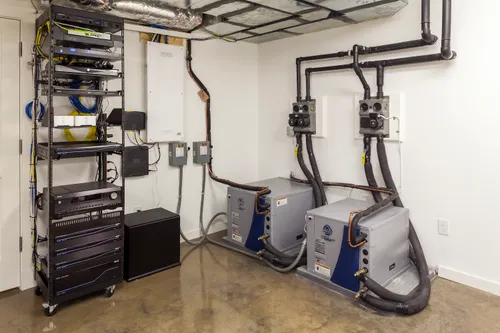
Grove Heating & Cooling
2142 Priest Bridge Court #6, Crofton, MD 21114
Grove Heating & Cooling is an HVAC company serving Washington, DC, and nearby areas including Bowie, Crofton, and Annapolis. They provide a range of services such as furnace repair, air conditioner repair, heat pump repair, HVAC installation, and indoor air quality solutions. The company also offers geothermal heat pump installation and HVAC tune-ups. Grove Heating & Cooling is equipped to handle heat pump repairs at any time, including day or night service. They aim to support customers with reliable heating, cooling, and ventilation needs.
United Air Temp
500 Redland Ct # 107, Owings Mills, MD 21117
United Air Temp is a home comfort service provider based in Baltimore, MD, offering heating, cooling, plumbing, and whole-home generator services. The company serves Baltimore homeowners with air conditioning, furnace, heat pump, boiler, mini split, geothermal heat pump, and HVAC installation, repair, and maintenance. They provide 24/7 emergency repairs to address urgent heating and cooling issues. Established in 1931, United Air Temp has over 90 years of experience in the industry, supporting homeowners with licensed and insured technicians to ensure efficient and safe operation of home systems.
United Air Temp
601 7th St Suite #301, Laurel, MD 20707
United Air Temp is an HVAC, plumbing, and whole-home generator service provider based in Baltimore, MD. Serving the Baltimore area, they offer a wide range of heating and cooling services including air conditioning, furnace, heat pump, boiler, geothermal heat pump, and mini split installation and repair. The company also provides water heater services and whole-home generator installation to help maintain home comfort and safety. Established in 1931, United Air Temp has over 90 years of experience in the industry. They offer 24/7 emergency repair services for heating and cooling systems to address urgent needs promptly.
Coastal Co., Inc.
25 Hudson St, Annapolis, MD 21401
Coastal Co., Inc. is an HVAC company serving Washington, DC, specializing in heating and air conditioning installation, repair, and maintenance. Their services include furnace and air conditioning repair, geothermal heat pump installation, and indoor air quality improvement. The company focuses on helping customers select efficient HVAC systems tailored to their property needs. Coastal Co., Inc. is known for qualified geothermal heat pump installations, offering an eco-friendly heating and cooling option that significantly reduces energy usage. They provide service agreements to help maintain system efficiency and longevity.
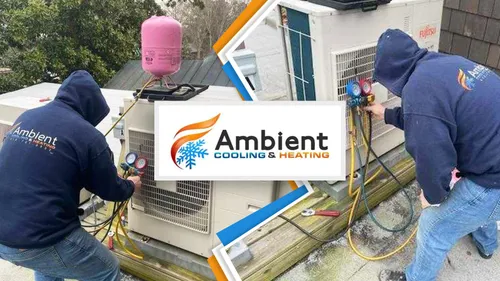
Ambient LLC
508 Shaw Ct #103, Severn, MD 21144
Ambient LLC is an HVAC company serving Baltimore, MD, offering a wide range of heating and cooling services. Their expertise includes installation, repair, and maintenance of air conditioners, furnaces, heat pumps, boilers, mini splits, geothermal HVAC systems, and indoor air quality solutions. They also provide specialized services such as air filtration, drying and dehumidification, and tankless water heater installation. Ambient LLC has experience working in Severn, Severna Park, and Columbia, Maryland, and is known for handling projects of various sizes and complexities with skilled technicians. The company emphasizes comprehensive HVAC solutions to maintain comfort and efficiency year-round.
How Geothermal Systems Work in Baltimore's Climate
The principle behind a geothermal heating and cooling system is elegantly simple. Just a few feet below the surface, the Earth maintains a relatively constant temperature, typically between 40-90°F in our region, regardless of the sweltering summer heat or winter chill above ground 1. A geothermal heat pump capitalizes on this stability. In the winter, a fluid circulating through pipes buried in the ground absorbs the Earth's natural warmth. The heat pump then concentrates this thermal energy and transfers it indoors to heat your home. During Baltimore's humid summers, the process reverses: the system extracts heat from your home and transfers it back into the cooler ground, providing air conditioning 2.
This method of heat exchange is far more efficient than conventional systems that battle the extreme outdoor air temperatures. By using the ground as a heat source and sink, a geothermal unit doesn't have to work as hard, which is the key to its significant energy savings and reliable performance.
Types of Ground Loop Systems for Baltimore Properties
The heart of any geothermal installation is the ground loop-the network of pipes buried on your property. The right type for your Baltimore home depends on your lot size, soil composition, and local geology. Here are the most common configurations:
-
Horizontal Closed Loop: This is often the most cost-effective option for properties with sufficient yard space. Trenches are dug about four to six feet deep, and pipes are laid in a series of loops before being backfilled 3. This approach is ideal for new construction where the land is already being excavated.
-
Vertical Closed Loop: For homes with smaller lots, which is common in many Baltimore neighborhoods, a vertical loop is the preferred solution. Contractors drill boreholes 150 to 500 feet deep and insert U-shaped pipe loops into each one 4. While drilling can be more expensive than trenching, it minimizes landscape disturbance and is excellent for rocky soil.
-
Pond/Lake Loop: If your property has access to a suitable body of water, a coil of pipe can be submerged at the bottom. This can be a very efficient and lower-cost installation option, provided the pond meets minimum size, depth, and quality requirements 5 6.
-
Open Loop System: This system uses groundwater from a well as the direct heat exchange fluid. After passing through the heat pump, the water is returned to the ground via a second well or approved discharge point. This option is highly efficient but depends entirely on having an adequate supply of clean water and complying with local codes.
The Installation Process: What Baltimore Homeowners Can Expect
Installing a ground-source heat pump is a significant project that requires careful planning and expert execution. Understanding the steps involved can help you prepare.
- Comprehensive Site Assessment: A qualified installer will first evaluate your property. They'll assess your yard's size and topography, analyze soil and rock conditions, and review your home's heating and cooling loads. This evaluation determines the most feasible and efficient loop type and the system size required 7.
- Loop Field Installation: This is the major excavation phase. For a horizontal system, a backhoe or trencher will dig the necessary trenches. For a vertical system, a drilling rig will be brought in to create the boreholes. The high-density polyethylene pipes are then placed and connected into a continuous loop.
- Indoor Unit Installation: The geothermal heat pump unit itself is typically installed indoors, often in a basement, utility room, or garage. It's about the size of a traditional furnace. Your installer will connect the ground loop to this unit and integrate it with your home's existing ductwork or hydronic distribution system 8.
- System Startup and Testing: Once everything is connected, the system is filled with fluid, purged of air, and pressurized. The technician will then start the system, calibrate the controls, and ensure everything is operating at peak efficiency before handing it over to you.
Find the perfect geothermal heat pump contractors for your needs
Get personalized recommendations and expert advice
Benefits and Cost Considerations for Baltimore
The decision to invest in a geothermal system involves weighing higher upfront costs against substantial long-term gains.
The most compelling benefit is energy savings. By leveraging the Earth's consistent temperature, geothermal heat pumps can reduce energy use for heating and cooling by 50% to 70% compared to conventional HVAC systems like standard air-source heat pumps or furnaces 9. For a typical 2,000-square-foot home in Baltimore, this often translates to cutting heating and cooling costs by more than half 10 11. Additionally, these systems are incredibly durable, with the underground piping often warrantied for 50+ years and the indoor heat pump unit lasting 20 years or more. They also provide balanced, draft-free comfort and can be equipped to supply a significant portion of your home's hot water.
On the cost side, installation is more expensive than replacing a traditional system. A complete geothermal system for a Baltimore home can range from $20,000 to $40,000 or more, with the loop field being a major portion of that cost 12 13. However, it's critical to view this as a long-term investment. The dramatic reduction in monthly utility bills provides a steady return. Furthermore, homeowners may qualify for federal tax credits and other local incentives that can offset a significant percentage of the installation cost, improving the payback period 14 15. Always check for the most current incentives available in Maryland.
Maintaining Your Geothermal System
One of the advantages of a ground-source heat pump is its relatively low maintenance requirements. The buried loop is designed to last for generations with no maintenance needed. Attention is primarily focused on the indoor components:
- Schedule annual check-ups with a qualified technician to inspect the heat pump unit, check refrigerant levels, clean coils, and ensure electrical connections are tight.
- Change or clean the standard air filters every 1-3 months, just as you would with a traditional forced-air system.
- Keep the area around the indoor unit clean and unobstructed for proper airflow.
Frequently asked questions
Sources
Footnotes
-
Energy 101: Geothermal | University of Maryland Extension - https://extension.umd.edu/resource/energy-101-geothermal ↩
-
Networked Geothermal Wiki - https://www.gastogeo.wiki/wiki/Main_Page ↩
-
Geothermal Heat Pump | Wilmington, DE | Hentkowski Inc. - https://hentkowski.com/geothermal-heat-pumps ↩
-
How Does a Geothermal System Work? - ClimateMaster - https://www.climatemaster.com/homeowner/side-links/how-it-works ↩
-
Geothermal Heat Pumps - Department of Energy - https://www.energy.gov/energysaver/geothermal-heat-pumps ↩
-
Geothermal Heating & Cooling System Information - https://earthrivergeothermal.com/geothermal-heating-cooling-system-information/ ↩
-
Understanding and Evaluating Geothermal Heat Pump Systems - https://www.nyserda.ny.gov/-/media/Project/Nyserda/Files/EERP/Residential/Geothermal/geothermal-manual.pdf ↩
-
How Does A Geothermal Heat Pump Work? Complete 2025 Guide - https://solartechonline.com/blog/how-does-geothermal-heat-pump-work/ ↩
-
5 Things You Should Know about Geothermal Heat Pumps - https://www.energy.gov/cmei/articles/5-things-you-should-know-about-geothermal-heat-pumps ↩
-
Geothermal Heating, Cooling, and Hot Water Systems - https://igshpa.org/wp-content/uploads/Homeowners-Guide-to-Geothermal.pdf ↩
-
Geothermal Heat Pump Installation & Service Annapolis MD - https://coastalhvac.biz/services/geothermal ↩
-
Understanding Geothermal Heat Pump Costs In Baltimore | MD - https://www.groundloop.com/understanding-geothermal-heat-pump-costs-in-baltimore/ ↩
-
Geothermal Heat Pump Guide: Installation Costs, Types And Benefits - https://modernize.com/hvac/heating-repair-installation/heat-pump/geothermal ↩
-
Geothermal Heating & Cooling - https://energy.maryland.gov/pages/info/renewable/geothermal.aspx ↩
-
Guide to Geothermal Heat Pumps - https://www.energy.gov/sites/prod/files/guide_to_geothermal_heat_pumps.pdf ↩