
Find the Best Geothermal Heat Pump Contractors for Your Business
No obligation • Fast responses • Nationwide coverage

Why you can trust HVAC Firms
HVAC Firms is a leading United States resource for evaluating HVAC service providers. Our team researches companies, checks credentials, and reviews customer feedback to present clear, unbiased information. Listings and rankings are based on merit, and companies cannot pay to change our editorial content.
Search providers near you
Top Geothermal Heat Pump Contractors in Westfield, Indiana Ranked
For Westfield homeowners seeking a comfortable, efficient, and sustainable home climate solution, geothermal heat pumps represent a powerful long-term investment. Unlike conventional systems that battle the extreme outdoor air temperatures of Indiana's seasons, a geothermal system-also known as a ground-source heat pump-leverages the earth's stable, moderate temperature just below the surface to provide both heating and cooling. This guide explains how this technology works locally, what installation entails, and how you can find qualified experts in the Westfield area to assess your property and install a system tailored to your home.
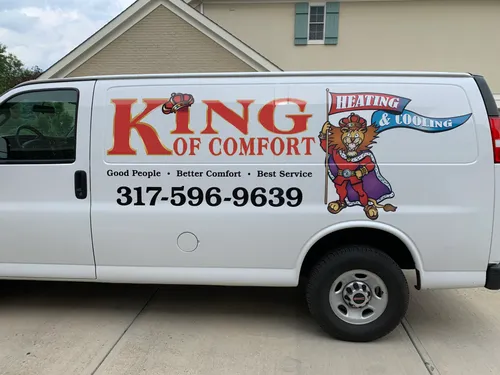
King of Comfort Heating & Cooling
7009 E 56th St, Indianapolis, IN 46226
King of Comfort Heating & Cooling is an HVAC company based in Indianapolis, IN, offering a wide range of heating and cooling services. Their team provides installation, repair, and maintenance for air conditioners, furnaces, heat pumps, boilers, mini splits, geothermal heat pumps, and thermostats. They emphasize comprehensive service and staying current with industry developments to meet diverse HVAC needs. The company also offers 24/7 emergency repair services to ensure reliable heating and cooling during extreme weather conditions. Their technicians handle everything from routine tune-ups to complex repairs, including cracked heat exchangers and faulty thermostats.
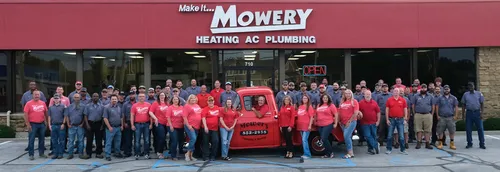
Mowery Heating, Cooling & Plumbing
710 E Main St, Brownsburg, IN 46112
Mowery Heating, Cooling & Plumbing is a full-service HVAC and plumbing company serving Indianapolis, IN. They offer a wide range of services including air conditioning, furnace, heat pump, mini split, and geothermal heat pump installation and repair, as well as HVAC tune-ups and thermostat installation. The company is equipped to handle complex tasks such as compressor and condenser coil checks, refrigerant management, and electrical component diagnostics. With over 20 years of experience, Mowery is known for comprehensive maintenance plans and skilled technicians who provide detailed system assessments. They also provide emergency plumbing services and have a strong focus on customer education and safety.
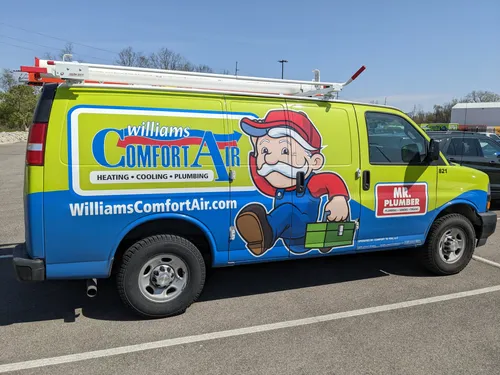
Williams Comfort Air - Heating Cooling Plumbing Electrical
310 West Main Street Suite 202, Greenwood, IN 46142
Williams Comfort Air - Heating Cooling Plumbing Electrical is a full-service HVAC and plumbing company serving Indianapolis, IN. They offer a wide range of services including air conditioning, furnace, heat pump, boiler, and geothermal HVAC repair and installation, as well as duct cleaning and indoor air quality solutions. The company is a Carrier Factory Authorized Dealer and employs NATE-certified technicians who provide comprehensive diagnostics and repairs. Established in 1966, Williams Comfort Air has decades of experience and provides 24/7 emergency HVAC service to ensure customers are never left without heating or cooling when they need it most.
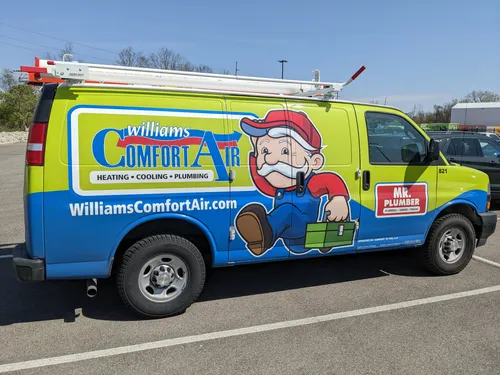
Williams Comfort Air - Heating Cooling Plumbing Electrical
114 S Center St, Plainfield, IN 46168
Williams Comfort Air - Heating Cooling Plumbing Electrical is a full-service HVAC and plumbing company serving Indianapolis, IN. They offer a wide range of services including air conditioner, furnace, heat pump, boiler, and geothermal heat pump repair and installation, as well as duct cleaning and indoor air quality services. The company is a Carrier Factory Authorized Dealer and employs NATE-certified technicians who handle repairs, maintenance, and replacements for various heating and cooling systems. Williams Comfort Air provides 24/7 emergency HVAC service to address urgent heating and cooling needs at any time.

Control Tech Heating, Air, & Plumbing
1200 Parkway Dr, Zionsville, IN 46077
Control Tech Heating, Air, & Plumbing is a family-owned HVAC and plumbing contractor based near Indianapolis, IN. Since 1983, they have provided residential and commercial heating, air conditioning, geothermal, and plumbing services in Indianapolis and surrounding communities. Their capabilities include installation and repair of air conditioners, furnaces, heat pumps, and geothermal systems, reflecting decades of experience in the industry.
How Geothermal Energy Works in Central Indiana
The core principle of a geothermal heating and cooling system is elegantly simple: it exchanges heat with the ground, not the air. Just a few feet below the surface in Central Indiana, the earth maintains a remarkably constant temperature between 50°F and 60°F year-round, regardless of summer heat waves or winter freezes. A geothermal system capitalizes on this stability.
Here's the basic process:
- Heat Exchange: A closed loop of pipes, buried in your yard, circulates a water-based fluid. In the winter, this fluid absorbs the earth's stored warmth.
- Concentration & Distribution: The warmed fluid travels to an indoor heat pump unit. The heat pump concentrates this low-grade heat and distributes it as warm air throughout your home via your existing ductwork.
- Cooling Cycle: In the summer, the process reverses. The system extracts heat from your home's air, transfers it to the fluid in the loop, and disperses it into the cooler ground.
This method of heat transfer is vastly more efficient than generating heat through combustion or fighting against scorching outdoor air, which is why ground-source heat pumps can achieve efficiencies of 400-600%.
Types of Geothermal Ground Loop Systems
The underground pipe network, or ground loop, is the heart of the system. The right type for your Westfield property depends primarily on the available land and soil conditions. A qualified installer will conduct a thorough site assessment to determine the best option.
Horizontal Closed Loops
This is often the most cost-effective installation method, particularly for new construction projects. Contractors excavate long trenches, typically 4 to 6 feet deep, and lay loops of pipe horizontally. While economical, this approach requires a significant amount of open land-generally between a quarter to three-quarters of an acre-making it less suitable for smaller, established lots in Westfield 1.
Vertical Closed Loops
For homes with limited yard space, a vertical ground loop is the ideal solution. Using drilling equipment, contractors bore holes 200 to 500 feet deep and insert U-shaped loops of pipe. Multiple boreholes are connected at the top. Although the drilling process adds to the upfront cost, this system has a minimal footprint and is excellent for retrofitting existing homes on standard residential lots 2 3.
Pond or Lake Loops
If your property has access to a sufficiently large and deep pond or lake, this can be the most efficient and least expensive loop option. Coils of pipe are submerged at a depth where water temperatures remain stable. This method eliminates the need for extensive digging or drilling, but it is entirely dependent on having a suitable water source.
The Geothermal Installation Process in Westfield
Understanding the installation steps can help Westfield residents know what to expect when working with a local geothermal provider.
- Comprehensive Site Evaluation: A professional installer will visit your property to evaluate soil composition, rock content, available space, and the location of existing utilities. This assessment is critical for designing an effective and efficient loop field.
- Ground Loop Installation: This is the major excavation phase. For a horizontal system, trenches are dug. For a vertical system, a drilling rig is brought in. High-density polyethylene pipes are placed and connected to form a continuous, sealed loop 4.
- Heat Pump & Connection Installation: The indoor heat pump unit, which is typically about the size of a traditional furnace, is installed. The ground loop is connected to this unit, and the system is filled with fluid and pressurized to check for leaks.
- Ductwork & System Integration: The heat pump is connected to your home's existing ductwork to distribute conditioned air. For homes without ducts, some geothermal systems can be configured with ductless mini-split heads. The electrical connections and control thermostat are finalized 5.
- System Startup & Testing: The installer will charge the system, start it up, and test all modes of operation to ensure everything is working at peak efficiency before providing you with instructions on its use and maintenance.
Find the perfect geothermal heat pump contractors for your needs
Get personalized recommendations and expert advice
Key Considerations for Westfield Homeowners
Upfront Cost vs. Long-Term Savings
The most significant consideration for any geothermal project is the initial investment. Installing a complete geothermal heating and cooling system for a typical 2,000-square-foot home in Westfield can range from $20,000 to over $40,000, which is higher than a conventional HVAC system 6. However, this is balanced by dramatically lower operating costs. Homeowners can save up to 70% on their heating, cooling, and even hot water bills, with many systems paying for themselves through energy savings in 4 to 15 years 7.
Efficiency and Environmental Impact
Geothermal systems are the most efficient residential heating and cooling technology available. By moving heat rather than creating it through combustion, they use significantly less electricity. This translates directly to lower monthly utility bills from providers like Duke Energy and a substantial reduction in your home's carbon footprint.
Durability and Longevity
A well-installed geothermal system is built to last. The underground piping, often called the ground loop, is typically warranted for 50 years and can last for 50 to 100 years 8. The indoor heat pump unit generally has a lifespan of 20-25 years, which is comparable to or longer than traditional air-source heat pumps and furnaces.
Local Climate Suitability
Westfield's climate, with its hot, humid summers and cold winters, is perfectly suited for geothermal technology. The system's efficiency shines during temperature extremes, providing steady, reliable comfort regardless of the weather outside. Furthermore, the system can be configured to provide a portion of your home's hot water at very high efficiency, adding to year-round savings.
Financial Incentives and Return on Investment
The financial case for geothermal in Westfield is strengthened by available incentives. The federal residential energy efficiency tax credit can cover a significant percentage of the installed cost for systems that meet specific efficiency requirements. When combined with the massive reduction in energy consumption-often 50-60% on heating and cooling costs alone-the return on investment becomes very compelling 9 10. It's a upgrade that increases home comfort while decreasing monthly expenses for decades.
Frequently asked questions
Sources
Footnotes
-
How Does A Geothermal Heat Pump Work? Complete 2025 Guide - https://solartechonline.com/blog/how-does-geothermal-heat-pump-work/ ↩
-
Your Step-by-Step Guide to Installing a Geothermal System in Indiana Before the 2025 Tax Credit Deadline - https://absolutecomfort.org/install-geothermal-system-indiana-2025-guide/ ↩
-
All You Need to Know About Home Geothermal Heating & ... - https://dandelionenergy.com/all-you-need-to-know-about-home-geothermal-heating-cooling ↩
-
Geothermal Heat Pump Installation: What To Expect For Your ... - https://jomory.com/geothermal-heat-pump-installation-what-to-expect-for-your-property/ ↩
-
Geothermal Heat Pumps | WBDG - https://www.wbdg.org/resources/geothermal-heat-pumps ↩
-
Geothermal Heat Pump Guide: Installation Costs, Types And Benefits - https://modernize.com/hvac/heating-repair-installation/heat-pump/geothermal ↩
-
How Does a Geothermal System Work? - ClimateMaster - https://www.climatemaster.com/homeowner/side-links/how-it-works ↩
-
Consider A Geothermal Heat Pump | JL Anderson HVAC | IN - https://jlanderson.net/3-reasons-to-consider-a-geothermal-heat-pump/ ↩
-
Geothermal Heating, Cooling, and Hot Water Systems - https://igshpa.org/wp-content/uploads/Homeowners-Guide-to-Geothermal.pdf ↩
-
Everything You Need to Know About Geothermal Heat Pumps - https://www.familyhandyman.com/article/everything-you-need-to-know-about-geothermal-heat-pumps/ ↩