
Find the Best Geothermal Heat Pump Contractors for Your Business
No obligation • Fast responses • Nationwide coverage

Why you can trust HVAC Firms
HVAC Firms is a leading United States resource for evaluating HVAC service providers. Our team researches companies, checks credentials, and reviews customer feedback to present clear, unbiased information. Listings and rankings are based on merit, and companies cannot pay to change our editorial content.
Search providers near you
Top Geothermal Heat Pump Contractors in Jeffersonville, Indiana Ranked
Geothermal heat pumps, also known as ground-source heat pumps, are a highly efficient method for heating and cooling your home by leveraging the earth's stable underground temperature. For Jeffersonville residents, this technology offers a path to significant energy savings and enhanced home comfort, regardless of the season. This guide explains how these systems work, what installation entails, and how you can connect with qualified local experts to explore this sustainable option for your property.
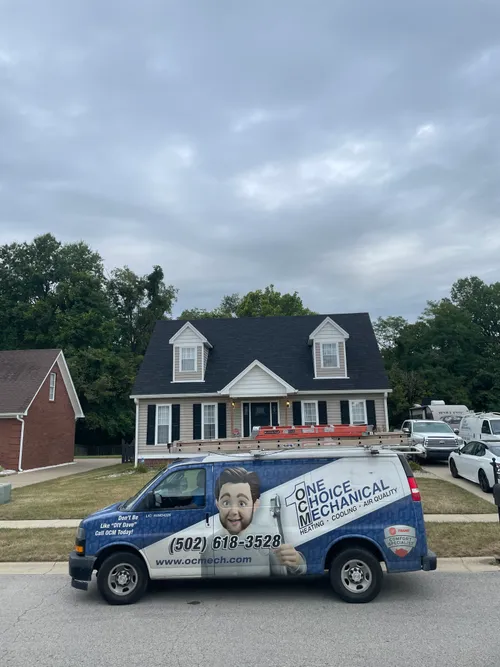
One Choice Mechanical
8611 National Tpke, Fairdale, KY 40118
One Choice Mechanical is an HVAC company serving Louisville, KY, offering a full range of heating and cooling services for residential and commercial clients. Their expertise includes installation, repair, and tune-ups for air conditioners, furnaces, heat pumps, boilers, mini splits, and geothermal heat pumps. Established in 2007, the company provides 24/7 emergency HVAC services to ensure reliable support whenever needed.

Allgeier Air
804 N English Station Rd, Louisville, KY 40223
Allgeier Air is an HVAC company based in Louisville, KY, offering design, installation, and repair services for heating and cooling systems. Their expertise includes gas furnaces, air conditioners, heat pumps, geothermal heating systems, and indoor air quality solutions. With over 70 years of experience, they also provide duct design and new construction HVAC engineering. They offer emergency repair services and specialize in geothermal heat pump systems, which use ground-source heat exchange for efficient heating and cooling. Their technicians are available to assist with air quality testing and fireplace services as well.
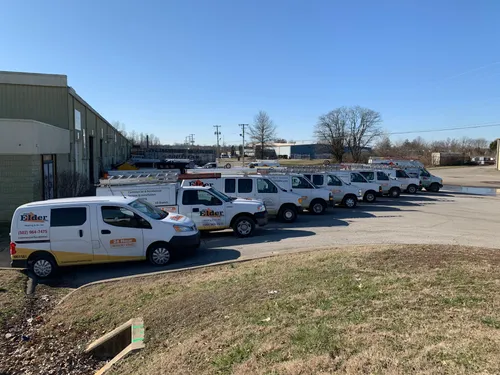
Elder Heating and Air
5800 Fern Valley Rd #100, Louisville, KY 40228
Elder Heating and Air is an HVAC company serving Louisville, KY, specializing in heating, cooling, and indoor air quality services for residential and light commercial properties. Their services include air conditioning repair and installation, furnace repair and replacement, heat pump and geothermal system installation, and ductless mini-split systems. The team has over 100 years of combined industry experience and is a Trane Comfort Specialist, capable of servicing various HVAC equipment brands. They also provide indoor air quality testing and products, home efficiency inspections, and custom sheet metal fabrication. Same day service is available with restrictions and a 3PM cutoff.
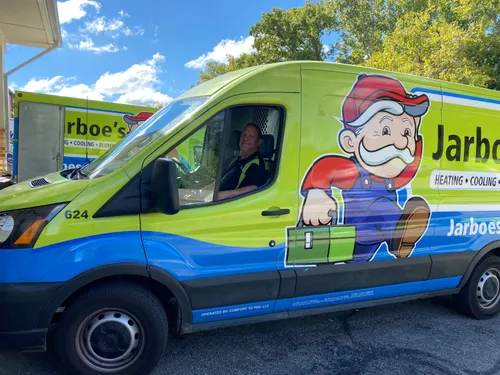
Jarboe's Heating Cooling Plumbing
2620 Gleeson Ln #4C, Jeffersontown, KY 40299
Jarboe's Heating Cooling Plumbing is a locally owned HVAC and plumbing company serving Louisville, KY. They provide a wide range of services including repair, installation, and maintenance for furnaces, heat pumps, air conditioners, boilers, mini splits, geothermal heat pumps, and duct cleaning. The company is known for its NATE-certified technicians and offers 24/7 emergency service to address heating, cooling, and plumbing issues promptly. With over 35 years of experience, Jarboe's specializes in HVAC system tune-ups, replacements, and indoor air quality improvements, ensuring homes stay comfortable year-round.
Jarboe's Plumbing, Heating & Cooling
503 Washburn Ave Suite 201B, Louisville, KY 40222
Jarboe's Plumbing, Heating & Cooling is a full-service HVAC and plumbing company serving Louisville, KY. They offer a wide range of services including repair, installation, and maintenance of air conditioners, furnaces, heat pumps, boilers, and duct cleaning. As a Carrier Factory Authorized Dealer, they provide expert installation of high-quality heating and cooling systems, including geothermal heat pumps and mini splits. With over 35 years of experience, Jarboe's is known for their NATE-certified technicians and 24/7 emergency repair availability to address urgent heating and cooling needs.
How Geothermal Systems Work in Southern Indiana
The core principle behind a geothermal heating and cooling system is remarkably simple: it uses the earth as a giant thermal battery. Below the frost line, roughly 10 feet deep, the soil in Indiana maintains a consistent temperature between 50 and 60 degrees Fahrenheit year-round. A geothermal system taps into this stable resource.
In the winter, a fluid (typically water mixed with antifreeze) circulates through a loop of pipes buried in your yard. This fluid absorbs the earth's gentle heat and carries it to a heat pump unit inside your home. The pump concentrates this low-grade heat and distributes warm air through your ductwork. In the summer, the process reverses: the system extracts heat from your home's air and transfers it into the cooler ground, providing air conditioning 1 2. This elegant exchange is what allows geothermal heat pumps to move three to five times more energy than they consume in electricity, leading to drastically lower utility bills.
Types of Ground Loop Systems
The buried pipe network, called the ground loop, is the heart of the system. The right loop configuration for your Jeffersonville home depends on your property's size, soil composition, and landscape. The three primary types are:
- Horizontal Ground Loops: This is often the most cost-effective option if space allows. Contractors excavate trenches about six feet deep in your yard, lay the piping, and backfill. A typical residential system requires 1,500 to 2,500 square feet of available land for these trenches. This is a great choice for properties with ample, clear yard space.
- Vertical Ground Loops: For homes with smaller lots, which is common in many Jeffersonville neighborhoods, vertical loops are the ideal solution. Contractors use a drilling rig to bore holes 150 to 400 feet deep. U-shaped pipes are inserted into these boreholes, which are then grouted. While the drilling cost is higher, this method minimizes surface disruption and is very effective 3.
- Pond or Lake Loops: If you have access to a sufficient body of water, this can be the most efficient loop option. Coils of pipe are submerged at the bottom of the pond or lake, which acts as a superb heat exchanger. This method avoids the need for extensive digging or drilling on your property.
The Geothermal Installation Process: What to Expect
Installing a ground-source heat pump is a significant project that requires professional expertise. Understanding the steps can help you prepare.
- Site Assessment and Design: A qualified installer will evaluate your property to determine the best loop type and size for your home's heating and cooling loads. They'll check soil conditions, available space, and local regulations.
- Ground Loop Installation: This is the major excavation phase. For a horizontal system, trenches are dug. For a vertical system, a drilling rig creates the boreholes. High-density polyethylene pipes are then placed and connected into a continuous loop.
- Heat Pump and Connection: The indoor heat pump unit is installed, typically in a basement, utility room, or garage. The ground loop pipes are connected to this unit, and the system is filled with its heat-transfer fluid.
- Distribution System Integration: The heat pump is connected to your home's ductwork to distribute conditioned air. If you don't have existing ducts, the installer can put in a new duct system or use a ductless mini-split style unit in some cases.
- System Startup and Restoration: Once everything is connected, the system is charged, tested, and balanced. Finally, the contractor will backfill all trenches or boreholes and restore your landscaping as much as possible 4.
Benefits and Financial Considerations
The decision to invest in a geothermal system involves weighing higher initial costs against long-term savings and benefits.
Upfront Investment: A complete geothermal heating and cooling system, including the ground loop, heat pump, and any necessary ductwork modifications, typically ranges from $10,000 to over $30,000. The loop installation constitutes a large portion of this cost.
Long-Term Savings and Value: The operational savings are where geothermal shines. Homeowners can save 30% to 65% on their heating and cooling energy bills compared to conventional systems 5 6 7. Many systems achieve a payback period of 5 to 10 years through these savings and available financial incentives 8 9. Furthermore, the components are incredibly durable: the indoor heat pump often lasts 20 years or more, while the underground piping can have a lifespan exceeding 50 years 9 7.
Find the perfect geothermal heat pump contractors for your needs
Get personalized recommendations and expert advice
Is a Geothermal System Right for Your Home?
Geothermal heat pumps are an excellent choice for homeowners planning to stay in their Jeffersonville residence for the long term, allowing them to reap the full benefit of energy savings. They are also ideal for new construction, where the loop installation can be seamlessly integrated into the site work. Existing homes with adequate yard space or access for drilling equipment are also strong candidates. Many local homeowners report savings of 50-60% on their heating and cooling bills after installation, along with remarkably steady and reliable comfort 10.
Maintenance and Longevity
One of the appealing aspects of geothermal HVAC systems is their low maintenance requirements. The indoor components require similar care to a standard furnace or air handler: regular filter changes and occasional professional check-ups. The buried ground loop is virtually maintenance-free due to its lack of moving parts and protected environment. This reliability contributes to the system's legendary lifespan and consistent performance decade after decade.
Frequently asked questions
Sources
Footnotes
-
How Does A Geothermal Heat Pump Work? Complete 2025 Guide - https://solartechonline.com/blog/how-does-geothermal-heat-pump-work/ ↩
-
Geothermal Heating & Cooling - Department of Energy - https://www.energy.gov/eere/geothermal/geothermal-heating-cooling ↩
-
Geothermal Heat Pump Installation: What To Expect For Your ... - https://jomory.com/geothermal-heat-pump-installation-what-to-expect-for-your-property/ ↩
-
Geothermal Heat Pumps | WBDG - https://www.wbdg.org/resources/geothermal-heat-pumps ↩
-
Your Step-by-Step Guide to Installing a Geothermal System in Indiana Before the 2025 Tax Credit Deadline - https://absolutecomfort.org/install-geothermal-system-indiana-2025-guide/ ↩
-
5 Things You Should Know about Geothermal Heat Pumps - https://www.energy.gov/cmei/articles/5-things-you-should-know-about-geothermal-heat-pumps ↩
-
Guide to Geothermal Heat Pumps - https://www.energy.gov/sites/prod/files/guide_to_geothermal_heat_pumps.pdf ↩ ↩2
-
Geothermal Heat Pumps - Department of Energy - https://www.energy.gov/energysaver/geothermal-heat-pumps ↩
-
Guide to Geothermal Heat Pumps - https://www.energy.gov/sites/prod/files/guide_to_geothermal_heat_pumps.pdf ↩ ↩2
-
Geothermal Heating, Cooling, and Hot Water Systems - https://igshpa.org/wp-content/uploads/Homeowners-Guide-to-Geothermal.pdf ↩