Find the Best Geothermal Heat Pump Contractors for Your Business
No obligation • Fast responses • Nationwide coverage

Why you can trust HVAC Firms
HVAC Firms is a leading United States resource for evaluating HVAC service providers. Our team researches companies, checks credentials, and reviews customer feedback to present clear, unbiased information. Listings and rankings are based on merit, and companies cannot pay to change our editorial content.
Search providers near you
Top Geothermal Heat Pump Contractors in Greenwood, Indiana Ranked
A geothermal heat pump, or ground-source heat pump, is one of the most efficient and sustainable ways to heat and cool your home in Greenwood. By tapping into the Earth's stable underground temperature, these systems can provide exceptional comfort year-round while significantly reducing your energy bills. This guide explains how geothermal technology works, what installation involves, and how you can find qualified local experts to evaluate your property for a system.
King of Comfort Heating & Cooling
7009 E 56th St, Indianapolis, IN 46226
King of Comfort Heating & Cooling is an HVAC company based in Indianapolis, IN, offering a wide range of heating and cooling services. Their team provides installation, repair, and maintenance for air conditioners, furnaces, heat pumps, boilers, mini splits, geothermal heat pumps, and thermostats. They emphasize comprehensive service and staying current with industry developments to meet diverse HVAC needs. The company also offers 24/7 emergency repair services to ensure reliable heating and cooling during extreme weather conditions. Their technicians handle everything from routine tune-ups to complex repairs, including cracked heat exchangers and faulty thermostats.
Mowery Heating, Cooling & Plumbing
710 E Main St, Brownsburg, IN 46112
Mowery Heating, Cooling & Plumbing is a full-service HVAC and plumbing company serving Indianapolis, IN. They offer a wide range of services including air conditioning, furnace, heat pump, mini split, and geothermal heat pump installation and repair, as well as HVAC tune-ups and thermostat installation. The company is equipped to handle complex tasks such as compressor and condenser coil checks, refrigerant management, and electrical component diagnostics. With over 20 years of experience, Mowery is known for comprehensive maintenance plans and skilled technicians who provide detailed system assessments. They also provide emergency plumbing services and have a strong focus on customer education and safety.

Williams Comfort Air - Heating Cooling Plumbing Electrical
310 West Main Street Suite 202, Greenwood, IN 46142
Williams Comfort Air - Heating Cooling Plumbing Electrical is a full-service HVAC and plumbing company serving Indianapolis, IN. They offer a wide range of services including air conditioning, furnace, heat pump, boiler, and geothermal HVAC repair and installation, as well as duct cleaning and indoor air quality solutions. The company is a Carrier Factory Authorized Dealer and employs NATE-certified technicians who provide comprehensive diagnostics and repairs. Established in 1966, Williams Comfort Air has decades of experience and provides 24/7 emergency HVAC service to ensure customers are never left without heating or cooling when they need it most.

Williams Comfort Air - Heating Cooling Plumbing Electrical
114 S Center St, Plainfield, IN 46168
Williams Comfort Air - Heating Cooling Plumbing Electrical is a full-service HVAC and plumbing company serving Indianapolis, IN. They offer a wide range of services including air conditioner, furnace, heat pump, boiler, and geothermal heat pump repair and installation, as well as duct cleaning and indoor air quality services. The company is a Carrier Factory Authorized Dealer and employs NATE-certified technicians who handle repairs, maintenance, and replacements for various heating and cooling systems. Williams Comfort Air provides 24/7 emergency HVAC service to address urgent heating and cooling needs at any time.

Control Tech Heating, Air, & Plumbing
1200 Parkway Dr, Zionsville, IN 46077
Control Tech Heating, Air, & Plumbing is a family-owned HVAC and plumbing contractor based near Indianapolis, IN. Since 1983, they have provided residential and commercial heating, air conditioning, geothermal, and plumbing services in Indianapolis and surrounding communities. Their capabilities include installation and repair of air conditioners, furnaces, heat pumps, and geothermal systems, reflecting decades of experience in the industry.
How Geothermal Heating and Cooling Works
At its core, a geothermal system is a heat exchange process. Unlike traditional air-source heat pumps that pull heat from the outside air, a ground-source heat pump exchanges heat with the earth. Just a few feet below the surface, the ground maintains a nearly constant temperature of 50-60°F year-round, regardless of the weather above 1 2. This provides a reliable and efficient thermal resource.
In the winter, a fluid (typically water mixed with antifreeze) circulates through a loop of pipes buried underground, absorbing the Earth's steady warmth. The geothermal heat pump then concentrates this low-grade heat and transfers it to your home's air or water distribution system 3. In the summer, the process reverses: the system extracts heat from your home and transfers it into the cooler ground, effectively providing air conditioning 4. This constant, reliable source temperature makes geothermal systems far more efficient than conventional systems that must work harder in extreme outdoor temperatures 4.
Types of Geothermal Ground Loops
The underground pipe system, or ground loop, is the heart of the installation. The right type for your Greenwood property depends on your land, soil conditions, and budget. There are two main categories: closed-loop and open-loop systems.
Closed-Loop Systems
This is the most common configuration for residential properties. A sealed loop of high-density polyethylene pipe is buried and filled with a heat-transfer fluid. The fluid circulates continuously, exchanging heat with the ground without ever mixing with groundwater. There are three primary closed-loop designs:
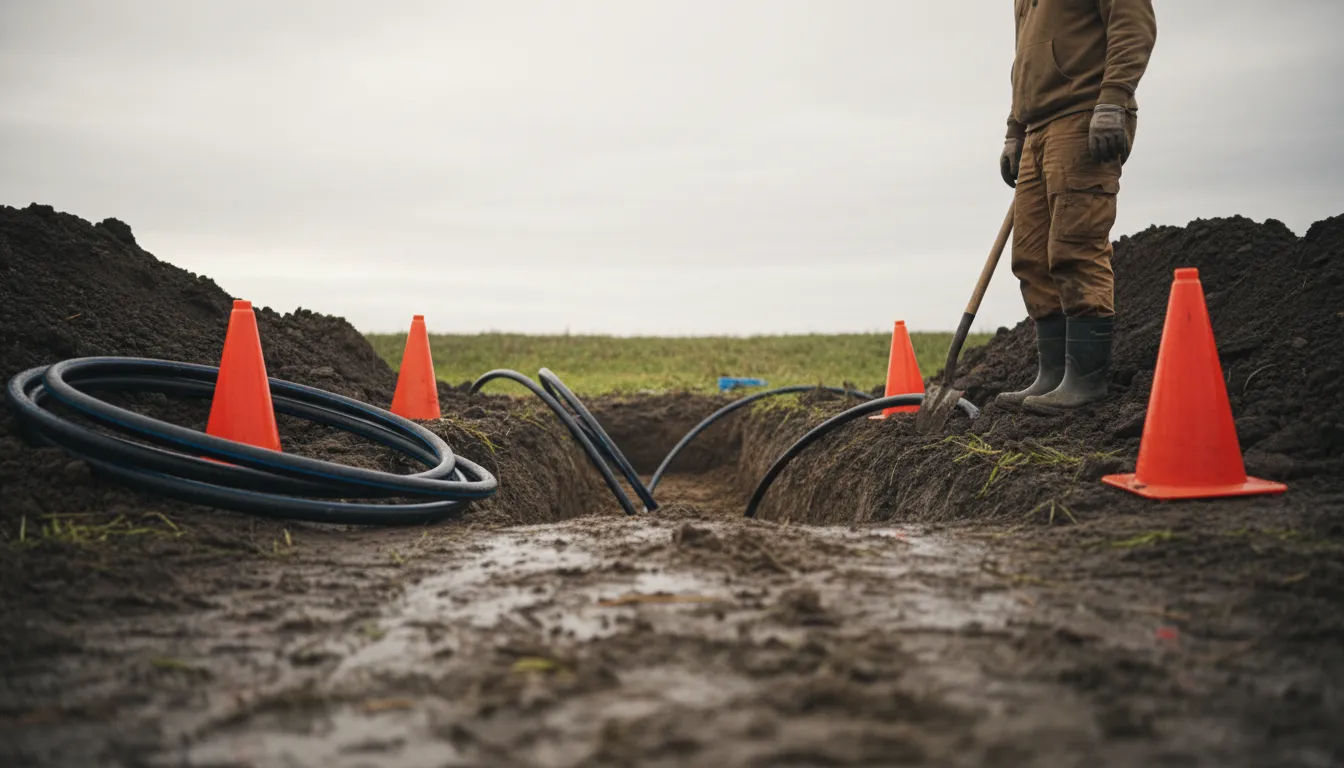
- Horizontal Loops: Pipes are laid in trenches dug 4 to 6 feet deep. This is often the most cost-effective installation method but requires a significant amount of open, clear land 5.
- Vertical Loops: For properties with limited yard space, like many in Greenwood, vertical loops are ideal. Boreholes are drilled 150 to 450 feet deep, and U-shaped loops of pipe are inserted into each hole 6. While drilling costs can be higher, this method minimizes land use.
- Pond/Lake Loops: If you have a suitable body of water, coils of pipe can be submerged at the bottom. This can be a very efficient and lower-cost option, as water is an excellent heat transfer medium 7.
Open-Loop Systems
This design uses groundwater from a well or spring as the direct heat exchange fluid. The water is pumped through the heat pump and then discharged back into a well, recharge basin, or approved surface body of water. While potentially very efficient, open-loop systems require an abundant supply of clean water and are subject to more local regulations regarding water use and discharge.
The Installation Process for Greenwood Homes
Installing a residential geothermal system is a significant project that requires careful planning and professional expertise. The process typically follows these key steps 8:
- Site Evaluation and Design: A qualified installer will assess your property, considering soil composition, lot size, landscaping, and your home's heating and cooling load. This evaluation determines the most effective and feasible type of ground loop.
- Loop Installation: This is the major excavation phase. For a horizontal system, trenches are dug. For a vertical system, a drilling rig creates the boreholes. The piping is then placed, connected, and pressure-tested to ensure there are no leaks.
- Indoor Unit Installation: The geothermal heat pump unit-which is typically about the size of a small refrigerator-is installed in your basement, utility closet, or garage. It is connected to your home's existing ductwork or to a new hydronic (water-based) distribution system.
- System Connection and Startup: The underground loops are connected to the heat pump inside your home. The loop is filled with fluid, the system is purged of air, and the electrical connections are made. Finally, the system is started, tested, and balanced to ensure optimal performance.
The choice between trenching for a horizontal loop and drilling for a vertical loop is a major decision. Trenching generally has a lower upfront cost but requires more land and can disrupt a larger area of your yard temporarily 9. Drilling is less invasive to the surface landscape and is perfect for smaller lots, though the cost of the drilling equipment and operation can be higher.
Find the perfect geothermal heat pump contractors for your needs
Get personalized recommendations and expert advice
Benefits, Costs, and Long-Term Value
Understanding the full financial picture is crucial when considering a geothermal system.
Upfront Investment: The total installed cost for a complete geothermal heating and cooling system in Greenwood can range from $10,000 to over $30,000 10. This wide range depends on your home's size, the chosen loop type (with vertical loops typically adding cost), the system's capacity, and the complexity of the installation. The ground loop itself often represents a substantial portion of this initial investment.
Operational Savings and Incentives: The primary financial benefit comes from dramatically lower operating costs. Geothermal heat pumps can reduce energy consumption for heating and cooling by 25% to 65% compared to conventional systems 11 12. These monthly savings on your utility bills help offset the higher initial cost over time. Furthermore, federal tax credits, such as the Residential Clean Energy Credit, can significantly reduce your net cost. Always consult with your installer and a tax professional about current federal, state, and local incentives.
Durability and Lifespan: One of the most compelling advantages is the system's longevity. The underground polyethylene piping used in closed-loop systems is incredibly durable and often comes with warranties of 50 years or more-and can realistically last for generations 13. The indoor heat pump unit typically has a lifespan of 20 to 25 years, which is longer than most standard air conditioners and furnaces 13.
Environmental Impact: By using renewable thermal energy from the ground and consuming far less electricity, a geothermal system drastically reduces your home's carbon footprint. It eliminates on-site fossil fuel combustion (like a natural gas furnace) and uses a refrigerant that stays contained in a sealed, indoor unit.
Is a Geothermal System Right for Your Home?
Geothermal technology offers remarkable benefits, but it's not a one-size-fits-all solution. The ideal candidate is a homeowner planning to stay in their home long enough to realize the long-term savings, has a property suitable for a ground loop (or is willing to invest in vertical drilling), and is motivated by both comfort and sustainability. The key to a successful project is partnering with a certified, experienced installer who can provide an accurate site assessment, a detailed proposal, and a clear explanation of the expected costs, savings, and return on investment.
Frequently asked questions
Sources
Footnotes
-
Geothermal Heat Pumps | WBDG - https://www.wbdg.org/resources/geothermal-heat-pumps ↩
-
How Geothermal Heat Pumps Work - https://www.youtube.com/watch?v=XxlTnBukweI&t=37 ↩
-
Geothermal (Ground Source) Heat Pumps - NY.gov - https://cleanheat.ny.gov/geothermal-heat-pumps/ ↩
-
Geothermal vs. Air Source Heat Pumps | Northern VA HVAC - https://www.unitedairtemp.com/blog/geothermal-vs-air-source-heat-pumps/ ↩ ↩2
-
Geothermal heat pumps: The ultimate guide to ground-source ... - https://termo-plus.com/blog/geothermal-ultimate-guide-to-ground-source-heat-pumps/ ↩
-
Geothermal heat pumps are among the most earth-friendly home ... - https://www.whispervalleyaustin.com/geothermal-heat-pumps-are-among-the-most-earth-friendly-home-energy-sources-experts-say/ ↩
-
Geothermal Heat Pumps - Department of Energy - https://www.energy.gov/energysaver/geothermal-heat-pumps ↩
-
All You Need to Know About Home Geothermal Heating & ... - https://dandelionenergy.com/all-you-need-to-know-about-home-geothermal-heating-cooling ↩
-
How My Geothermal Heat Pump Really Performed (2 Years) - https://www.youtube.com/watch?v=DTb7TKJzr5g&vl=en ↩
-
Your Step-by-Step Guide to Installing a Geothermal System in Indiana Before the 2025 Tax Credit Deadline - https://absolutecomfort.org/install-geothermal-system-indiana-2025-guide/ ↩
-
5 Things You Should Know about Geothermal Heat Pumps - https://www.energy.gov/cmei/articles/5-things-you-should-know-about-geothermal-heat-pumps ↩
-
Guide to Geothermal Heat Pumps - https://www.energy.gov/sites/prod/files/guide_to_geothermal_heat_pumps.pdf ↩
-
How Do Geothermal Systems Work for Residential Homes? - https://www.davisheat.com/blog/how-do-geothermal-systems-work-for-residential-homes/ ↩ ↩2