Find the Best Geothermal Heat Pump Contractors for Your Business
No obligation • Fast responses • Nationwide coverage

Why you can trust HVAC Firms
HVAC Firms is a leading United States resource for evaluating HVAC service providers. Our team researches companies, checks credentials, and reviews customer feedback to present clear, unbiased information. Listings and rankings are based on merit, and companies cannot pay to change our editorial content.
Search providers near you
Top Geothermal Heat Pump Contractors in Gary, Indiana Ranked
A geothermal heat pump is a highly efficient heating and cooling system that uses the earth's stable underground temperature to regulate your home's climate. For Gary residents, this technology offers a powerful way to cut energy bills and reduce environmental impact. This guide explains how these ground-source systems work, what installation involves, and how you can find qualified local experts to assess your property's potential.

How Geothermal Heating and Cooling Works
A geothermal system, often called a ground-source heat pump, doesn't create heat by burning fuel. Instead, it moves existing heat. The earth below the frost line maintains a nearly constant temperature year-round, typically between 50-60°F in Indiana 1. This stable thermal mass is the system's powerhouse.
In the winter, a fluid (usually water mixed with antifreeze) circulates through a loop of pipes buried in your yard. This fluid absorbs the earth's warmth. The heat pump then concentrates this low-grade heat and distributes it as warm air through your home's ductwork or as hot water through radiant floor systems 2. In the summer, the process reverses: the system extracts heat from your home and transfers it into the cooler ground, providing air conditioning 3. This elegant exchange of heat with the ground is what makes these systems so remarkably efficient.
Types of Ground Loop Systems
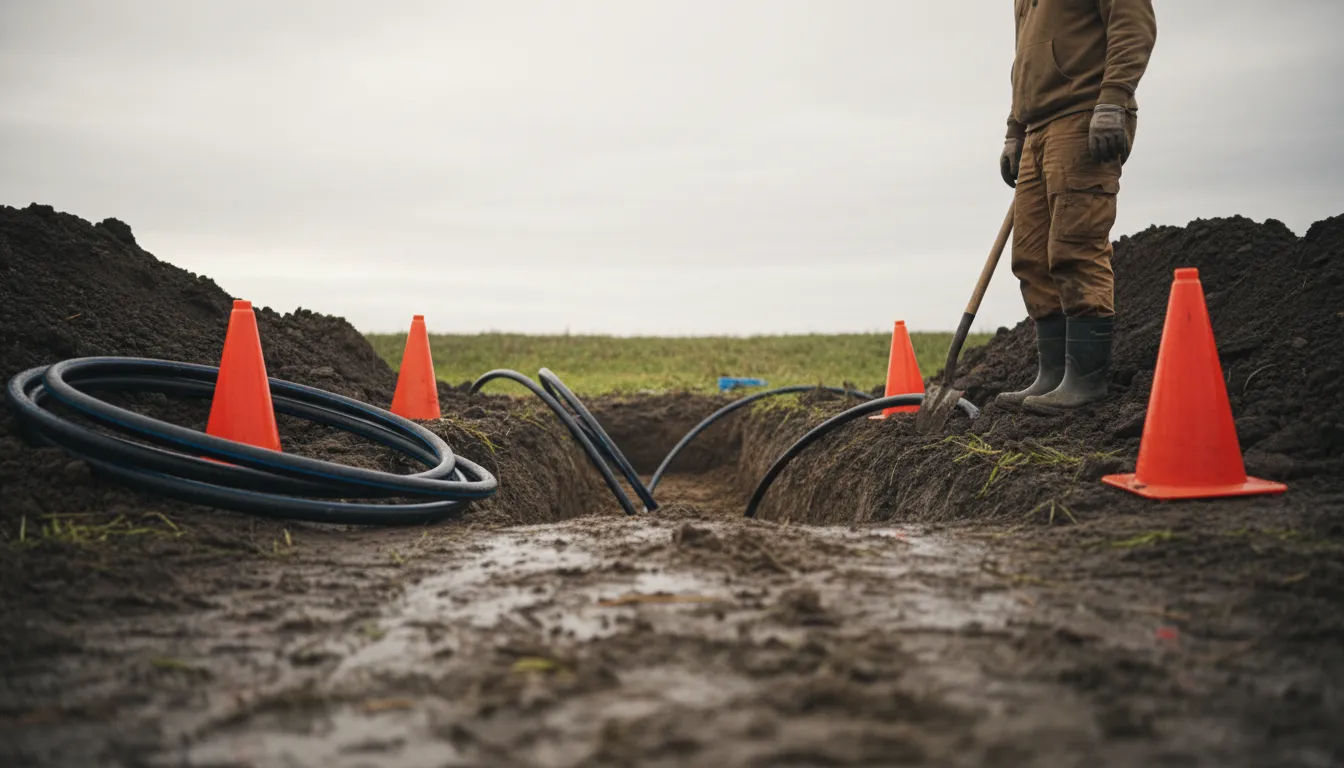
The buried pipe network, or ground loop, is the critical component that facilitates heat exchange with the earth. The right type for your Gary home depends on soil conditions, land availability, and budget. The three main configurations are:
- Closed-Loop Systems: This is the most common residential setup. A sealed, continuous loop of high-density polyethylene pipe circulates the heat transfer fluid. There are two primary closed-loop designs:
- Vertical Loops: For properties with limited yard space, like many in urban Gary, vertical loops are the ideal solution. Holes are drilled 150 to 400 feet deep, and U-shaped loops of pipe are inserted into each borehole. While drilling costs are higher, this method minimizes landscape disruption and is effective in most soil and rock types.
- Open-Loop Systems: This system uses groundwater from a well or a pond as the heat exchange fluid. After passing through the heat pump, the water is returned to a second well or discharged to a pond. While potentially very efficient, open-loop systems are less common due to water availability, quality requirements, and local regulations6.
Key Considerations for Gary Homeowners
Installing a geothermal unit is a significant investment that pays off for decades. Several local factors influence the feasibility and design of your system.
- Soil and Geology: Indiana's soil is generally suitable for geothermal installations. However, the specific composition on your property-such as the presence of clay, sand, or bedrock-can affect drilling speed, loop length requirements, and overall installation cost7 8. A reputable installer will assess these conditions.
- Property Size and Layout: The available land directly dictates your loop options. A larger, clear yard might accommodate a cost-effective horizontal loop. For smaller urban lots, a vertical loop system is often the only viable choice, despite higher upfront drilling costs.
- New Construction vs. Retrofit: Integrating a ground-source heat pump is most straightforward during the construction of a new home. However, retrofitting an existing home in Gary is entirely possible. The process involves connecting the new geothermal heat pump to your existing ductwork or hydronic system, which may need evaluation or modification.
Find the perfect geothermal heat pump contractors for your needs
Get personalized recommendations and expert advice
The Financial and Efficiency Picture
The decision to install a geothermal system is a long-term financial strategy centered on swapping high monthly operating costs for a higher initial capital cost.
- Exceptional Efficiency: Geothermal heat pumps are 300-500% efficient, meaning they move 3 to 5 units of heat for every 1 unit of electricity they consume9 10. This contrasts sharply with high-efficiency furnaces, which top out at around 98% efficiency. This efficiency translates directly into lower utility bills.
- Operational Savings: Homeowners can see reductions in heating and cooling energy bills of up to 65% compared to traditional HVAC systems11 12. A Purdue University study in Lafayette, Indiana, documented a home's significant decrease in natural gas consumption after installing a heat pump system, despite a predictable increase in electricity use13.
- Upfront Costs and Payback: For a typical 2,000-square-foot home in Gary, a complete geothermal system installation can range from $20,000 to over $40,00014. The wide range depends on the loop type, drilling conditions, and home specifics. The payback period-the time it takes for energy savings to equal the installation cost-typically falls between 4 and 15 years15 16. This period is influenced by local energy prices, the system's efficiency, and available incentives.
- Longevity and Value: The indoor heat pump components often last 20-25 years, while the underground piping can have a lifespan of 50 years or more. This durability, combined with dramatically lower energy costs, can also increase a home's resale value.
Finding the Right Local Expertise
Selecting a qualified installer is the most important step in your geothermal journey. Look for contractors with specific experience in ground-source heat pump design and installation. They should conduct a detailed load calculation for your home and provide a site assessment to determine the best loop type. Ask for references from past geothermal projects and verify they are licensed and insured. A professional will also help you navigate any local permits required in Gary and provide clear information on federal tax credits and potential utility rebates that can substantially lower your net cost.
Frequently asked questions
Sources
Footnotes
-
Geothermal (Ground Source) Heat Pumps - NY.gov - https://cleanheat.ny.gov/geothermal-heat-pumps/ ↩
-
How Do Geothermal Systems Work for Residential Homes? - https://www.davisheat.com/blog/how-do-geothermal-systems-work-for-residential-homes/ ↩
-
How it Works - https://www.climatemaster.com/homeowner/side-links/how-it-works ↩
-
All You Need to Know About Home Geothermal Heating & Cooling - Dandelion Energy - https://dandelionenergy.com/all-you-need-to-know-about-home-geothermal-heating-cooling ↩
-
Geothermal heat pumps are among the most earth-friendly home ... - https://www.whispervalleyaustin.com/geothermal-heat-pumps-are-among-the-most-earth-friendly-home-energy-sources-experts-say/ ↩
-
Geothermal Heat Pumps - Department of Energy - https://www.energy.gov/energysaver/geothermal-heat-pumps ↩
-
Geothermal heat pumps: The ultimate guide to ground-source ... - https://termo-plus.com/blog/geothermal-ultimate-guide-to-ground-source-heat-pumps/ ↩
-
Falcon Engineering - https://falcon.ca/an-introduction-to-geoexchange ↩
-
5 Things You Should Know about Geothermal Heat Pumps - https://www.energy.gov/cmei/articles/5-things-you-should-know-about-geothermal-heat-pumps ↩
-
Guide to Geothermal Heat Pumps - https://www.energy.gov/sites/prod/files/guide_to_geothermal_heat_pumps.pdf ↩
-
Geothermal Heat Pumps - EnergySmart CNY - https://www.energysmartcny.org/heat-pumps/geothermal/ ↩
-
How It Works: Geothermal Heat Pump 101 - GeoComfort Blog - https://geocomfort.com/blog/how-it-works-geothermal-heat-pump-101 ↩
-
Home Heat Pump Case Study 7: Air-Source Heat Pump with an Existing Furnace - https://sustainabletechnologies.ca/reports/heat-pump-case-study-7/ ↩
-
Geothermal Heat Pump Guide: Installation Costs, Types And Benefits - https://modernize.com/hvac/heating-repair-installation/heat-pump/geothermal ↩
-
Everything You Need to Know About Geothermal Heat Pumps - https://www.familyhandyman.com/article/everything-you-need-to-know-about-geothermal-heat-pumps/ ↩
-
Geothermal Heat Pumps | WBDG - https://www.wbdg.org/resources/geothermal-heat-pumps ↩