Find the Best Geothermal Heat Pump Contractors for Your Business
No obligation • Fast responses • Nationwide coverage

Why you can trust HVAC Firms
HVAC Firms is a leading United States resource for evaluating HVAC service providers. Our team researches companies, checks credentials, and reviews customer feedback to present clear, unbiased information. Listings and rankings are based on merit, and companies cannot pay to change our editorial content.
Search providers near you
Top Geothermal Heat Pump Contractors in Boise, Idaho Ranked
A geothermal heat pump, often called a ground-source heat pump, is a highly efficient system that uses the earth's stable temperature to heat and cool your home. For Boise residents, this technology is particularly relevant, tapping into the region's unique geology to provide year-round comfort with significant energy savings. This guide explains how these systems work, the installation process, and how to connect with qualified local professionals who can assess your property for this sustainable upgrade.
A-1 Heating, Air Conditioning & Electric
327 N Linder Rd, Meridian, ID 83642
A-1 Heating, Air Conditioning & Electric is a heating, cooling, and electrical contractor serving Boise, ID, and the surrounding Treasure Valley area. Established in 1956, the company offers a wide range of HVAC services including furnace and heat pump repair, AC installation, geothermal heat pump solutions, indoor air quality improvements, and electrical work for both residential and commercial clients. They provide 24/7 emergency HVAC services and have expertise in installing and maintaining energy-efficient systems tailored to each property's needs.
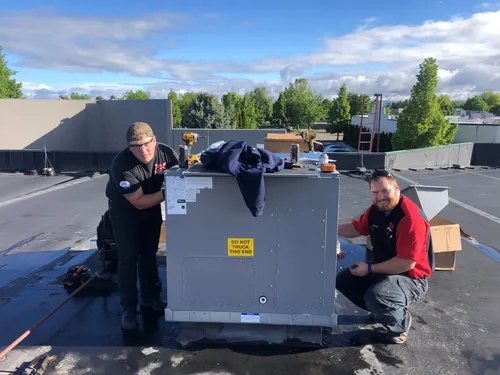
Fox Heating and Cooling
4255 Banner St, Boise, ID 83709
Fox Heating and Cooling is an HVAC contractor based in Boise, ID, offering a range of heating and cooling services for residential and commercial customers. They provide installation, repair, and maintenance for air conditioners, furnaces, heat pumps, boilers, mini split systems, and geothermal heat pumps. As a Carrier® dealer, they supply various indoor comfort products including programmable thermostats, humidifiers, air cleaners, and zoning systems. Fox Heating and Cooling also specializes in indoor air quality solutions and services all makes and models. The company offers 24/7 emergency service and preventative maintenance agreements to help maintain system performance.
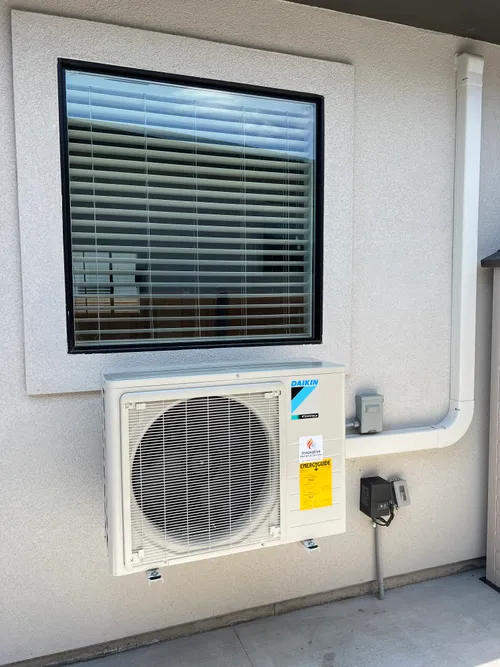
Innovative Mechanical Solutions
Boise, ID
Innovative Mechanical Solutions is a heating and cooling contractor serving Boise, ID, and the surrounding Treasure Valley area. With over 25 years of experience, they offer a full range of HVAC services including installation, repair, and maintenance of air conditioning, furnaces, heat pumps, geothermal systems, refrigeration, venting, and indoor air quality solutions. Their team is equipped to handle both residential and commercial projects, providing specialized services such as air duct installation and repair, gas line services, and walk-in cooler and freezer installations. Innovative Mechanical Solutions also provides 24/7 emergency response to address urgent HVAC needs.
The Trade Source Mechanical LLC
415 E 51st St, Garden City, ID 83714
The Trade Source Mechanical LLC is a veteran-owned HVAC company based in Boise, ID, offering a full range of heating, cooling, ventilation, refrigeration, and plumbing services for residential and commercial customers. They specialize in installing and servicing traditional ducted systems, ductless mini-splits, geothermal heat pumps, and other high-efficiency mechanical systems. With over 40 years of combined experience, the company provides 24/7 service and supports energy-efficient solutions including solar and water source heat pumps. Their team includes veterans and active military personnel, emphasizing quality workmanship and licensed expertise.
The Comfort Source
4419 W, 4419 Marvin St, Boise, ID 83705
The Comfort Source is a full-service heating and air conditioning company located in Boise, ID. With nearly 30 years of experience, they specialize in the repair, maintenance, and installation of furnaces, air conditioners, heat pumps, and related systems for residents and businesses in the Treasure Valley. As an authorized dealer of American Standard Heating & Air Conditioning, they offer reliable products and services including geothermal systems, ductless setups, air quality systems, and thermostat installations.
How Geothermal Heating and Cooling Works
The principle behind a geothermal system is elegant in its simplicity. Just a few feet below the surface, the earth maintains a nearly constant temperature between 50° and 60°F year-round, regardless of Boise's hot summers or chilly winters. A geothermal heat pump harnesses this stable thermal energy through a process of heat exchange.
The system has three main components:
- The Ground Loop: This is a network of pipes buried in your yard, circulating a water-based solution. In the winter, this fluid absorbs the earth's warmth.
- The Heat Pump Unit: Located inside your home, this unit concentrates the low-grade heat from the fluid, raising it to a temperature suitable for heating your living spaces via your existing ductwork or radiant floor system.
- The Distribution System: This is your home's internal network (like ductwork) that delivers the conditioned air.
In summer, the process reverses. The system extracts heat from your home, transfers it to the fluid in the ground loop, and deposits it into the cooler earth, effectively providing air conditioning 1 2 3. This cycle is what makes ground-source heat pumps so efficient, moving 3 to 5 units of energy for every 1 unit of electricity they consume-an efficiency rate of 300-500% 4.
Boise's Unique Geothermal Advantage
Boise sits on a geological gem that makes geothermal energy a standout choice. The city is famously built over a hot underground river, with water temperatures in the East End area reaching approximately 177°F 5. While most residential geothermal heat pump systems use closed ground loops (described below), this abundant geothermal resource underscores the region's inherent compatibility with earth-coupled technology.
The consistent ground temperature beneath the Treasure Valley provides an ideal "battery" for heat exchange, ensuring geothermal systems operate with remarkable efficiency regardless of the season 6. This local advantage means systems installed here are poised to deliver on their promise of reduced energy consumption and lower utility bills.
Types of Geothermal Systems
There are two primary categories of residential geothermal systems, each suited to different property conditions.
Closed-Loop Systems
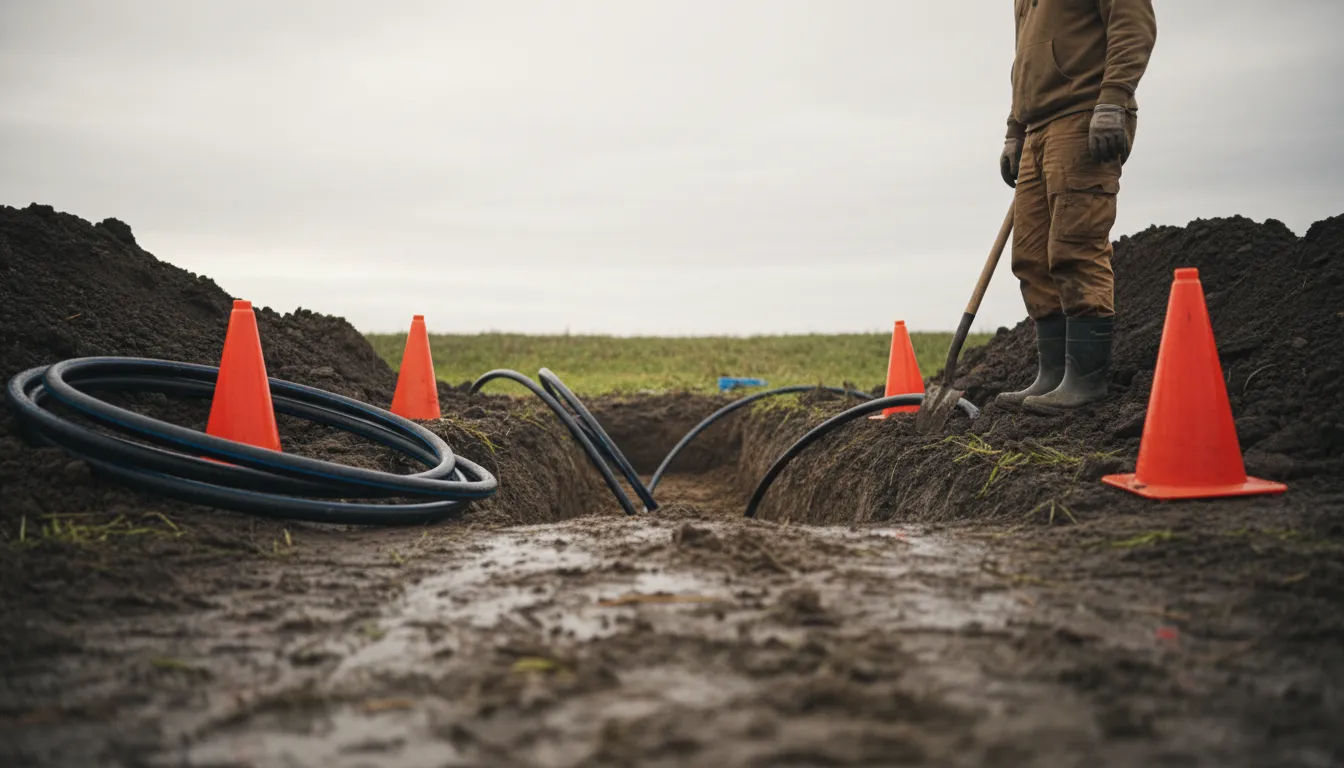
This is the most common type of installation for homes. A sealed loop of high-density polyethylene pipe is buried in the ground and filled with an environmentally friendly antifreeze solution that circulates continuously. There are two main configurations:
- Horizontal Closed-Loop: Pipes are laid in trenches dug 4 to 6 feet deep. This requires a larger amount of available land but typically involves lower excavation costs than drilling 7. It's a good option for properties with ample yard space.
- Vertical Closed-Loop: Pipes are inserted into boreholes drilled 100 to 400 feet deep and connected at the bottom with a U-bend. This is ideal for smaller urban or suburban lots in Boise, as it minimizes landscape disruption, though the drilling itself is a more specialized and costly process 8 9 10.
Open-Loop Systems
This system uses groundwater from a well as the heat exchange fluid. Water is pumped from the aquifer, run through the heat pump to exchange heat, and then discharged back into a second "return" well or a suitable surface body of water 11. This option can be highly efficient but is less common because it requires a sufficient supply of clean water and compliance with local codes regarding water discharge.
Find the perfect geothermal heat pump contractors for your needs
Get personalized recommendations and expert advice
The Installation Process: What to Expect
Installing a geothermal heating and cooling system is a significant project that requires professional expertise. The process typically follows these key stages:
- Site Assessment and Design: A qualified installer will evaluate your property, considering soil composition, lot size, landscaping, and your home's heating and cooling load. This step is crucial for determining the right type and size of the ground loop and heat pump.
- Ground Loop Installation: This is the major excavation phase. For a horizontal system, trenches are dug. For a vertical system, a drilling rig is used to create the boreholes. The pipe network is then placed, connected, and pressure-tested to ensure integrity before the trenches are backfilled.
- Indoor Unit Installation: The geothermal heat pump unit, which is typically about the size of a small refrigerator, is installed in your basement, utility room, or garage. It is connected to the ground loop, your home's electrical system, and the existing ductwork or air distribution system.
- System Startup and Commissioning: Once everything is connected, the system is filled, purged of air, and started. The contractor will test and balance the system to ensure it operates at peak efficiency and provides even comfort throughout your home 12.
Costs, Savings, and Long-Term Value
The upfront investment for a geothermal system in Boise is typically higher than for a conventional furnace and air conditioner, often ranging from $20,000 to $40,000 or more, depending on system size, loop type, and property characteristics 13.
However, this cost is balanced by substantial long-term benefits:
- Dramatic Energy Savings: By leveraging the earth's free thermal energy, geothermal heat pumps can reduce energy consumption for heating and cooling by up to 65% compared to standard systems 14 15. This translates to significantly lower monthly utility bills.
- High Efficiency and Durability: With fewer mechanical parts exposed to the elements (the noisy condenser fan of a standard AC is eliminated), the indoor heat pump unit often lasts 20-25 years, while the underground piping can have a lifespan of 50+ years.
- Quiet Operation and Comfort: These systems operate very quietly and provide consistent, draft-free comfort by delivering steady airflow at moderate temperatures.
- Environmental Benefits: By using renewable thermal energy from the ground and electricity, a geothermal system drastically reduces a home's carbon footprint associated with heating and cooling.
Financial incentives, such as the federal residential energy tax credit, can also help offset the initial installation cost, improving the return on investment over time.
Frequently asked questions
Sources
Footnotes
-
How Does A Geothermal Heat Pump Work? Complete 2025 Guide - https://solartechonline.com/blog/how-does-geothermal-heat-pump-work/ ↩
-
All You Need to Know About Home Geothermal Heating & Cooling - Dandelion Energy - https://dandelionenergy.com/all-you-need-to-know-about-home-geothermal-heating-cooling ↩
-
How Does a Geothermal System Work? - https://www.climatemaster.com/homeowner/side-links/how-it-works ↩
-
Guide to Geothermal Heat Pumps - https://www.energy.gov/sites/prod/files/guide_to_geothermal_heat_pumps.pdf ↩
-
The Inside Scoop on Boise's Geothermal Heat - https://www.weknowboise.com/blog/geothermal-in-boise.html ↩
-
Geothermal District Heating & Cooling - Department of Energy - https://www.energy.gov/eere/geothermal/geothermal-district-heating-cooling ↩
-
Geothermal Heat Pumps - Department of Energy - https://www.energy.gov/energysaver/geothermal-heat-pumps ↩
-
Geothermal Heat Pump Installation: What To Expect For Your Property - https://jomory.com/geothermal-heat-pump-installation-what-to-expect-for-your-property/ ↩
-
4 Types of Geothermal Air Conditioning Systems for Your Home - https://gopaschal.com/resources/4-types-of-geothermal-systems-for-residential-use/ ↩
-
Ground-Source Heat Pumps | Building America Solution Center - https://basc.pnnl.gov/resource-guides/ground-source-heat-pumps ↩
-
GEO-HEAT CENTER - https://oemr.idaho.gov/wp-content/uploads/2016/06/geo-heat_pre-reasibility_study_id_fish_game_hq.pdf ↩
-
Geothermal Ground Loop FAQs - Dandelion Energy - https://dandelionenergy.com/geothermal-ground-loop-frequently-asked-questions ↩
-
Geothermal Heat Pump Guide: Installation Costs, Types And Benefits - https://modernize.com/hvac/heating-repair-installation/heat-pump/geothermal ↩
-
5 Things You Should Know about Geothermal Heat Pumps - https://www.energy.gov/cmei/articles/5-things-you-should-know-about-geothermal-heat-pumps ↩
-
Top 5 Benefits Of Installing A Geothermal System In Boise - https://westernhvac.com/top-5-benefits-of-installing-a-geothermal-system/ ↩