Find the Best Geothermal Heat Pump Contractors for Your Business
No obligation • Fast responses • Nationwide coverage

Why you can trust HVAC Firms
HVAC Firms is a leading United States resource for evaluating HVAC service providers. Our team researches companies, checks credentials, and reviews customer feedback to present clear, unbiased information. Listings and rankings are based on merit, and companies cannot pay to change our editorial content.
Search providers near you
Top Geothermal Heat Pump Contractors in Winter Garden, Florida Ranked
Geothermal heat pumps, often called ground-source heat pumps or geoexchange systems, are a highly efficient method for heating and cooling your home by leveraging the earth's stable underground temperature. For Winter Garden residents, this technology offers a powerful way to achieve consistent comfort while dramatically reducing energy bills and environmental impact. This guide explains how geothermal systems work, their benefits for our local climate, and how you can find qualified professionals to evaluate and install a system for your property.
Heating & Cooling | Mafer AC
1317 Edgewater Dr Suite 3594, Orlando, FL 32804
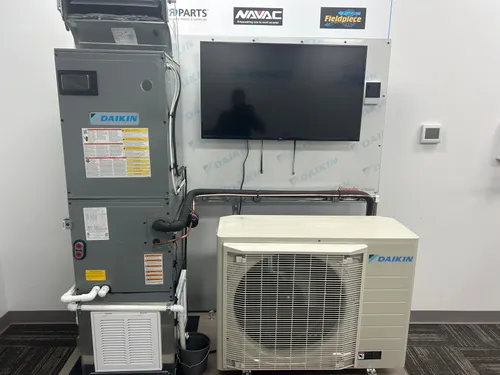
Heating & Cooling | Mafer AC is an HVAC company based in Orlando, FL, providing a wide range of heating and cooling services. They offer installation, repair, and maintenance for air conditioners, furnaces, heat pumps, boilers, and geothermal systems, along with duct cleaning and indoor air quality services. The company is known for handling both residential and commercial HVAC needs with certified professionals. Established in 2021, Mafer AC serves the Central Florida area and provides 24/7 emergency support for urgent HVAC issues.
Ingenuity Air
2785 Wrights Rd #1133, Oviedo, FL 32765
Ingenuity Air is an HVAC contractor serving Orlando, FL, specializing in residential and commercial HVAC installation, repair, and maintenance. They provide services for air conditioning, furnaces, heat pumps, boilers, mini splits, and geothermal heat pumps. The company covers the Orlando area including Oviedo and Winter Park, offering comprehensive HVAC solutions to keep homes and businesses comfortable year-round.
How Geothermal Heating and Cooling Works in Florida
The core principle of a geothermal system is simple: it uses the earth as a giant thermal battery. While air temperatures in Florida swing from hot summers to mild winters, the ground just a few feet below the surface maintains a remarkably constant temperature of 72-76°F year-round. A geothermal heat pump capitalizes on this stability.
In the winter, the system circulates a fluid through a loop of pipes buried in the ground. This fluid absorbs the earth's natural warmth. The now-warmed fluid is brought back to an indoor heat pump unit, which concentrates the heat and transfers it to your home's air distribution system. In the summer, the process reverses: the system extracts heat and humidity from your indoor air and transfers it into the cooler ground, effectively using the earth as a heat sink to provide air conditioning. This elegant heat exchange process is what makes geothermal technology so remarkably efficient.
Types of Geothermal Ground Loop Systems
The underground pipe network, known as the ground loop, is the heart of the system. The right type for your Winter Garden home depends on your soil conditions, lot size, and budget. There are two primary categories: closed-loop and open-loop systems.
Closed-Loop Systems
Most residential installations use a closed-loop system, where a water-antifreeze solution is continuously circulated through sealed, high-density polyethylene pipes. There are two main configurations:
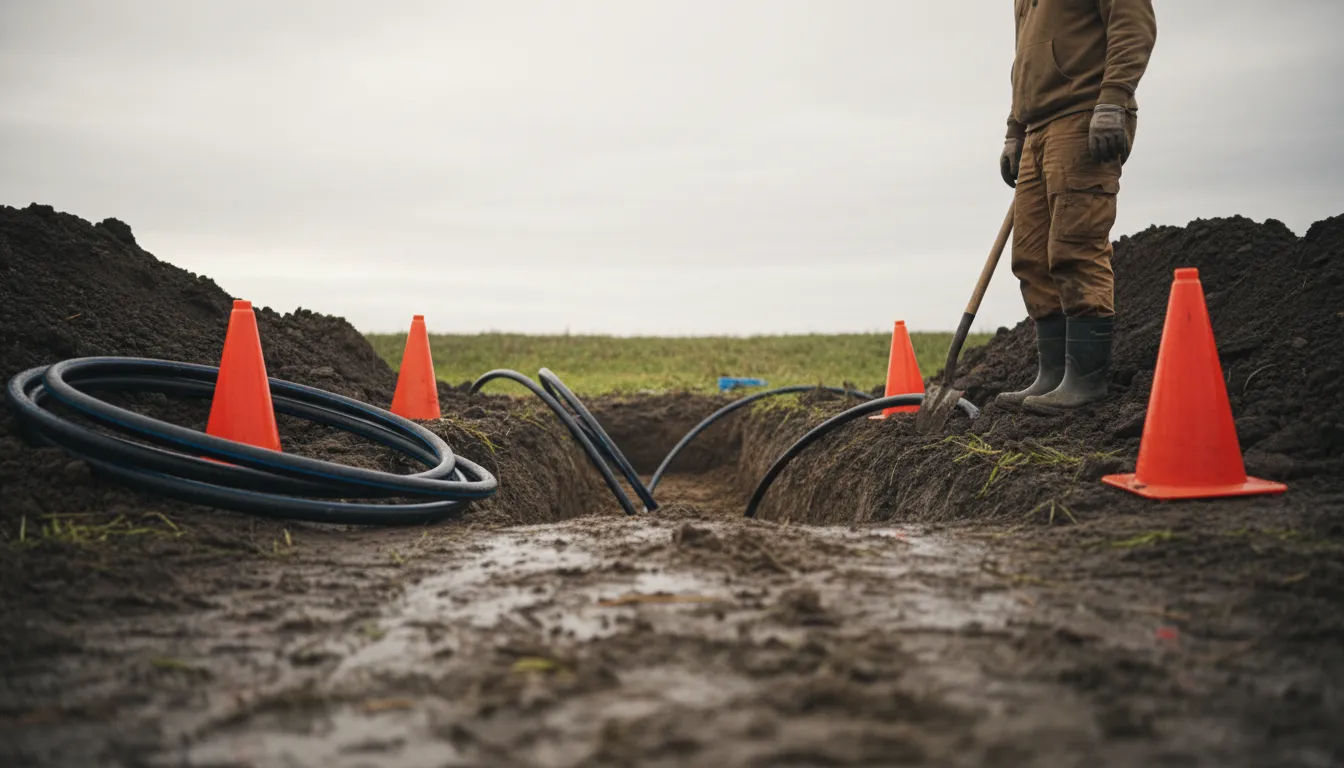
- Horizontal Loops: Pipes are laid in trenches that are typically 5 to 8 feet deep. This configuration requires a larger amount of land but is often less expensive to install than vertical loops where trenching is feasible.
- Vertical Loops: For properties with limited space, such as smaller urban lots common in parts of Winter Garden, vertical loops are the ideal solution. Boreholes are drilled 150 to 250 feet deep, and U-shaped loop pipes are inserted into each hole. The holes are then backfilled with a special grout to ensure good thermal contact.
Open-Loop Systems
An open-loop system uses groundwater from a well as the direct heat exchange fluid. After passing through the heat pump, the water is returned to the ground via a second well (recharge well) or a suitable surface discharge. This method can be extremely efficient if you have an adequate supply of clean groundwater, but it requires specific site conditions and may be subject to local regulations.
The Geothermal Installation Process
Installing a ground-source heat pump is a significant project that requires careful planning and expert execution. Understanding the steps can help you know what to expect when working with a local installer.
- Site Assessment and Design: A qualified contractor will evaluate your property to determine the best loop type (horizontal vs. vertical) and size. This involves assessing soil composition, available land, and your home's heating and cooling loads.
- Loop Field Installation: This is the major excavation phase. For a horizontal system, a backhoe or trencher will dig the necessary trenches. For a vertical system, a drilling rig will be brought in to create the boreholes. The loop pipes are then placed, connected, and pressure-tested 1.
- Indoor Unit Installation: The geothermal heat pump unit, which is typically about the size of a traditional furnace, is installed inside your home-often in a garage, basement, or utility closet. It connects to your existing ductwork or to a new air distribution system.
- Connection and Commissioning: The underground loops are connected to the indoor unit via pipes that enter your home's foundation. The entire system is filled with fluid, purged of air, and started. The contractor will test and calibrate the system to ensure it operates at peak efficiency 2 3.
Find the perfect geothermal heat pump contractors for your needs
Get personalized recommendations and expert advice
Key Benefits for Winter Garden Homeowners
Why consider a geothermal system? The advantages are substantial, especially in our Florida climate.
- Exceptional Efficiency and Savings: This is the standout benefit. A geothermal heat pump doesn't create heat by burning fuel; it simply moves it. This allows it to deliver 3 to 5 units of energy for every 1 unit of electrical energy it consumes, achieving efficiencies of 300-500% 4 5. Homeowners can expect to reduce their energy use for heating and cooling by 30% to 70%, leading to significant savings on utility bills that help offset the higher upfront investment over time 4 6 7.
- Perfect for Florida's Climate: Our state's consistently warm ground temperature is an ideal match for geothermal technology. The system doesn't have to work hard to find a temperature differential, allowing it to run efficiently year-round for both air conditioning and supplemental heating 8.
- Longevity and Reliability: The underground loop system is incredibly durable, with a lifespan often exceeding 50 years. The indoor heat pump components also tend to last longer than conventional outdoor AC units because they are protected from the weather, with a typical life of about 25 years.
- Comfort and Quiet Operation: Geothermal systems provide steady, even heating and cooling without the blast of hot or cold air associated with some traditional systems. They also operate very quietly, as the noisiest component (the compressor) is located indoors.
- Environmental Impact: By using renewable thermal energy from the ground and drastically reducing electricity consumption, a geothermal system significantly lowers your household's carbon footprint.
Understanding Costs and Long-Term Value
It's important to approach geothermal as a long-term investment in your home's efficiency and comfort. The initial installation cost is higher than that of a standard air-source HVAC system, primarily due to the ground loop excavation or drilling. However, the dramatic reduction in monthly energy bills creates a payback period. Many Winter Garden homeowners find the system pays for itself through utility savings within 10 to 20 years 9. Furthermore, the exceptional longevity of the system components means you'll likely avoid replacement costs for decades. When evaluating cost, be sure to inquire about available federal tax credits for renewable energy installations, which can substantially reduce the net investment.
Frequently asked questions
Sources
Footnotes
-
Geothermal Heating, Cooling, and Hot Water Systems - https://igshpa.org/wp-content/uploads/Homeowners-Guide-to-Geothermal.pdf ↩
-
Geothermal Installation Steps Explained - https://ultrageothermal.com/geothermal-installation-steps-explained/ ↩
-
Geothermal Ground Source Loops - https://ultrageothermal.com/what-is-geothermal/our-systems/ ↩
-
Geothermal Heat Pumps - EnergySmart CNY - https://www.energysmartcny.org/heat-pumps/geothermal/ ↩ ↩2
-
5 Things You Should Know about Geothermal Heat Pumps - https://www.energy.gov/cmei/articles/5-things-you-should-know-about-geothermal-heat-pumps ↩
-
How Does GeoThermal Air Conditioning Work in Florida? - https://symbiontservice.com/services/geothermal-air-conditioning/how-does-geothermal-ac-work/ ↩
-
Guide to Geothermal Heat Pumps - https://www.energy.gov/sites/prod/files/guide_to_geothermal_heat_pumps.pdf ↩
-
Geothermal Heating And Cooling Works In Florida. Here's How - https://symbiontservice.com/2011/06/07/geothermal-heating-and-cooling-works-in-florida-heres-how/ ↩
-
Geothermal Energy in Florida | Efficient Heating & Cooling - https://tonykellyinc.com/what-is-geothermal-energy-in-florida/ ↩