Find the Best Geothermal Heat Pump Contractors for Your Business
No obligation • Fast responses • Nationwide coverage

Why you can trust HVAC Firms
HVAC Firms is a leading United States resource for evaluating HVAC service providers. Our team researches companies, checks credentials, and reviews customer feedback to present clear, unbiased information. Listings and rankings are based on merit, and companies cannot pay to change our editorial content.
Search providers near you
Top Geothermal Heat Pump Contractors in Sanford, Florida Ranked
Geothermal heat pumps, also known as ground-source heat pumps, are a highly efficient method for heating and cooling your home by leveraging the earth's stable temperature. This technology is particularly valuable in Sanford's climate, offering significant energy savings and long-term reliability compared to conventional air conditioners and furnaces. This guide explains how these systems work, their benefits for local homeowners, and how you can find qualified professionals to assess your property for a potential installation.
Heating & Cooling | Mafer AC
1317 Edgewater Dr Suite 3594, Orlando, FL 32804
Heating & Cooling | Mafer AC is an HVAC company based in Orlando, FL, providing a wide range of heating and cooling services. They offer installation, repair, and maintenance for air conditioners, furnaces, heat pumps, boilers, and geothermal systems, along with duct cleaning and indoor air quality services. The company is known for handling both residential and commercial HVAC needs with certified professionals. Established in 2021, Mafer AC serves the Central Florida area and provides 24/7 emergency support for urgent HVAC issues.
Ingenuity Air
2785 Wrights Rd #1133, Oviedo, FL 32765
Ingenuity Air is an HVAC contractor serving Orlando, FL, specializing in residential and commercial HVAC installation, repair, and maintenance. They provide services for air conditioning, furnaces, heat pumps, boilers, mini splits, and geothermal heat pumps. The company covers the Orlando area including Oviedo and Winter Park, offering comprehensive HVAC solutions to keep homes and businesses comfortable year-round.
How Geothermal Systems Work
Unlike traditional HVAC systems that exchange heat with the outside air, a geothermal system uses the ground as its heat source in winter and its heat sink in summer. The key principle is the earth's remarkably stable temperature. Just a few feet below the surface, the ground maintains a near-constant temperature of approximately 72°F year-round, regardless of the weather above.
The system circulates a water-based solution through a network of durable pipes, called a ground loop, buried in your yard. During the cooling season, the warm heat from your home is absorbed by the fluid in the loop and carried underground, where it is dissipated into the cooler earth. For heating, the process reverses: the fluid absorbs the gentle heat from the ground and brings it inside, where the geothermal heat pump concentrates it to warm your living spaces efficiently 1. This direct exchange with the stable ground temperature is what makes ground-source heat pumps so much more efficient than air-source models.
Types of Ground Loop Systems
The configuration of the buried piping is a critical part of the installation. The right type for your Sanford property depends on soil conditions, land availability, and local geology. Here are the most common loop field designs:
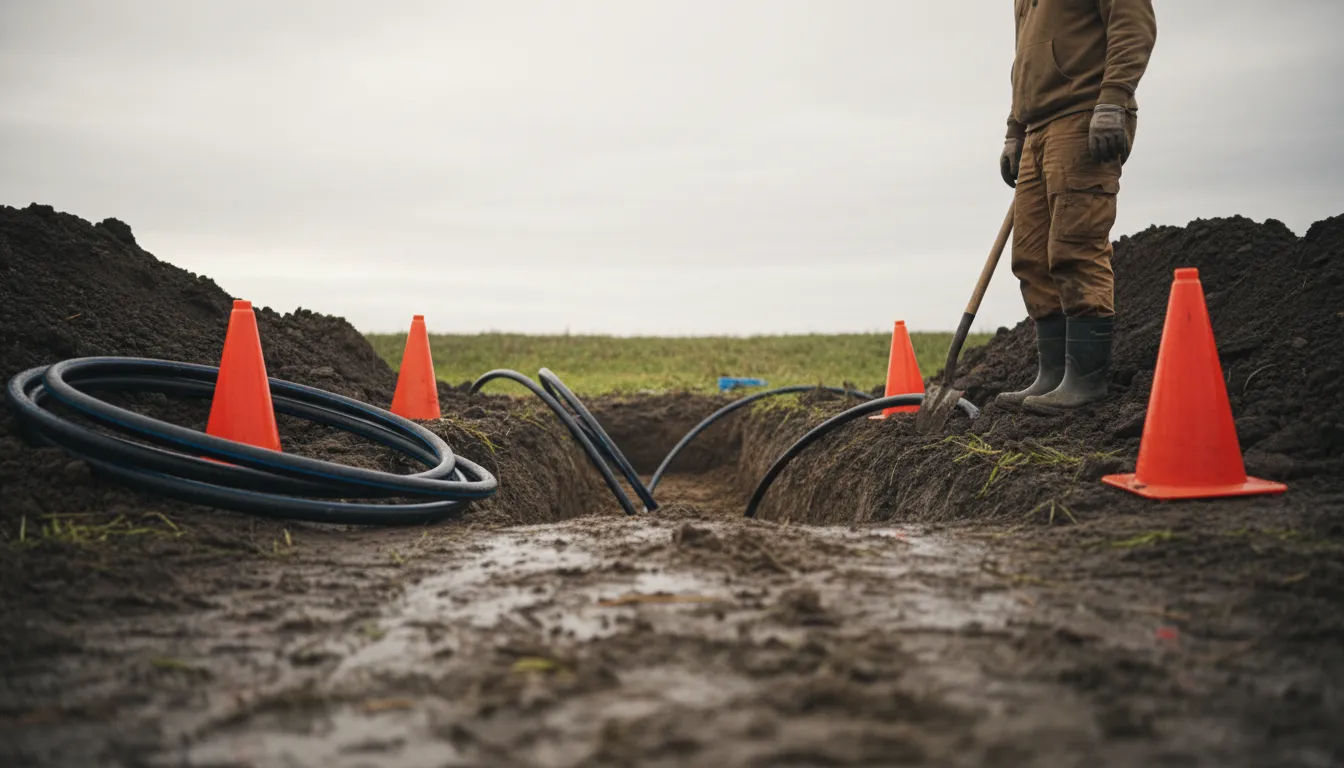
Horizontal Loops: This is often the most cost-effective option if sufficient land is available. Contractors dig trenches, typically four to six feet deep, and lay pipes in a series of parallel runs. This design requires a larger, open area of your property but generally involves lower excavation costs than drilling.
Vertical Loops: For properties with limited space, such as many suburban lots in Sanford, vertical loops are the ideal solution. Boreholes are drilled straight down, usually between 100 and 400 feet deep, and U-shaped pipe loops are inserted into each hole. The holes are then grouted. This method minimizes landscape disruption and is often the only feasible option for smaller yards.
Pond or Lake Loops: If you have a suitable, deep body of water on your property, this can be an excellent option. Coils of pipe are submerged at the bottom of the pond or lake. Water is an excellent conductor of heat, making this a very efficient loop configuration, and it typically has the lowest installation cost if the water source is readily available 2.
Open Loop Systems: This system uses groundwater directly from a well. Water is pumped from the well, passes through the heat pump to exchange heat, and is then discharged. This requires an adequate supply of clean well water and a suitable discharge method, such as a recharge well or surface drainage, in compliance with local regulations 3.
The Installation Process in Sanford
Installing a geothermal heating and cooling system is a significant project that requires careful planning and expert execution. The process is more involved than replacing a standard air conditioner, primarily due to the ground loop component.
First, a qualified installer will conduct a detailed site evaluation of your property. They will assess soil composition, available space, and access to determine the best loop type. For horizontal systems, this means planning for trenching equipment. For vertical systems, it involves coordinating with a drilling rig 4.
The ground loop installation itself is the most disruptive phase. For a horizontal field, your yard will see extensive trenching. For a vertical field, a drilling rig will be on-site to create the boreholes. This work can temporarily impact landscaping, which is why installations are often timed with new construction or major renovations. Once the loops are placed and pressure-tested, the trenches are backfilled or the boreholes are grouted.
Finally, the indoor heat pump unit is installed. This unit, which is typically about the size of a traditional furnace, is connected to the ground loop and to your home's existing ductwork or hydronic distribution system. A qualified technician will then charge the system, test all components, and ensure it operates at peak efficiency.
Find the perfect geothermal heat pump contractors for your needs
Get personalized recommendations and expert advice
Benefits for Sanford Homeowners
Investing in a geothermal system offers compelling advantages, especially in the Florida climate.
Substantial Energy Savings: This is the most significant benefit. By using the earth's constant temperature, geothermal heat pumps operate with extreme efficiency. Homeowners can see reductions in energy use for heating and cooling of up to 65% compared to conventional systems like standard heat pumps or air conditioners with electric furnaces 5 6. These savings directly translate to lower monthly utility bills, helping to offset the system's initial cost over time.
Longevity and Durability: The components of a geothermal system are built to last. The underground piping, often made of high-density polyethylene, is designed to last for more than 50 years. The indoor heat pump unit also enjoys a long lifespan, typically 20 to 25 years, because it is protected from the outdoor elements. This durability makes it a long-term investment in your home's comfort and value.
Ideal for Florida's Climate: Geothermal systems excel at cooling, which is the primary HVAC need in Sanford. They efficiently move heat from your home into the ground, which remains a reliable heat sink even during the hottest summer days 7. Furthermore, for homes in coastal or sandy areas, a geothermal system eliminates the outdoor condenser unit that is vulnerable to corrosion from salt spray and damage from blowing sand, offering superior protection and reliability 7.
Quiet Operation and Comfort: With no loud outdoor condenser fan running, geothermal systems operate very quietly. They also provide exceptionally consistent temperatures and better humidity control than many forced-air systems, enhancing overall indoor comfort.
Understanding Costs and Incentives
The upfront investment for a complete geothermal heating and cooling system is higher than for a conventional HVAC system. For a typical residential home in Sanford, total installed costs generally range from $20,000 to $40,000 8 9 10. The final price depends heavily on the chosen loop type (vertical loops are typically more expensive than horizontal due to drilling), the size and layout of your home, and the specific equipment selected.
It's crucial to view this cost in the context of total ownership. The dramatic energy savings will recoup a portion of the investment over time through lower electric bills. Additionally, the federal government offers a tax credit for qualified geothermal heat pump installations, which can significantly reduce the net cost 11. It's advisable to consult with a tax professional and your installer about current federal and any potential local or utility incentives available in Seminole County.
Frequently asked questions
Sources
Footnotes
-
Geothermal (Ground Source) Heat Pumps - NY.gov - https://cleanheat.ny.gov/geothermal-heat-pumps/ ↩
-
Geothermal Heat Pumps, Explained - Bosch Home Comfort - https://www.bosch-homecomfort.com/us/en/residential/connect/blog/geothermal-heat-pumps-go-green-save-green/ ↩
-
Geothermal Heating, Cooling, and Hot Water Systems - https://igshpa.org/wp-content/uploads/Homeowners-Guide-to-Geothermal.pdf ↩
-
FAQs • What types of ground-source heat pumps and configurat - https://concordma.gov/FAQ.aspx?QID=484 ↩
-
5 Things You Should Know about Geothermal Heat Pumps - https://www.energy.gov/cmei/articles/5-things-you-should-know-about-geothermal-heat-pumps ↩
-
How Do Geothermal Systems Work for Residential Homes? - https://www.davisheat.com/blog/how-do-geothermal-systems-work-for-residential-homes/ ↩
-
Geothermal Energy in Florida | Efficient Heating & Cooling - https://tonykellyinc.com/what-is-geothermal-energy-in-florida/ ↩ ↩2
-
Geothermal Heating and Cooling - Greener Solutions Air Conditioning - https://www.greenersolutionsair.com/geothermal ↩
-
How Geothermal Heating and Cooling Systems Work | Belle Air - https://www.belleairservices.com/how-geothermal-heating-and-cooling-systems-work/ ↩
-
Geothermal Heat Pump Guide: Installation Costs, Types And Benefits - https://modernize.com/hvac/heating-repair-installation/heat-pump/geothermal ↩
-
Geothermal Heat Pumps - Department of Energy - https://www.energy.gov/energysaver/geothermal-heat-pumps ↩