Find the Best Geothermal Heat Pump Contractors for Your Business
No obligation • Fast responses • Nationwide coverage

Why you can trust HVAC Firms
HVAC Firms is a leading United States resource for evaluating HVAC service providers. Our team researches companies, checks credentials, and reviews customer feedback to present clear, unbiased information. Listings and rankings are based on merit, and companies cannot pay to change our editorial content.
Search providers near you
Top Geothermal Heat Pump Contractors in Ocoee, Florida Ranked
Geothermal heat pumps, also known as ground-source heat pumps, are a highly efficient method for heating and cooling your home by leveraging the Earth's stable underground temperature. In Ocoee, this technology is particularly effective because it taps into Florida's consistently warm groundwater, offering significant energy savings and long-term reliability. This guide will help you understand how these systems work, what installation entails, and how to connect with qualified local professionals for your project.
Heating & Cooling | Mafer AC
1317 Edgewater Dr Suite 3594, Orlando, FL 32804
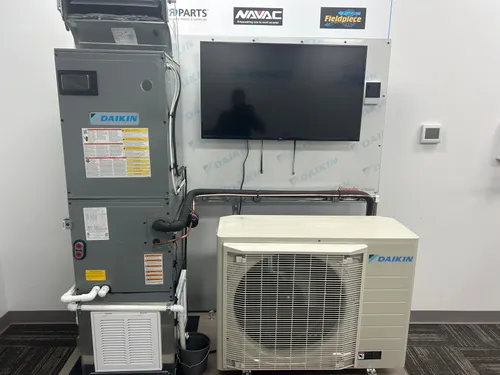
Heating & Cooling | Mafer AC is an HVAC company based in Orlando, FL, providing a wide range of heating and cooling services. They offer installation, repair, and maintenance for air conditioners, furnaces, heat pumps, boilers, and geothermal systems, along with duct cleaning and indoor air quality services. The company is known for handling both residential and commercial HVAC needs with certified professionals. Established in 2021, Mafer AC serves the Central Florida area and provides 24/7 emergency support for urgent HVAC issues.
Ingenuity Air
2785 Wrights Rd #1133, Oviedo, FL 32765
Ingenuity Air is an HVAC contractor serving Orlando, FL, specializing in residential and commercial HVAC installation, repair, and maintenance. They provide services for air conditioning, furnaces, heat pumps, boilers, mini splits, and geothermal heat pumps. The company covers the Orlando area including Oviedo and Winter Park, offering comprehensive HVAC solutions to keep homes and businesses comfortable year-round.
Why Geothermal is Ideal for Ocoee's Climate
Florida's unique geology provides a perfect environment for geothermal systems. Unlike air temperatures that swing with the seasons, the ground just a few feet below the surface in Central Florida maintains a near-constant temperature of approximately 76°F year-round. This stable thermal resource is the secret to a ground-source heat pump's efficiency.
During Ocoee's hot summers, the system works by extracting heat from your home and transferring it into the cooler ground. In the milder winter, the process reverses: it absorbs the Earth's natural warmth and concentrates it to heat your home 1. Because the system is exchanging heat with a 76°F source instead of 90°F summer air or 40°F winter air, it operates with far less effort than a traditional air-source HVAC unit. This fundamental advantage translates directly into lower energy consumption and reduced utility bills for homeowners.
How a Geothermal Heating and Cooling System Works
A geothermal or earth-coupled heat pump system consists of three main components: a ground loop, a heat pump unit, and a distribution system inside your home.
- The Ground Loop: This is a network of high-density polyethylene pipes buried underground or submerged in a water source. A water-based solution circulates through these closed loops, acting as a heat exchange medium.
- The Heat Pump Unit: Located inside your home (typically in a garage or utility closet), this unit contains a compressor and heat exchanger. It concentrates the thermal energy collected from or rejected to the ground loop.
- The Distribution System: This is usually your home's existing ductwork, which distributes the conditioned air throughout your living spaces. The system can also be configured for radiant floor heating or to provide domestic hot water.
The magic is in the consistent ground temperature. In heating mode, the fluid in the loops absorbs the Earth's warmth and carries it to the heat pump. The pump then elevates this heat to a higher temperature suitable for warming your home. In cooling mode, it functions like a refrigerator in reverse, pulling heat from your house and depositing it into the cooler ground. This process is so efficient that for every unit of electrical energy used to run the system, it moves three to five units of thermal energy, resulting in exceptional efficiency ratings.
Types of Ground Loop Systems for Ocoee Properties
The design of the underground portion, or ground heat exchanger, depends on your property's soil conditions, rock composition, and available space. The most common configurations are:
- Vertical Closed Loop: This is the most frequent choice for residential properties in Ocoee, especially where yard space is limited. A drilling rig bores holes 150 to 400 feet deep. U-shaped loop pipes are inserted into each borehole, which is then backfilled with a special grout to ensure good thermal conductivity 2. This method minimizes landscape disruption and is effective in most soil types.
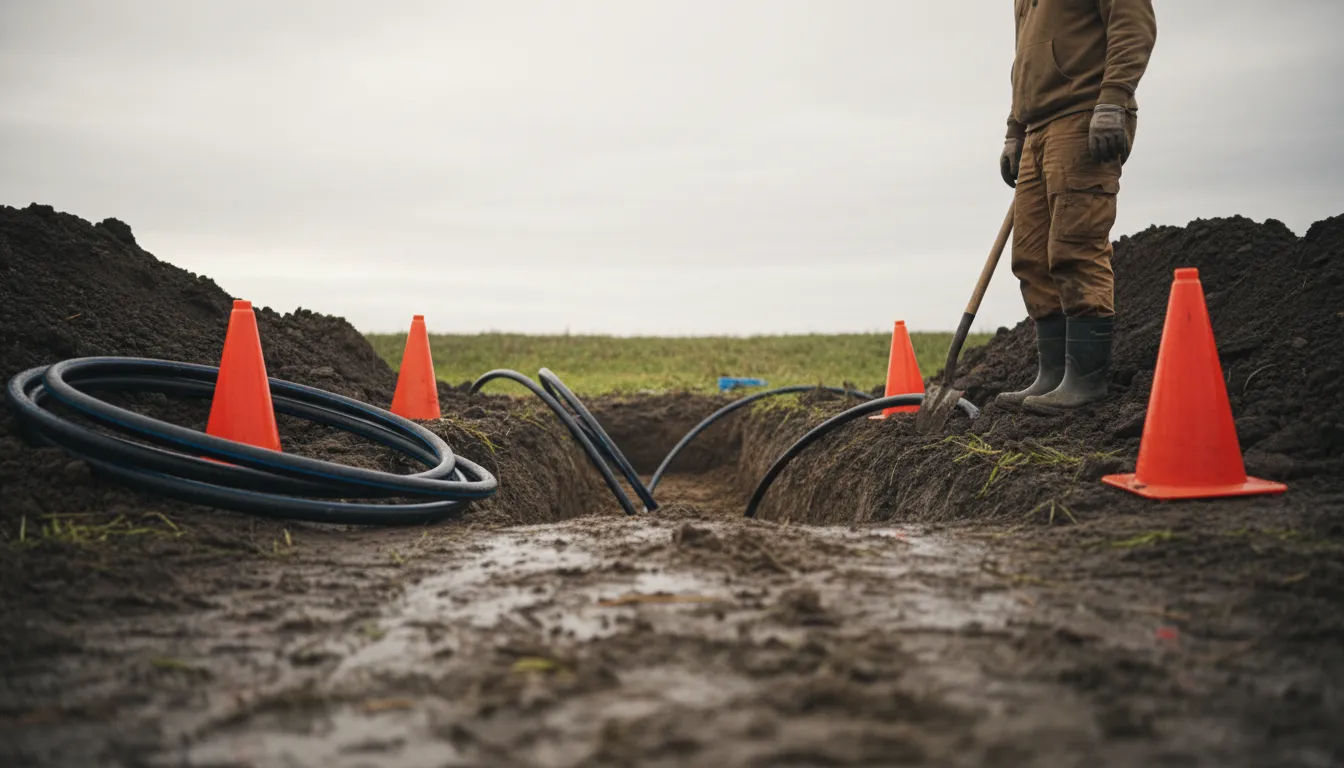
- Horizontal Closed Loop: If you have ample land (typically half an acre or more), a horizontal system may be an option. Trenchers dig trenches 5 to 8 feet deep, and pipes are laid in a coiled or slinky pattern before the trenches are backfilled 3 4 5. This method generally has a lower installation cost than vertical drilling but requires more surface area.
- Pond/Lake Loop: If your property has a suitable pond or lake, this can be a very cost-effective option. Coils of pipe are submerged at the bottom of the body of water, which acts as a heat source and sink 6 7. This method avoids the need for drilling or extensive trenching, but it requires specific water conditions regarding depth, volume, and quality.
A qualified installer will conduct a site survey to determine the best loop configuration for your specific Ocoee home, considering local geology and space to ensure optimal performance.
Find the perfect geothermal heat pump contractors for your needs
Get personalized recommendations and expert advice
Understanding Costs, Savings, and Lifespan
The investment in a geothermal climate control system is often higher upfront than a conventional system, but the long-term benefits are substantial.
- Installation Cost: A primary cost driver is installing the ground loop field. A typical system cost in our area can be around $2,500 per ton of capacity, plus the complete installation and drilling work. For example, a standard 3-ton residential unit might start around $7,500 for the equipment, with the total project cost significantly higher due to loop installation. The final price depends heavily on the loop type, soil conditions, and home size.
- Operational Savings: This is where geothermal shines. Homeowners typically see a 40% to 70% reduction in their heating and cooling energy bills compared to conventional electric resistance or standard heat pump systems 8 9 10. In Florida's long cooling season, these savings can justify the initial investment over time.
- System Lifespan and Durability: The indoor heat pump unit often lasts 20 years or more. The buried ground loop, with no moving parts and protected from the elements, has an exceptionally long life expectancy of 25 to over 50 years 11. This durability means the most expensive component (the loop field) may last for the lifetime of the home, with only the indoor unit potentially needing replacement decades down the line.
The Installation Process: What to Expect
Installing a residential geothermal system is a significant project that requires specialized expertise. Here's a general overview of the steps involved:
- Site Evaluation and Design: A professional will assess your property, perform a load calculation for your home, and design the most efficient loop system and equipment size.
- Loop Field Installation: For a vertical system, a drilling rig will create the necessary boreholes. For a horizontal system, a trencher will dig the required trenches. The polyethylene pipes are then placed and connected into a manifold.
- Indoor Unit Installation: The geothermal heat pump unit is installed indoors and connected to your home's electrical system and ductwork.
- Connection and Testing: The ground loops are connected to the heat pump, the system is filled with fluid and purged of air, and the entire system is thoroughly tested for performance and leaks 12.
Working with an experienced, certified installer is crucial for ensuring the system is designed and installed correctly for maximum efficiency and longevity.
Benefits Beyond Energy Bills
While lower utility costs are a major advantage, geothermal heat exchange systems offer other compelling benefits:
- Quiet Operation: The major mechanical components are located indoors, and there is no loud outdoor condenser unit, leading to quieter home comfort.
- Low Maintenance: With fewer mechanical parts exposed to the weather and a protected ground loop, these systems generally require less maintenance than conventional HVAC systems.
- Increased Home Value: The promise of low energy costs for decades can be an attractive feature for future home buyers.
- Environmental Friendliness: By using renewable thermal energy from the ground and drastically reducing electricity consumption, these systems have a much smaller carbon footprint.
Frequently asked questions
Sources
Footnotes
-
How a Geothermal Heat Pump Works | This Old House - https://www.youtube.com/watch?v=d5Tbsx3R2T8 ↩
-
Geothermal Heat Pumps, Explained - Bosch Home Comfort - https://www.bosch-homecomfort.com/us/en/residential/connect/blog/geothermal-heat-pumps-go-green-save-green/ ↩
-
Geothermal Heat Pump Installation: What To Expect For Your Property - https://jomory.com/geothermal-heat-pump-installation-what-to-expect-for-your-property/ ↩
-
How Geothermal Heat Pumps Work - https://www.youtube.com/watch?v=XxlTnBukweI&t=37 ↩
-
Ground Source Heat Pumps: Distribution System Types and ... - https://goclean.masscec.com/article/gshp-distribution-system-types-and-configurations/ ↩
-
Geothermal Heating, Cooling, and Hot Water Systems - https://igshpa.org/wp-content/uploads/Homeowners-Guide-to-Geothermal.pdf ↩
-
Geothermal Heat Pumps - Department of Energy - https://www.energy.gov/energysaver/geothermal-heat-pumps ↩
-
Geothermal Energy in Florida | Efficient Heating & Cooling - https://tonykellyinc.com/what-is-geothermal-energy-in-florida/ ↩
-
How Does GeoThermal Air Conditioning Work in Florida? - https://symbiontservice.com/services/geothermal-air-conditioning/how-does-geothermal-ac-work/ ↩
-
Guide to Geothermal Heat Pumps - https://www.energy.gov/sites/prod/files/guide_to_geothermal_heat_pumps.pdf ↩
-
How Does A Geothermal Heat Pump Work? Complete 2025 Guide - https://solartechonline.com/blog/how-does-geothermal-heat-pump-work/ ↩
-
Geothermal heating & cooling, heat pumps, heat exchange ... - https://aztechgeo.com/residential-geothermal/how-it-works/ ↩