Find the Best Geothermal Heat Pump Contractors for Your Business
No obligation • Fast responses • Nationwide coverage

Why you can trust HVAC Firms
HVAC Firms is a leading United States resource for evaluating HVAC service providers. Our team researches companies, checks credentials, and reviews customer feedback to present clear, unbiased information. Listings and rankings are based on merit, and companies cannot pay to change our editorial content.
Search providers near you
Top Geothermal Heat Pump Contractors in Lauderhill, Florida Ranked
A geothermal heat pump, also known as a ground-source heat pump, is a highly efficient heating and cooling system that uses the earth's stable temperature to regulate your home's climate. This technology matters because it can drastically reduce energy consumption and utility bills while providing reliable comfort year-round. For Lauderhill residents, this guide explains how these systems work, their benefits, and how to connect with qualified local professionals for installation and service.
How Geothermal Systems Work in South Florida
Unlike traditional air conditioners and heaters that battle Florida's extreme outdoor temperatures, a geothermal system taps into the earth's consistent thermal energy. Just a few feet below the surface, the ground in Lauderhill maintains a stable temperature of approximately 72-75°F year-round 1. A geothermal heat pump leverages this constant temperature through a simple, brilliant process of heat exchange.
The system has three main components: the ground loop, the heat pump unit, and your home's ductwork. A water-based solution circulates through a network of durable, high-density polyethylene pipes buried in your yard-this is the ground loop. In the summer, the loop carries excess heat from your home and disperses it into the cooler earth. In the winter, it absorbs the earth's natural warmth and brings it inside. The indoor heat pump unit then concentrates this thermal energy and distributes conditioned air throughout your home via the ducts. It's a closed-loop system that simply moves existing heat, making it extraordinarily efficient.
Types of Ground Loop Systems
The configuration of the underground piping is critical and depends on your property's characteristics. The most common types installed in the Lauderhill area include:
- Vertical Closed Loops: This is often the preferred method for residential properties in developed areas like Lauderhill. Contractors use a drilling rig to bore holes 150 to 450 feet deep, into which U-shaped loops are inserted and sealed with a special grout. This is ideal for smaller lots as it requires minimal surface area.
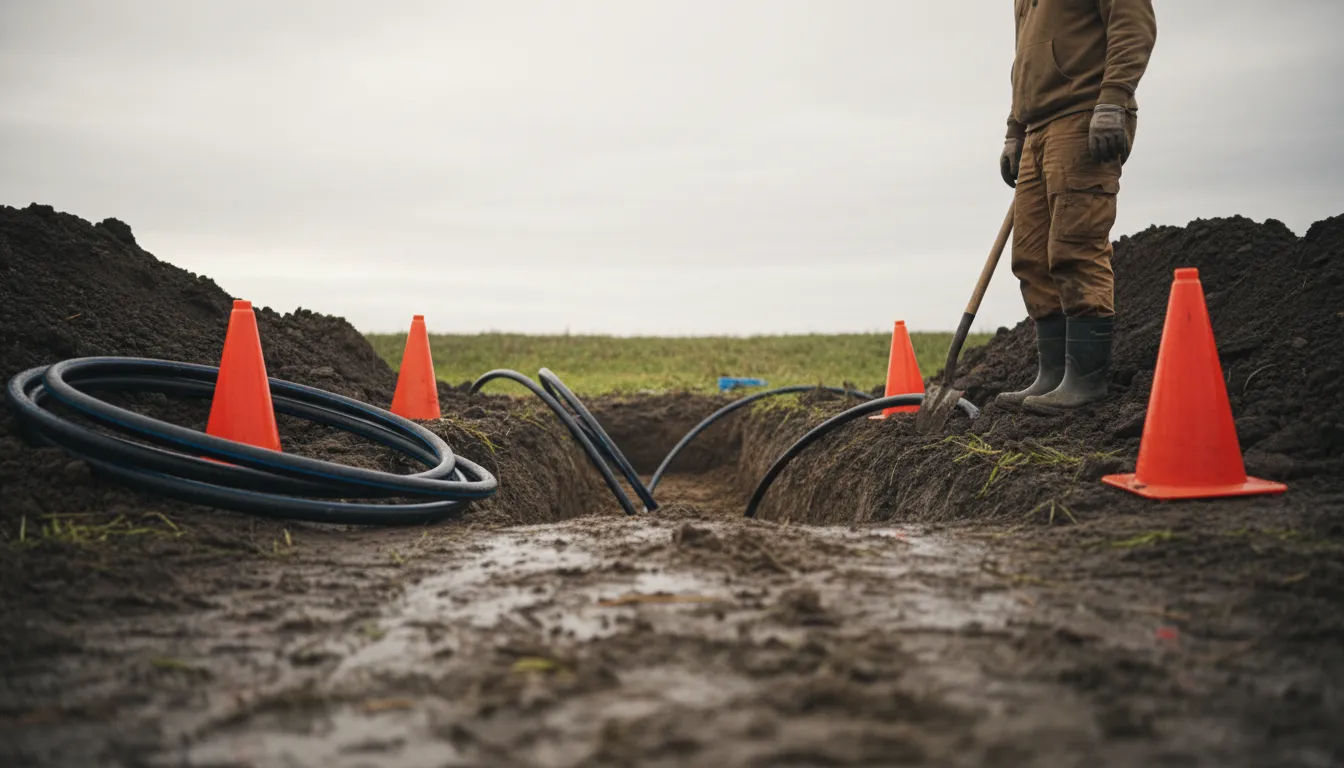
- Horizontal Closed Loops: If you have more available land, trenches are dug about four to six feet deep to lay the piping horizontally. This method generally requires more square footage of unobstructed land but can be less expensive than deep drilling if the conditions are right.
- Pond/Lake Loops: If your property has a sufficient body of water, coils of pipe can be submerged at the bottom. This can be a very cost-effective loop option, but it requires a pond or lake with adequate depth, volume, and quality 2.
- Open Loop Systems: This system uses well water or surface water as the heat exchange fluid. It pumps water from a source, runs it through the heat pump, and then discharges it. This requires an abundant, clean water source and compliance with local codes regarding water discharge.
A professional installer will conduct a thorough site assessment to determine the best and most feasible loop type for your specific property, considering soil composition, lot size, and local geology 3.
The Installation Process for a Geothermal System
Installing a ground-source heat pump is a significant project that requires specialized expertise. Understanding the steps can help you know what to expect.
- Site Evaluation and Design: A certified installer will survey your property to assess soil conditions, available space, and your home's heating and cooling loads. This step determines the optimal loop type and system size.
- Loop Field Installation: For a vertical system, a drilling rig will create the necessary boreholes. For a horizontal system, a trenching machine will dig the required trenches. The HDPE pipe is then placed into the holes or trenches.
- Loop Connection and Testing: The individual pipe loops are connected to form a continuous circuit that runs to and from the house. The entire loop is then pressure-tested to ensure there are no leaks before being backfilled or grouted 4.
- Indoor Unit Installation: The geothermal heat pump unit is installed inside your home, typically where your old furnace or air handler was located. It is connected to the ground loop and your existing ductwork or a new air distribution system 5.
- System Startup and Commissioning: The installer fills the loop with fluid, purges air from the lines, and starts the system. They will calibrate the thermostat and ensure all components are operating at peak efficiency before handing the system over to you.
Find the perfect geothermal heat pump contractors for your needs
Get personalized recommendations and expert advice
Benefits and Financial Considerations
The decision to install a geothermal heating and cooling system is a long-term investment in comfort, savings, and sustainability.
- Substantial Energy Savings: This is the most compelling benefit. By using the earth's free and stable thermal energy, geothermal heat pumps can reduce your energy use for heating and cooling by 30% to 70% compared to conventional systems. For Lauderhill homeowners facing hot summers and occasional cool winters, this translates to significantly lower monthly utility bills.
- Long-Term Reliability and Low Maintenance: The ground loop is typically warranted for 50+ years and can last generations. The indoor heat pump unit also has a long lifespan, often 20-25 years, which is longer than standard air conditioners. With fewer mechanical parts exposed to the elements, maintenance is relatively simple.
- Quiet Operation and Comfort: The main unit operates indoors, and there is no loud outdoor condenser. The system provides exceptionally even heating and cooling without the drafts or temperature swings associated with traditional systems.
- Environmental Impact: Geothermal systems use renewable energy from the ground and emit no on-site carbon dioxide. They also use electricity very efficiently, reducing your overall carbon footprint 6.
- Understanding Costs and Incentives: The upfront cost for a complete residential geothermal system in Lauderhill can range from $20,000 to $40,000 or more, influenced by your home's size, the loop type, and property conditions 7. However, the payback period is often between 5 to 10 years due to the dramatic energy savings 8 9. Furthermore, federal tax credits can cover a significant percentage of the installation cost (including labor and loop installation), and there may be additional local utility rebates available, improving the financial return 10 9.
Local Considerations for Lauderhill Properties
While geothermal is an excellent technology for Florida, local factors specific to Lauderhill and Broward County are important.
- Space Constraints: Many residential lots in the area are compact. This makes vertical loop systems the most common and practical choice, as they require the least amount of surface land 11 12.
- Geology and Groundwater: South Florida's geology, characterized by porous limestone and high groundwater tables, is generally favorable for drilling. A reputable installer will understand local regulations regarding drilling depth and potential impacts on aquifers 13 14.
- Permitting: Your installer should handle all necessary permits from the city of Lauderhill and Broward County, ensuring the installation meets all local building and environmental codes.
Frequently asked questions
Sources
Footnotes
-
Geothermal Heat Pumps - EnergySmart CNY - https://www.energysmartcny.org/heat-pumps/geothermal/ ↩
-
Geothermal Heating And Cooling Works In Florida. Here's How - https://symbiontservice.com/2011/06/07/geothermal-heating-and-cooling-works-in-florida-heres-how/ ↩
-
Geothermal Heating, Cooling, and Hot Water Systems - https://igshpa.org/wp-content/uploads/Homeowners-Guide-to-Geothermal.pdf ↩
-
Geothermal Heat Pumps, Explained - Bosch Home Comfort - https://www.bosch-homecomfort.com/us/en/residential/connect/blog/geothermal-heat-pumps-go-green-save-green/ ↩
-
How Do Geothermal Systems Work for Residential Homes? - https://www.davisheat.com/blog/how-do-geothermal-systems-work-for-residential-homes/ ↩
-
5 Things You Should Know about Geothermal Heat Pumps - https://www.energy.gov/cmei/articles/5-things-you-should-know-about-geothermal-heat-pumps ↩
-
Geothermal Heat Pump Guide: Installation Costs, Types And Benefits - https://modernize.com/hvac/heating-repair-installation/heat-pump/geothermal ↩
-
Geothermal Energy in Florida | Efficient Heating & Cooling - https://tonykellyinc.com/what-is-geothermal-energy-in-florida/ ↩
-
Guide to Geothermal Heat Pumps - https://www.energy.gov/sites/prod/files/guide_to_geothermal_heat_pumps.pdf ↩ ↩2
-
Geothermal Heat Pumps - Department of Energy - https://www.energy.gov/energysaver/geothermal-heat-pumps ↩
-
Geothermal heat pumps: The ultimate guide to ground-source ... - https://termo-plus.com/blog/geothermal-ultimate-guide-to-ground-source-heat-pumps/ ↩
-
Geothermal heating & cooling, heat pumps, heat exchange ... - https://aztechgeo.com/residential-geothermal/how-it-works/ ↩
-
PEX Pipe Guide for Geothermal Heat Pump - https://outdoorboiler.com/blogs/news/pex-for-geothermal-heat-pumps-what-you-need-to-know ↩
-
Geothermal Loop Installations | Trenchless Technology - https://trenchlesstechnology.com/geothermal-loop-installations/ ↩