
Find the Best Geothermal Heat Pump Contractors for Your Business
No obligation • Fast responses • Nationwide coverage

Why you can trust HVAC Firms
HVAC Firms is a leading United States resource for evaluating HVAC service providers. Our team researches companies, checks credentials, and reviews customer feedback to present clear, unbiased information. Listings and rankings are based on merit, and companies cannot pay to change our editorial content.
Search providers near you
Top Geothermal Heat Pump Contractors in Lakeland, Florida Ranked
A geothermal heat pump is a highly efficient heating and cooling system that leverages the Earth's stable underground temperature to regulate your home's climate. For Lakeland residents, this technology offers a powerful way to combat Florida's heat and humidity while significantly reducing energy consumption. This guide explains how these ground-source systems work, what installation entails, and how you can find qualified local professionals to assess your property for this sustainable upgrade.
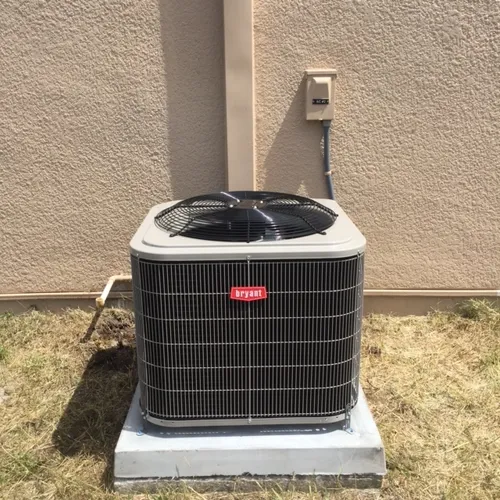
How Geothermal Systems Work in Florida's Climate
Unlike traditional air-source heat pumps that exchange heat with the outside air, a geothermal system, or ground-source heat pump, uses a network of buried pipes called a ground loop. This loop circulates a water-based solution to exchange heat with the ground, which in Florida maintains a remarkably constant temperature of 60-70°F just a few feet below the surface year-round. This constant temperature is the key to the system's efficiency.
In the winter, the fluid in the loop absorbs the Earth's natural warmth. The geothermal heat pump unit inside your home then concentrates this heat and distributes it as warm air through your ductwork 1 2. During Lakeland's long, hot summers, the process simply reverses: the system extracts heat and humidity from your home's air and transfers it into the cooler ground loop, providing efficient air conditioning 3. This process is far more efficient than fighting the extreme outdoor air temperatures, leading to substantial energy savings.
Types of Ground Loop Systems
The buried pipe system is the heart of a geothermal installation. The right type for your Lakeland home depends on your land availability, soil conditions, and budget. There are four primary configurations:
Horizontal Closed Loop This is often the most cost-effective option if space allows. Contractors dig trenches several feet deep and lay pipes in a series of loops. While it requires a larger plot of land, the installation process is generally less complex than drilling.
Vertical Closed Loop For homes with smaller yards, a vertical ground-source heat pump system is ideal. Installers drill boreholes typically 100 to 400 feet deep and insert U-shaped loop pipes. Although the drilling increases upfront costs, it minimizes land use and can offer excellent performance 4 5.
Pond/Lake Loop If your property has a sufficient pond or lake, this can be an efficient option. Coils of pipe are submerged at an adequate depth where water temperatures remain stable. This method can reduce excavation costs but is entirely dependent on having a suitable water body 6 7.
Open Loop System This less common system uses groundwater from a well as the heat exchange fluid. After circulating through the heat pump, the water is discharged back into a second well or a suitable drainage point. Local regulations and water availability are critical factors for this type.
The Installation Process for a Lakeland Home
Installing a geothermal heating and cooling system is a significant project that requires careful planning and expert execution. The process typically follows these key stages:
- Site Assessment and Design: A qualified installer will evaluate your property to determine the best loop type, size the system correctly for your home's load, and plan the routing. This step considers soil composition, available space, and your existing ductwork 8.
- Ground Loop Installation: For a horizontal system, this involves excavation with trenching equipment. For a vertical system, a drilling rig is used to create the boreholes. The high-density polyethylene pipes are then placed, connected, and pressure-tested 9 10.
- Heat Pump and Ductwork Connection: The indoor geothermal unit is installed, often in place of your old furnace or air handler. It is connected to the ground loop and to your home's existing ductwork. If your ductwork is old or inadequate, modifications or replacement may be recommended 11.
- System Startup and Testing: Finally, the system is charged with refrigerant, electrical connections are finalized, and the entire system is tested for proper operation, efficiency, and airflow.
Key Considerations for Lakeland Properties
Before investing in a geothermal system, homeowners should evaluate a few local factors:
- Land Availability: Horizontal loops require substantial open land, while vertical loops are designed for limited spaces but involve deeper drilling. Your installer's site survey will determine the viable options.
- Soil and Ground Conditions: The composition of the soil and rock in Lakeland can affect the ease of trenching or drilling and the thermal conductivity of the ground, which influences loop length and design.
- Upfront Cost vs. Long-Term Value: The initial investment is higher than a standard HVAC system. However, the exceptional energy savings and long lifespan create a compelling long-term value proposition.
Find the perfect geothermal heat pump contractors for your needs
Get personalized recommendations and expert advice
Understanding Costs and Energy Savings
The total installed cost for a residential geothermal heat pump system in Lakeland typically ranges from $12,000 to over $45,000 12. This wide range depends on your home's size, the chosen loop type (vertical loops are more expensive), the condition of existing ductwork, and the specific equipment selected.
While the upfront price is significant, the operational savings are substantial. Homeowners can expect to reduce their heating and cooling energy consumption by 25% to 50%, with some saving up to 65% compared to conventional systems 13 14. These savings on monthly utility bills mean the system can often pay for itself through lower operating costs in an estimated 4 to 15 years, a period known as the payback period 15 16. Furthermore, geothermal systems are renowned for their durability, with indoor components lasting about 20 years and the underground loop often guaranteed for 25 to 50 years 17.
Benefits Beyond Energy Bills
Choosing a ground-source heat pump offers advantages that extend beyond monthly savings:
- Quiet Operation: With no loud outdoor condenser unit, geothermal systems operate very quietly.
- Low Maintenance: The protected underground loop has few moving parts, and the indoor unit is sheltered from the elements, leading to minimal maintenance needs.
- Improved Comfort: These systems provide consistent, even heating and cooling without the drafts or temperature swings associated with some traditional systems.
- Reduced Carbon Footprint: By using renewable thermal energy from the ground and consuming less electricity, you significantly reduce your home's environmental impact.
Finding the Right Local Professional
Success with geothermal technology hinges on proper design and installation. Seek out experienced contractors in the Lakeland area who specialize in geothermal or ground-source systems. They should conduct a detailed Manual J load calculation for your home, provide clear options for loop types, and offer references from past installations. A reputable professional will guide you through the entire process, from initial feasibility to final commissioning.
Frequently asked questions
Sources
Footnotes
-
Geothermal Energy in Florida | Efficient Heating & Cooling - https://tonykellyinc.com/what-is-geothermal-energy-in-florida/ ↩
-
Geothermal Heating & Cooling - Department of Energy - https://www.energy.gov/eere/geothermal/geothermal-heating-cooling ↩
-
Geothermal (Ground Source) Heat Pumps - NY.gov - https://cleanheat.ny.gov/geothermal-heat-pumps/ ↩
-
Geothermal Heat Pumps, Explained - Bosch Home Comfort - https://www.bosch-homecomfort.com/us/en/residential/connect/blog/geothermal-heat-pumps-go-green-save-green/ ↩
-
Geothermal Heating And Cooling Works In Florida. Here's How - https://symbiontservice.com/2011/06/07/geothermal-heating-and-cooling-works-in-florida-heres-how/ ↩
-
Geothermal Heat Pumps - Department of Energy - https://www.energy.gov/energysaver/geothermal-heat-pumps ↩
-
4 Types of Geothermal HVAC Systems - https://www.sandhillsheating.com/article/4-types-of-geothermal-hvac-systems ↩
-
Ground Source Heat Pump Systems - https://link.springer.com/rwe/10.1007/978-3-662-49088-4_3-1 ↩
-
FAQs • What types of ground-source heat pumps and configurat - https://concordma.gov/FAQ.aspx?QID=484 ↩
-
How Does the Performance of Geothermal Heat Pumps Compare in Various Climates? - https://www.miamihp.com/how-does-the-performance-of-geothermal-heat-pumps-compare-in-various-climates/ ↩
-
All You Need to Know About Home Geothermal Heating & Cooling - Dandelion Energy - https://dandelionenergy.com/all-you-need-to-know-about-home-geothermal-heating-cooling ↩
-
How Does A Geothermal Heat Pump Work? Complete 2025 Guide - https://solartechonline.com/blog/how-does-geothermal-heat-pump-work/ ↩
-
5 Things You Should Know about Geothermal Heat Pumps - https://www.energy.gov/cmei/articles/5-things-you-should-know-about-geothermal-heat-pumps ↩
-
Geothermal Heat Pump | DSO Electric Cooperative - https://dsoelectric.com/geothermal-heat-pump ↩
-
Everything You Need to Know About Geothermal Heat Pumps - https://www.familyhandyman.com/article/everything-you-need-to-know-about-geothermal-heat-pumps/ ↩
-
Geothermal Heat Pump Guide: Installation Costs, Types And Benefits - https://modernize.com/hvac/heating-repair-installation/heat-pump/geothermal ↩
-
Guide to Geothermal Heat Pumps - https://www.energy.gov/sites/prod/files/guide_to_geothermal_heat_pumps.pdf ↩