Find the Best Geothermal Heat Pump Contractors for Your Business
No obligation • Fast responses • Nationwide coverage

Why you can trust HVAC Firms
HVAC Firms is a leading United States resource for evaluating HVAC service providers. Our team researches companies, checks credentials, and reviews customer feedback to present clear, unbiased information. Listings and rankings are based on merit, and companies cannot pay to change our editorial content.
Search providers near you
Top Geothermal Heat Pump Contractors in Kissimmee, Florida Ranked
A geothermal heat pump, or ground-source heat pump, is one of the most energy-efficient ways to heat and cool your Kissimmee home. By tapping into the earth's stable underground temperature, these systems provide exceptional comfort and significant savings on your utility bills year-round. This guide explains how geothermal heating and cooling works in our local climate, what installation involves, and how you can find qualified professionals to assess your property and provide a quote.
Heating & Cooling | Mafer AC
1317 Edgewater Dr Suite 3594, Orlando, FL 32804
Heating & Cooling | Mafer AC is an HVAC company based in Orlando, FL, providing a wide range of heating and cooling services. They offer installation, repair, and maintenance for air conditioners, furnaces, heat pumps, boilers, and geothermal systems, along with duct cleaning and indoor air quality services. The company is known for handling both residential and commercial HVAC needs with certified professionals. Established in 2021, Mafer AC serves the Central Florida area and provides 24/7 emergency support for urgent HVAC issues.
Ingenuity Air
2785 Wrights Rd #1133, Oviedo, FL 32765
Ingenuity Air is an HVAC contractor serving Orlando, FL, specializing in residential and commercial HVAC installation, repair, and maintenance. They provide services for air conditioning, furnaces, heat pumps, boilers, mini splits, and geothermal heat pumps. The company covers the Orlando area including Oviedo and Winter Park, offering comprehensive HVAC solutions to keep homes and businesses comfortable year-round.
How Geothermal Systems Work in Central Florida
Unlike traditional air-source heat pumps that exchange heat with the outside air, a geothermal system uses the earth as its heat source in winter and its heat sink in summer. This is a game-changer for efficiency because, just a few feet below the surface, the ground in Florida maintains a remarkably stable temperature between 72°F and 75°F year-round. This constant temperature provides a perfect medium for heat exchange.
Here's the basic cycle:
- For Heating: In the cooler winter months, a water or antifreeze solution circulates through underground pipes, absorbing the earth's natural warmth. The geothermal heat pump then concentrates this heat and transfers it to your home's air or water distribution system 1.
- For Cooling: During our hot summers, the process reverses. The system extracts heat and humidity from your home and transfers it into the cooler ground loop. The now-chilled refrigerant then cools the air circulating through your ducts 2.
This process is so efficient because the system is moving heat rather than generating it through combustion or intense electrical resistance, leading to the substantial energy savings homeowners experience.
The Core Components: Ground Loops and Heat Pumps
A complete geothermal installation has two main parts: the ground loop (the outdoor heat exchanger) and the heat pump unit (typically located indoors).
Types of Ground Loops
The loop field is the network of pipes buried in your yard. The right type for your Kissimmee property depends on soil conditions, land availability, and budget.
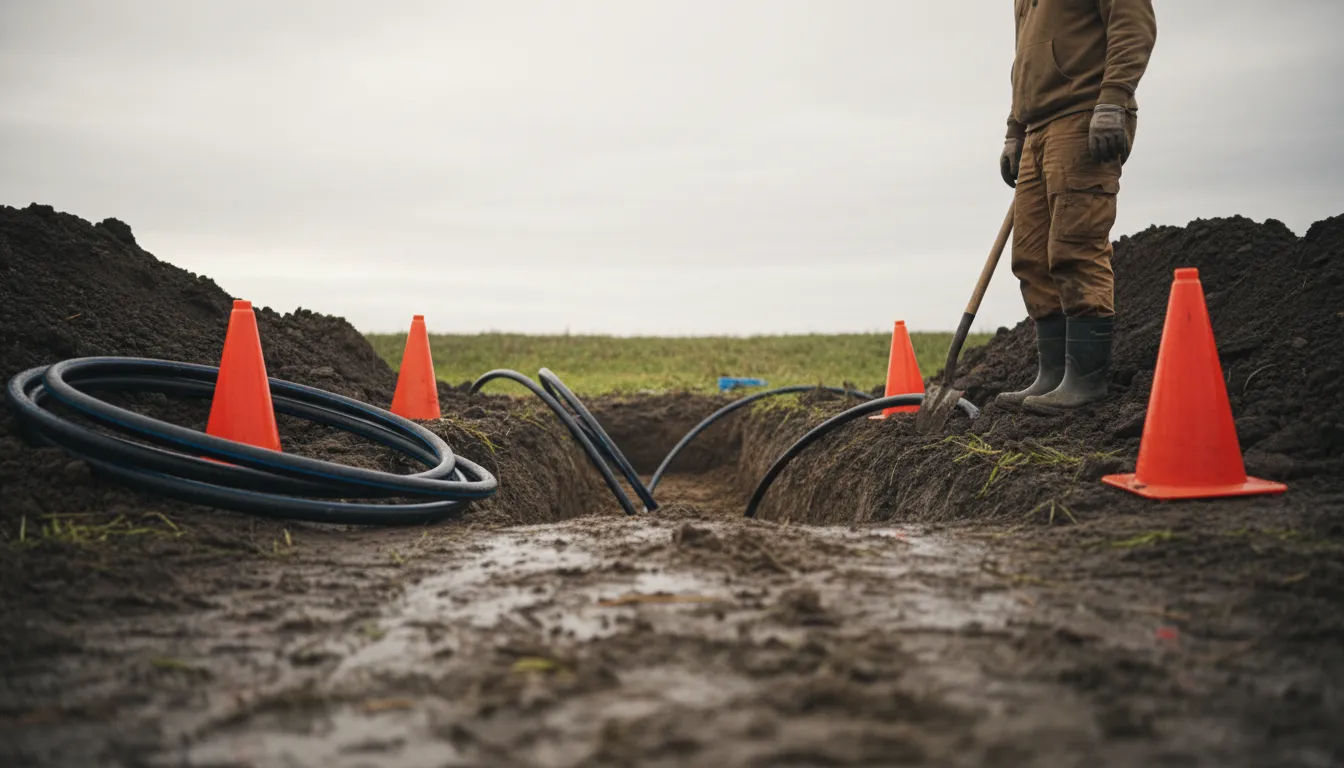
- Horizontal Closed Loops: This is often the most cost-effective option if space allows. Trenches are dug about four to eight feet deep, and pipes are laid in a series of loops. A horizontal system typically requires a significant amount of land-anywhere from 1/4 to 3/4 of an acre for an average home 3 4. This method is very common for new construction where the yard can be easily excavated.
- Vertical Closed Loops: For homes with smaller lots, which is common in many Kissimmee neighborhoods, vertical loops are the ideal solution. Contractors drill boreholes 100 to 400 feet deep and insert U-shaped loop pipes 5 6. While the drilling cost is higher, a vertical system minimizes landscape disruption and is excellent for retrofitting an existing property.
- The Closed-Loop System: Both horizontal and vertical setups typically use a "closed-loop" design. This means a sealed mixture of water and environmentally friendly antifreeze circulates continuously through the buried pipes and the heat pump, never contacting the ground directly 7.
The Indoor Heat Pump Unit
This is the heart of the system, usually installed in your garage, basement, or a utility closet. It houses the compressor, heat exchanger, and fan coil. It connects to your home's existing ductwork to distribute conditioned air or, in some systems, to a hydronic setup for radiant floor heating. These units are known for being exceptionally quiet and having long lifespans, often exceeding 20 years for the indoor components.
The Installation Process: What to Expect
Installing a geothermal heating and cooling system is a significant project that requires specialized expertise. Understanding the steps can help you prepare.
- Site Assessment and Design: A qualified installer will evaluate your property, considering soil composition, lot size, and your home's heating and cooling loads. This assessment determines the optimal loop type and size for maximum efficiency.
- Loop Field Installation: This is the major excavation phase. For a horizontal system, a backhoe will dig the trenches. For a vertical system, a drilling rig will create the boreholes. The pipes are then placed, connected into a manifold, and pressure-tested to ensure there are no leaks 8.
- Indoor Unit Installation: The geothermal heat pump unit is set in place and connected to your home's electrical system and ductwork. If you don't have existing ducts, that will be a separate part of the project.
- System Connection and Commissioning: The ground loops are connected to the heat pump. The entire system is filled, purged of air, and started. The technician will test and calibrate the system to ensure it operates correctly and efficiently 9.
Find the perfect geothermal heat pump contractors for your needs
Get personalized recommendations and expert advice
Financial Considerations: Cost, Savings, and Incentives
The upfront investment for a geothermal system is higher than for a conventional HVAC system. For a typical 2,000-square-foot home in Kissimmee, total installation costs often range from $20,000 to $40,000 or more, depending on the loop type and site conditions 10 11. However, this cost is balanced by dramatic operational savings and valuable incentives.
- Energy Savings: Homeowners typically see a reduction of 30% to 70% on their heating and cooling bills 12 13. In Florida's climate, where air conditioning runs for much of the year, these savings can be substantial.
- Federal Tax Credit: The federal government offers a significant tax credit for installing a qualified geothermal heat pump system, which can directly reduce your income tax liability. This incentive is a major factor in improving the return on investment.
- Long-Term Value: With lower utility bills, the system often pays for itself over time, with many homeowners seeing a payback period within 5 to 10 years 14. Furthermore, a geothermal system can increase your property's value and appeal to energy-conscious buyers.
Why Geothermal is a Smart Choice for Kissimmee
Kissimmee's climate and geology are exceptionally well-suited for geothermal technology. Our consistent ground temperature provides the perfect resource for a heat pump. While the initial cost is a consideration, the long-term benefits are compelling:
- Superior Efficiency: Geothermal systems deliver more units of heating or cooling per unit of electricity consumed than any other conventional system.
- Year-Round Comfort: They provide steady, even heating without cold drafts and highly effective, dehumidifying cooling.
- Durability and Quiet Operation: The protected underground loops can last for generations (50+ years), and the indoor unit operates very quietly 15.
- Environmental Benefit: By drastically reducing fossil fuel consumption or electricity demand from the grid, you are significantly lowering your home's carbon footprint.
Finding the Right Local Professional
Selecting an experienced, certified installer is the most critical step. Look for contractors who are accredited by organizations like the International Ground Source Heat Pump Association (IGSHPA). They should conduct a detailed Manual J load calculation for your home and provide a clear, comprehensive quote that includes all excavation, equipment, and labor. Be sure to ask for references from local installations and verify they are familiar with the specific permitting requirements in Osceola County.
Frequently asked questions
Sources
Footnotes
-
Geothermal Heating And Cooling Works In Florida. Here's How - https://symbiontservice.com/2011/06/07/geothermal-heating-and-cooling-works-in-florida-heres-how/ ↩
-
How Does GeoThermal Air Conditioning Work in Florida? - https://symbiontservice.com/services/geothermal-air-conditioning/how-does-geothermal-ac-work/ ↩
-
How Does A Geothermal Heat Pump Work? Complete 2025 Guide - https://solartechonline.com/blog/how-does-geothermal-heat-pump-work/ ↩
-
Geothermal Heat Pump Installation: What To Expect For Your Property - https://jomory.com/geothermal-heat-pump-installation-what-to-expect-for-your-property/ ↩
-
5 Things You Should Know about Geothermal Heat Pumps - https://www.energy.gov/cmei/articles/5-things-you-should-know-about-geothermal-heat-pumps ↩
-
How Do Geothermal Systems Work for Residential Homes? - https://www.davisheat.com/blog/how-do-geothermal-systems-work-for-residential-homes/ ↩
-
Geothermal Heat Pumps - EnergySmart CNY - https://www.energysmartcny.org/heat-pumps/geothermal/ ↩
-
All You Need to Know About Home Geothermal Heating & Cooling - Dandelion Energy - https://dandelionenergy.com/all-you-need-to-know-about-home-geothermal-heating-cooling ↩
-
Geothermal Heat Pumps - https://www.wfsmith.com/geothermal-heat-pumps/ ↩
-
Geothermal Heat Pump Guide: Installation Costs, Types And Benefits - https://modernize.com/hvac/heating-repair-installation/heat-pump/geothermal ↩
-
Guide to Geothermal Heat Pumps - https://www.energy.gov/sites/prod/files/guide_to_geothermal_heat_pumps.pdf ↩
-
Geothermal Energy in Florida | Efficient Heating & Cooling - https://tonykellyinc.com/what-is-geothermal-energy-in-florida/ ↩
-
Geothermal Heat Pump - DSO Electric Cooperative - https://dsoelectric.com/geothermal-heat-pump ↩
-
Geothermal Heating, Cooling, and Hot Water Systems - https://igshpa.org/wp-content/uploads/Homeowners-Guide-to-Geothermal.pdf ↩
-
Geothermal Heat Pumps | Department of Energy - https://www.energy.gov/energysaver/geothermal-heat-pumps ↩