
Find the Best Geothermal Heat Pump Contractors for Your Business
No obligation • Fast responses • Nationwide coverage

Why you can trust HVAC Firms
HVAC Firms is a leading United States resource for evaluating HVAC service providers. Our team researches companies, checks credentials, and reviews customer feedback to present clear, unbiased information. Listings and rankings are based on merit, and companies cannot pay to change our editorial content.
Search providers near you
Top Geothermal Heat Pump Contractors in Apopka, Florida Ranked
Geothermal heat pumps, also known as ground-source heat pumps, are a highly efficient method for heating and cooling your home by leveraging the stable temperatures found underground. For Apopka residents, this technology offers a powerful way to combat high energy bills while maintaining year-round comfort, especially given Florida's long cooling season. This guide explains how these systems work, what installation entails, and how you can find qualified local experts to assess your property for a geothermal solution.
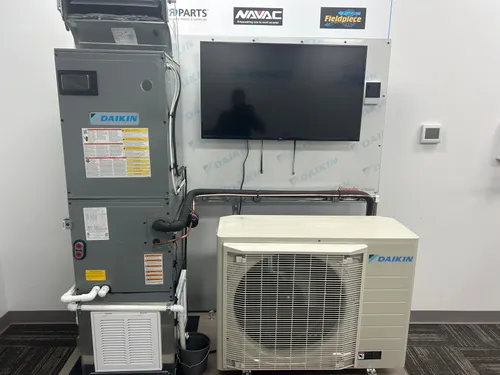
Heating & Cooling | Mafer AC
1317 Edgewater Dr Suite 3594, Orlando, FL 32804
Heating & Cooling | Mafer AC is an HVAC company based in Orlando, FL, providing a wide range of heating and cooling services. They offer installation, repair, and maintenance for air conditioners, furnaces, heat pumps, boilers, and geothermal systems, along with duct cleaning and indoor air quality services. The company is known for handling both residential and commercial HVAC needs with certified professionals. Established in 2021, Mafer AC serves the Central Florida area and provides 24/7 emergency support for urgent HVAC issues.
Ingenuity Air
2785 Wrights Rd #1133, Oviedo, FL 32765
Ingenuity Air is an HVAC contractor serving Orlando, FL, specializing in residential and commercial HVAC installation, repair, and maintenance. They provide services for air conditioning, furnaces, heat pumps, boilers, mini splits, and geothermal heat pumps. The company covers the Orlando area including Oviedo and Winter Park, offering comprehensive HVAC solutions to keep homes and businesses comfortable year-round.
How Geothermal Systems Work in Florida's Climate
A geothermal heating and cooling system operates on a simple principle: it exchanges heat with the earth, which maintains a remarkably constant temperature below the surface. In Florida, the ground below about 10 feet remains at a stable 60-70°F throughout the year, regardless of the sweltering summer heat or occasional winter chill. This consistency is the key to the system's extreme efficiency.
The process uses a network of underground pipes, called a ground loop, filled with a water-based solution. During the summer, the system acts as a highly efficient air conditioner. It extracts excess heat from your home and transfers it into the cooler ground loop, where it is absorbed by the earth 1 2. In the winter, the process reverses. The fluid in the loops absorbs the earth's natural warmth, and the heat pump concentrates this energy to provide comfortable heating for your home 3 4. This efficient heat exchange process is why geothermal systems can reduce your heating and cooling energy consumption by 30% to 70% compared to conventional systems 1.
Types of Ground Loop Systems
The design of the underground loop field is critical and depends on your property's characteristics. There are three primary configurations, each with its own advantages.
-
Horizontal Loops: This is often the most cost-effective option if sufficient land is available. Pipes are laid in trenches that are typically 5 to 8 feet deep. While trenching is less expensive than drilling, it requires a larger, clear area of land, which can be a limiting factor on smaller residential lots in Apopka 5.
-
Vertical Loops: This is the most common choice for homes with limited yard space, which is relevant for many properties in and around Apopka. For a vertical ground source heat pump system, contractors use a drilling rig to bore holes 150 to 400 feet deep 6. U-shaped pipe loops are inserted into each borehole, which are then filled with a special grout to ensure good heat transfer. Vertical systems minimize surface disruption but generally have a higher installation cost due to the drilling equipment and labor involved.
-
Pond/Lake Loops: If you have a sufficient body of water on your property, this can be an excellent option. Coils of pipe are submerged at an adequate depth where water temperatures remain stable. This method can be very efficient and lower cost, as it avoids extensive digging or drilling, but it is entirely dependent on having a suitable water source available 7 8.
The Installation Process: What to Expect
Installing a geothermal HVAC system is a significant project that requires careful planning and professional execution. Understanding the steps can help you prepare.
-
Site Assessment and Design: A qualified installer will first conduct a thorough evaluation of your property. This includes calculating your home's heating and cooling loads, assessing soil composition, evaluating available space, and determining the best loop type and size for maximum efficiency.
-
Drilling or Trenching: This is the major earthwork phase. For vertical systems, a drilling rig will create the necessary boreholes. For horizontal systems, an excavator will dig the long trenches. This stage manages the significant upfront labor cost of a geothermal installation 9 10.
-
Loop Installation: The high-density polyethylene pipes are placed into the trenches or boreholes. All sections are fused together to create a continuous, leak-proof loop, which is then pressure-tested to ensure integrity before being connected to the manifold that leads to your home.
-
Indoor Unit Installation: The geothermal heat pump unit itself is typically installed in a garage, basement, or utility closet. It is quieter than a traditional outdoor AC unit. Your installer will connect it to your home's existing ductwork or to a new duct system if needed.
-
System Connection and Startup: The ground loops are connected to the heat pump, completing the circuit. The system is filled with fluid, purged of air, and started. A final inspection and test ensure everything is operating correctly and efficiently 11.
Find the perfect geothermal heat pump contractors for your needs
Get personalized recommendations and expert advice
Benefits and Considerations for Apopka Homeowners
The decision to invest in a geothermal system involves weighing long-term benefits against initial costs.
Key Benefits:
- Substantial Energy Savings: The core appeal is dramatically lower utility bills. By using the earth's stable temperature, these systems require far less electricity to heat and cool your home, leading to savings of 30% to 70% on related energy costs 12.
- Exceptional Longevity: The underground loop system is incredibly durable, often carrying warranties of 25 to 50 years and potentially lasting generations. The indoor heat pump unit also has a long life expectancy, typically over 20 years.
- Superior Cooling Performance: For Florida homeowners, this is a major advantage. A geothermal system is exceptionally efficient at removing heat and humidity from your home, providing powerful, cost-effective air conditioning throughout the long summer.
- Quiet and Low-Maintenance: With no loud outdoor condenser unit, operation is very quiet. The system also has fewer mechanical components exposed to the weather, which can translate to lower maintenance needs over time.
Important Considerations:
- Higher Upfront Investment: The installation cost for a complete residential geothermal system is significant, often ranging from $20,000 to $40,000 or more 13 14. This cost is influenced by your home's size, the chosen loop type (vertical loops are more expensive), and site-specific challenges.
- Site Suitability: Not every property is ideal. A professional assessment is crucial to determine if you have enough land for horizontal trenches, suitable soil/rock for drilling, or access to a pond. In denser parts of Apopka, vertical loops are frequently the only viable option.
- Return on Investment: While the payback period varies, the combination of high energy savings, potential tax credits or rebates, and increased home value can make geothermal a sound financial decision over the long term 15.
Finding the Right Local Expertise
Given the complexity and custom nature of geothermal installations, choosing an experienced, certified contractor is paramount. Look for professionals with specific training in geothermal system design and installation, such as certification from the International Ground Source Heat Pump Association (IGSHPA). They should conduct a detailed Manual J load calculation for your home and provide a clear, comprehensive proposal outlining the system design, equipment specifications, and a realistic estimate of energy savings.
Frequently asked questions
Sources
Footnotes
-
5 Things You Should Know about Geothermal Heat Pumps - https://www.energy.gov/cmei/articles/5-things-you-should-know-about-geothermal-heat-pumps ↩ ↩2
-
Geothermal Heating And Cooling Works In Florida. Here's How - https://symbiontservice.com/2011/06/07/geothermal-heating-and-cooling-works-in-florida-heres-how/ ↩
-
Geothermal Energy in Florida | Efficient Heating & Cooling - https://tonykellyinc.com/what-is-geothermal-energy-in-florida/ ↩
-
Geothermal (Ground Source) Heat Pumps - NY.gov - https://cleanheat.ny.gov/geothermal-heat-pumps/ ↩
-
Geothermal heating & cooling, heat pumps, heat exchange ... - https://aztechgeo.com/residential-geothermal/how-it-works/ ↩
-
Geothermal Heat Pump Installation: What To Expect For Your Property - https://jomory.com/geothermal-heat-pump-installation-what-to-expect-for-your-property/ ↩
-
Geothermal Heating, Cooling, and Hot Water Systems - https://igshpa.org/wp-content/uploads/Homeowners-Guide-to-Geothermal.pdf ↩
-
Geothermal Heat Pumps - Department of Energy - https://www.energy.gov/energysaver/geothermal-heat-pumps ↩
-
Geothermal Heat Pumps, Explained - Bosch Home Comfort - https://www.bosch-homecomfort.com/us/en/residential/connect/blog/geothermal-heat-pumps-go-green-save-green/ ↩
-
How Geothermal Heat Pumps Work - https://www.youtube.com/watch?v=XxlTnBukweI&t=37 ↩
-
Geothermal Heat Pump Orlando: Top Benefits in 2024! - https://www.callacs.com/post/geothermal-heat-pump-orlando ↩
-
Guide to Geothermal Heat Pumps - https://www.energy.gov/sites/prod/files/guide_to_geothermal_heat_pumps.pdf ↩
-
How Does A Geothermal Heat Pump Work? Complete 2025 Guide - https://solartechonline.com/blog/how-does-geothermal-heat-pump-work/ ↩
-
Geothermal Heat Pump Guide: Installation Costs, Types And Benefits - https://modernize.com/hvac/heating-repair-installation/heat-pump/geothermal ↩
-
Geothermal Heat Pumps - EnergySmart CNY - https://www.energysmartcny.org/heat-pumps/geothermal/ ↩