
Find the Best Geothermal Heat Pump Contractors for Your Business
No obligation • Fast responses • Nationwide coverage

Why you can trust HVAC Firms
HVAC Firms is a leading United States resource for evaluating HVAC service providers. Our team researches companies, checks credentials, and reviews customer feedback to present clear, unbiased information. Listings and rankings are based on merit, and companies cannot pay to change our editorial content.
Search providers near you
Top Geothermal Heat Pump Contractors in Stratford, Connecticut Ranked
Geothermal heat pumps, also known as ground-source heat pumps, are a highly efficient technology for heating and cooling your Stratford home by leveraging the earth's stable underground temperature. This system matters because it can dramatically reduce your energy bills and environmental footprint while providing reliable comfort year-round. For Stratford residents, finding a qualified local installer is the first step to accessing these long-term benefits. This guide will help you understand how these systems work, what installation entails, and how to evaluate providers in the Stratford area.
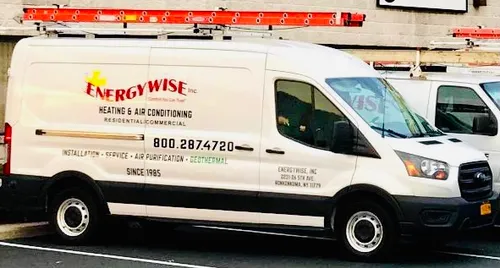
Energywise Inc
2231 5th Ave Suite 26, Ronkonkoma, NY 11779
Energywise Inc is an HVAC company based in New York, NY, specializing in heating and cooling solutions. They offer installation, repair, and maintenance services for a variety of systems including heat pumps, central air conditioning, ductless mini splits, geothermal systems, and traditional furnaces. Their factory-trained technicians provide expert guidance and personalized recommendations to optimize home comfort and energy efficiency. Energywise Inc emphasizes energy-efficient products and sustainable solutions to reduce environmental impact while maintaining reliable system performance. The company has decades of experience and provides 24/7 emergency repair services to address urgent heating or cooling issues promptly.
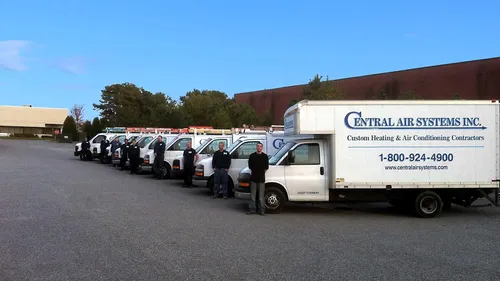
Central Air Systems, Inc
22 Scouting Blvd #2, Medford, NY 11763
Central Air Systems, Inc is an HVAC company serving New York, NY, specializing in heating and cooling services. They provide repair, installation, and maintenance for air conditioners, furnaces, boilers, and geothermal heat pumps. The company also offers indoor air quality services and HVAC tune-ups. Established in 1989, Central Air Systems has experience delivering comprehensive comfort solutions, including high-efficiency system installations and geothermal heating and cooling. Their technicians are factory trained and equipped to handle repairs for all major brands.

ZBF Geothermal, LLC
New York, NY
ZBF Geothermal, LLC is a geothermal heat pump contractor based in New York, NY, serving Long Island and the surrounding areas. The company specializes in the design, installation, and servicing of geothermal systems for residential and commercial clients. They work with most major brands of geothermal and HVAC equipment and have been involved in notable projects such as NYC's first closed loop affordable passive housing project in Far Rockaway. Founded in 2012 by Zachary Fink, who comes from a family with over 70 years of experience in heating and air conditioning, ZBF Geothermal focuses on high-quality geothermal installations with industry-leading warranties and performance.
How a Geothermal System Works
A geothermal or ground-source heating and cooling system operates on a simple principle of heat exchange. Unlike traditional systems that burn fuel or battle outdoor air temperatures, a geothermal unit uses a network of buried pipes, called a ground loop, filled with a water-based solution 1.
In the winter, this fluid circulates through the underground loop, absorbing the consistent warmth of the earth (typically 45-55°F in Connecticut). The geothermal heat pump then concentrates this low-grade heat and transfers it to your home's air ducts or radiant floor system 2. The process reverses in the summer: the system extracts heat from your indoor air and transfers it into the cooler ground loop, effectively providing air conditioning. Many systems can also be configured to supply a portion of your home's hot water, increasing overall efficiency.
Types of Geothermal Loop Systems for Stratford Properties
The design of the underground loop is critical and depends heavily on your property's characteristics. The most common types installed in Connecticut are closed-loop systems.
Vertical Closed-Loop Systems This is the most popular configuration for Stratford and surrounding Fairfield County homes, where residential lots are often smaller. A vertical system involves drilling several deep boreholes, typically between 150 to 500 feet deep. U-shaped pipes are inserted into each borehole, and the holes are then grouted. This design requires minimal surface area but involves specialized drilling equipment, making site access an important consideration.
Horizontal Closed-Loop Systems If you have more land available (often half an acre or more), a horizontal loop may be an option. Excavators dig long, shallow trenches-usually four to six feet deep-and lay pipes in a serpentine pattern before backfilling. This method can be less expensive to install than vertical drilling when space permits, as it uses more common excavation equipment.
Other System Types While less common, other configurations exist. An open-loop system uses groundwater from a well as the heat exchange fluid, circulating it directly through the heat pump before discharging it 3. A pond/lake loop can be a highly efficient option if you have a sufficiently large, deep body of water on your property, as coils of pipe are submerged at the bottom 4.
The Geothermal Installation Process
Installing a ground-source heat pump is a significant project that requires careful planning and expert execution. Understanding the steps can help you know what to expect from local Stratford contractors.
- Site Analysis and System Design: A qualified installer will assess your home's heating and cooling loads, evaluate your property's soil composition, rock content, and available space, and determine the optimal loop type and size. Proper design is crucial for system efficiency and longevity.
- Permitting: Your installer will handle obtaining the necessary local building and drilling permits required by the Town of Stratford.
- Loop Installation: This is the most distinctive phase. For a vertical system, a drilling rig will be brought in to create the boreholes. For a horizontal system, an excavator will dig the trenches. The high-density polyethylene pipes are then placed and connected into a continuous loop.
- Heat Pump Unit Installation: The indoor heat pump unit, which is about the size of a traditional furnace, is installed in your basement, utility room, or garage. The existing ductwork or radiant system is connected to this unit.
- Connection and Testing: The underground loop is connected to the heat pump, the system is filled with fluid, purged of air, and pressurized. The contractor will then start up the system, test its performance, and ensure all components are operating correctly 5.
Find the perfect geothermal heat pump contractors for your needs
Get personalized recommendations and expert advice
Drilling vs. Trenching: What Stratford Homeowners Should Know
The method used to install the ground loop has major implications for your property and project.
- Drilling for Vertical Loops: This method is ideal for smaller lots common in Stratford neighborhoods. It causes less surface disruption to lawns and landscaping, as the boreholes are only about 4-6 inches in diameter. The deeper loops also often provide superior performance due to more stable ground temperatures. The key requirement is access for a large drilling rig to your backyard or side yard 6.
- Trenching for Horizontal Loops: This approach requires a significant amount of clear, open land. While the trenches are shallow, they cover a large area, which will temporarily disrupt a sizable section of your yard. The equipment used (excavators) is more common than drilling rigs, which can sometimes make this a more cost-effective option if your property can accommodate it 7 8.
Understanding Costs and Long-Term Savings
The decision to invest in a geothermal system involves weighing higher upfront costs against decades of operational savings.
Upfront Investment The initial cost for a complete geothermal heating and cooling system in Stratford is significant, typically ranging from $20,000 to $40,000 or more, depending on your home's size, the loop type, and site conditions 9 10. The majority of this cost is associated with the ground loop installation-the drilling, piping, and excavation. It's important to get detailed, itemized quotes from multiple installers.
Substantial Energy Savings This is where geothermal systems shine. By using the earth's free, stable thermal energy, these systems operate with remarkable efficiency. Homeowners can expect to see a reduction of 30% to 70% on their heating, cooling, and hot water bills compared to conventional systems like oil furnaces or standard air conditioners 11 12 13. The exact savings depend on your previous fuel source and local utility rates.
Longevity and Value A well-installed geothermal system offers exceptional durability. The indoor heat pump unit typically lasts 20 years or more, while the underground polyethylene piping often carries warranties of 50 years and can potentially last for generations. This longevity, combined with massive energy savings, means the system often pays for itself over time. Additionally, it can increase your home's value and appeal to energy-conscious buyers.
Finding the Right Local Installer
Choosing a qualified geothermal contractor in the Stratford area is the most important step. Look for companies with specific, proven experience in ground-source heat pump installation, not just general HVAC work. They should be able to explain the design process, provide references from local installations, and hold relevant certifications from organizations like the International Ground Source Heat Pump Association (IGSHPA). Always review multiple detailed proposals that include system design specifications, equipment models, and a clear breakdown of all costs.
Frequently asked questions
Sources
Footnotes
-
How Do Geothermal Systems Work for Residential Homes? - https://www.davisheat.com/blog/how-do-geothermal-systems-work-for-residential-homes/ ↩
-
How Does a Geothermal System Work? - ClimateMaster - https://www.climatemaster.com/homeowner/side-links/how-it-works ↩
-
PROS AND CONS OF GEOTHERMAL SYSTEMS - CGA.ct.gov - https://www.cga.ct.gov/2008/rpt/2008-R-0543.htm ↩
-
Geothermal Heat Pumps - Department of Energy - https://www.energy.gov/energysaver/geothermal-heat-pumps ↩
-
How It Works: The Geothermal Installation Process - https://www.awheatingandcooling.com/blog/geothermal-service/how-it-works-the-geothermal-installation-process/ ↩
-
Geothermal Heat Pumps, Explained - Bosch Home Comfort - https://www.bosch-homecomfort.com/us/en/residential/connect/blog/geothermal-heat-pumps-go-green-save-green/ ↩
-
Geothermal Heating, Cooling, and Hot Water Systems - https://igshpa.org/wp-content/uploads/Homeowners-Guide-to-Geothermal.pdf ↩
-
Ground-Source Heat Pumps - Energize CT - https://www.energizect.com/sites/default/files/documents/ECT_21_GSHP_GUIDE_FIN_011222.pdf ↩
-
Guide to Geothermal Heat Pumps - https://www.energy.gov/sites/prod/files/guide_to_geothermal_heat_pumps.pdf ↩
-
Geothermal Heat Pump Guide: Installation Costs, Types And Benefits - https://modernize.com/hvac/heating-repair-installation/heat-pump/geothermal ↩
-
5 Things You Should Know about Geothermal Heat Pumps - https://www.energy.gov/cmei/articles/5-things-you-should-know-about-geothermal-heat-pumps ↩
-
Geothermal heat pumps: The ultimate guide to ground-source ... - https://termo-plus.com/blog/geothermal-ultimate-guide-to-ground-source-heat-pumps/ ↩
-
Geothermal Heat Pumps - EnergySmart CNY - https://www.energysmartcny.org/heat-pumps/geothermal/ ↩