Find the Best Geothermal Heat Pump Contractors for Your Business
No obligation • Fast responses • Nationwide coverage

Why you can trust HVAC Firms
HVAC Firms is a leading United States resource for evaluating HVAC service providers. Our team researches companies, checks credentials, and reviews customer feedback to present clear, unbiased information. Listings and rankings are based on merit, and companies cannot pay to change our editorial content.
Search providers near you
Best Geothermal Heat Pump Contractors in Connecticut Ranked
A geothermal heat pump, or ground-source heat pump, is a highly efficient heating and cooling system that uses the earth's stable temperature to regulate your home's climate. In Connecticut, these systems offer a powerful solution for reducing energy bills and environmental impact, especially given the state's cold winters and warm summers. This guide explains the key considerations for Connecticut homeowners, from local regulations and incentives to installation costs and finding qualified professionals.
How Geothermal Systems Work in Connecticut
Geothermal heat pumps don't create heat by burning fuel; they move it. They leverage the earth's relatively constant temperature-approximately 50°F at depth in Connecticut-as a heat source in winter and a heat sink in summer 1. A fluid circulates through a loop of pipes buried underground, exchanging heat with the earth. This fluid then carries that thermal energy to a heat pump unit inside your home, which concentrates it and distributes comfortable air through your existing ductwork or a ductless system.
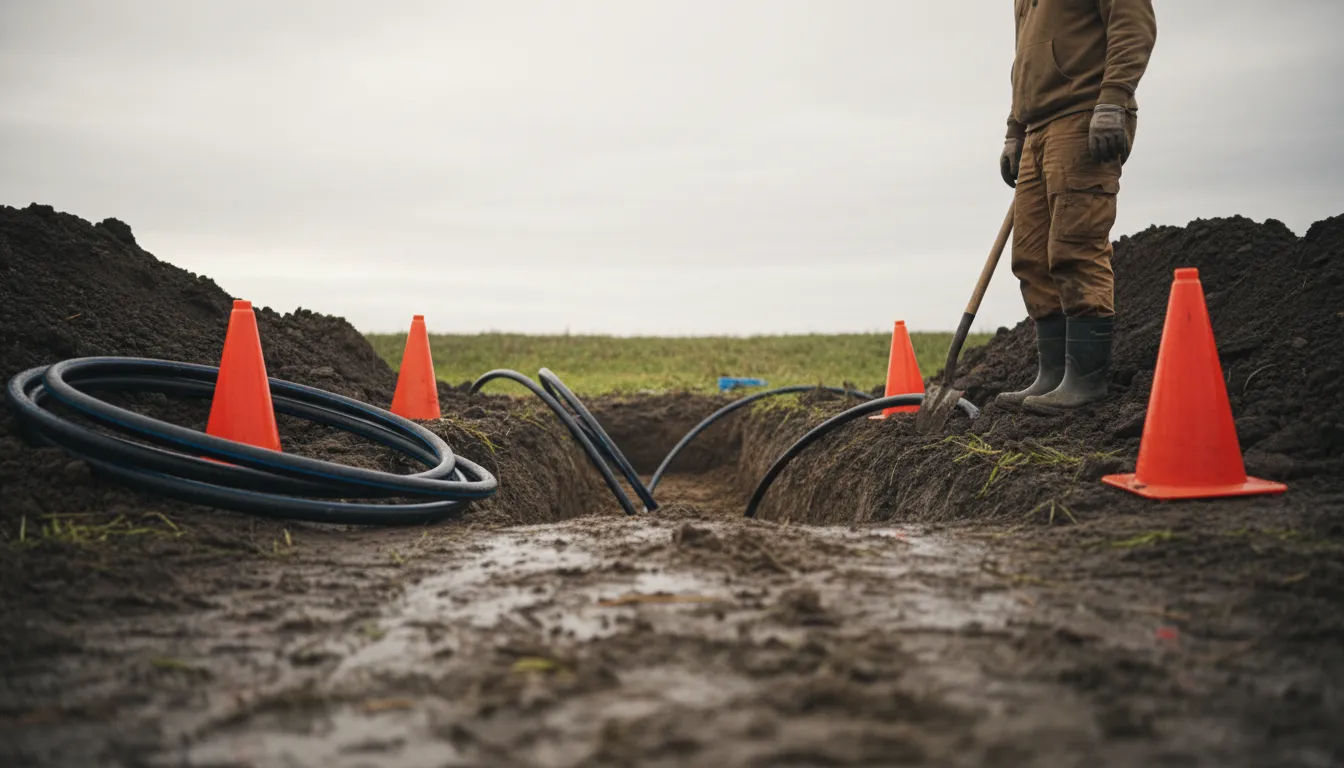
The core of the system is the ground loop. In Connecticut, the most common type is the vertical closed-loop system. This involves drilling deep boreholes-typically 300 to 500 feet-and inserting U-shaped pipes that are then sealed with a special grout. This design is ideal for Connecticut's often smaller residential lots and provides excellent performance in a variety of soil and rock conditions.
Key Benefits for Connecticut Homeowners
Installing a geothermal system in Connecticut comes with significant long-term advantages:
- Exceptional Efficiency: Ground-source heat pumps are the most efficient heating and cooling technology available, often achieving efficiencies of 300-600% 2. This means they deliver 3 to 6 units of heat for every unit of electricity used, leading to dramatic reductions in energy consumption.
- Lower Operating Costs: By slashing your heating and cooling energy use by 40-70%, a geothermal system can significantly reduce your monthly utility bills, offsetting the higher upfront investment over time.
- Year-Round Comfort: A single system provides quiet, even heating in winter, efficient cooling in summer, and can often be configured to supply a portion of your home's hot water.
- Reduced Carbon Footprint: By using renewable thermal energy from the ground and electricity (which is increasingly green in Connecticut), you drastically cut your home's greenhouse gas emissions.
- Durability and Longevity: The underground piping often carries warranties of 50 years and can last generations, while the indoor heat pump unit typically lasts 20-25 years-longer than conventional HVAC equipment.
Understanding Costs and Incentives
The primary barrier to geothermal adoption is the initial installation cost, which is higher than traditional systems due to the drilling and ground loop work.
- Upfront Installation Cost: For a typical residential closed-loop system in Connecticut, homeowners can expect costs to range from $10,000 to $25,000 per ton of capacity 3 4. A full system for an existing home often falls in the $20,000 to $45,000 range before incentives. New construction projects are generally less expensive.
- Long-Term Savings: While the initial cost is high, the operational savings are substantial. Homeowners typically see a payback period of 5 to 15 years, after which they enjoy decades of significantly lower energy bills.
Thankfully, Connecticut offers robust financial incentives to make geothermal more accessible:
- Energize CT Rebates: This statewide program, funded by the Connecticut Energy Efficiency Fund, offers significant rebates for installing qualifying ground-source heat pumps. Rebates are administered through your local utility (Eversource or United Illuminating) and can reduce your upfront cost by thousands of dollars 5.
- Federal Tax Credits: You may be eligible for a federal investment tax credit (ITC) for renewable energy systems, which can cover a percentage of the total installed cost, including labor and site work. It's crucial to consult with a tax professional for current credit details 6.
- Financing Options: Many contractors offer financing, and programs like the Energize CT Smart-E Loan provide low-interest financing specifically for energy efficiency upgrades.
Find the perfect geothermal heat pump contractors for your needs
Get personalized recommendations and expert advice
Connecticut Regulations and the Permitting Process
Installing a geothermal ground loop is considered well drilling in Connecticut and is strictly regulated to protect groundwater, which is a critical resource. Navigating these rules is a key part of the process.
Licensing Requirements: Anyone drilling boreholes for a geothermal system must hold a specific state license. Drillers must be licensed as a Limited Geothermal Contractor (W-7) by the Connecticut Department of Consumer Protection 7. Always verify your installer holds this active license.
The Permitting Process: A successful installation requires several approvals:
- State Permit: The driller must submit a DCP Well Drilling Permit Application to the state before work begins.
- Local Health Department Permit: This is the most critical local permit. Your town's health department will review the system design to ensure it complies with codes regarding setbacks from property lines, septic systems, wells, and utilities 8.
- Building Permit: A standard building permit from your local building department is also required for the interior mechanical work and electrical connections.
Installation Standards: Connecticut has specific technical rules for boreholes. Regulations mandate that boreholes extend at least 4 feet below grade and are properly grouted from the bottom up with an approved material (like bentonite or thermally enhanced cement) to prevent surface contaminants from entering groundwater 9. Special grout mixes are required in areas susceptible to road salt contamination 10.
Finding the Right Installer and Assessing Your Property
Choosing a qualified, experienced installer is the single most important decision you will make.
What to Look For in a Contractor:
- Valid W-7 License: Non-negotiable proof of state qualification for drilling.
- Experience with Local Geology: Ask for examples of past installations in your area.
- IACC Certification: While not a state requirement, certification from the International Association of Certified Geothermal Contractors indicates advanced training.
- Comprehensive Service: The best contractors handle everything: design, permitting, drilling, interior installation, and system commissioning.
- References and Portfolios: Ask for and contact recent customer references.
Site Suitability: Not every property is ideal. A reputable contractor will conduct a thorough site evaluation, which may include:
- Thermal Conductivity Test: A small test borehole is drilled to measure how well your soil and rock transfer heat, which is essential for proper system sizing.
- Land Assessment: Evaluating available space for drilling rig access and the loop field itself. Vertical systems require less surface area but need adequate space for the drilling equipment.
- Utility Locates: Identifying all underground utilities before any digging begins.
Maintenance and Long-Term Performance
Geothermal systems are remarkably low-maintenance. The indoor unit requires the same basic maintenance as a furnace or air handler: regular filter changes and periodic check-ups by a professional. The buried ground loop is virtually maintenance-free. To ensure peak efficiency and longevity, consider signing an annual service agreement with your installer.
Frequently asked questions
Sources
Footnotes
-
CT Geothermal Brochure - CT Farm Energy Program - https://ctfarmenergy.org/wp-content/uploads/2018/11/CT-Geothermal-Brochure-2018-1.pdf ↩
-
Geothermal Incentives & Financing - Connecticut Wells - https://connecticutwells.com/geothermal-heating-and-cooling/geothermal-incentives-financing/ ↩
-
Heat Pumps - Connecticut General Assembly - https://www.cga.ct.gov/2025/rpt/pdf/2025-R-0096.pdf ↩
-
PROS AND CONS OF GEOTHERMAL SYSTEMS - https://www.cga.ct.gov/2008/rpt/2008-R-0543.htm ↩
-
Ground-Source Heat Pumps - Energize CT - https://www.energizect.com/sites/default/files/documents/ECT_21_GSHP_GUIDE_FIN_011222.pdf ↩
-
Geothermal HVAC in Litchfield, CT: Advantages & Costs - https://www.plumbtechllc.com/geothermal-hvac-in-litchfield-ct/ ↩
-
Sec. 25-129-7. Limited geothermal contractor W-7 - https://eregulations.ct.gov/eRegsPortal/Browse/RCSA/Title_25Subtitle_25-129Section_25-129-7/ ↩
-
Closed Loop Geothermal Systems - Bethel, CT - https://bethel-ct.gov/index.asp?SEC=7ED60FCF-759E-4194-8945-CFEFF03F088A ↩
-
Connecticut eRegulations System - https://eregulations.ct.gov/eRegsPortal/Search/getDocument?guid=%7BB0EC2581-0000-C63A-9D25-3436EF9CC303%7D ↩
-
Well Drilling and Geothermal Systems - Connecticut General Assembly - https://www.cga.ct.gov/2022/rrdata/pr/2022REG2022-006-RC.PDF ↩