
Find the Best Geothermal Heat Pump Contractors for Your Business
No obligation • Fast responses • Nationwide coverage

Why you can trust HVAC Firms
HVAC Firms is a leading United States resource for evaluating HVAC service providers. Our team researches companies, checks credentials, and reviews customer feedback to present clear, unbiased information. Listings and rankings are based on merit, and companies cannot pay to change our editorial content.
Search providers near you
Top Geothermal Heat Pump Contractors in Milford, Connecticut Ranked
A geothermal heat pump is a highly efficient heating and cooling system that leverages the stable temperatures found underground. For Milford homeowners, this technology offers a path to significant energy savings and long-term comfort, independent of fluctuating outdoor air temperatures. This guide explains how ground-source systems work, the installation process specific to our area, and how you can connect with qualified local experts to explore this sustainable option for your home.
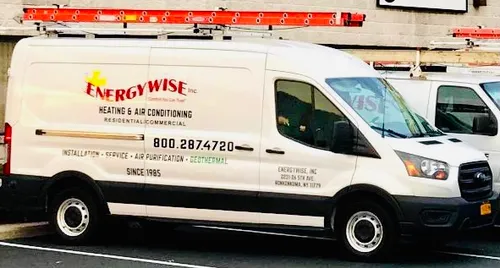
Energywise Inc
2231 5th Ave Suite 26, Ronkonkoma, NY 11779
Energywise Inc is an HVAC company based in New York, NY, specializing in heating and cooling solutions. They offer installation, repair, and maintenance services for a variety of systems including heat pumps, central air conditioning, ductless mini splits, geothermal systems, and traditional furnaces. Their factory-trained technicians provide expert guidance and personalized recommendations to optimize home comfort and energy efficiency. Energywise Inc emphasizes energy-efficient products and sustainable solutions to reduce environmental impact while maintaining reliable system performance. The company has decades of experience and provides 24/7 emergency repair services to address urgent heating or cooling issues promptly.

Central Air Systems, Inc
22 Scouting Blvd #2, Medford, NY 11763
Central Air Systems, Inc is an HVAC company serving New York, NY, specializing in heating and cooling services. They provide repair, installation, and maintenance for air conditioners, furnaces, boilers, and geothermal heat pumps. The company also offers indoor air quality services and HVAC tune-ups. Established in 1989, Central Air Systems has experience delivering comprehensive comfort solutions, including high-efficiency system installations and geothermal heating and cooling. Their technicians are factory trained and equipped to handle repairs for all major brands.

ZBF Geothermal, LLC
New York, NY
ZBF Geothermal, LLC is a geothermal heat pump contractor based in New York, NY, serving Long Island and the surrounding areas. The company specializes in the design, installation, and servicing of geothermal systems for residential and commercial clients. They work with most major brands of geothermal and HVAC equipment and have been involved in notable projects such as NYC's first closed loop affordable passive housing project in Far Rockaway. Founded in 2012 by Zachary Fink, who comes from a family with over 70 years of experience in heating and air conditioning, ZBF Geothermal focuses on high-quality geothermal installations with industry-leading warranties and performance.
How Geothermal Systems Work: Harnessing the Earth's Energy
The core principle behind a geothermal system is remarkably simple and reliable. Just a few feet below the surface, the Earth maintains a nearly constant temperature year-round, typically between 50°F and 60°F in our region. This thermal stability is the system's powerhouse, unlike conventional air-source heat pumps that struggle with Connecticut's cold winters and humid summers.
A ground-source heat pump system has three main components:
- The Ground Loop: This is a network of high-density polyethylene pipes buried in your yard, either vertically in deep boreholes or horizontally in trenches. A water-based fluid circulates through this closed loop.
- The Heat Pump Unit: This indoor unit, similar in size to a traditional furnace, contains a compressor and heat exchanger.
- The Distribution System: This is your home's existing ductwork for forced air or a hydronic system (like radiant floor tubing) for distributing heated or cooled air/water.
In the winter, the fluid in the ground loop absorbs the Earth's latent heat and carries it to the indoor heat pump. The pump concentrates this low-grade heat and transfers it to your home's air or water distribution system. In the summer, the process reverses: the system extracts heat from your indoor air and transfers it into the cooler ground loop fluid, which then dissipates the heat into the Earth, effectively cooling your home.
Types of Ground Loop Systems for Milford Properties
Choosing the right type of ground loop is a critical decision based on your property's characteristics. The geology, soil composition, and available land area in Milford directly influence which system is most feasible and cost-effective.
Vertical Closed-Loop Systems This is the most common configuration for residential installations in Connecticut, including Milford1 2. Vertical systems are ideal for smaller residential lots, as they require minimal surface area. Installers use a drilling rig to bore holes typically 150 to 500 feet deep 3. U-shaped loops of pipe are inserted into each borehole, which are then backfilled with a special grout to ensure good thermal conductivity. While the drilling process represents a significant portion of the upfront cost, vertical loops offer excellent performance and longevity.
Horizontal Closed-Loop Systems If you have ample land available (often ¼ to ¾ of an acre for an average home), a horizontal loop may be an option 4. Trenchers dig trenches about five to eight feet deep, and pipes are laid in a serpentine pattern before the trenches are backfilled5 6. This method generally has lower excavation costs than vertical drilling but is usually only practical for new construction projects or homes with very large, unobstructed yards.
Pond/Lake Loops For properties with access to a sufficiently deep and large pond or lake, this can be an efficient option. Coils of pipe are submerged at a depth where water temperatures remain stable. This method avoids the need for extensive drilling or trenching but is entirely dependent on having a suitable water body on or adjacent to your property.
Open-Loop Systems These systems are less common in residential settings. They use groundwater from a well as the direct heat exchange fluid, pumping it through the heat pump and then discharging it back into a second well or a suitable drainage area. They require an abundant, clean water source and are subject to more local environmental regulations and permitting.
Find the perfect geothermal heat pump contractors for your needs
Get personalized recommendations and expert advice
The Installation Process: From Assessment to Comfort
Installing a geothermal heating and cooling system is a significant project that requires specialized expertise. Understanding the steps involved can help you know what to expect when working with a local installer.
-
Comprehensive Site Assessment: A qualified installer will first conduct a detailed evaluation of your property. This includes assessing soil and rock conditions (which affect thermal conductivity), available space for drilling or trenching, your home's current insulation and ductwork, and calculating your precise heating and cooling loads. This assessment is crucial for designing a properly sized and efficient system.
-
System Design & Permitting: Based on the assessment, the installer designs the loop field and selects the appropriate indoor heat pump unit. They will also handle securing any necessary local building or environmental permits required for drilling in Milford.
-
Loop Field Installation: This is the major earthwork phase. For a vertical system, a drilling rig will be brought in to create the boreholes. For a horizontal system, a trencher will excavate the necessary loops. The high-density polyethylene pipe is then carefully placed and connected into a continuous loop 7.
-
Loop Connection & Backfilling: The ends of the ground loop are brought into the home to connect to the heat pump. Vertical boreholes are filled with a thermally enhanced grout, while horizontal trenches are backfilled with native soil. Proper backfilling is essential for maximizing heat transfer and protecting the pipes.
-
Indoor Unit Installation: The geothermal heat pump unit is installed inside your home, typically in a basement, utility room, or garage. It is connected to the ground loop and to your home's existing ductwork or hydronic distribution system. An experienced technician will also set up the system's controls and thermostat.
-
System Charging, Testing, & Commissioning: The loop is filled with fluid, purged of air, and pressurized. The entire system is then started and meticulously tested to ensure it operates at peak efficiency for both heating and cooling modes before being turned over to the homeowner8.
Long-Term Value: Savings, Payback, and Durability
The decision to install a geothermal system is an investment in long-term home performance and energy independence. The benefits extend far beyond monthly utility bills.
-
Substantial Energy Savings: Geothermal heat pumps are 300-600% efficient, meaning they move three to six units of heat for every one unit of electricity used to run the compressor and pump. This can translate to a reduction of 30% to 70% in your heating and cooling energy use compared to systems using oil, propane, or standard electric resistance heat9. Homeowners often see the most dramatic savings when switching from fuel oil or propane.
-
Understanding Payback Period: The upfront cost for a complete geothermal system in Milford can range from $20,000 to $40,000 or more, with the ground loop work being a major component10. The "payback period"-the time it takes for energy savings to recoup the installation cost-typically ranges from 4 to 15 years11 12. This period is influenced by your current fuel costs, the efficiency of your old system, available incentives, and the specific design of your new system.
-
Exceptional System Lifespan: The underground loop system is incredibly durable, with a lifespan often exceeding 50 years 13. The indoor heat pump unit typically lasts 20 to 25 years, which is longer than the average lifespan of a conventional furnace or air conditioner. This longevity means you are investing in a climate control solution that will serve your home for decades.
-
Enhanced Comfort & Quiet Operation: Geothermal systems provide consistent, even heating and cooling without the drafts or hot/cold spots common with fossil fuel systems. They also operate very quietly, as there is no noisy outdoor condenser unit kicking on and off.
Frequently asked questions
Sources
Footnotes
-
Ground-Source Heat Pumps - Energize CT - https://www.energizect.com/sites/default/files/documents/ECT_21_GSHP_GUIDE_FIN_011222.pdf ↩
-
PROS AND CONS OF GEOTHERMAL SYSTEMS - CGA.ct.gov - https://www.cga.ct.gov/2008/rpt/2008-R-0543.htm ↩
-
Geothermal Explained - https://www.geo-inc.com/geothermal-explained ↩
-
Geothermal Heat Pumps - Department of Energy - https://www.energy.gov/energysaver/geothermal-heat-pumps ↩
-
All You Need to Know About Home Geothermal Heating & ... - https://dandelionenergy.com/all-you-need-to-know-about-home-geothermal-heating-cooling ↩
-
Geothermal Heating Systems - https://earthrivergeothermal.com/geothermal-heating-systems/ ↩
-
Geothermal heat pumps: The ultimate guide to ground-source ... - https://termo-plus.com/blog/geothermal-ultimate-guide-to-ground-source-heat-pumps/ ↩
-
Geothermal Heat Pumps | WBDG - https://www.wbdg.org/resources/geothermal-heat-pumps ↩
-
Geothermal Heating, Cooling, and Hot Water Systems - https://igshpa.org/wp-content/uploads/Homeowners-Guide-to-Geothermal.pdf ↩
-
Geothermal Heat Pump Guide: Installation Costs, Types And Benefits - https://modernize.com/hvac/heating-repair-installation/heat-pump/geothermal ↩
-
Everything You Need to Know About Geothermal Heat Pumps - https://www.familyhandyman.com/article/everything-you-need-to-know-about-geothermal-heat-pumps/ ↩
-
Geothermal Heat Pumps: How They Work and Benefits for Your ... - https://www.rbiva.com/resources/geothermal-heat-pumps-how-they-work-and-benefits/ ↩
-
How Do Geothermal Systems Work for Residential Homes? - https://www.davisheat.com/blog/how-do-geothermal-systems-work-for-residential-homes/ ↩