Find the Best Furnace Repair Companies for Your Business
No obligation • Fast responses • Nationwide coverage

Why you can trust HVAC Firms
HVAC Firms is a leading United States resource for evaluating HVAC service providers. Our team researches companies, checks credentials, and reviews customer feedback to present clear, unbiased information. Listings and rankings are based on merit, and companies cannot pay to change our editorial content.
Search providers near you
Top Furnace Repair Companies in Highland, California Ranked
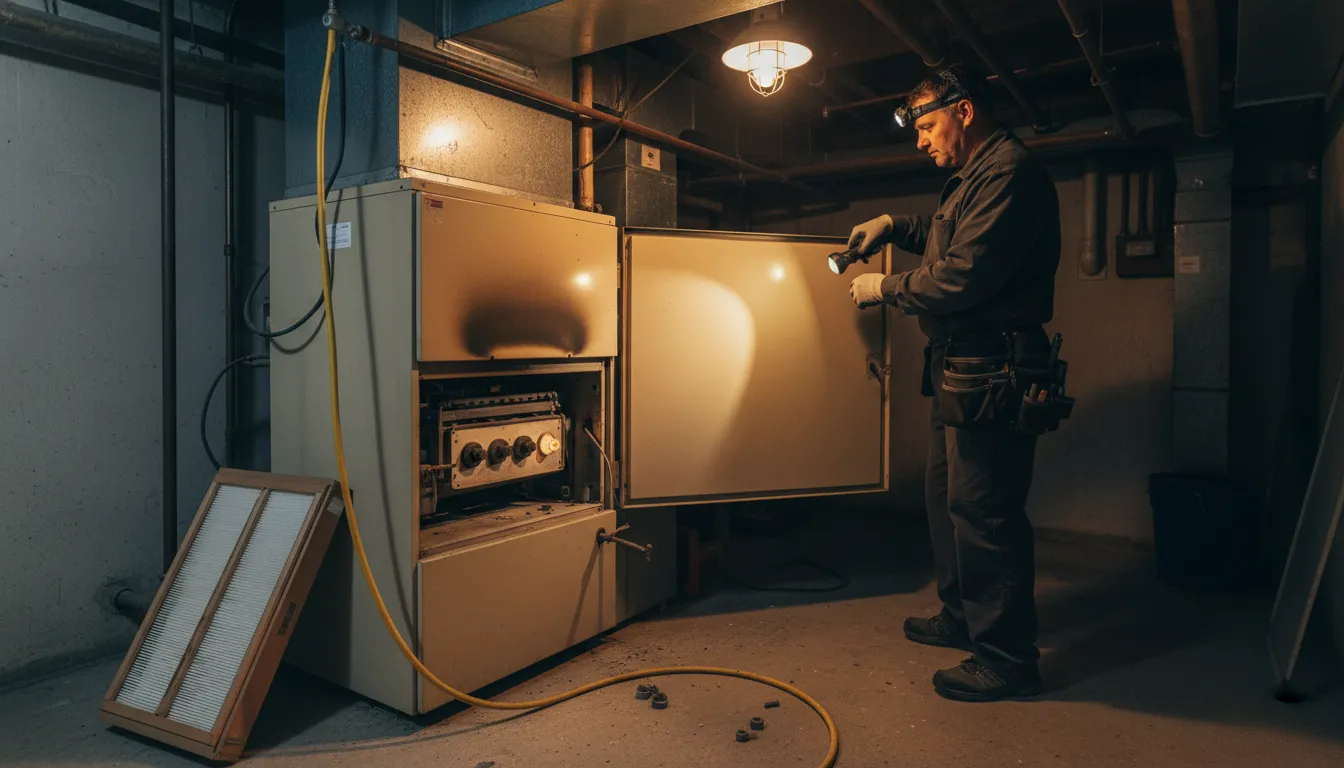
When your furnace stops working on a chilly Highland evening, getting reliable and fast heating repair is essential for your comfort and safety. Furnace repair involves diagnosing and fixing issues with your home's heating system, from simple component swaps to complex part replacements. This guide will help you understand the common furnace problems, typical repair processes, and what to expect when you need to find a qualified technician in the Highland area.
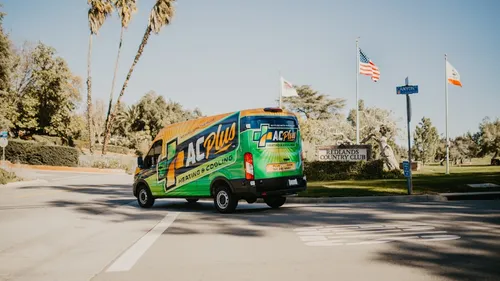
AC Plus Heating & Air Conditioning
14615 Palmdale Rd, Victorville, CA 92392
AC Plus Heating & Air Conditioning serves homeowners in Los Angeles, CA, offering a full range of HVAC services including air conditioning and furnace repair, installation, and maintenance. The company specializes in ductless mini split system installation, providing energy-efficient solutions tailored to home size and climate. Their technicians handle emergency repairs and routine tune-ups to keep systems running smoothly. Based in Victorville, AC Plus Heating & Air Conditioning brings years of experience to the Los Angeles area.
MSP HEATING AND AIR CONDITIONING
2932 Rubidoux Blvd Suite B, Jurupa Valley, CA 92509
MSP HEATING AND AIR CONDITIONING is an HVAC company based in Riverside, CA, offering repair, installation, and maintenance services for air conditioning, furnaces, heat pumps, and indoor air quality systems. Serving Riverside County and parts of San Bernardino County, they provide certified expertise including heat exchange, NATE, EPA 608, and indoor air quality certifications. With over a decade of experience, MSP HEATING AND AIR CONDITIONING focuses on preventing issues through regular maintenance and delivering prompt repairs when needed. They also offer 24/7 availability for emergency HVAC services.
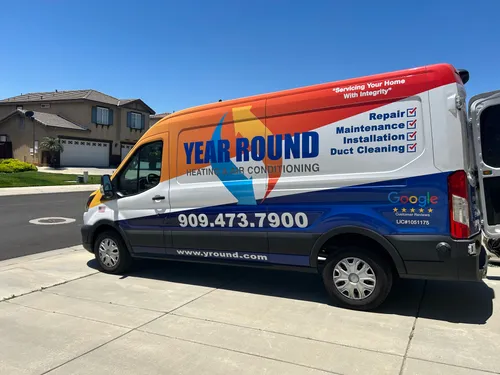
Year Round Heating & Air Conditioning
10444 Corporate Dr Unit A-B, Redlands, CA 92374
Year Round Heating & Air Conditioning provides comprehensive HVAC services in Riverside, CA, including air conditioning and furnace repair, installation, maintenance, and indoor air quality solutions. As a Lennox Dealer, the company offers skilled technicians who handle a variety of heating and cooling systems, ensuring accurate and efficient service. Established in 2016, Year Round Heating & Air Conditioning also offers emergency response services and financing options for repairs and installations.
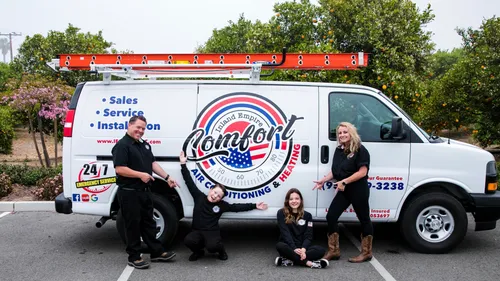
Inland Empire Comfort
19071 Newsome Rd, Riverside, CA 92508
Inland Empire Comfort is a furnace repair company based in Riverside, CA. They provide heating repair services focused on diagnosing and fixing furnace issues to restore efficient heating. Their technicians check for common problems such as dirty filters and uneven heating to ensure the furnace operates properly. Inland Empire Comfort offers same-day emergency heating repairs for urgent situations outside regular business hours.
Direct AC
4199 Flat Rock Rd #126, Riverside, CA 92505
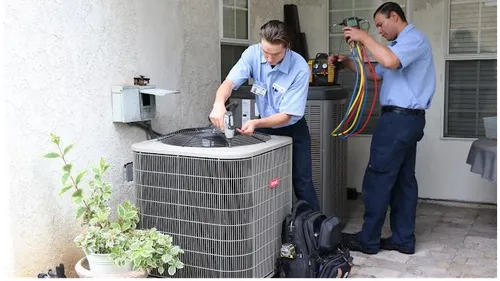
Direct AC is an HVAC contractor based in Riverside, CA, serving the Inland Empire, North San Diego County, and South Orange County. They provide air conditioning, heating, heat pump, and indoor air quality services for both residential and commercial customers. Their capabilities include AC repair, furnace and heat pump installation, and HVAC tune-ups. With years of experience addressing the unique heating and cooling needs of Riverside County residents, Direct AC focuses on maintaining healthy indoor environments. They offer priority service through a Comfort Club membership and provide free second opinions on system replacements.
Understanding the Furnace Repair Process
Knowing what happens when you call for heating system service can make the experience less stressful. The process is generally straightforward and designed to get your home warm again as efficiently as possible.
Initial Contact and Dispatch The first step is contacting a local HVAC company. You'll describe the symptoms-perhaps no heat, strange noises, or the system short-cycling. Based on your description, the company will schedule a service visit. Many providers offer emergency or same-day service for urgent situations, especially during peak winter months.
On-Site Diagnosis A technician arrives at your home and performs a thorough inspection of your heating unit. They will check critical components, run tests, and identify the root cause of the malfunction, such as a faulty ignitor, a dirty flame sensor, or a problem with the control board.
Quote and Approval Before any work begins, the technician should provide you with a clear, itemized quote for the necessary repairs. This includes the cost of parts and labor. You have the opportunity to approve the estimate before they proceed with the furnace service 1 2.
The Repair Work Once approved, the technician performs the fix. The duration can range from 30 minutes for a simple thermostat calibration to several hours for a more involved repair like replacing a blower motor.
System Testing and Completion After the repair is complete, the technician will test your furnace to ensure it operates correctly, safely, and efficiently. They should explain what was done and may offer advice on maintenance to prevent future issues before leaving your home.
Common Furnace Problems in Highland Homes
Furnaces can fail for a variety of reasons. Understanding the most frequent issues can help you communicate problems more effectively to your technician.
Ignition and Pilot Light Failures This is one of the most common reasons a furnace won't start. Hot surface ignitors can crack and fail due to repeated heating and cooling cycles. Similarly, a dirty flame sensor-a safety device-can cause the system to shut down prematurely because it cannot detect a flame.
Faulty Thermostats Sometimes the issue isn't with the furnace itself but with its command center. Problems can include faulty wiring, calibration drift, or simply dead batteries in a wireless model, all of which prevent the signal to heat from reaching your furnace.
Blower Motor and Capacitor Issues The blower motor is responsible for circulating warm air throughout your ducts. If the motor or its starting capacitor fails, you might hear the furnace fire up but feel little to no air coming from your vents 3.
Restricted Airflow from Clogged Filters A dirty air filter is a leading cause of reduced efficiency and system stress. It restricts airflow, causing the furnace to overheat and shut off on a safety limit. This is a simple issue to prevent with regular maintenance.
Venting and Exhaust Problems Your furnace produces combustion gases that must be safely vented outside. A blocked, damaged, or corroded flue pipe can create a dangerous situation with carbon monoxide and will cause your furnace to shut down as a safety precaution 4.
What to Expect: Repair Timelines and Costs
The time and cost for furnace fixes in Highland can vary widely based on the problem's complexity, the parts needed, and the time of year.
How Long Will the Repair Take?
- Simple Fixes (30-60 minutes): Repairs like replacing a thermostat, installing a new air filter, or swapping out a hot surface ignitor are typically very quick once the technician diagnoses the issue.
- Moderate Repairs (1-4 hours): Jobs such as replacing a blower motor capacitor, a gas valve, or a relay involve more labor and testing, generally taking a few hours to complete.
- Complex Repairs (Half-day or more): Major component replacements, like a heat exchanger or a full blower assembly, are more involved. These can take longer and may require ordering specific parts, which can add to the timeline.
- Emergency Response Time: The wait for a technician to arrive can vary by company and demand. During a cold snap, expect longer wait times for non-emergency appointments, but most companies prioritize no-heat calls.
Understanding Furnace Repair Costs
Pricing for heating repair depends heavily on the part that needs replacement and the labor involved. Here's a general breakdown for the Highland area:
- Minor Repairs ($100 - $300): This range typically covers simple parts and labor, such as replacing a thermocouple, a relay, a standard air filter, or a hot surface ignitor.
- Intermediate Repairs ($300 - $1,000): More significant components fall into this category. Examples include replacing a blower motor, a gas valve, or a control board.
- Major Repairs ($1,000 - $3,000+): The most expensive repairs involve extensive labor or costly parts. The most notable example is a heat exchanger replacement, which is a critical safety component and requires significant labor to access and install 5 6.
Find the perfect furnace repair companies for your needs
Get personalized recommendations and expert advice
Choosing the Right Service for Your Heating System
Not all furnace issues require the same level of expertise. Knowing when to seek a simple tune-up versus a major component repair can save you time and money.
When a Diagnostic Tune-Up is Enough If your furnace is running but seems inefficient, is making new but minor noises, or hasn't been serviced in over a year, a professional maintenance visit might be all you need. A technician can clean sensors, check gas pressure, and ensure all components are in good working order, often resolving small issues before they become big, costly repairs.
Signs You Need Immediate Furnace Service Certain symptoms should prompt an immediate call to a professional:
- No Heat: The most obvious sign of a problem.
- Strange Smells: Particularly the smell of gas or burning electronics.
- Loud Noises: Such as banging, screeching, or rumbling from the unit.
- Frequent Cycling: The furnace turns on and off more often than usual.
- Yellow Burner Flame: A healthy furnace flame is blue. A yellow flame can indicate a combustion problem.
The Value of Professional Diagnosis While some homeowners are handy, furnace repair involves working with gas lines, high-voltage electricity, and intricate safety controls. A certified HVAC technician has the tools, training, and experience to diagnose problems accurately and perform repairs safely, ensuring your system operates efficiently and doesn't pose a risk to your household.
Preparing for a Service Visit
You can make the repair process smoother and more efficient by taking a few steps before the technician arrives.
- Note the Symptoms: Write down exactly what's happening. When did it start? What noises do you hear? Is the thermostat set correctly but no heat is coming out?
- Locate Your Furnace: Ensure the area around your furnace is clear for easy access. Move any stored items away from the unit.
- Check the Basics: Verify that your thermostat is set to "Heat," the circuit breaker hasn't tripped, and the furnace's power switch (usually located near the unit) is in the "On" position.
- Have Your Model Information Ready: The make and model of your furnace is often on a label on the inside of the cabinet door. This helps the technician understand your specific system.
- Ask About Estimates and Warranties: Be prepared to ask how the company provides estimates and what kind of warranty they offer on both parts and labor for the repair.
Frequently asked questions
Sources
Footnotes
-
Furnace Repair Winters CA Emergency and Scheduled - https://alwaysaffordableplumbing.com/heating/furnace-repair-winters-ca ↩
-
How Long Does It Usually Take to Repair a Furnace?. - https://www.tcmemt.com/post/how-long-does-it-usually-take-to-repair-a-furnace ↩
-
What Is The Most Common Part to Fail on a Furnace? - https://www.myqualitycomfort.com/general/what-is-the-most-common-part-to-fail-on-a-furnace/ ↩
-
The Most Common HVAC Problems & How To Fix Them - https://jacobsheating.com/blog/common-hvac-problems-how-to-fix/ ↩
-
How Much Does it Cost to Repair a Furnace in Southern ... - https://www.burgesons.com/blog/whats-the-cost-of-a-furnace-repair-in-southern-california ↩
-
Cost to Repair HVAC - The Home Depot - https://www.homedepot.com/services/c/cost-repair-service-hvac/673dcc2c8 ↩