Find the Best Furnace Repair Companies for Your Business
No obligation • Fast responses • Nationwide coverage

Why you can trust HVAC Firms
HVAC Firms is a leading United States resource for evaluating HVAC service providers. Our team researches companies, checks credentials, and reviews customer feedback to present clear, unbiased information. Listings and rankings are based on merit, and companies cannot pay to change our editorial content.
Search providers near you
Top Furnace Repair Companies in Burbank, California Ranked
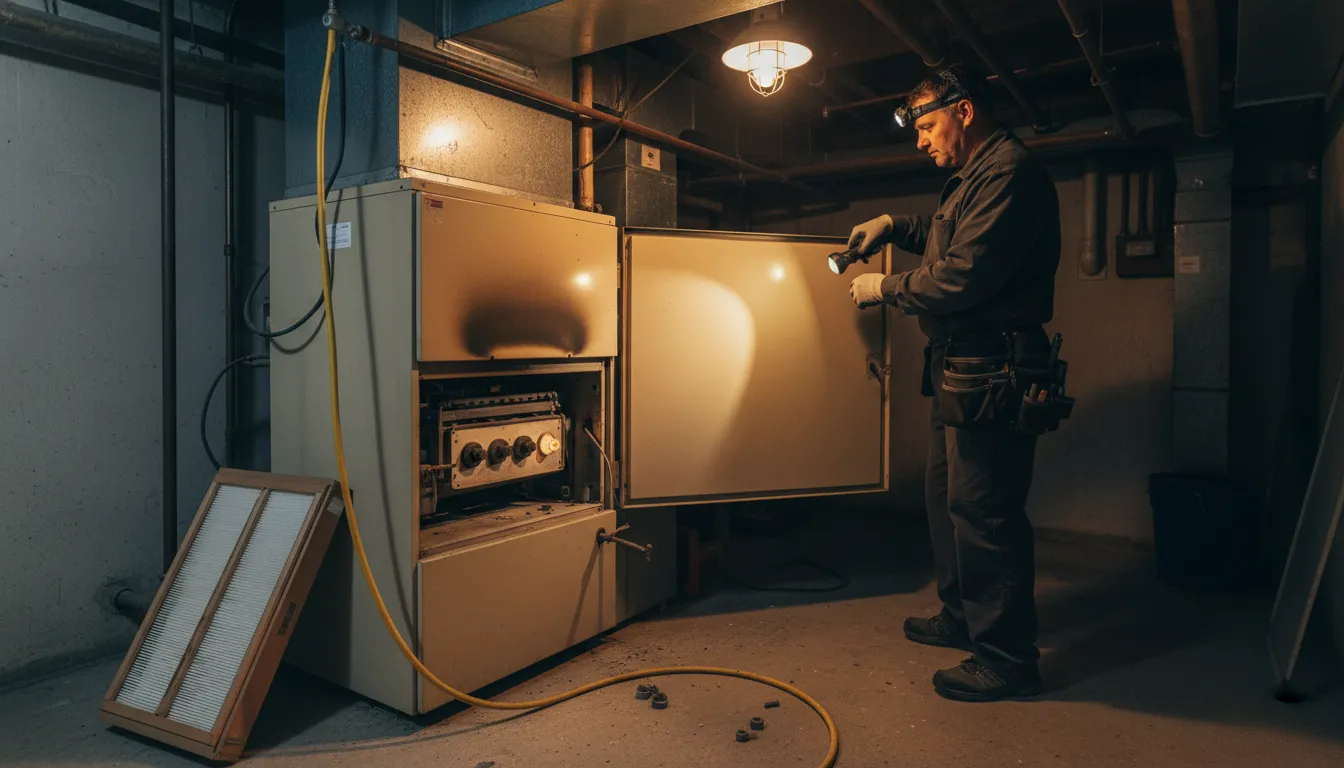
When your furnace stops working on a cool Burbank evening, getting reliable heat restored quickly is the priority. Furnace repair is a specialized service that addresses malfunctions in your home's heating system, ensuring safety, efficiency, and comfort. This resource connects you with local, licensed professionals who can diagnose common issues-from faulty ignitors to blower motor failures-and perform the necessary fixes. Understanding the typical process, timelines, and what to expect can help you make an informed decision when selecting a service provider for your heating system needs.
Comfort Time Plumbing Heating & Cooling
8038 Freestone Ave, Santa Fe Springs, CA 90670
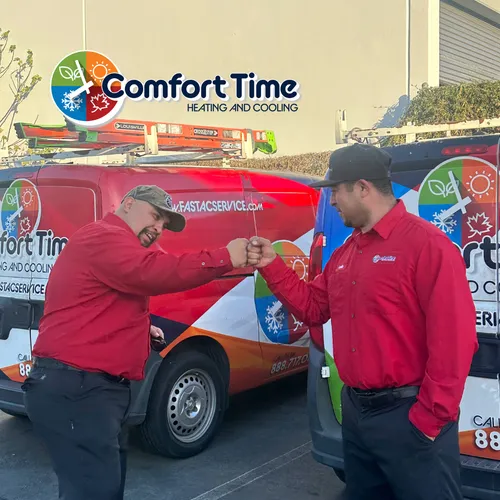
Comfort Time Plumbing Heating & Cooling is a family-owned company based in Los Angeles, CA, providing comprehensive HVAC and plumbing services for homes and businesses. They specialize in the repair and installation of air conditioning, furnaces, heat pumps, boilers, mini splits, and commercial refrigeration systems. Comfort Time Plumbing Heating & Cooling offers same-day service and uses advanced techniques such as trenchless sewer line replacement to address plumbing issues efficiently. Since 2008, they have served the local community with trained technicians who maintain up-to-date certifications and prioritize respect for customers' homes.
Hilo Aire
28220 Ave Crocker # 407, Valencia, CA 91355
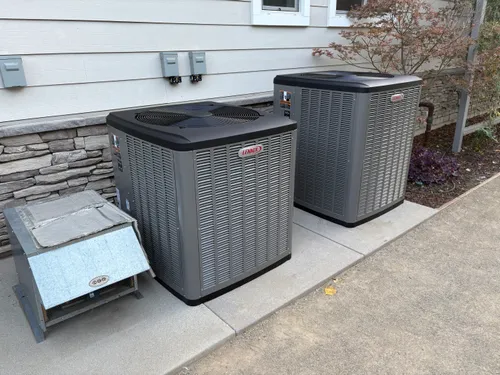
Hilo Aire is an HVAC company serving Santa Clarita, CA, and surrounding areas including Ventura and Los Angeles counties. They provide a range of heating and cooling services such as air conditioning, furnace, heat pump, and ductless mini-split installation, maintenance, and repair. The company also offers indoor air quality services and customized system design focused on energy efficiency. With over 30 years of combined industry experience, Hilo Aire emphasizes transparent pricing and customer-centered service. They provide same-day, weekend, and emergency service options.
ASP Heating & Air Conditioning
6924 Canby Ave UNIT 108, Reseda, CA 91335
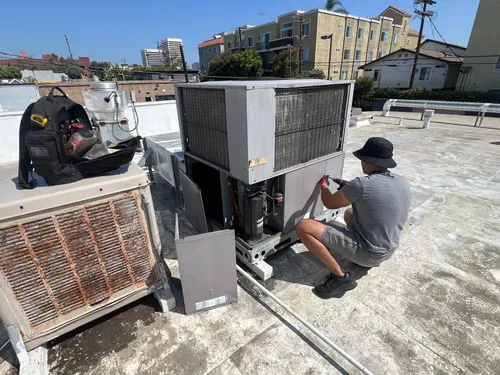
ASP Heating & Air Conditioning is an HVAC company serving Los Angeles, CA, with over 31 years of experience in the industry. They provide installation, repair, maintenance, and replacement services for commercial and residential HVAC systems, refrigeration equipment, and appliances. ASP Heating & Air Conditioning is known for handling complex HVAC and refrigeration projects, including commercial freezer repairs. The company offers 24/7 customer support and employs licensed and certified technicians to ensure quality service.
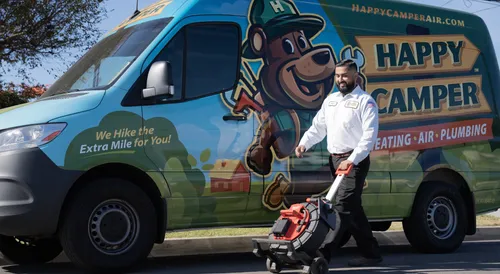
Happy Camper Heating, Plumbing, and AC Repair
15132 Whittier Blvd, Whittier, CA 90603
Happy Camper Heating, Plumbing, and AC Repair is a furnace repair company serving Los Angeles, CA. They provide expert diagnosis and repair services to restore furnace systems to efficient operation. Their knowledgeable technicians focus on quickly identifying and fixing furnace problems to ensure reliable heating.
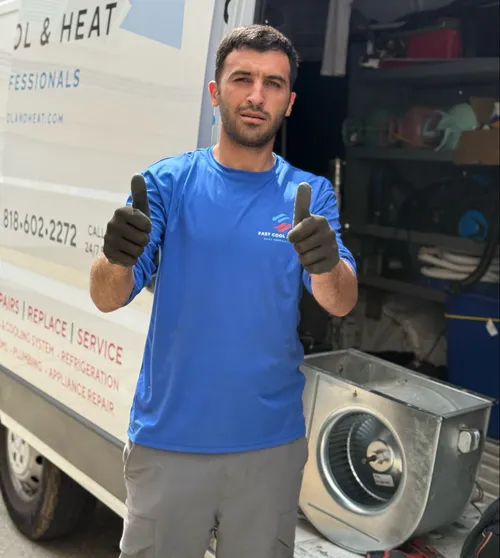
Fast Cool & Heat Inc.
7417 Woodman Ave, Van Nuys, CA 91405
Fast Cool & Heat Inc. offers comprehensive HVAC installation and repair services in Los Angeles, CA. They specialize in heating, ventilation, and air conditioning solutions, including furnace, heat pump, central AC, and ductless mini-split systems. Their certified technicians provide custom installations and maintenance designed for efficiency and long-term performance. The company focuses on energy-efficient systems suited for the local climate and supports both residential and commercial properties.
Understanding Furnace Service in Burbank's Climate
Burbank's mild winters mean your heating system often sees intermittent use. This sporadic operation can actually expose underlying faults or cause components to fail when they are finally called upon after months of inactivity. Common problems that surface include short-cycling, uneven heating, and reduced airflow. A professional heating repair technician will start by checking fundamental items: ensuring the unit has power, verifying thermostat settings, inspecting air filters, and listening for unusual noises from mechanical components 1. This systematic approach helps quickly isolate whether the issue is with an electrical component, a mechanical part like a motor, or the system's airflow.
The Typical Furnace Repair Visit: Step-by-Step
Knowing how a service call unfolds can demystify the process and set clear expectations.
1. Scheduling and Arrival Most local HVAC companies in Burbank offer prompt scheduling, with many providing same-day or next-day service for urgent heating repairs. Upon arrival, a licensed technician will typically provide a free estimate for the diagnosis or discuss a standard service call fee, which is often waived if you proceed with the recommended repair.
2. Comprehensive System Diagnosis The core of the visit is a thorough inspection. The tech will:
- Confirm electrical power to the furnace and thermostat.
- Check the condition of the air filter, a frequent culprit for airflow problems.
- Inspect vents and ductwork for blockages or leaks.
- Examine the blower assembly and motor for wear.
- Test the ignitor or pilot light and the burner assembly for proper operation. This diagnosis usually takes 15 to 30 minutes to pinpoint the exact cause of the malfunction.
3. Explanation and Repair Options The technician will explain their findings, identify the failed part (such as an ignitor, control board, or blower motor), and present your repair options. They should provide a clear quote for parts and labor before any work begins.
4. Executing the Repair Repair times vary significantly based on the issue:
- Simple Repairs: Replacing a hot surface ignitor or a thermostat often takes 30 to 90 minutes.
- Complex Repairs: Swapping out a blower motor or addressing significant ductwork issues can take 2 to 4 hours or more. A reputable professional will test the entire system after the repair to ensure it's operating safely and efficiently.
Find the perfect furnace repair companies for your needs
Get personalized recommendations and expert advice
Common Furnace Problems in Burbank Homes
Familiarizing yourself with frequent issues can help you describe problems more accurately to a technician.
- No Heat or Ignition Failure: This is often the most urgent issue. The most common single part to fail on a modern furnace is the hot surface ignitor. It's an electrical component that lights the gas, and it can wear out or crack over time.
- Short-Cycling: If your furnace turns on and off frequently without properly heating your home, it could be due to a clogged filter, improper airflow, a faulty flame sensor, or an oversized unit 2.
- Uneven Heating: Some rooms feeling cold while others are warm often points to imbalances in your ductwork, blocked vents, or a failing blower motor that can't distribute air effectively.
- Unusual Noises: Scraping, squealing, or rumbling sounds usually indicate mechanical wear. A high-pitched squeal may point to a belt issue, while a scraping sound could mean a blower wheel is hitting its housing.
- Reduced Airflow: Weak airflow from your vents is typically a sign of a clogged air filter, blocked return air grilles, or issues within the ductwork itself 3.
What to Know About Repair Timelines and Costs
While every job is unique, having a general sense of timelines and cost factors can help you plan.
How Long Will the Repair Take? From start to finish, a service call can range from under an hour to half a day.
- Diagnosis: 15-30 minutes.
- Ignitor or Thermostat Replacement: 30-90 minutes.
- Blower Motor or Control Board Replacement: 2-4 hours.
- Ductwork Sealing or Repair: Highly variable, potentially 4+ hours. Always ask the technician for an estimated timeline after their diagnosis.
Understanding Cost Variables Repair costs depend on the part needed, labor rates, and any required materials. Here are illustrative ranges based on common repairs:
- Service Call/Diagnosis Fee: Often ranges from $75 to $150. Many companies apply this fee toward the repair cost if you hire them 4.
- Hot Surface Ignitor Replacement: Typically between $100 and $300+ for part and labor, as it's a common but relatively straightforward fix 5.
- Blower Motor Replacement: A more involved repair, usually costing between $500 and $1,500+ depending on the motor type and accessibility 6.
- Thermostat Replacement: Installing a new programmable or smart thermostat generally ranges from $150 to $400+ 7.
- Ductwork Repair: Sealing leaks or repairing sections can cost anywhere from $200 to over $1,000, based on the extent of the work 8.
The Value of Regular Maintenance Scheduling an annual furnace tune-up before the heating season is one of the most effective ways to avoid unexpected breakdowns. A maintenance visit includes cleaning critical components, checking safety controls, and identifying small issues before they lead to a costly repair or system failure 9. For Burbank homes, this pre-winter check is especially valuable due to the system's long periods of dormancy.
Frequently asked questions
Sources
Footnotes
-
6 Important Things to Check Before Scheduling a Service Call - https://acmasters.com/6-things-to-check-before-scheduling-a-service-call/ ↩
-
Factors Impacting Furnace Efficiency & Improvement Tips - Shipley Energy - https://www.shipleyenergy.com/resources/efficiency/furnace-efficiency-tips/ ↩
-
How to Troubleshoot an HVAC System: Guide for Homeowners - https://www.ars.com/blog/how-to-troubleshoot-a-hvac-system ↩
-
Hidden Costs of a Furnace Replacement: What Most Homeowners Miss - https://thefurnaceoutlet.com/blogs/news/hidden-costs-of-a-furnace-replacement-what-most-homeowners-miss ↩
-
What Is The Most Common Part to Fail on a Furnace? - https://www.myqualitycomfort.com/general/what-is-the-most-common-part-to-fail-on-a-furnace/ ↩
-
How Long Does It Usually Take to Repair a Furnace?. - https://www.tcmemt.com/post/how-long-does-it-usually-take-to-repair-a-furnace ↩
-
Top 10 Best Heating & Air Conditioning/HVAC Near Burbank ... - https://m.yelp.com/search?cflt=hvac&find_loc=Burbank%2C+CA ↩
-
Furnace Repair in Burbank, California - Enertek - https://www.enertekac.com/locations/burbank/furnace-repair-burbank/ ↩
-
Winter HVAC Troubleshooting in Burbank, CA | Certified Service - https://certifiedac.net/winter-hvac-troubleshooting-burbank-ca/ ↩