Find the Best Furnace Installation & Replacement Contractors for Your Business
No obligation • Fast responses • Nationwide coverage

Why you can trust HVAC Firms
HVAC Firms is a leading United States resource for evaluating HVAC service providers. Our team researches companies, checks credentials, and reviews customer feedback to present clear, unbiased information. Listings and rankings are based on merit, and companies cannot pay to change our editorial content.
Search providers near you
Top Furnace Installation & Replacement Contractors in Fort Worth, Texas Ranked
Keeping your Fort Worth home warm and comfortable during the occasional chilly winter snap requires a reliable heating system. When your old furnace starts showing its age or fails completely, a professional installation or replacement is a critical investment in your home's comfort, safety, and energy efficiency. This guide will help you understand your options, from high-efficiency gas furnaces to modern heat pump systems, and what to expect when finding a qualified local specialist for your project.
United States Home Services
1805 Royal Ln #101, Dallas, TX 75229
United States Home Services is a Dallas, TX-based company specializing in HVAC, plumbing, and insulation solutions. They provide a range of services including air conditioning, furnace, and heat pump repair and installation, as well as HVAC tune-ups. With over 20 years of experience, they serve homeowners throughout the Dallas metroplex, offering reliable and transparent service. One of their key capabilities is providing custom HVAC installations tailored to home comfort needs. The company emphasizes clear pricing and customer satisfaction, backed by a 100% satisfaction guarantee.
Medley Heating Air Conditioning Plumbing
1711 Briercroft Ct ste 127, Carrollton, TX 75006
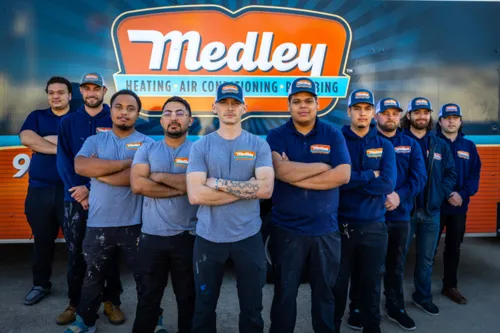
Medley Heating Air Conditioning Plumbing provides heating, air conditioning, indoor air quality, and plumbing services in Dallas, TX. They offer installation, repair, and maintenance for HVAC systems, including furnaces and air conditioners, with a focus on high-efficiency solutions. Their licensed technicians are employees who receive ongoing training and background checks, ensuring careful and knowledgeable service. Medley also offers financing options to assist with system upgrades and emergency repairs. The company serves Dallas and nearby communities such as Carrollton, Coppell, and Plano.
Prime AC and Heat
150 Valley Ridge Blvd Suite #102, Lewisville, TX 75057
Prime AC and Heat is a residential HVAC company serving Dallas, TX, and the wider DFW metroplex, including Lewisville, Flower Mound, and surrounding areas. They offer a full range of home comfort services such as air conditioning repair and replacement, furnace installation and repair, heat pump service, duct cleaning, thermostat installation, and indoor air quality solutions. The company provides 24/7 emergency service with same-day appointments to address urgent HVAC needs. Prime AC and Heat is known for its licensed technicians, A+ BBB rating, and transparent pricing without hidden fees.
Lawrence Air Conditioning & Heating
7949 Old Decatur Rd, Fort Worth, TX 76179
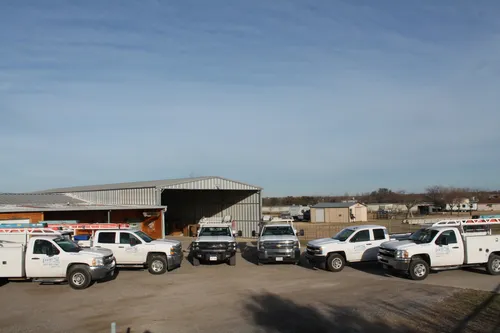
Lawrence Air Conditioning & Heating is an HVAC company based in Fort Worth, TX. They provide air conditioning and furnace repair, installation, and sales services. Established in 1989, the company has over three decades of experience in heating and cooling solutions.
Coventry & Gattis A/C, Inc.
219 N Dooley St, Grapevine, TX 76051
Coventry & Gattis A/C, Inc. provides HVAC services including air conditioning repair, installation, furnace installation, and indoor air quality solutions in Irving, TX. They offer energy-efficient heating systems and advanced air purification options such as ultraviolet light air purifiers and air filtration systems. Serving Grapevine and surrounding areas, the company focuses on maintaining comfortable and breathable indoor environments.
Understanding Your Heating System Options in Fort Worth
Choosing the right furnace or heating system for your home involves balancing upfront costs, long-term energy savings, and the specific climate of the Dallas-Fort Worth area. The mild but variable Texas winters create unique opportunities for efficient heating solutions.
Gas Furnaces: The Common Choice
Natural gas furnaces are a prevalent and reliable choice for Fort Worth homes due to the widespread availability of natural gas and their cost-effective operation. They work by burning fuel to create heat, which is then distributed through your ductwork.
- Standard Efficiency (80% AFUE): These models convert about 80% of the fuel's energy into heat. They offer a lower initial purchase and installation cost, typically ranging from $3,500 to $6,000, making them a solid choice for homes with less intense heating needs or tighter budgets.
- High-Efficiency (90%+ AFUE): Modern high-efficiency condensing furnaces extract more heat from the same amount of gas, achieving Annual Fuel Utilization Efficiency (AFUE) ratings of 90% or higher. While the installation cost is higher ($5,500 to $9,000+), they can lead to significant savings on your monthly utility bills over the system's lifespan. These systems require a condensate drain to remove the water produced as a byproduct of the more efficient heat exchange process.
Electric Furnaces and Heat Pumps
For homes without access to a natural gas line, electric systems are the primary alternative.
- Electric Furnaces: These units use electrical resistance to generate heat, similar to a large space heater. They generally have a lower installation cost ($2,500 to $5,000 for the unit) but can become expensive to run during prolonged cold periods due to higher electricity costs per unit of heat 1.
- Air Source Heat Pumps: Increasingly popular in Fort Worth's climate, heat pumps are extremely efficient because they move existing heat from the outside air into your home, rather than generating it through combustion or resistance. In our mild winters, they operate very efficiently, providing both heating and cooling from one system. For the few very cold days, many systems have built-in electric resistance backup.
Advanced Systems: Dual-Fuel Maximizes Efficiency
A dual-fuel system combines the best of both worlds: an electric air-source heat pump for efficient heating during the majority of Fort Worth's mild winter, and a gas furnace that kicks in only during deep freezes when the heat pump's efficiency drops 2. This setup provides maximum comfort and energy savings year-round, though the combined installation represents a higher initial investment, often between $10,000 and $14,000+.
The Professional Installation Process: What to Expect
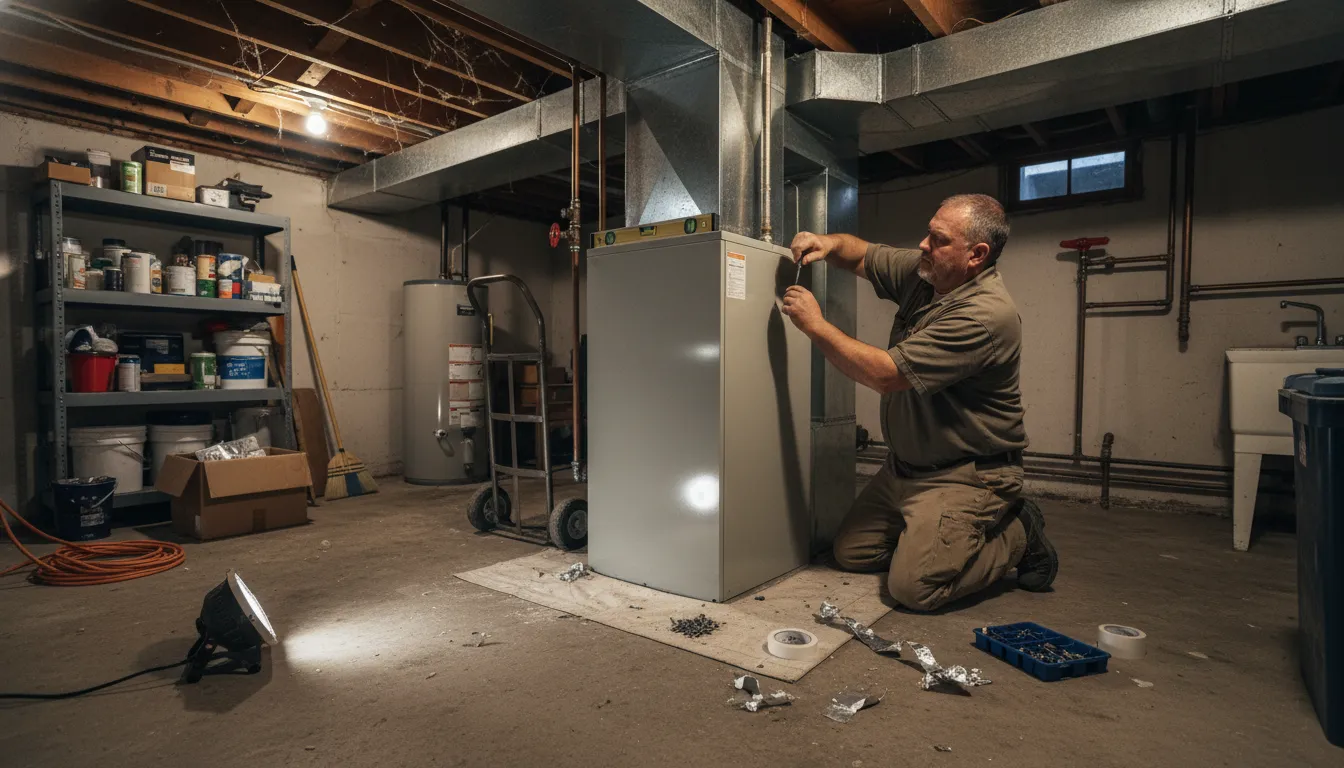
A proper furnace installation is not a simple swap. It's a detailed process that ensures safety, efficiency, and longevity for your new system. Here's how a typical professional installation unfolds:
- Consultation and Home Assessment: A qualified technician will visit your home to assess your needs. This should include a Manual J Load Calculation, which is crucial for correctly sizing your new furnace based on your home's square footage, insulation, window quality, and other factors. An oversized or undersized unit will lead to comfort issues, frequent cycling, and higher energy bills.
- System Selection and Proposal: Based on the assessment, your HVAC professional will recommend the right type, size (in BTUs), efficiency rating, and brand of furnace for your home and budget. They should provide a clear, written estimate covering all equipment and labor costs.
- Preparation and Removal: On installation day, the crew will safely disconnect and remove your old furnace and dispose of it properly. They will inspect the existing ductwork, gas line, electrical connections, and venting to ensure they meet code requirements for the new unit.
- Installation and Connection: The new furnace is carefully positioned, leveled, and secured. Technicians will connect it to the ductwork, gas supply line (for gas models), electrical system, and thermostat. Proper sealing of all connections is vital for efficiency and safety. This stage often requires pulling local permits, which a reputable company will handle.
- Calibration, Testing, and Walkthrough: Once installed, the system is calibrated. The technician will test ignition, airflow, safety controls, and thermostat operation. They will also check for gas leaks (if applicable) and ensure the condensate drain is clear. Finally, they should explain the system's operation and basic maintenance to you 3 4.
Find the perfect furnace installation & replacement contractors for your needs
Get personalized recommendations and expert advice
Key Factors Influencing Your Furnace Replacement Cost
The total cost of a new furnace installation in Fort Worth is influenced by several variables. Understanding these can help you interpret estimates and make informed decisions.
- System Type and Efficiency: As outlined above, the choice between a standard gas, high-efficiency gas, electric, or dual-fuel system is the primary cost driver.
- Furnace Size (BTU Capacity): The heating capacity must match your home's calculated heat loss. Larger homes require more powerful (and typically more expensive) units.
- 1,000-1,200 sq ft: Often requires a 40-60k BTU furnace, with costs ranging from $3,500 to $5,500+.
- 1,500-2,000 sq ft: Typically needs a 60-80k BTU system, with estimates between $5,000 and $7,500+.
- 2,000-2,500 sq ft: May require an 80-100k BTU furnace, with project costs from $6,000 to $9,000+ 5.
- Installation Complexity: If your new furnace requires modifications to existing ductwork, electrical upgrades, or new gas line runs, labor costs will increase. The physical accessibility of your attic, closet, or garage installation site also plays a role.
- Additional Components and Bundling: Replacing other components at the same time can add cost but also create savings. For example, bundling a new air conditioner with your furnace replacement can save $1,500 to $3,000 in combined labor costs, as much of the work overlaps. Similarly, upgrading your thermostat or air handler will affect the total price.
Saving on Your New Heating System
A new furnace is a significant investment, but there are ways to manage the cost and improve your return on investment.
- Explore Rebates and Tax Credits: Always ask your HVAC provider about available incentives. Utility companies like Oncor often offer rebates (sometimes up to $1,000) for installing high-efficiency equipment 6. Additionally, federal tax credits may be available for qualifying high-efficiency heat pumps and gas furnaces, directly reducing your tax liability 7 6.
- Prioritize Energy Efficiency: While a higher-efficiency model costs more upfront, the reduction in monthly gas or electric bills will pay you back over time. In Fort Worth's climate, the savings from a heat pump or a 90%+ AFUE gas furnace can be substantial.
- Focus on Quality Installation: The best furnace will underperform if installed incorrectly. Choosing a licensed, insured, and well-reviewed installer ensures the job is done right the first time, maximizing your system's efficiency and lifespan, and preventing costly callbacks or repairs.
Maintaining Your New Furnace
Protect your investment with regular maintenance. An annual professional tune-up before each heating season is recommended. This service typically includes cleaning components, checking for wear, testing safety controls, and ensuring the system operates at peak efficiency. Homeowners should also change their air filter regularly (every 1-3 months) to maintain good airflow and indoor air quality.
Frequently asked questions
Sources
Footnotes
-
How Much Does Heating System Installation Cost in Fort Worth? - https://r10heatandair.com/heating-system-installation-cost/ ↩
-
Cost of a New Furnace in Fort Worth: Pricing & Installation Guide - https://r10heatandair.com/cost-of-a-new-furnace-fort-worth/ ↩
-
Fort Worth Furnace Installation & Replacement - Ideal Partners - https://www.idealpartners.com/hvac/heating/furnace-installation/ ↩
-
Top Residential Furnace Installation & Replacement in Fort ... - https://www.grantac.com/furnace-installation-replacement-fort-worth-tx/ ↩
-
How Much Does it Cost to Replace Your Furnace? - Synchrony - https://www.synchrony.com/blog/home/furnace-replacement-cost ↩
-
Complete Heating System Installation Guide In {Forth Worth} - https://r10heatandair.com/heating-system-installation-in-fort-worth/ ↩ ↩2
-
Furnace Replacement Cost In 2025 - Homeowners' Guide In TX & NC - https://greenleafair.com/furnace-replacement-cost/ ↩