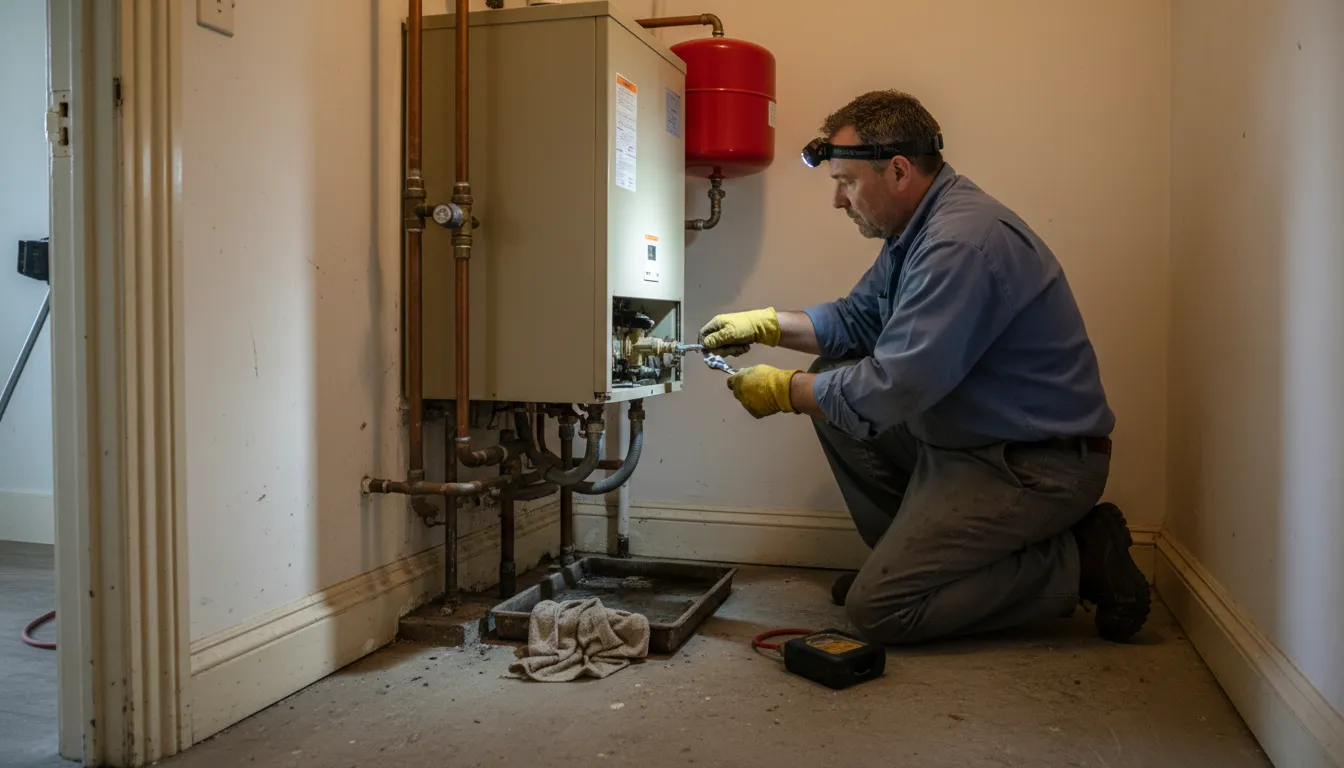
Find the Best Boiler Repair Contractors for Your Business
No obligation • Fast responses • Nationwide coverage

Why you can trust HVAC Firms
HVAC Firms is a leading United States resource for evaluating HVAC service providers. Our team researches companies, checks credentials, and reviews customer feedback to present clear, unbiased information. Listings and rankings are based on merit, and companies cannot pay to change our editorial content.
Search providers near you
Top Boiler Repair Contractors in Joliet, Illinois Ranked
A reliable boiler is the heart of your home's heating system, especially during Joliet's cold winters. Boiler repair and maintenance services ensure your hydronic heating system-whether it uses baseboard heaters, radiators, or radiant floors-operates safely and efficiently. When your system falters, knowing your options for repair versus replacement is key to staying warm and managing costs. This guide helps you understand common issues, local considerations, and how to connect with qualified professionals for an assessment.
Just Right Heating & Cooling
539 E Briarcliff Rd, Bolingbrook, IL 60440
Just Right Heating & Cooling is a family owned and operated HVAC company serving Chicago, IL, and the surrounding Southwest suburbs. With over 30 years of experience, they provide installation, repair, and maintenance services for furnaces, boilers, air conditioners, heat pumps, and indoor air quality systems including air cleaners and humidifiers. Their certified technicians stay updated with the latest industry techniques to ensure knowledgeable service.
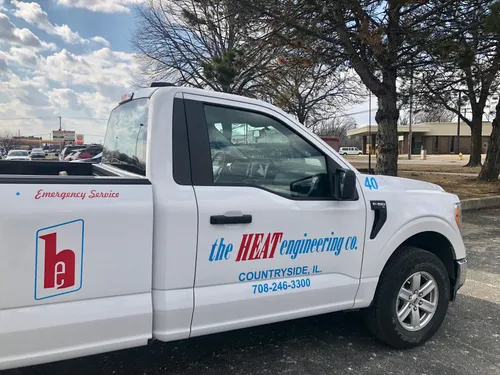
The Heat Engineering Co.
6500 Joliet Rd, Countryside, IL 60525
The Heat Engineering Co. is a third-generation, family-owned HVAC company serving Chicago, IL. They provide a wide range of heating and cooling services including installation, repair, and maintenance of air conditioners, furnaces, boilers, and indoor air quality systems. As a Carrier dealer, they offer advanced, energy-efficient HVAC solutions tailored to both residential and commercial needs. The company is experienced in system assessments and uses modern tools to ensure optimal installation and performance. They also provide 24/7 emergency repair services to address urgent HVAC issues promptly.
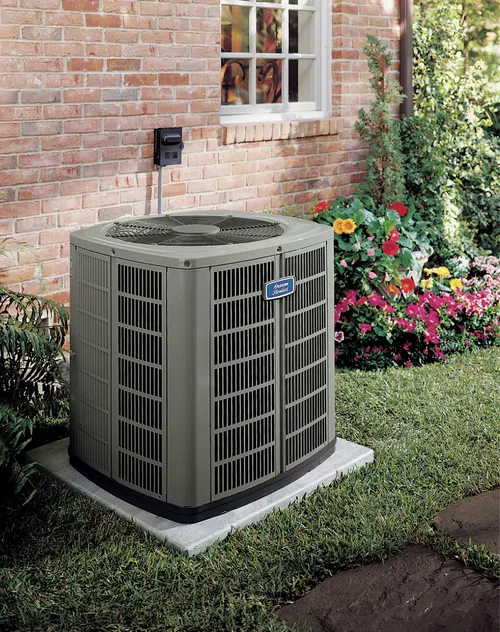
WINDY CITY MECHANICAL, INC.
4811 W 129th St, Alsip, IL 60803
WINDY CITY MECHANICAL, INC. is a heating and cooling specialist serving Chicago, IL. They provide a range of HVAC services including installation, repair, and maintenance for air conditioners, furnaces, boilers, mini split systems, and thermostats. As an American-Standard dealer, they offer a variety of indoor comfort products such as air cleaners, humidifiers, and zoning systems. Their licensed technicians handle both residential and commercial HVAC needs, with capabilities including sheet metal fabrication and indoor air quality solutions. The company also offers emergency service and maintenance contracts to help keep systems running efficiently.
House of Heat
334 Harrison St, Oak Park, IL 60304
House of Heat is a family-owned HVAC company serving Chicago, IL, and nearby areas. They provide a full range of heating and cooling services including repair, installation, and maintenance for air conditioners, furnaces, heat pumps, boilers, mini splits, and other HVAC systems. As a licensed and bonded dealer with over 60 years of experience, they offer expertise with top brands like Lennox®, Weil McLain, Fujitsu, and Triangle Tube. Their services include custom sheet metal fabrication and 24-hour availability year-round.
Going Green Home Solutions
7959 S Western Ave, Chicago, IL 60620
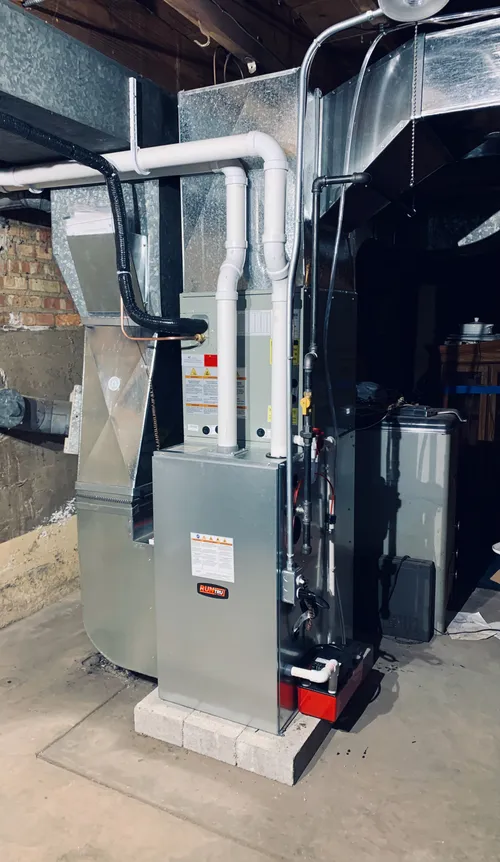
Going Green Home Solutions is an HVAC contractor based in Chicago, IL, offering comprehensive heating and air conditioning services to homeowners and businesses throughout the Chicagoland area. Their services include furnace, boiler, and air conditioning installation and repair, with a focus on energy-efficient and environmentally responsible solutions. They also provide custom sheet metal fabrication for HVAC systems to optimize airflow and system efficiency. The company is fully licensed and insured, emphasizing sustainable living and energy savings in their work.
Understanding Your Hydronic Heating System
Before diving into repair decisions, it helps to know what kind of system you have. In Joliet, most homes with boiler-based heating use one of a few common setups.
- Baseboard or Radiator Systems: This is a classic setup where water heated by the boiler circulates through metal baseboard units or cast-iron radiators in each room.
- Radiant Floor Heating: A luxurious and efficient option where hot water circulates through tubing installed beneath the floor, providing even, comfortable warmth from the ground up 1.
- Combi-Boilers: Gaining popularity for their space-saving design, combination boilers provide both space heating and on-demand domestic hot water from a single, efficient unit 2.
Identifying your system type can help when discussing symptoms with a technician, as some issues are more common to specific configurations.
Why Boiler Health is Critical in Joliet
Joliet's climate places unique demands on heating equipment. Winters demand consistent, reliable heat, and an underperforming boiler can lead to more than just discomfort.
- Demand for Reliability: A breakdown during a cold snap isn't just an inconvenience; it can be a hazard. Older, inefficient boilers struggle more in sustained cold, increasing the risk of failure.
- Efficiency Equals Savings: Heating costs can be a significant part of a Joliet homeowner's winter budget. Modern, high-efficiency boilers (including condensing and ENERGY STAR® certified models) convert far more fuel into usable heat than older units, leading to substantial savings on utility bills over time. An inefficient boiler silently costs you money every time it runs.
Common Boiler Problems and Troubleshooting Signs
How do you know if your boiler needs attention? Look for these warning signs:
- No Heat or Insufficient Heat: The most obvious sign. This could stem from a faulty thermostat, a broken pump, low water pressure, or a problem with the ignition system.
- Unusual Noises: Banging, whistling, or gurgling sounds (often called "kettling") are typically caused by limescale or sludge buildup, which impedes water flow and causes overheating.
- Leaks: Any sign of water around the boiler or pipes is a red flag. Leaks can cause water damage and indicate failing internal components.
- Pilot Light Issues: For older systems, a pilot light that frequently goes out or burns yellow instead of blue can signal a dirty thermocouple or a ventilation problem.
- Rising Energy Bills: A gradual, unexplained increase in your heating costs often points to declining boiler efficiency.
If you notice any of these issues, it's time to contact a local specialist for a professional diagnosis.
The Critical Decision: Repair or Replace?
This is the central question for any homeowner facing boiler trouble. The right choice depends on your system's age, condition, and the cost of the proposed fix.
When Repair is the Smart Choice: Repair is typically the best path for newer systems-generally those under 10 to 15 years old-experiencing isolated, minor problems. Examples include replacing a faulty thermostat, fixing a minor leak on a valve, or swapping out a circulating pump. If the repair cost is reasonable and the system has been otherwise reliable, fixing it extends the unit's life.
When Replacement Becomes the Recommendation: There are several strong indicators that investing in a new boiler is more economical in the long run.
- Age: The single biggest factor. Most boilers have a lifespan of 15-20 years. If your boiler is 15 years or older, replacement parts become harder to find, efficiency plummets, and the likelihood of a major failure increases significantly 3.
- Frequency of Repairs: If you're calling for service every season, you're pouring money into a declining asset. The cumulative cost of repairs can quickly approach the price of a new, reliable system.
- High Energy Bills: As boilers age, their efficiency drops. If your winter bills are climbing despite consistent usage, a modern high-efficiency model can pay for itself through savings over several years.
- The 50% Rule: A common industry benchmark suggests that if the estimated repair cost exceeds 50% of the price of a new, high-efficiency boiler, replacement is usually the more prudent financial decision 4 5. This rule helps avoid sinking major money into a unit that may fail again soon.
Find the perfect boiler repair contractors for your needs
Get personalized recommendations and expert advice
Understanding Costs and Local Incentives
Being informed about potential costs helps you budget and evaluate quotes.
- Typical Repair Costs: A service call for diagnosis typically ranges from $100 to $200. From there, costs depend on the issue: minor parts and labor might be $100-$300, while replacing major components like a pump or heat exchanger can cost $250 to $500 or more 6.
- Replacement Investment: A full boiler replacement is a more significant investment, varying widely based on system type, efficiency rating, and home complexity. Installed costs for a high-efficiency unit can range from $4,000 to over $10,000 7 8. While the upfront cost is higher, the long-term energy savings and reliability are key benefits.
- Check for Local Incentives: Importantly, Illinois and local utility companies often offer rebates or incentives for upgrading to high-efficiency heating equipment. Programs like Keep Warm Illinois provide resources and may list available rebates. Always ask any local professional you consult about current rebates or special financing options; these can substantially reduce your net cost for a new, efficient system 9.
How to Proceed: Working with Joliet Area Professionals
Taking the next step involves engaging with local experts who understand the specific needs of homes in our climate.
- Get Multiple Quotes: Contact several established local providers for an on-site assessment. Companies like Comfort First Heating and Cooling, Inc. or Gene May Heating & Cooling offer diagnostic services. An in-person visit is crucial for an accurate quote.
- Ask the Right Questions: During consultations, ask about:
- Their diagnosis and recommended solution (repair specific part or full replacement).
- The energy efficiency (AFUE rating) of any proposed new boiler.
- Current local rebates or incentives for which you may qualify 10.
- The warranty offered on both parts and labor.
- A detailed, written estimate that breaks down equipment, labor, and any ancillary costs.
- Consider Long-Term Value: When comparing options, factor in the projected annual energy savings of a high-efficiency model against the upfront cost. A slightly higher initial investment for a top-tier unit can offer the best return over its lifetime.
Maintaining Your Boiler System
Once your boiler is repaired or replaced, proper maintenance is key to longevity and efficiency. An annual tune-up by a qualified technician before each heating season can catch small problems early, ensure safe operation, and keep your system running at peak efficiency. This routine service typically includes cleaning components, checking for leaks, testing pressure and controls, and ensuring proper ventilation.
Frequently asked questions
Sources
Footnotes
-
Radiant Heating Systems | Joliet, IL - https://comfortfirstheatingandcooling.com/heating/radiant-heating-systems/ ↩
-
What Are the Different Boilers Types? | BWS Plumbing, Heat & Air - https://bwsheatingandair.com/blog/what-are-the-different-types-of-boilers/ ↩
-
Boiler Troubles? How to Tell If It's Time for Repair or Replacement - https://www.halcoenergy.com/about-us/blog/49647-boiler-troubles-how-to-tell-if-its-time-for-repair-or-replacement.html ↩
-
Boiler Repair vs Replacement: How to Make the Right Choice - https://www.grossiservicesinc.com/boiler-repair-vs-replacement-how-to-make-the-right-choice ↩
-
The Cost of Boiler Repair vs. Replacement: What's the Best Option? - https://www.premierboilerandcombustion.com/the-cost-of-boiler-repair-vs-replacement-whats-the-best-option ↩
-
UK Average Cost of Boiler Repair Explained - Go Assist - https://go-assist.co.uk/blog/average-cost-of-boiler-repair ↩
-
Replace & Install Boilers | Joliet, IL | Comfort First HVAC - https://comfortfirstheatingandcooling.com/heating/boiler-replacement-joliet/ ↩
-
Heating Systems | Keep Warm Illinois - https://keepwarm.illinois.gov/content/dam/soi/en/web/keepwarm/documents/heatingsystems.pdf ↩
-
Boiler Service in Joliet - Gene May Heating & Cooling - https://www.genemayheating.com/boiler-services ↩
-
Home Boiler Systems | Joliet, IL - Comfort First Heating and Cooling - https://comfortfirstheatingandcooling.com/heating/boilers/ ↩