Find the Best Boiler Installation & Replacement Contractors for Your Business
No obligation • Fast responses • Nationwide coverage

Why you can trust HVAC Firms
HVAC Firms is a leading United States resource for evaluating HVAC service providers. Our team researches companies, checks credentials, and reviews customer feedback to present clear, unbiased information. Listings and rankings are based on merit, and companies cannot pay to change our editorial content.
Search providers near you
Top Boiler Installation & Replacement Contractors in Edmond, Oklahoma Ranked
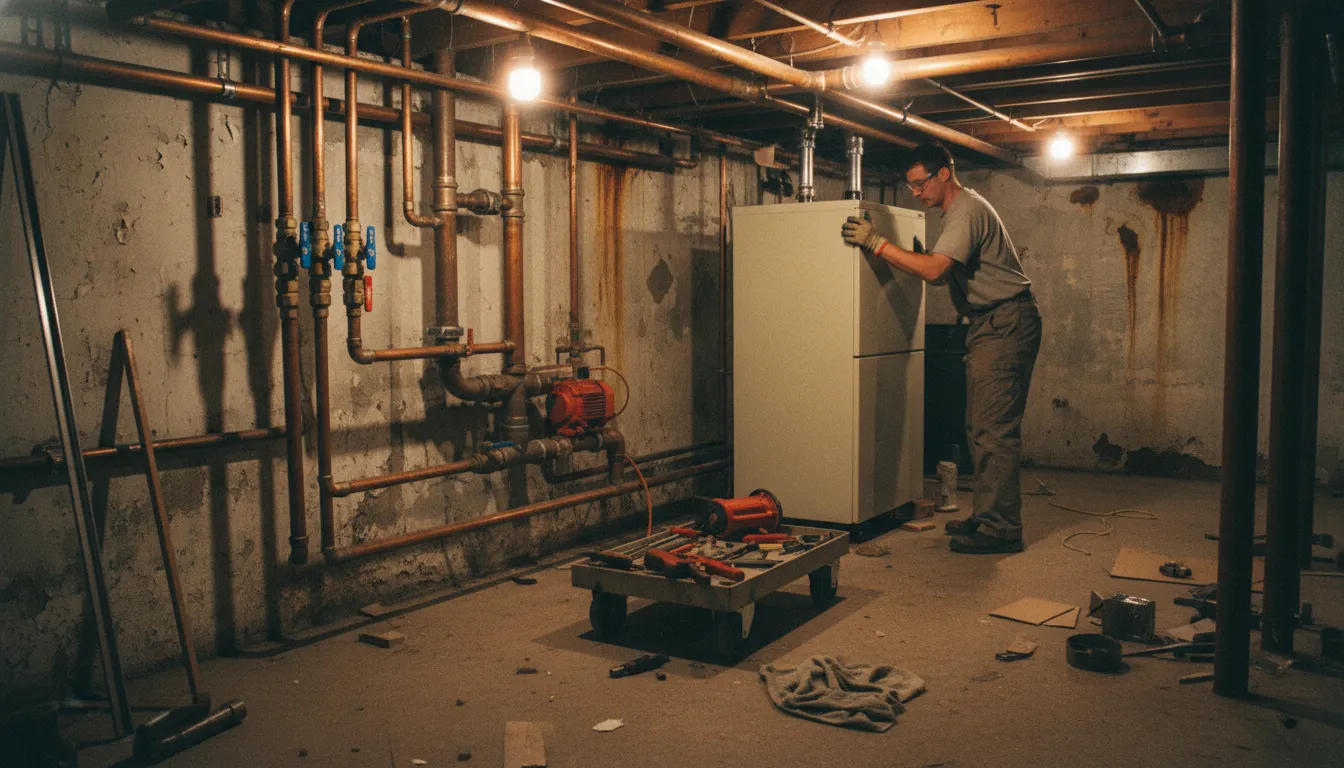
Replacing or installing a new boiler is a significant home improvement decision that directly impacts your comfort, energy bills, and safety. A modern, efficient boiler system provides reliable, even heat for your home through radiators, baseboard heaters, or radiant floor systems. This guide is designed to help Edmond homeowners understand the key considerations, local requirements, and steps involved in a boiler installation or replacement project, empowering you to make informed choices with local professionals.
Trinity Climate Control
Oklahoma City, OK
Trinity Climate Control is a family-owned HVAC company serving Oklahoma City, OK. They provide repair, installation, and tune-up services for air conditioners, furnaces, heat pumps, and boilers. The company maintains a large inventory of parts to complete repairs and installations efficiently. Trinity Climate Control also offers emergency services to address urgent HVAC needs.
Hodge Heat and Air LLC
11200 Ashford Dr, Yukon, OK 73099
Hodge Heat and Air LLC provides residential HVAC services in Oklahoma City, OK. They specialize in the installation, repair, and maintenance of air conditioners, furnaces, heat pumps, boilers, mini splits, and geothermal heat pumps. The company offers HVAC tune-up services and is available around the clock to address heating and cooling needs. Their team consists of qualified professionals focused on delivering reliable HVAC solutions for home comfort.
Smart Air Solutions, LLC
10 NE 10th St Suite 209, Oklahoma City, OK 73104
Smart Air Solutions, LLC is an HVAC company serving Oklahoma City, OK, specializing in heating and air conditioning repair, installation, and maintenance. Their services cover air conditioners, furnaces, heat pumps, boilers, mini splits, and geothermal heat pumps. The company provides comprehensive system evaluations and customized solutions to fit different needs and budgets. They also offer preventative maintenance plans to help extend the life of HVAC systems. Smart Air Solutions emphasizes clear communication with customers throughout the service process to ensure transparency and satisfaction.
Platinum Heat and Air
2917 Tucson Dr, Yukon, OK 73099
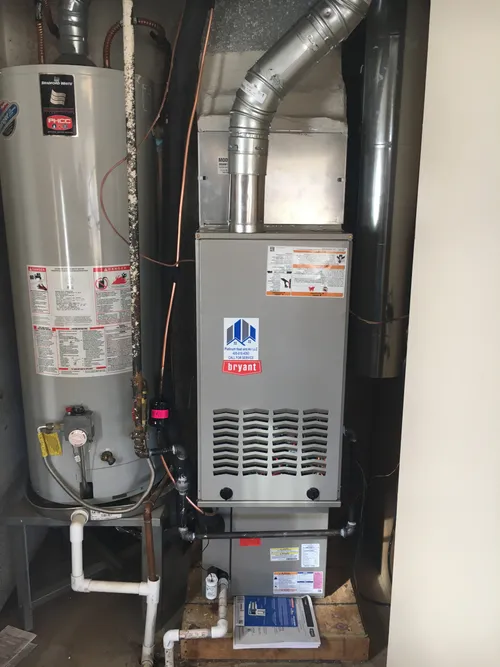
Platinum Heat and Air provides HVAC installation, repair, and maintenance services in Oklahoma City, OK. They offer solutions for air conditioning, furnaces, heat pumps, and boilers, serving Oklahoma City, Mustang, Yukon, and nearby areas. Their team handles installations and tune-ups with attention to quality and care. The company focuses on reliable heating and cooling systems tailored to customer needs, emphasizing both technical expertise and customer comfort.
Advantage Heating & Air conditioning
4317 SW 22nd St #705, Oklahoma City, OK 73108
Advantage Heating & Air Conditioning is a family-owned HVAC contractor serving Oklahoma City, OK, with over 23 years of experience. They provide a wide range of heating, ventilation, and air conditioning services including installation and repair of air conditioners, furnaces, heat pumps, boilers, and thermostats. Their certified technicians specialize in ductwork, ventilation system installation, and water heater services. The company is fully licensed, insured, NATE certified, and a member of the Better Business Bureau and Air Conditioning Contractors of America. They offer 24/7 emergency HVAC services to address urgent repairs any time of the year.
Understanding Your Boiler System
Before diving into replacement, it's helpful to understand how your current heating system works. A boiler is the heart of a hydronic heating system, which uses hot water or steam to distribute warmth. Unlike a forced-air furnace that heats air, a boiler heats water that is then circulated through a network of pipes to terminal units like radiators or baseboard convectors 1. This method is known for providing consistent, comfortable heat without the drafts or noise associated with ductwork.
Common configurations in Edmond homes include:
- Hot Water (Hydronic) Systems: The most prevalent type, where heated water is pumped through pipes to radiators, baseboard heaters, or in-floor tubing.
- Steam Systems: Less common in newer construction, these boilers produce steam that travels through pipes to radiators. They are often found in older homes.
- Zoning: Systems can be single-zone, heating the entire house as one unit, or multi-zone, allowing you to control temperatures independently in different areas (e.g., upstairs vs. downstairs) for enhanced efficiency and comfort.
Types of Boilers and Efficiency Ratings
Selecting the right boiler involves choosing a fuel type and an efficiency level that balances upfront cost with long-term savings.
Fuel Types:
- Natural Gas: The most common and typically most cost-effective fuel in areas with gas service.
- Propane: A common alternative for homes not connected to a natural gas line.
- Oil: Found in some older homes, requiring an on-site storage tank.
Efficiency Levels: Boiler efficiency is measured by its Annual Fuel Utilization Efficiency (AFUE) percentage. A higher AFUE means more of the fuel's energy is converted into usable heat for your home.
- Standard Efficiency Boilers: These units typically have an AFUE of 80% to 85%. They have a lower initial purchase price but lose more heat through the exhaust flue.
- High-Efficiency (Condensing) Boilers: These advanced models have AFUE ratings of 90% and higher, often reaching 95%+. They capture more heat from the combustion gases, which condense water vapor in the process. While they cost more upfront, they can lead to significant savings on your energy bills, especially in our climate, and are considered the best choice for modern installations 2 3.
Local Codes, Permits, and Professional Requirements in Edmond
Safety and compliance are paramount when installing a pressure vessel like a boiler. In Oklahoma, this work is strictly regulated.
- Oklahoma Department of Labor (ODL): The ODL's Boiler & Pressure Vessels Program oversees the safety, registration, and inspection of boilers in the state. Reputable installation firms will be familiar with ODL requirements.
- Building Codes: Oklahoma has adopted the International Residential Code (IRC). Chapter 20 of the IRC specifically addresses boilers and water heaters, mandating adherence to manufacturer instructions, the presence of a permanent rating plate, and proper control setup.
- Permits are Required: A building permit is almost always required for a boiler replacement or new installation in Edmond. Permit fees typically range from $50 to $200. This process ensures the work will be inspected for code compliance 4.
- Professional Installation is Not Optional: Installing a boiler, especially one fueled by gas, involves complex connections to fuel lines, water pipes, electrical systems, and exhaust vents. This work is illegal and extremely dangerous for unlicensed individuals. DIY installation will void the manufacturer's warranty and can lead to catastrophic safety hazards, including carbon monoxide poisoning or fire 5 6. Always hire a licensed, insured HVAC contractor.
Cost Factors for Boiler Replacement in Edmond
The total investment for a new boiler system in the Edmond area can vary widely based on several factors. On average, homeowners can expect a total project cost between $4,000 and $10,000 or more 7.
Here's a general breakdown of what influences the price:
- Equipment Cost ($2,000 - $5,000+): The boiler unit itself is the largest variable. High-efficiency condensing models, larger units (measured in BTUs) for bigger homes, and well-known brands will be at the higher end of this range.
- Labor & Installation ($1,500 - $2,500+): This covers the professional removal of the old unit, installation of the new boiler, and all necessary connections. Complexity, such as re-piping, adding zones, or relocating the unit, will increase labor costs.
- Additional Components & Upgrades: Your existing system may need updates, such as a new circulator pump, expansion tank, or updated controls and thermostats.
- Fuel System Modifications: Switching fuel types (e.g., from oil to gas) involves significant extra work, like installing a new gas line or removing an old oil tank, which can add $2,000 or more to the project 8 9.
- Permits & Inspections ($50 - $200): The required local permit fees are a necessary part of the budget.
Find the perfect boiler installation & replacement contractors for your needs
Get personalized recommendations and expert advice
The Professional Installation Process: What to Expect
Working with a qualified local contractor ensures a smooth and compliant installation. Here's a typical process:
- Initial Consultation & Load Calculation: A good technician will not just look at your old boiler. They will perform a heat load calculation, considering your home's square footage, insulation, window quality, and layout to correctly size the new unit. An oversized or undersized boiler will operate inefficiently.
- System Assessment & Quote: The contractor will assess your existing distribution system (pipes, radiators), venting, and fuel supply. You should receive a detailed, itemized quote outlining the equipment model, labor, permit fees, and a projected timeline.
- Handling Permits: Your chosen professional should pull the required building permit from the local jurisdiction, a key sign of a legitimate operation.
- Installation Day: The old boiler is safely disconnected and removed. The new unit is positioned, connected to water, fuel, electrical, and venting systems according to strict codes. The system is filled, purged of air, and fired up.
- Testing, Inspection, and Tutorial: The contractor will test all operations, check for leaks, and verify safe combustion. After a municipal inspector approves the work, the technician should walk you through the new controls and explain the warranty.
Preparing for Your Boiler Project
To ensure a successful outcome, take these steps before contacting contractors:
- Gather Information: Note the make, model, and age of your current boiler. Observe how your current system performs-are there cold spots, unusual noises, or frequent repairs?
- Assess Your Distribution System: Check the condition of visible pipes, radiators, or baseboards. Modern high-efficiency boilers often work best with lower water temperatures, so ensuring your radiators are adequately sized is important.
- Get Multiple Quotes: It is highly recommended to obtain detailed quotes from 2-3 licensed and insured local HVAC contractors. Compare not just the bottom line, but the equipment proposed, warranty terms, and the scope of labor included 10.
- Verify Credentials: Confirm the contractor is licensed to work in Edmond and carries liability insurance. You can verify a company's standing with the Oklahoma Department of Labor 11.
- Ask About Rebates: Inquire with your contractor or utility company (like OG&E or Oklahoma Natural Gas) about potential rebates for installing high-efficiency equipment, which can help offset the initial cost.
Frequently asked questions
Sources
Footnotes
-
The Difference Between Boilers and Furnaces, Explained - https://reimerhvac.com/difference-between-boilers-and-furnaces/ ↩
-
Boiler Replacement and Installation - Modernize - https://modernize.com/hvac/heating-repair-installation/boiler ↩
-
How Much Does it Cost to Replace a Boiler? - https://www.runwise.com/learn/how-much-does-it-cost-to-replace-a-boiler ↩
-
Chapter 20 Boilers and Water Heaters - UpCodes - https://up.codes/viewer/oklahoma/irc-2018/chapter/20/boilers-and-water-heaters ↩
-
Why You Should Never Install Your Own Boiler - AN Heating Services - https://anheating.co.uk/why-you-should-never-install-your-own-boiler/ ↩
-
Guide to Installing a New Boiler System - Aspen Creek HVAC - https://www.aspencreekhc.com/guide-to-installing-a-new-boiler-system/ ↩
-
Boiler Replacement Cost and Price - Carrier - https://www.carrier.com/residential/en/us/products/boilers/cost-buying-boiler-replacement/ ↩
-
Heating System Replacement Costs in Oklahoma City - https://calltripleplay.com/cost-to-replace-heating-system/ ↩
-
Boiler Replacement Costs: Smart Budgeting and Planning ... - https://www.tcmemt.com/post/the-cost-of-boiler-replacement-expert-guide-to-smart-budgeting-and-installation-planning ↩
-
How Much Does Boiler Installation and Replacement Cost ... - https://www.angi.com/articles/how-much-does-boiler-installation-cost.htm ↩
-
Boiler & Pressure Vessels Program - https://oklahoma.gov/labor/safety-and-health/safety-standards/boiler-pressure-vessels.html ↩