Find the Best Boiler Installation & Replacement Contractors for Your Business
No obligation • Fast responses • Nationwide coverage

Why you can trust HVAC Firms
HVAC Firms is a leading United States resource for evaluating HVAC service providers. Our team researches companies, checks credentials, and reviews customer feedback to present clear, unbiased information. Listings and rankings are based on merit, and companies cannot pay to change our editorial content.
Search providers near you
Best Boiler Installation & Replacement Contractors in Oklahoma Ranked
A new boiler is a significant investment in your Oklahoma home's comfort, safety, and energy efficiency. Proper installation and replacement are governed by specific state and local codes to ensure reliable operation and protect your property. This guide explains the key regulations, costs, and considerations for Oklahoma homeowners, helping you make an informed decision and connect with qualified local professionals for your project.
TemperaturePro
10404 E 55th Pl Suite Y, Tulsa, OK 74146
TemperaturePro is a locally owned and family-operated HVAC company serving Tulsa, OK. They provide comprehensive heating and cooling services including installation, repair, and maintenance for systems such as air conditioners, furnaces, heat pumps, boilers, and ductless mini splits. Their technicians also specialize in indoor air quality solutions, including air scrubbers and filtration systems. TemperaturePro offers 24/7 emergency service and supports a wide range of brands including Trane, Goodman, and Daikin. They emphasize transparent pricing and honest service to help customers maintain comfortable and efficient HVAC systems year-round.
Baker's Mechanical Services
2608 W Kenosha St Ste.242, Broken Arrow, OK 74012
Baker's Mechanical Services is a residential HVAC company based in Tulsa, OK, providing installation, maintenance, and repair for heating and cooling systems. They offer services including air quality solutions such as humidifiers, air cleaners, and air purification systems. Serving Tulsa and surrounding areas, the company has been operating since 2009 and focuses on optimizing HVAC efficiency and lifespan through semi-annual maintenance programs.
Trinity Climate Control
Oklahoma City, OK
Trinity Climate Control is a family-owned HVAC company serving Oklahoma City, OK. They provide repair, installation, and tune-up services for air conditioners, furnaces, heat pumps, and boilers. The company maintains a large inventory of parts to complete repairs and installations efficiently. Trinity Climate Control also offers emergency services to address urgent HVAC needs.
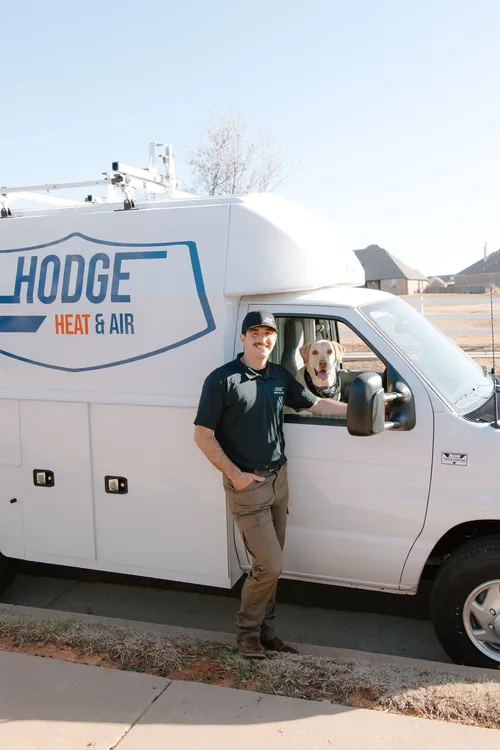
Hodge Heat and Air LLC
11200 Ashford Dr, Yukon, OK 73099
Hodge Heat and Air LLC provides residential HVAC services in Oklahoma City, OK. They specialize in the installation, repair, and maintenance of air conditioners, furnaces, heat pumps, boilers, mini splits, and geothermal heat pumps. The company offers HVAC tune-up services and is available around the clock to address heating and cooling needs. Their team consists of qualified professionals focused on delivering reliable HVAC solutions for home comfort.
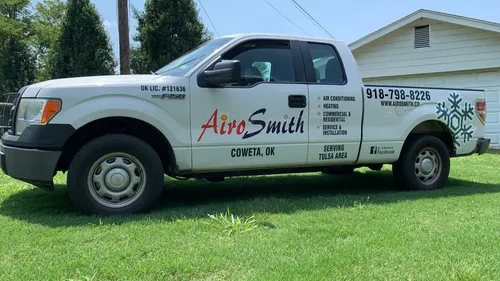
Airosmith Inc.
Tulsa, OK
Airosmith Inc. offers commercial HVAC services in Tulsa, OK, specializing in installation, repair, and maintenance of air conditioning, heating, heat pumps, and boilers. They focus on optimizing business operations by providing HVAC solutions tailored to commercial needs, including new construction projects. Their team handles complex commercial systems to ensure efficient performance and energy management.
Oklahoma's Regulatory Landscape for Boilers
In Oklahoma, the installation and replacement of boilers are overseen by the Oklahoma Department of Labor (ODL) Boiler & Pressure Vessels Program. This means the work must be performed by a licensed firm or individual holding the appropriate credentials from the state. Adherence to the latest adopted codes is not optional; it's a legal requirement for safety and compliance.
The primary codes governing boiler installations are the 2018 International Mechanical Code (IMC) and the 2018 International Residential Code (IRC), as amended for Oklahoma use1 2. These codes cover everything from equipment standards and clearances to combustion air requirements and venting. Ignoring these rules can lead to unsafe conditions, failed inspections, and costly rework.
Key Code Requirements for Installation
Understanding the core code requirements can help you discuss your project knowledgeably with a contractor.
- Licensing & Permits: Only a licensed installer can legally install or replace a boiler in Oklahoma3. They are responsible for pulling the necessary local permits, which typically cost between $50 and $200. This step ensures the work will be inspected by a municipal official to verify code compliance.
- Equipment Standards: All boilers installed must be constructed and labeled in accordance with the ASME Boiler & Pressure Vessel Code (Sections I or IV). Furthermore, the controls and safety devices on boilers with an input less than 12.5 million Btu/hr must comply with ASME CSD-1 standards.
- Manufacturer Instructions: Code mandates that installation follow the manufacturer's instructions precisely. This includes how the unit is leveled, secured, and how its controls are set. The installer must provide you with the manufacturer's installation and operation diagrams.
- Physical Placement & Clearances: The boiler must be installed on a level, non-combustible base unless specifically listed for installation on combustible flooring. Specific clearance distances from walls, ceilings, and other combustibles are detailed in the IMC (Chapters 10 and 14) and are crucial for safety, service access, and proper operation 4.
- Combustion Air: Fuel-burning boilers require a dedicated source of combustion air, as outlined in IMC Chapter 20. An improperly vented or air-starved boiler can produce deadly carbon monoxide.
- System Valves: Shutoff valves must be installed on both the supply and return piping connected to the boiler5. This allows for isolation of the appliance for maintenance or repair without draining the entire heating system.
Understanding Boiler Types and Efficiency
Choosing the right type of boiler impacts your upfront cost, long-term energy bills, and home comfort.
- Conventional Boilers: Often the most affordable option upfront, these systems have lower efficiency ratings (typically 80-85% AFUE). They require a separate tank to hold hot water for your taps.
- System Boilers: These incorporate key components like the pump and expansion vessel within the unit, simplifying installation. They still require a hot water storage cylinder.
- Combination (Combi) Boilers: These high-efficiency units heat water for both your radiators and your taps directly from the mains, eliminating the need for a storage tank. They are compact and provide endless hot water, making them ideal for smaller homes.
- High-Efficiency Condensing Boilers: The current standard for new installations, these boilers capture heat from exhaust gases that would otherwise be wasted, achieving Annual Fuel Utilization Efficiency (AFUE) ratings of 90% or higher. While they have a higher initial cost, they offer significant fuel savings over time. Oklahoma's energy codes reference the International Energy Conservation Code (IECC), which generally aligns with these high-efficiency national standards6.
Cost Breakdown for Boiler Replacement in Oklahoma
The total cost of a boiler replacement in Oklahoma varies widely, typically ranging from $4,000 to over $12,000 for a complete project. This broad range is due to several factors:
- Equipment Cost ($2,000 - $5,000+): The boiler unit itself is the largest variable. A basic, standard-efficiency model costs less, while a high-efficiency condensing or combi boiler commands a premium price 7.
- Labor ($1,500 - $2,500+): Labor costs depend on the complexity of the installation. A straightforward swap-out is less expensive than a job requiring new piping, a fuel source conversion (e.g., oil to gas), or relocation of the unit.
- Ancillary Costs:
- Permits: $50 - $200.
- Removal & Disposal: $500 - $1,000 for safely removing the old boiler and any related tanks8.
- Additional Components: New thermostats, zone valves, or system flushing can add to the cost.
Standard-efficiency boiler installations generally fall in the $3,500 - $6,000 range, while high-efficiency installations typically cost $6,000 - $8,500 or more9. Always get detailed, itemized estimates from multiple licensed contractors.
Find the perfect boiler installation & replacement contractors for your needs
Get personalized recommendations and expert advice
The Importance of Professional Sizing and Installation
A boiler that is too large for your home will "short cycle"-turn on and off frequently-leading to uneven heating, increased wear, and higher energy bills. One that is too small will struggle to keep your home warm during Oklahoma's coldest snaps. A professional installer will perform a Manual J heat load calculation, which considers your home's square footage, insulation, window quality, and other factors to determine the precise boiler size needed.
Beyond sizing, proper installation is critical for safety, efficiency, and warranty validation. A licensed professional will ensure:
- Correct fuel line and gas pressure (for gas boilers).
- Proper venting and condensation drainage for high-efficiency models.
- Adequate water pressure and system cleanliness.
- That all safety devices are tested and operational.
- That the system is commissioned and you are shown how to operate it.
Navigating Permits and Inspections
Your licensed contractor should handle the permit process. After installation, a local building inspector will visit to verify that the work meets all applicable codes-Oklahoma's adopted IMC/IRC, local amendments, and manufacturer specifications 10. Passing this inspection is your assurance that the installation is safe and compliant. Never let a contractor suggest skipping permits; it is a red flag and can create liability issues for you as the homeowner.
Long-Term Considerations and Savings
Investing in a high-efficiency boiler, while more expensive initially, pays dividends through lower monthly utility bills. The energy savings can often offset the higher purchase price over the lifespan of the unit. Additionally, a properly installed and maintained boiler will have a longer operational life, provide more consistent comfort, and be less prone to costly breakdowns.
Regular annual maintenance by a qualified technician is essential to maintain efficiency, ensure safe operation, and uphold the manufacturer's warranty. This typically involves cleaning components, checking for leaks, testing safety controls, and assessing venting.
Frequently asked questions
Sources
Footnotes
-
chapter 10 boilers, water heaters and pressure vessels - https://codes.iccsafe.org/content/OKIMC2018P1/chapter-10-boilers-water-heatersand-pressure-vessels ↩
-
CHAPTER 20 BOILERS AND WATER HEATERS - ICC Digital Codes - https://codes.iccsafe.org/content/OKIRC2018P1/chapter-20-boilers-and-water-heaters ↩
-
Boiler & Pressure Vessels Program - https://oklahoma.gov/labor/safety-and-health/safety-standards/boiler-pressure-vessels.html ↩
-
Chapter 3 General Regulations: Oklahoma Mechanical Code 2018 - https://up.codes/viewer/oklahoma/imc-2018/chapter/3/general-regulations ↩
-
Chapter 10 Boilers, Water Heaters and Pressure Vessels - UpCodes - https://up.codes/viewer/oklahoma/imc-2018/chapter/10/boilers-water-heaters-and-pressure-vessels ↩
-
Chapter 11 [RE] Energy Efficiency: Oklahoma Residential Code 2018 - https://up.codes/viewer/oklahoma/irc-2018/chapter/11/re-energy-efficiency ↩
-
Guide to Installing a New Boiler System - Aspen Creek HVAC - https://www.aspencreekhc.com/guide-to-installing-a-new-boiler-system/ ↩
-
How Much Does Boiler Replacement Cost? - https://todayshomeowner.com/hvac/cost/boiler-replacement-cost/ ↩
-
Boiler Replacement Costs: Smart Budgeting and Planning ... - https://www.tcmemt.com/post/the-cost-of-boiler-replacement-expert-guide-to-smart-budgeting-and-installation-planning ↩
-
Tulsa Water Heater Replacement: Key Differences from Standard - https://halfmoonplumbing.com/blog/tulsa-water-heater-replacement-understanding-key-differences-from-standard-installation ↩