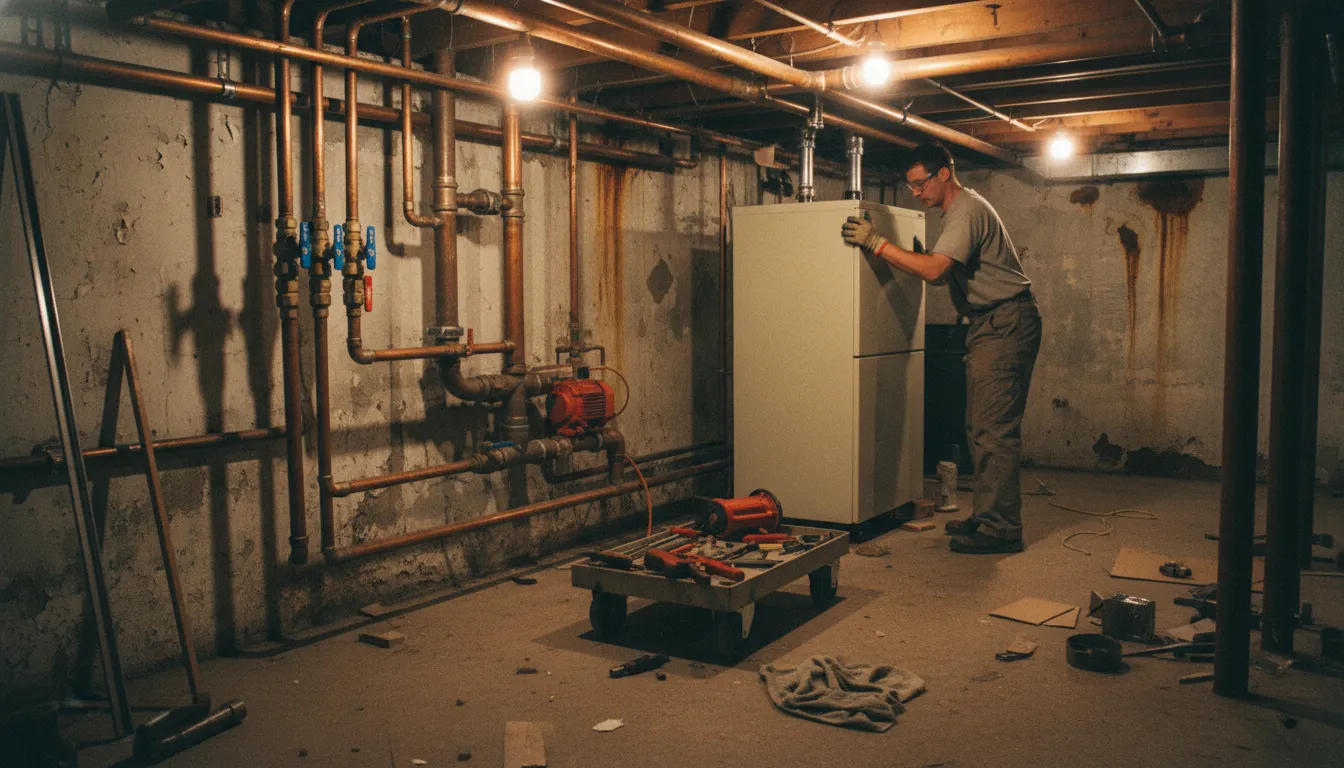
Find the Best Boiler Installation & Replacement Contractors for Your Business
No obligation • Fast responses • Nationwide coverage

Why you can trust HVAC Firms
HVAC Firms is a leading United States resource for evaluating HVAC service providers. Our team researches companies, checks credentials, and reviews customer feedback to present clear, unbiased information. Listings and rankings are based on merit, and companies cannot pay to change our editorial content.
Search providers near you
Top Boiler Installation & Replacement Contractors in Middletown, Ohio Ranked
Installing or replacing a boiler is a significant home improvement decision that impacts your comfort, energy bills, and safety. In Ohio, this process is governed by specific state rules and building codes designed to ensure safe, efficient, and reliable operation. This guide provides a clear overview of what Ohio homeowners need to know, from navigating permits and choosing the right equipment to understanding costs and finding qualified professionals. You can use this information to make informed decisions and connect with local, licensed experts for your project.
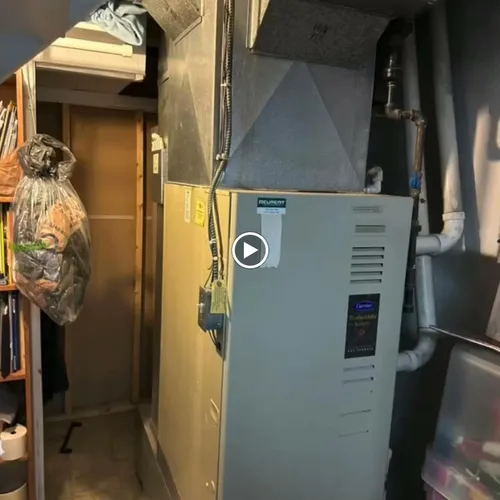
Zimmer Heating & Cooling
7458 Colerain Ave, Cincinnati, OH 45239
Zimmer Heating & Cooling is a third-generation family-owned HVAC company serving Cincinnati, OH, and the Tristate area since 1946. They provide sales, service, and installation of heating and cooling systems, including air conditioners, furnaces, heat pumps, boilers, mini splits, and full HVAC systems. The company is a factory-authorized dealer for Carrier and Mitsubishi, with certified technicians licensed in Ohio and Kentucky. Zimmer Heating & Cooling also offers light commercial design-build services and after-hours support.
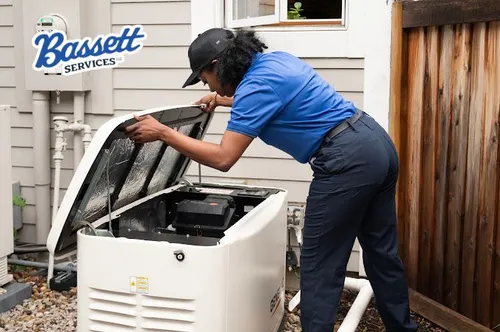
Bassett Services: Heating, Cooling, Plumbing, & Electrical
8950 Glendale Milford Rd, Loveland, OH 45140
Bassett Services: Heating, Cooling, Plumbing, & Electrical provides comprehensive HVAC, plumbing, and electrical services in Cincinnati, OH. They offer repair, installation, and maintenance for systems including furnaces, boilers, heat pumps, air conditioners, mini-splits, geothermal systems, and air quality equipment. Their capabilities include specialized services such as geothermal system installation and air scrubber maintenance. With over 40 years of experience, Bassett Services supports homes and businesses with tailored solutions to maintain comfort and safety throughout the year.
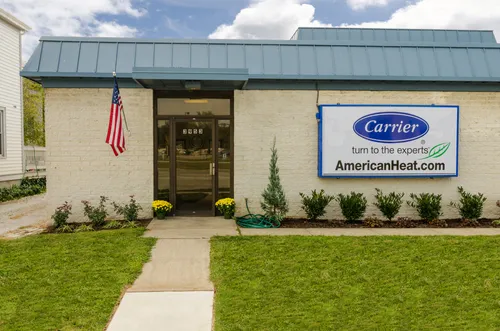
American Heating and Air Conditioning
3953 Red Bank Rd, Cincinnati, OH 45227
American Heating and Air Conditioning has been serving Cincinnati, OH since 1936, providing comprehensive HVAC services for homes and businesses. They specialize in installation, repair, and maintenance of heating and cooling systems, including furnaces, boilers, air conditioners, heat pumps, and thermostats. The company offers tailored comfort solutions using trusted brands like Carrier, and they also provide indoor air quality services such as air cleaners and humidifiers. With nearly a century of experience, American Heating and Air Conditioning supports both routine tune-ups and complex HVAC projects in the Cincinnati area.

Thomas & Galbraith Heating, Cooling, Plumbing & Electrical
8563 Mason Montgomery Rd Ste 30 C, Mason, OH 45040
Thomas & Galbraith Heating, Cooling, Plumbing & Electrical is a full-service HVAC and plumbing company serving Cincinnati, OH. They offer a wide range of services including repair, installation, and maintenance of furnaces, heat pumps, boilers, air conditioners, and duct cleaning. As a Carrier Factory Authorized Dealer with over 40 years of experience, their NATE-certified technicians provide expert diagnostics and repairs, often completing same-day service with stocked parts. The company also offers 24/7 emergency HVAC repair to address urgent heating and cooling issues at any time.
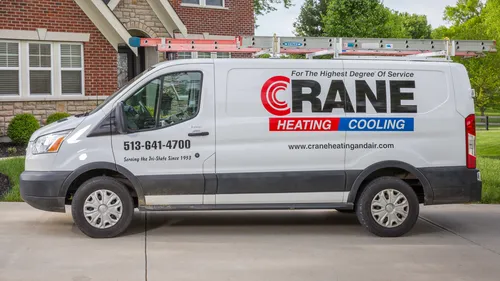
Crane
24 Clay St, Cincinnati, OH 45217
Crane provides heating and air conditioning services in Cincinnati, OH. They specialize in the installation, repair, and maintenance of HVAC systems including air conditioners, furnaces, heat pumps, and boilers. Their team consists of factory-trained professionals equipped with a fleet of trucks and a warehouse stocked with parts to support timely service. Crane offers comprehensive solutions from routine maintenance to emergency repairs and full system replacements.
Understanding Ohio's Boiler Rules and Regulations
Ohio takes boiler safety and efficiency seriously. The state has established a framework of regulations that contractors and homeowners must follow for any new installation or major replacement. The primary authority is the Ohio Department of Commerce, Division of Industrial Compliance, which oversees the Boiler Section.
Key Regulatory Requirements:
- Permits are Mandatory: Before any work begins, a permit must be obtained from the state. This is not a local city permit but a specific state boiler permit. Your licensed contractor will typically handle this application process, which includes paying a fee and registering the job 1.
- Adherence to Multiple Codes: Installations must comply with a layered set of standards:
- Manufacturer's Instructions: This is the first and foremost requirement.
- ASME Boiler & Pressure Vessel Code (Section IV): This national standard covers the design, fabrication, installation, and inspection of heating boilers 2.
- Ohio Building Code (OBC) & Ohio Mechanical Code (OMC): These incorporate the International Residential Code (IRC) and International Mechanical Code (IMC) with Ohio amendments, covering installation specifics like clearances, venting, and fuel piping 3.
- Underwriters Laboratories (UL) Standards: Specific standards apply based on fuel type, such as UL 726 for oil-fired boilers and UL 834 for electric boilers.
- Final Inspection and Certification: Once installation is complete, a state-appointed boiler inspector must examine the work. After passing inspection, a Certificate of Operation is issued, which is the legal document allowing the boiler to be used 4.
- Flood Zone Considerations: For homes in designated flood hazard areas, special rules apply. Boilers must be installed on an elevated base or platform to keep critical components above the predicted flood level 5 6.
Efficiency Standards and Why They Matter
Ohio's energy codes mandate high efficiency for new heating equipment to reduce energy consumption and lower utility bills for homeowners. The key metric for boilers is the Annual Fuel Utilization Efficiency (AFUE) rating, which represents the percentage of fuel converted directly into heat over a typical year.
For new residential boiler installations, the effective requirement is for high-efficiency, condensing models with an AFUE of 90% or greater 7. Condensing boilers capture heat from exhaust gases that would otherwise escape up the flue, making them significantly more efficient than standard models (which typically range from 80% to 85% AFUE). While the upfront cost is higher, the long-term savings on fuel bills, especially given Ohio's cold winters, can be substantial.
A Detailed Look at Boiler Installation Costs in Ohio
The total cost for a new boiler system in Ohio varies widely, typically ranging from $3,500 on the very low end for a simple, standard-efficiency replacement to over $12,000 for a complex, high-efficiency system with extensive labor and upgrades. Several core factors determine where your project will fall within this range.
1. Boiler Type and Efficiency:
- Standard Efficiency (80%-85% AFUE): $3,500 - $6,500. These are often non-condensing models and may be chosen for straightforward replacements where venting a high-efficiency unit is problematic.
- High-Efficiency Condensing (90%+ AFUE): $6,000 - $8,500+. This is the most common range for new installations complying with current codes. The higher initial investment is offset by lower operating costs.
2. Fuel Source: The type of fuel your boiler uses is a major cost driver.
- Natural Gas or Propane: $4,000 - $9,000. Gas is a common and cost-effective fuel in Ohio.
- Oil: $4,800 - $9,000. Oil boilers are robust but subject to fluctuating fuel prices.
- Electric: $1,800 - $8,000. Electric boilers have lower equipment costs but higher operating costs due to electricity rates.
- Wood/Pellet: $7,000 - $16,000+. These systems have high equipment and installation costs but can use a low-cost fuel source 8 9 10.
3. Labor and Installation Complexity: Labor often constitutes 30-50% of the total project cost. Complexity increases with:
- System Type: Switching from a steam system to hot water, or from a traditional system to a modern zone-controlled setup.
- Location and Access: Installing a boiler in a tight basement crawlspace or a finished attic.
- Necessary Upgrades: Bringing old gas lines, electrical service, or venting up to current code requirements.
- Removal and Disposal: Safely removing the old boiler, which can be heavy and require special handling.
4. Ancillary Costs:
- State Permit Fees: Typically between $50 and $200, depending on the job's scope and boiler horsepower 11.
- New Components: Thermostats, circulator pumps, expansion tanks, air separators, and zone valves add to the cost.
- Venting Materials: High-efficiency condensing boilers require special PVC or CPVC venting, which differs from the metal flue used for standard boilers.
Find the perfect boiler installation & replacement contractors for your needs
Get personalized recommendations and expert advice
The Homeowner's Step-by-Step Guide
Navigating a boiler project successfully involves careful planning and working with the right professionals.
Step 1: Assessment and Consultation Begin by having a detailed in-home assessment from multiple licensed HVAC contractors. A good professional will evaluate your entire heating system-not just the boiler itself-including radiation (baseboard, radiators), piping, controls, and fuel supply. They should perform a heat loss calculation to properly size the new boiler; an oversized or undersized unit leads to inefficiency and comfort problems.
Step 2: Select a Licensed Ohio Contractor This is the most critical step. Verify that any contractor you consider is:
- Registered with the State of Ohio: They must hold an active license with the Ohio Department of Commerce.
- Insured: Carry both liability and worker's compensation insurance.
- Experienced with Boilers: Specifically ask about their experience with your fuel type (gas, oil, etc.) and with the brand/models they are proposing.
- Willing to Pull the Permit: The contractor should obtain the required state boiler permit. Be wary of anyone who suggests you pull it as the homeowner to "save money" or avoid inspection.
Step 3: Review Quotes and Choose Equipment Compare detailed written proposals. They should include:
- Complete equipment model numbers and efficiency ratings (AFUE).
- A clear scope of work: removal of old unit, all new materials, piping, venting, electrical connections, etc.
- A breakdown of costs: equipment, labor, permit fees, and any ancillary items.
- A projected timeline for the work.
- Warranty information for both parts and labor.
Step 4: Installation and Inspection Once work begins, the contractor should manage the process, including scheduling the required state inspection after completion. Ensure you receive all final documentation: the manufacturer's warranty paperwork, the installer's certificate, and the state-issued Certificate of Operation after the inspection is passed. Do not make final payment until you have this certificate in hand.
Maintaining Your New Boiler System
To protect your investment and ensure longevity, regular maintenance is key. An annual tune-up by a professional before each heating season is recommended. This service typically includes cleaning the burner and heat exchanger, checking combustion efficiency, inspecting the vent system, testing safety controls, and verifying water pressure/purity in hydronic systems. Simple homeowner tasks include keeping the area around the boiler clear and monitoring the system pressure gauge.
Frequently asked questions
Sources
Footnotes
-
Section 4104.101 - Ohio Revised Code - https://codes.ohio.gov/ohio-revised-code/section-4104.101 ↩
-
Chapter 10 Boilers, Water Heaters and Pressure Vessels - https://up.codes/viewer/ohio/imc-2015/chapter/10/boilers-water-heaters-and-pressure-vessels ↩
-
Proposed Ohio Mechanical Code Rules - https://dam.assets.ohio.gov/image/upload/com.ohio.gov/documents/Combined%20OMC%20rules%20and%20summary%20for%20Enotification.pdf ↩
-
Section 4104.12 - Ohio Revised Code - https://codes.ohio.gov/ohio-revised-code/section-4104.12 ↩
-
Boilers and Water Heaters, Ohio Residential Code 2013 | UpCodes - https://up.codes/viewer/ohio/oh-residential-code-2013/chapter/20/boilers-and-water-heaters ↩
-
2019 Residential Code of Ohio - 2001.1 Installation. - https://codes.iccsafe.org/s/OHRC2019P3/part-v-mechanical/OHRC2019P3-Pt05-Ch20-Sec2001.1 ↩
-
Ohio Admin. Code 4101:8-11-01 - Energy efficiency - https://www.law.cornell.edu/regulations/ohio/Ohio-Admin-Code-4101-8-11-01 ↩
-
Boiler Replacement Costs: Smart Budgeting and Planning ... - https://www.tcmemt.com/post/the-cost-of-boiler-replacement-expert-guide-to-smart-budgeting-and-installation-planning ↩
-
How Much Does Boiler Installation and Replacement Cost ... - https://www.angi.com/articles/how-much-does-boiler-installation-cost.htm ↩
-
Boiler Installation in Mansfield | Quarry Hills Plumbing & HVAC - https://www.quarryhillsplumbing.com/heating/boiler-installation/ ↩
-
Boiler Permits - Ohio Department of Commerce - https://com.ohio.gov/wps/portal/gov/com/licensing-and-registration/construction-inspection-and-maintenance/boiler-permits ↩