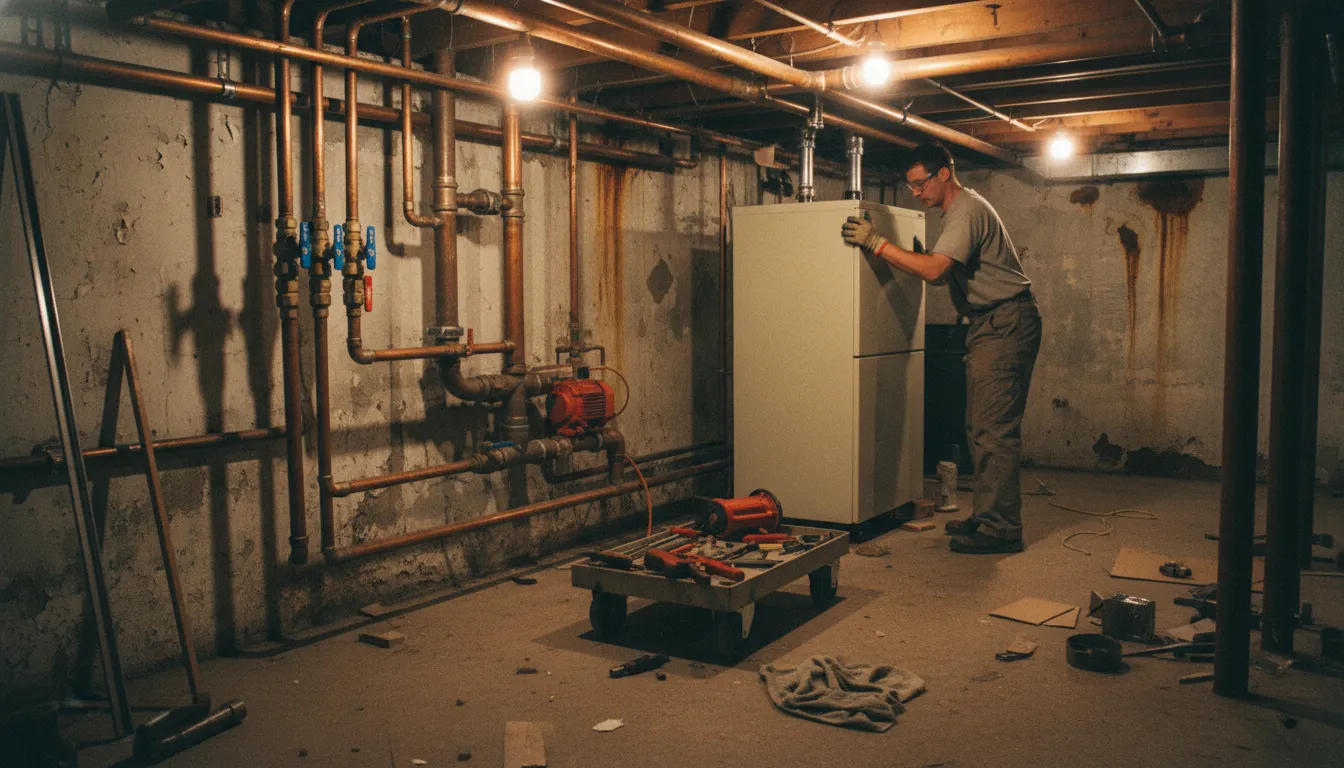
Find the Best Boiler Installation & Replacement Contractors for Your Business
No obligation • Fast responses • Nationwide coverage

Why you can trust HVAC Firms
HVAC Firms is a leading United States resource for evaluating HVAC service providers. Our team researches companies, checks credentials, and reviews customer feedback to present clear, unbiased information. Listings and rankings are based on merit, and companies cannot pay to change our editorial content.
Search providers near you
Top Boiler Installation & Replacement Contractors in Cincinnati, Ohio Ranked
A new boiler is a significant investment in your home's comfort, efficiency, and safety. Whether you're upgrading an aging system, converting from another fuel source, or installing a boiler in a new construction, understanding the process, local requirements, and your options is crucial. This guide provides essential information for Cincinnati homeowners considering boiler installation or replacement, helping you navigate local codes, choose the right system, and connect with qualified professionals in your area.
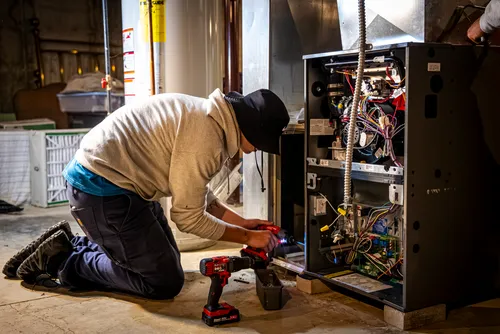
Sweet Life Heating & Cooling
5555 N Bend Rd Suite C, Burlington, KY 41005
Sweet Life Heating & Cooling is a family-owned HVAC company serving Cincinnati, OH. They provide heating and cooling services including installation and repair of air conditioners, furnaces, heat pumps, boilers, mini splits, and geothermal heat pumps. The company focuses on community connections and treats each home with care. Their offerings include HVAC tune-ups and comprehensive system installations to maintain comfort throughout the year.
Zimmer Heating & Cooling
7458 Colerain Ave, Cincinnati, OH 45239
Zimmer Heating & Cooling is a third-generation family-owned HVAC company serving Cincinnati, OH, and the Tristate area since 1946. They provide sales, service, and installation of heating and cooling systems, including air conditioners, furnaces, heat pumps, boilers, mini splits, and full HVAC systems. The company is a factory-authorized dealer for Carrier and Mitsubishi, with certified technicians licensed in Ohio and Kentucky. Zimmer Heating & Cooling also offers light commercial design-build services and after-hours support.
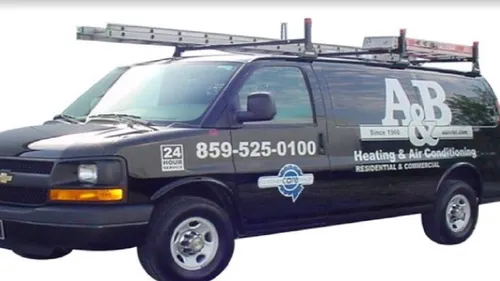
A & B Heating & Air Conditioning
5632 Commercial Dr, Burlington, KY 41005
A & B Heating & Air Conditioning is an HVAC company serving Cincinnati, OH, and nearby areas including Northern Kentucky and Southeast Indiana. They provide repair and installation services for heat pumps, furnaces, boilers, air conditioners, geothermal systems, air cleaners, and humidifiers for both residential and commercial properties. The company has been in business since 1966 and is a preferred dealer of American Standard products.
Bassett Services: Heating, Cooling, Plumbing, & Electrical
8950 Glendale Milford Rd, Loveland, OH 45140
Bassett Services: Heating, Cooling, Plumbing, & Electrical provides comprehensive HVAC, plumbing, and electrical services in Cincinnati, OH. They offer repair, installation, and maintenance for systems including furnaces, boilers, heat pumps, air conditioners, mini-splits, geothermal systems, and air quality equipment. Their capabilities include specialized services such as geothermal system installation and air scrubber maintenance. With over 40 years of experience, Bassett Services supports homes and businesses with tailored solutions to maintain comfort and safety throughout the year.
American Heating and Air Conditioning
3953 Red Bank Rd, Cincinnati, OH 45227
American Heating and Air Conditioning has been serving Cincinnati, OH since 1936, providing comprehensive HVAC services for homes and businesses. They specialize in installation, repair, and maintenance of heating and cooling systems, including furnaces, boilers, air conditioners, heat pumps, and thermostats. The company offers tailored comfort solutions using trusted brands like Carrier, and they also provide indoor air quality services such as air cleaners and humidifiers. With nearly a century of experience, American Heating and Air Conditioning supports both routine tune-ups and complex HVAC projects in the Cincinnati area.
Understanding Your Boiler System Options
Before contacting professionals, it helps to know the basic types of boiler systems available. The right choice depends on your home's existing infrastructure, fuel availability, and heating preferences.
Hot Water (Hydronic) Systems are the most common in modern installations. These systems heat water, which is then circulated through pipes to terminal units like baseboard radiators, cast-iron radiators, or even radiant floor heating coils. They operate at lower pressures than steam systems and offer precise temperature control for different zones in your home.
Steam Boiler Systems are often found in older Cincinnati homes. They heat water to the point of creating steam, which then travels through pipes to radiators. As the steam cools and condenses, it releases heat. While effective, steam systems can be less energy-efficient than modern hydronic systems and may require more specialized knowledge for maintenance and installation.
Your choice of fuel type is another primary consideration:
- Natural Gas: The most common and typically most cost-effective fuel in areas served by gas lines. High-efficiency gas boilers are widely available.
- Oil: A reliable option for homes not serviced by natural gas. Oil boilers require an on-site storage tank and regular fuel deliveries.
- Electric: These boilers are compact, quiet, and require no venting, making them easier to install in certain spaces. Operating costs can be higher depending on local electricity rates.
The Importance of Efficiency: Understanding AFUE
When comparing boilers, the most critical specification is its Annual Fuel Utilization Efficiency (AFUE) rating. This percentage tells you how much of the fuel's energy is converted directly into heat for your home over a typical year.
- Standard Efficiency models typically have AFUE ratings between 80% and 85%. This means 80-85% of the fuel's energy becomes heat, while the rest is lost, primarily through the flue gases.
- High-Efficiency condensing boilers have AFUE ratings of 90% or higher, with many models reaching 95-98%. 1 They achieve this by capturing heat from the exhaust gases that would otherwise be vented outside, condensing the water vapor in the flue gas to extract extra energy. While they often have a higher upfront cost, the significant reduction in fuel consumption can lead to substantial savings on your monthly energy bills, especially during Cincinnati's cold winters.
Navigating Cincinnati and Ohio Boiler Codes & Permits
Installing or replacing a boiler is not a simple DIY project; it is heavily regulated for safety. Compliance with state and local codes is mandatory and involves a formal permitting and inspection process.
State Requirements: The Ohio Department of Commerce, through its Board of Building Standards, oversees boiler safety. A state boiler installation or repair permit is generally required. 2 Contractors must follow strict guidelines, including the ASME (American Society of Mechanical Engineers) code for boiler construction and the Ohio Mechanical Code for installation. Key safety requirements include proper sizing and placement of safety relief valves, maintaining minimum clearances (often 3 feet) around the boiler for service access, and correct control settings. 3 4 5
Local Cincinnati Permits: The City of Cincinnati's Department of Buildings and Inspections requires a Mechanical Permit for the installation of any fuel-burning heating device, including boilers. This permit ensures the work will be inspected to comply with all applicable codes.
The Inspection Process: After installation, a certified inspector must examine the work before the boiler is put into full operation. The inspector will verify proper installation, venting, fuel connections, safety device operation, and overall compliance. Passing this inspection is your assurance that the installation is safe. Your contractor should handle pulling the necessary permits and scheduling the inspection.
Find the perfect boiler installation & replacement contractors for your needs
Get personalized recommendations and expert advice
The Installation Process: What to Expect
A professional boiler installation follows a structured process to ensure safety, efficiency, and reliability.
- Initial Consultation and Load Calculation: A qualified technician will assess your home's heating needs by performing a heat load calculation. This considers your home's size, insulation, window quality, and layout to determine the correctly sized boiler-an oversized or undersized unit will lead to inefficiency and comfort issues.
- System and Equipment Selection: Based on the assessment, your existing system (if any), and your budget, the professional will recommend the appropriate boiler type, fuel, efficiency rating, and compatible components.
- Preparation and Removal: For replacements, the old boiler and any unusable components will be safely disconnected and removed. This may involve draining the system, disconnecting fuel and water lines, and disposing of the old unit.
- New Installation: The new boiler is positioned, leveled, and connected to the water supply lines, fuel line (gas or oil), electrical supply, and venting/chimney system. Circulator pumps, expansion tanks, air separators, and zoning controls are installed as needed.
- System Startup and Testing: Once everything is connected, the system is filled with water, purged of air, and fired up. The technician will check for leaks, verify proper operation of all controls and safety devices, and ensure the system is producing heat correctly.
- Final Inspection and Customer Orientation: After the official inspection passes, the installer should walk you through the basics of operating your new boiler, explain maintenance tasks, and leave you with all manufacturer documentation and warranty information. 6
Cost Considerations for Boiler Installation
The total cost of a boiler installation in Cincinnati can vary widely based on several factors. It's important to get detailed, written estimates from multiple contractors.
Equipment Costs: The boiler unit itself can range from $2,000 to $5,000 or more, with high-efficiency condensing models commanding a higher price. Labor and Installation: Professional installation labor typically adds $1,500 to $2,500+ to the total, depending on the job's complexity. Additional Components: Costs can increase if you need new radiators, baseboards, thermostatic radiator valves, a new chimney liner, or a more sophisticated zoning system. Permit Fees: Budget for $50 to $200+ for required state and city permits. Removal and Disposal: Removing an old boiler may cost an additional $500 to $1,000. Fuel Conversion: Switching from an oil-fired system to natural gas can add $2,000 or more for running a new gas line to the boiler location.
As a general estimate, a standard-efficiency boiler replacement might start around $3,500 installed, while a high-efficiency system installation often falls in the range of $6,000 to $8,500 or more. 7 8
Choosing the Right Cincinnati Professional
This is the most critical step. Your boiler installer must be knowledgeable, experienced, and properly credentialed.
- Verify State Registration: Ensure the contractor is registered with the State of Ohio to perform boiler work. 9
- Check for Local Licensing: Confirm they are licensed to pull permits in the City of Cincinnati. 10
- Ask for References and Proof of Insurance: A reputable company will provide references from recent local installations and carry both liability and worker's compensation insurance.
- Get Detailed Written Estimates: Compare quotes that include a breakdown of equipment model numbers, labor, permit fees, and any ancillary costs. The lowest price is not always the best value if it compromises on quality or expertise.
Frequently asked questions
Sources
Footnotes
-
Cincinnati 24/7 Boiler Repair, Maintenance, and Replacement - https://thomasgalbraith.com/boilers-2/ ↩
-
Checklist for New Hot Water Heating or Hot Water Supply Boilers | Ohio Department of Commerce - https://com.ohio.gov/divisions-and-programs/industrial-compliance/boilers/guides-and-resources/checklist-for-new-hot-water-heating-or-hot-water-supply-boilers ↩
-
2019 Residential Code of Ohio - 2001.1 Installation. - https://codes.iccsafe.org/s/OHRC2019P3/part-v-mechanical/OHRC2019P3-Pt05-Ch20-Sec2001.1 ↩
-
Pre-Inspection Checklist for New Potable Water Heaters - https://com.ohio.gov/divisions-and-programs/industrial-compliance/boilers/guides-and-resources/pre-inspection-checklist-for-new-potable-water-heaters ↩
-
Chapter 10 Boilers, Water Heaters and Pressure Vessels - https://up.codes/viewer/ohio/imc-2015/chapter/10/boilers-water-heaters-and-pressure-vessels ↩
-
Boiler Installation in Cincinnati, Ohio - JonLe Heating & Cooling - https://jonle.com/heating/boiler-installation/ ↩
-
Boiler Replacement Costs: Smart Budgeting and Planning ... - https://www.tcmemt.com/post/the-cost-of-boiler-replacement-expert-guide-to-smart-budgeting-and-installation-planning ↩
-
Boiler Installation & Replacement in Fairfield, OH | Hill-Air - https://hill-air.com/boiler-installation/ ↩
-
Boiler Compliance | Ohio Department of Commerce - https://com.ohio.gov/wps/portal/gov/com/divisions-and-programs/industrial-compliance/boilers/guides-and-resources/boiler-compliance ↩
-
Mechanical Inspections - Buildings - https://www.cincinnati-oh.gov/buildings/building-construction-inspections/mechanical-inspections/ ↩