Find the Best Boiler Installation & Replacement Contractors for Your Business
No obligation • Fast responses • Nationwide coverage

Why you can trust HVAC Firms
HVAC Firms is a leading United States resource for evaluating HVAC service providers. Our team researches companies, checks credentials, and reviews customer feedback to present clear, unbiased information. Listings and rankings are based on merit, and companies cannot pay to change our editorial content.
Search providers near you
Top Boiler Installation & Replacement Contractors in Rocky Mount, North Carolina Ranked
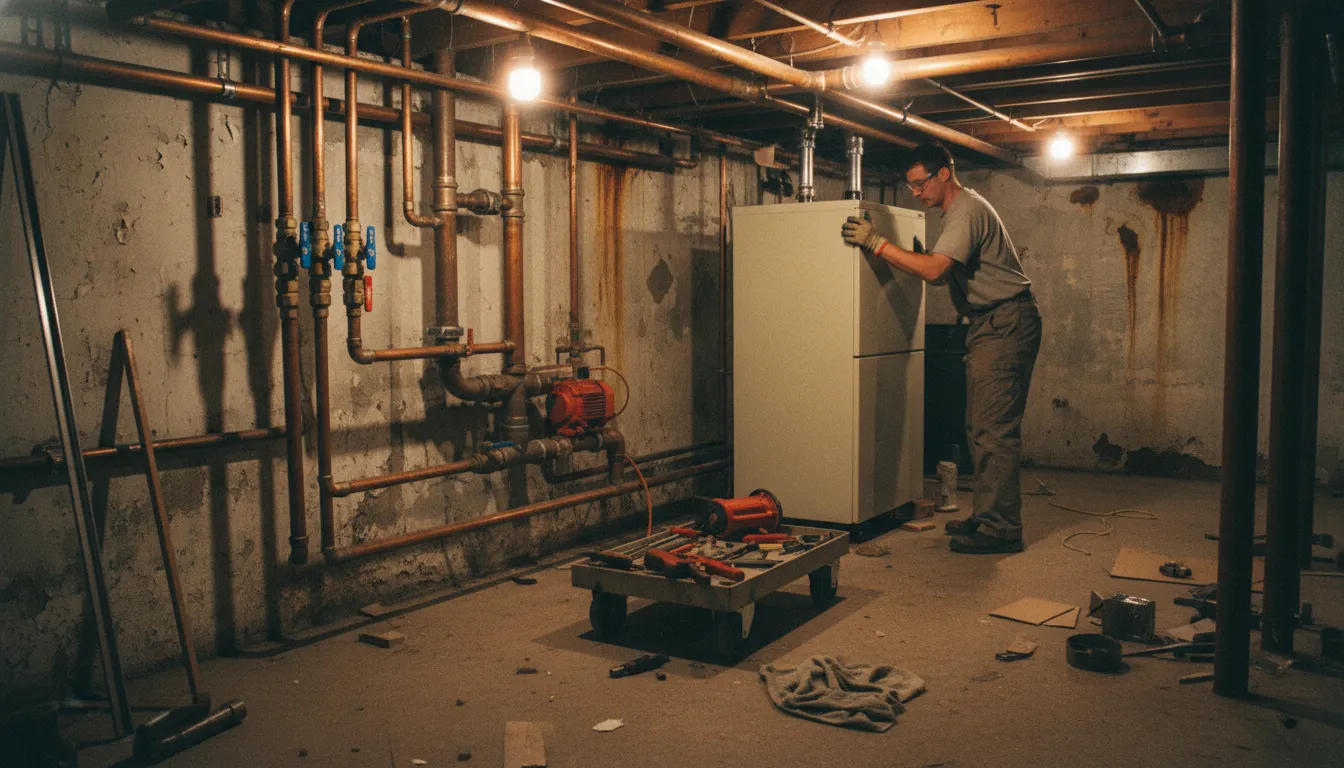
A boiler is the heart of a home's hydronic heating system, providing reliable warmth through radiators, baseboards, or radiant floor loops. Whether you're facing a sudden breakdown or planning an upgrade for efficiency, understanding your boiler replacement options is crucial for comfort and safety in Rocky Mount's climate. This guide outlines the key considerations-from system types and local codes to cost factors-to help you navigate the process of finding a qualified professional for your project.
Understanding Your Boiler System Options
When it's time for a new boiler, the first step is understanding the different technologies available. Modern boilers are far more efficient and versatile than older models, offering solutions tailored to your home's layout and your hot water needs.
Hydronic Systems: The most common setup in Rocky Mount uses hot water to distribute heat. This includes traditional cast-iron radiators, fin-tube baseboard heaters, or in-slab radiant floor tubing. These systems are prized for their consistent, comfortable heat.
Combi-Boilers: A popular space-saving option, combination boilers provide both space heating and on-demand domestic hot water from a single unit. They eliminate the need for a separate storage tank, making them ideal for homes with limited utility space.
High-Efficiency Condensing Boilers: Modern condensing (mod-con) boilers are designed to extract extra heat from the combustion gases, achieving efficiency ratings often above 90% 1. They are an excellent choice for reducing long-term energy bills, though they may have a higher initial equipment cost.
Fuel Sources: Your choice will largely depend on existing infrastructure. Natural gas is common, but many homes in the area may use oil, propane, or electricity. Switching fuels (e.g., from oil to gas) involves additional work like running new gas lines or removing an old oil tank, which impacts the overall project scope and cost.
Key Factors in Boiler Selection and Sizing
Choosing the right boiler isn't just about picking a type; it requires careful calculation to ensure optimal performance, efficiency, and longevity.
Proper Sizing (BTU Calculation): An oversized boiler will short-cycle (turn on and off frequently), wasting fuel and causing wear, while an undersized unit will struggle to heat your home. A qualified installer will perform a heat load calculation, considering your home's square footage, insulation levels, window quality, and climate zone to determine the correct British Thermal Unit (BTU) output 2.
Efficiency Ratings: Look for the Annual Fuel Utilization Efficiency (AFUE) rating. A standard efficiency model might have an AFUE of 80-85%, while a high-efficiency condensing boiler can reach 95% or higher. The higher the AFUE, the more of your fuel dollar goes directly into heating your home.
System Compatibility: Your new boiler must work with your existing distribution system. The water temperature and pressure requirements for radiant floor heat differ from those for old cast-iron radiators. A professional will assess whether your current pipes, radiators, and controls are compatible with a modern, high-efficiency unit or if updates are needed.
Find the perfect boiler installation & replacement contractors for your needs
Get personalized recommendations and expert advice
Navigating Rocky Mount and North Carolina Codes & Permits
Boiler installation is heavily regulated for safety. In Rocky Mount, installations must comply with North Carolina state codes and require official inspections. Navigating this process correctly is non-negotiable.
Required Permits: Before any work begins, your contractor must typically pull mechanical, plumbing, and electrical permits from the local building department. This ensures the project is reviewed for code compliance.
State Inspection: North Carolina requires a final inspection by the North Carolina Department of Labor (NCDOL) Boiler Safety Bureau for a DOL permit before the boiler can be operated. Your installer coordinates this critical step.
Governing Standards: Installations in Rocky Mount follow the International Mechanical Code (IMC), ASME (American Society of Mechanical Engineers) codes-specifically Section I (Power Boilers) or Section IV (Heating Boilers)-and UL safety standards 3 4. Key safety requirements include proper installation of pressure relief valves, low-water cutoffs, and ensuring adequate combustion air supply 4.
The Installation Process: What to Expect
A professional boiler replacement is a multi-step process that extends beyond simply swapping units. Understanding the workflow can help you prepare your home and set realistic expectations.
- Initial Consultation and Load Calculation: A reputable technician will inspect your current system, discuss your needs, and perform the necessary calculations to recommend correctly sized equipment.
- Equipment and Permit Procurement: Once you approve the quote, the contractor will order the boiler and secure all required local and state permits.
- System Shutdown and Removal: The old boiler is safely disconnected from fuel, water, and electrical lines. Its removal often involves draining the system and dismantling the old unit, which can be heavy and cumbersome.
- Preparation and New Installation: The installation area is prepared, which may include updating pipe connections, valves, or the flue/chimney liner. The new boiler is positioned, leveled, and connected to the water, fuel, and venting systems.
- System Startup and Testing: The unit is filled, purged of air, and fired up. The technician will test all safety controls, check for leaks, and verify proper operation and efficiency.
- Final Inspections: The installer arranges for the final local building and mandatory NCDOL state inspections 5.
- Homeowner Orientation: A good contractor will walk you through the operation of your new boiler, explain the thermostat or control system, and review maintenance tips.
Cost Breakdown for Boiler Replacement in Rocky Mount
The total investment for a boiler replacement varies widely based on equipment choices and project complexity. Here's a general breakdown of what influences the final price in the Rocky Mount area.
Equipment Costs: The boiler unit itself typically ranges from $2,000 for a standard-efficiency model to $5,000 or more for a high-efficiency or combination unit. Brand, capacity, and features like modulating burners or smart controls affect this price.
Labor and Installation: Professional installation labor generally falls between $1,500 and $3,000+. This covers the skilled work of removal, installation, testing, and coordinating inspections. Complexity, such as relocating the boiler or integrating with a complex radiant system, will increase labor time and cost.
Ancillary Costs:
- Permits: Local and state permit fees can range from $50 to $200.
- Old Boiler Removal: Disposal of the old unit and any associated fuel (like oil) may cost $500 to $1,000.
- System Updates: Upgrading piping, adding a chimney liner, or installing a water softener to protect the new boiler are common add-ons.
- Fuel Conversion: Switching from oil to natural gas can add $2,000 or more to the project for line running and tank abandonment 6.
Total Project Estimates: For a typical 2,000-square-foot home in Rocky Mount, homeowners can expect a total installed cost generally between $5,000 and $8,000+ 7. A standard replacement might range from $3,500 to $7,000, while a high-efficiency or combi-boiler installation often falls between $6,000 and $11,000+ 8 9.
Maintaining Your New Boiler System
Protecting your investment requires regular maintenance. An annual professional tune-up before the heating season is recommended. This service typically includes cleaning the burner and heat exchanger, checking all safety and operating controls, testing water quality, and inspecting the venting system. Homeowners can also help by keeping the area around the boiler clear and monitoring system pressure via the gauge. Proper maintenance ensures safety, maximizes efficiency, and extends the lifespan of your equipment.
Frequently asked questions
Sources
Footnotes
-
How Much Does Boiler Replacement Cost in 2026? Price by Type - https://modernize.com/hvac/heating-repair-installation/boiler ↩
-
Boiler-Book-2024.pdf - https://nclicensing.org/wp-content/uploads/2024/01/Boiler-Book-2024.pdf ↩
-
CHAPTER 20 BOILERS AND WATER HEATERS - https://codes.iccsafe.org/content/NCRC2018P2/chapter-20-boilers-and-water-heaters ↩
-
Chapter 10 Boilers, Water Heaters and Pressure Vessels - https://up.codes/viewer/north_carolina/imc-2021/chapter/10/boilers-water-heaters-and-pressure-vessels ↩ ↩2
-
North Carolina Boiler Laws: Rules, Regulations, & Inspection - https://www.wcrouse.com/blog/north-carolina-boiler-laws-rules-regulations-inspection/ ↩
-
How Much Does Boiler Replacement Cost? (2026) - This Old House - https://www.thisoldhouse.com/heating-cooling/boiler-replacement-cost ↩
-
How Much Does Boiler Installation and Replacement Cost? [2026 Data] - https://www.angi.com/articles/how-much-does-boiler-installation-cost.htm ↩
-
Boiler Replacement Costs: Smart Budgeting and Planning ... - https://www.tcmemt.com/post/the-cost-of-boiler-replacement-expert-guide-to-smart-budgeting-and-installation-planning ↩
-
Boiler Replacement Cost and Price - Carrier - https://www.carrier.com/residential/en/us/products/boilers/cost-buying-boiler-replacement/ ↩