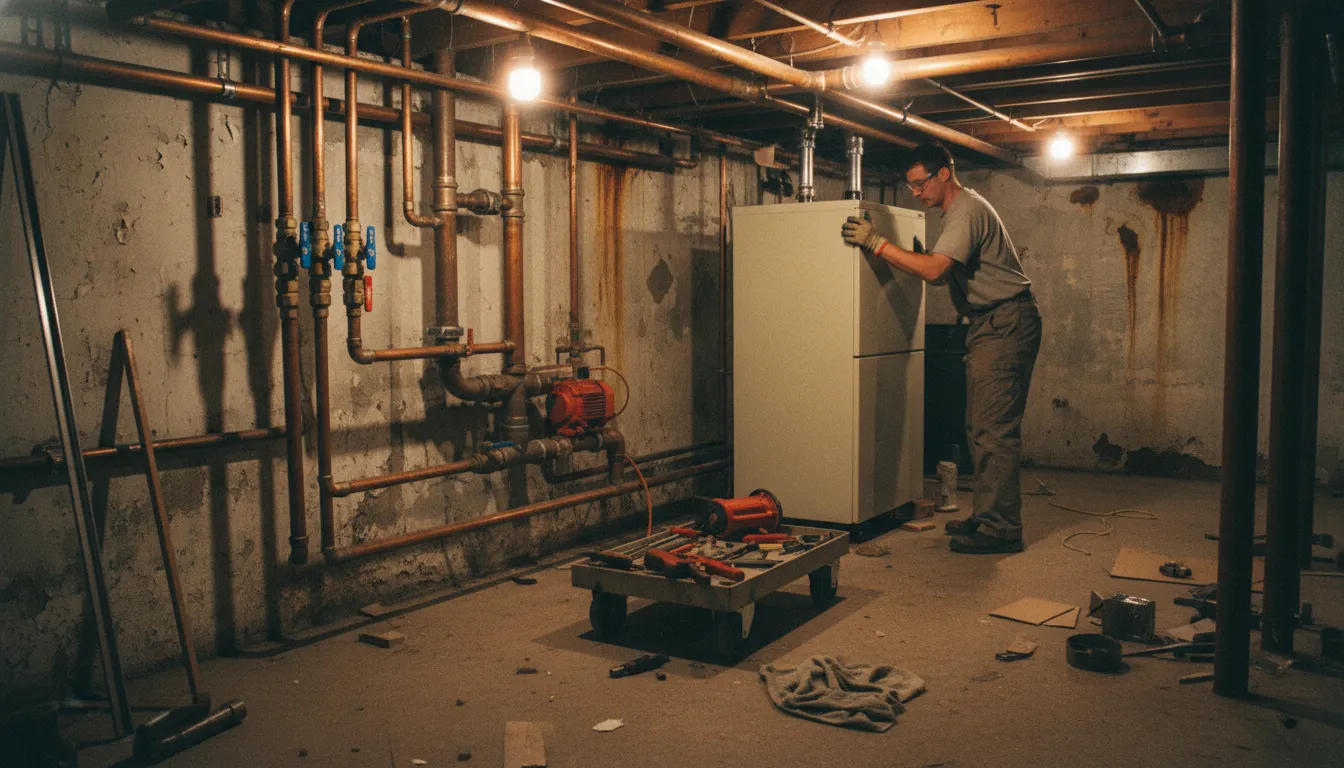
Find the Best Boiler Installation & Replacement Contractors for Your Business
No obligation • Fast responses • Nationwide coverage

Why you can trust HVAC Firms
HVAC Firms is a leading United States resource for evaluating HVAC service providers. Our team researches companies, checks credentials, and reviews customer feedback to present clear, unbiased information. Listings and rankings are based on merit, and companies cannot pay to change our editorial content.
Search providers near you
Best Boiler Installation & Replacement Contractors in North Carolina Ranked
Installing or replacing a boiler is a significant home improvement decision that directly impacts your comfort, energy bills, and safety. In North Carolina, this process is governed by specific state and local codes to ensure reliable and safe operation. This guide explains the key considerations, from understanding state regulations and choosing the right equipment to navigating permits and finding qualified professionals for your project.
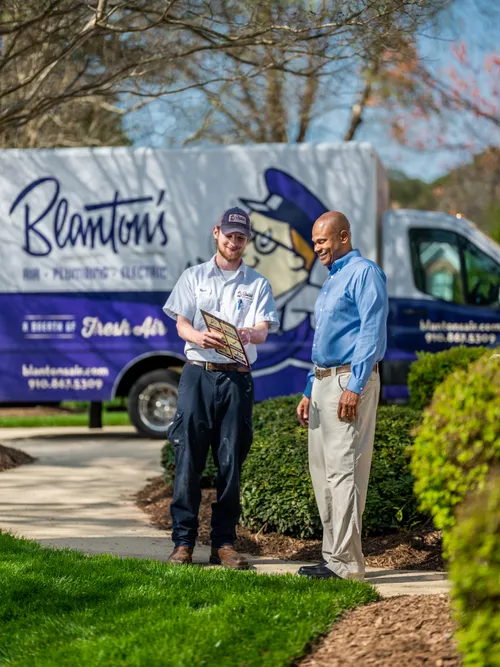
Blanton's Air, Plumbing & Electric
2000 Citation Dr Ste 100, Garner, NC 27529
Blanton's Air, Plumbing & Electric has been serving Raleigh, NC, and the surrounding Triangle area since 1951. They provide a wide range of home services including HVAC repair and installation for air conditioners, furnaces, heat pumps, and boilers. With over 75 years of experience, they offer comprehensive maintenance and emergency services to ensure home comfort and safety year-round. Their team is available 24/7, including after-hours support through an AI representative and live customer care, prioritizing urgent needs and flexible scheduling.
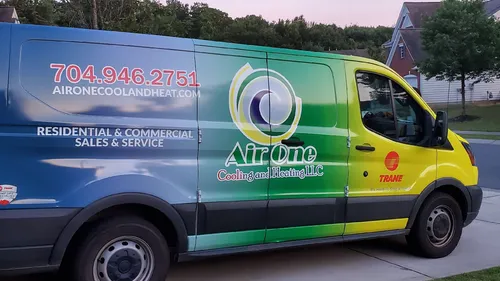
Air One Cooling & Heating, LLC
16507-A Northcross Dr #107, Huntersville, NC 28078
Air One Cooling & Heating, LLC is an HVAC company based in Charlotte, NC, providing residential and commercial heating and air conditioning services. They offer installation, replacement, maintenance, and repair for systems including air conditioners, heat pumps, furnaces, boilers, geothermal systems, and ductless mini splits. As a certified Preferred Partner of Piedmont Natural Gas and a Trane dealer, they provide expertise in indoor air quality products and emergency service available 24/7. The company is known for customized solutions and extended service agreements to maintain system efficiency.
Next Hvac
1031 Bannister Rd, Waxhaw, NC 28173
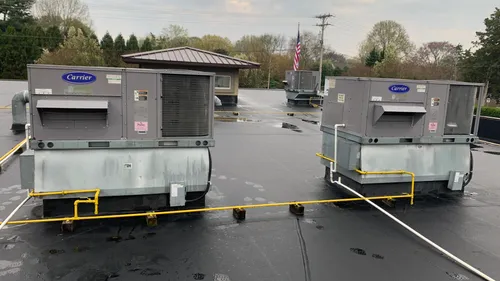
Next HVAC is an HVAC company based in Charlotte, NC, offering a range of heating and cooling services including air conditioning repair and installation, furnace repair, heat pump installation, boiler installation, and ventilation system services. With 16 years of experience, the team is trained and insured, providing same-day service and 24/7 availability for emergencies. They specialize in efficient ductwork fixes and commercial ventilation systems designed to meet air quality standards.
Precision Climate
45 Shadowbrook Rd, Mt Holly, NC 28120
Precision Climate is an HVAC company serving Charlotte, NC, specializing in repair and installation of air conditioning, furnaces, heat pumps, boilers, mini splits, and geothermal heat pumps. With over 25 years of experience, they provide comprehensive HVAC tune-up services to maintain system efficiency and comfort.

Quality Air Indoor Specialists, Inc.
Charlotte, NC
Quality Air Indoor Specialists, Inc. is an HVAC company based in Charlotte, NC, focusing on both heating and cooling services as well as improving indoor air quality. They provide installation and repair services for air conditioners, furnaces, heat pumps, and boilers, with an emphasis on systems that also clean the air to support health. Their team serves Charlotte and the surrounding Lake Norman area, including Huntersville, Mooresville, Cornelius, Concord, and Davidson. The company is known for assessing air quality issues and offering solutions tailored to reduce health problems related to poor indoor air. Quality Air Indoor Specialists, Inc. is committed to community connections and supporting local areas through sponsorships and partnerships.
Understanding North Carolina's Boiler Regulations
All boiler work in North Carolina must comply with the North Carolina State Building Code, which includes the North Carolina Mechanical Code (NCMC). The NCMC is based on the International Mechanical Code with state-specific amendments and is enforced at the local level by city or county building departments 1.
Key regulatory points include:
- ASME/National Board Compliance: All boilers installed must be constructed to the ASME (American Society of Mechanical Engineers) Boiler and Pressure Vessel Code. Safety relief valves must be National Board certified.
- Permit Requirements: Most boiler installations or replacements require a building permit. While some minor repairs under a certain cost threshold may be exempt for single-family homes, any work involving changes to fuel lines, venting, or plumbing typically does require a permit 2 3. It is always best to check with your local permitting office.
- Installation Standards: Installations must strictly follow the manufacturer's instructions and code requirements for clearances, combustion air, venting, and electrical connections.
- Inspections: After installation, the work must be inspected and approved by the local building inspector to ensure code compliance.
Types of Boilers for North Carolina Homes
Choosing the right type of boiler depends on your home's size, existing infrastructure, and efficiency goals.
- Gas-Fired Boilers: The most common type, utilizing natural gas or propane. Modern high-efficiency condensing models are highly recommended.
- Oil-Fired Boilers: A traditional option for homes without access to natural gas. Replacement often involves updating old tanks and burners.
- Electric Boilers: An option where gas or oil is not available or desired. They have near-100% efficiency but can be costly to operate depending on local electricity rates.
- Combination (Combi) Boilers: These high-efficiency units provide both space heating and domestic hot water from a single appliance, saving space.
The Importance of Efficiency: AFUE Ratings
A boiler's efficiency is measured by its Annual Fuel Utilization Efficiency (AFUE) percentage. North Carolina's energy codes, which follow the International Energy Conservation Code (IECC), often mandate minimum efficiency levels for new installations 4 5.
- Standard Efficiency: Non-condensing boilers with AFUE ratings typically between 80% and 85%.
- High-Efficiency Condensing Boilers: The best choice for new installations, these boilers capture extra heat from exhaust gases, achieving AFUE ratings of 90% to over 95% 6. This translates to significant long-term savings on fuel bills, especially during North Carolina's colder months.
Cost Factors for Boiler Replacement in North Carolina
The total cost of a boiler replacement project varies widely based on equipment and complexity. Research indicates a typical range of $4,000 to $12,000 or more for a full replacement, including installation 7.
Breakdown of Costs:
- Equipment: The boiler unit itself is the largest variable. High-efficiency condensing models are more expensive upfront than standard models.
- Labor: Professional installation by a licensed HVAC contractor.
- Additional Materials & Work: This can include new piping, circulator pumps, zone valves, venting materials, electrical updates, and a condensate drain system for high-efficiency units.
- Removal & Disposal: Safely removing and disposing of the old boiler and any associated fuel tanks.
- Permits: Local permit fees, which typically range from $50 to $200 8.
- Fuel Conversion: Switching from oil to natural gas, for example, adds significant cost for new gas line runs and equipment modifications 9.
The Professional Installation Process
A proper installation follows a clear sequence to ensure safety, efficiency, and code compliance.
- Consultation & Load Calculation: A qualified contractor will assess your home and perform a heat load calculation (often called a Manual J) to determine the correctly sized boiler. Oversizing or undersizing leads to inefficiency and comfort issues.
- Equipment Selection & Proposal: Based on the assessment, the contractor will recommend a boiler type and model and provide a detailed written estimate.
- Permitting: The contractor typically pulls the required mechanical and plumbing permits from your local building department 10.
- Preparation & Removal: The old system is safely disconnected, and the new installation site is prepared, ensuring proper clearances from combustible materials.
- Installation: The new boiler is installed according to manufacturer specs and code. This includes mounting, connecting fuel and water lines, installing venting and electrical connections, and ensuring adequate combustion air supply 11.
- System Setup & Testing: The contractor fills the system, purges air, tests for leaks, fires the boiler, checks all safety controls, and balances the system.
- Final Inspection: The contractor arranges for the local building inspector to approve the installation.
- Homeowner Orientation: The contractor should walk you through the system's operation, basic maintenance, and explain the warranty.
Find the perfect boiler installation & replacement contractors for your needs
Get personalized recommendations and expert advice
Key Safety and Code Requirements
Adherence to code is non-negotiable for safety. Key requirements for North Carolina include:
- Clearances: Boilers must be installed with specific clearances from walls, ceilings, and combustible materials as per the manufacturer and code. Outdoor units require a stable base, such as a concrete pad, that is at least 2 inches above grade 12 13.
- Combustion Air: Fuel-fired boilers must have an adequate supply of combustion air, as outlined in NCMC Chapter 17, to operate safely and efficiently.
- Venting: The venting system must be sized and installed correctly for the boiler type. High-efficiency condensing boilers use special PVC or CPVC vent pipe for their cooler exhaust gases.
- Pressure Relief Valve: A code-compliant, correctly sized relief valve is critical for safety and is required to be discharged to a safe location 14.
Maintaining Your New Boiler
Protect your investment with regular maintenance, which can extend the system's life and maintain its efficiency.
- Annual Professional Service: Have a licensed technician inspect and clean the boiler before each heating season. They will check burners, heat exchangers, controls, and the venting system.
- Monitor System Pressure: Keep an eye on the system's pressure gauge; most residential systems operate between 12 and 25 psi.
- Listen for Unusual Noises: Banging, whistling, or rumbling can indicate issues like air in the system, low water flow, or scale buildup.
- Check the Vent Termination: Ensure the exterior vent terminal is clear of debris, snow, or insect nests.
Choosing a Qualified Contractor in North Carolina
This is the most critical step. Look for:
- Proper Licensing: Ensure the company holds a valid North Carolina HVAC contractor license.
- Insurance: Verify they carry general liability and workers' compensation insurance.
- Experience & References: Choose a company with specific experience in boiler installation and a list of recent references.
- Detailed Written Estimates: Obtain multiple estimates that detail the equipment model, labor scope, warranty, and a complete price breakdown.
- Permit Responsibility: Confirm they will handle pulling all necessary permits and scheduling inspections.
Frequently asked questions
Sources
Footnotes
-
North Carolina State Building Code: Mechanical Code, 2024 edition - https://shop.iccsafe.org/media/wysiwyg/material/5731L24-TOC.pdf ↩
-
NCREC Bulletins - Building Permits - A Broker's Responsibility - https://bulletins.ncrec.gov/building-permits-a-brokers-responsibility/ ↩
-
Guide to Installing a New Boiler System - Aspen Creek HVAC - https://www.aspencreekhc.com/guide-to-installing-a-new-boiler-system/ ↩
-
CHAPTER 4 RE RESIDENTIAL ENERGY EFFICIENCY - https://codes.iccsafe.org/content/NCECC2024V1.0/chapter-4-re-residential-energy-efficiency ↩
-
Reduce First Cost in a New Warehouse Building: An Example of Performance Path Energy Code Compliance - G2 Energy Solutions - https://g2energysolutions.com/resources/2021/4/19/warehouse-iecc-case-study ↩
-
CHAPTER 20 BOILERS AND WATER HEATERS - https://codes.iccsafe.org/content/NCRC2018P2/chapter-20-boilers-and-water-heaters ↩
-
How Much Does It Cost to Replace a Boiler? - United State Solutions - https://unitedstatesolutions.com/how-much-does-it-cost-to-replace-a-boiler/ ↩
-
Boiler Replacement Costs: Smart Budgeting and Planning ... - https://www.tcmemt.com/post/the-cost-of-boiler-replacement-expert-guide-to-smart-budgeting-and-installation-planning ↩
-
How Much Does Boiler Installation and Replacement Cost ... - https://www.angi.com/articles/how-much-does-boiler-installation-cost.htm ↩
-
chapter 13 - boiler and pressure vessel - Available Reports - http://reports.oah.state.nc.us/ncac/title%2013%20-%20labor/chapter%2013%20-%20boiler%20and%20pressure%20vessel/chapter%2013%20rules.pdf ↩
-
Boiler-Book-2024.pdf - https://nclicensing.org/wp-content/uploads/2024/01/Boiler-Book-2024.pdf ↩
-
Chapter 3 General Regulations: North Carolina Mechanical Code ... - https://up.codes/viewer/north_carolina/imc-2021/chapter/3/general-regulations ↩
-
Chapter 3 General Regulations: North Carolina Mechanical Code ... - https://up.codes/viewer/north_carolina/imc-2009/chapter/3/general-regulations ↩
-
Overview of the Boiler Safety Bureau | NC DOL - https://www.labor.nc.gov/safety-and-health/boiler-and-pressure-vessel-safety/overview-boiler-safety-bureau ↩