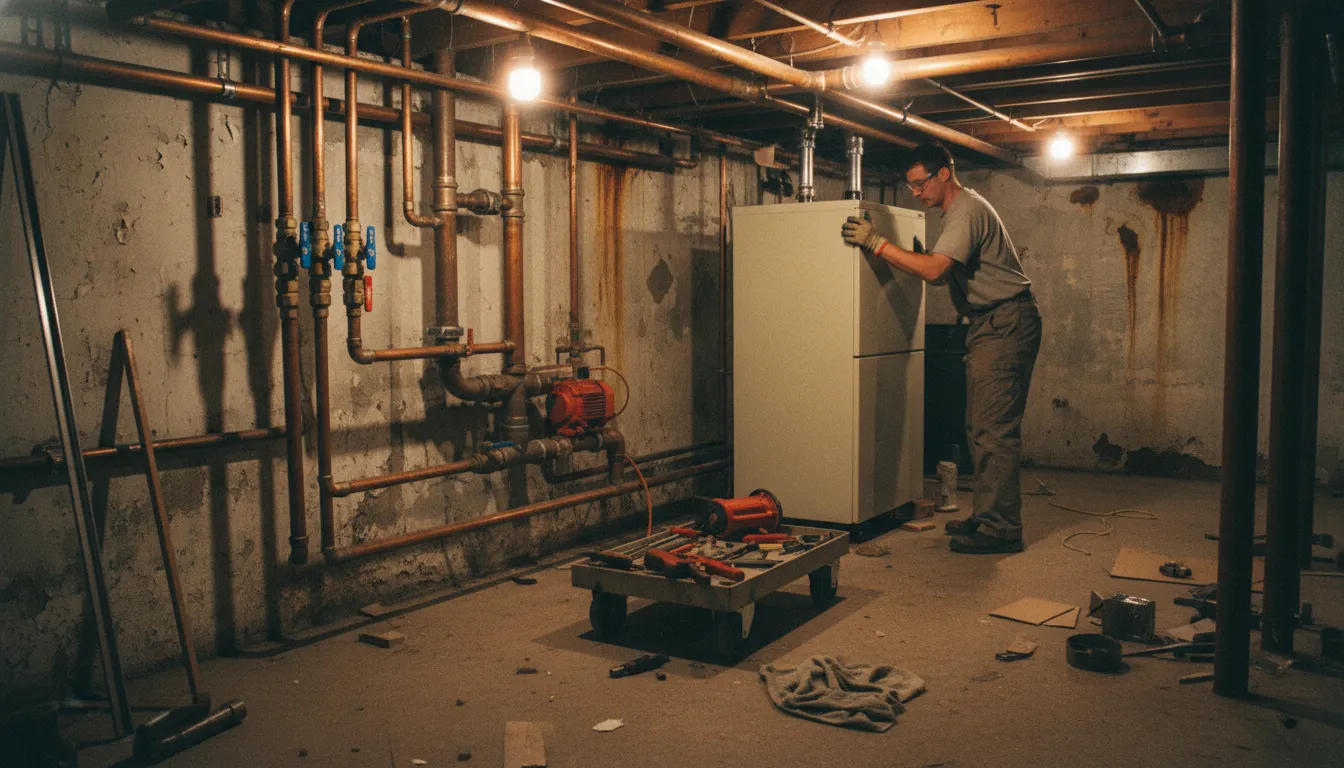
Find the Best Boiler Installation & Replacement Contractors for Your Business
No obligation • Fast responses • Nationwide coverage

Why you can trust HVAC Firms
HVAC Firms is a leading United States resource for evaluating HVAC service providers. Our team researches companies, checks credentials, and reviews customer feedback to present clear, unbiased information. Listings and rankings are based on merit, and companies cannot pay to change our editorial content.
Search providers near you
Top Boiler Installation & Replacement Contractors in Greensboro, North Carolina Ranked
A new boiler installation or replacement is a significant investment in your home's comfort, efficiency, and long-term value. Whether you're upgrading an aging system, converting from oil to gas, or installing heating for a new addition, understanding the process and local requirements is key. This guide will help you navigate the essentials of boiler work in Greensboro, from system types and costs to the crucial permits and inspections mandated by North Carolina.

Aire Serv of Liberty
Greensboro, NC
Aire Serv of Liberty is a heating and air conditioning company serving Greensboro, NC. They provide a range of HVAC services including repair, installation, and maintenance for air conditioners, furnaces, heat pumps, and boilers. The company also offers indoor air quality improvements with air purification systems. Aire Serv of Liberty is known for its skilled professionals and commitment to customer satisfaction, backed by the Neighborly Done Right Promise®. They provide 24/7 customer service to ensure heating and cooling systems remain operational at all times.
Thomas Cooling & Heating, LLC
Winston Salem, NC
Thomas Cooling & Heating, LLC is a licensed HVAC company based in Winston Salem, NC. They provide a range of services including installation, repair, and maintenance for air conditioning, furnaces, heat pumps, boilers, and full HVAC systems. Their technicians bring years of experience to each job and offer individualized HVAC solutions to fit customer needs and budgets. The company also provides a one-year labor warranty alongside manufacturer warranties, emphasizing quality parts and equipment in their work.
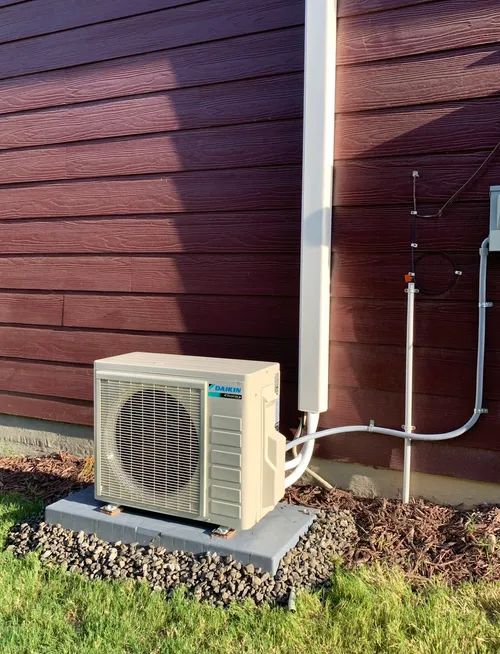
Lloyd Heating & Cooling, LLC
Greensboro, NC
Lloyd Heating & Cooling, LLC is a family-owned HVAC contractor based in Greensboro, NC. With nearly two decades of experience, the company provides a range of services including repair and installation of air conditioning units, furnaces, heat pumps, boilers, mini splits, and full HVAC systems. Lloyd Heating & Cooling handles projects of all sizes, from minor repairs to large-scale installations, serving clients throughout the North Carolina area.
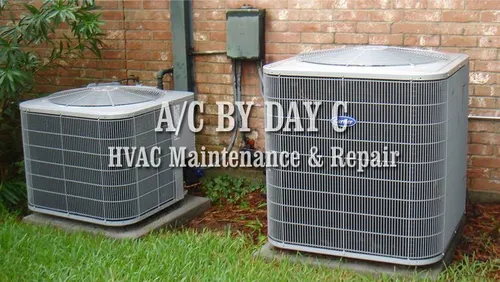
Ac by Day C
Greensboro, NC
Ac by Day C is a female-owned HVAC contractor based in Greensboro, NC, offering residential and commercial heating and cooling services. The company provides installation, repair, diagnostics, and seasonal maintenance for air conditioners, furnaces, heat pumps, boilers, and other HVAC equipment. With 15 years of experience, Ac by Day C emphasizes quality craftsmanship and transparency while promoting inclusion in the skilled trades. They serve the Greensboro area and the surrounding Triad region, providing access to major HVAC brands and specialized equipment like cranes for rooftop system installations.
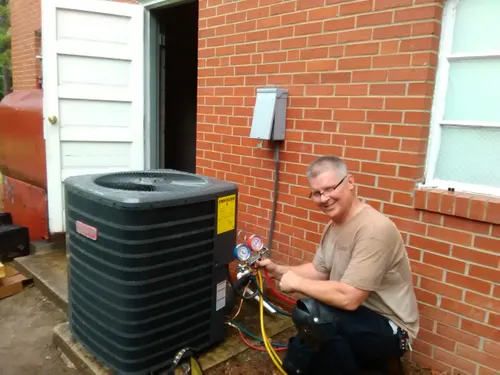
Spainhour
Winston Salem, NC
Spainhour is a local, family-owned HVAC company serving Winston Salem, NC, and surrounding areas including High Point and Thomasville. They provide a range of heating and air services, including repair and installation of air conditioners, furnaces, heat pumps, and boilers. Their technicians service all makes and models and offer convenient, fast on-site service.
Understanding Your Boiler System Options
When considering a new boiler, the first step is understanding the different types available. The most common system in Greensboro homes is a forced hot water or hydronic system. This setup heats water in the boiler, which is then circulated through a network of pipes to terminal units like baseboard radiators, cast-iron radiators, or radiant tubing embedded in floors. This method provides consistent, comfortable heat and is highly efficient.
The major decision point today is choosing between a condensing and a non-condensing (standard) boiler. Condensing models are the modern standard for high efficiency. They capture extra heat from the exhaust gases that would otherwise be wasted, achieving efficiency ratings of 90% or higher 1. They work best with systems designed for lower water temperatures. Non-condensing boilers are simpler and have a lower upfront cost but are less efficient, making them more common in straightforward replacements of older, similar systems.
Fuel type is another critical factor. Natural gas is the most common and typically most economical fuel in Greensboro. However, many older homes may still have oil-fired boilers. Replacing an oil boiler with a new oil model is straightforward, but converting from oil to natural gas involves additional work-like running a new gas line from the meter-which adds to the project's complexity and cost 2.
The Cost of Boiler Replacement in Greensboro
Budgeting for a boiler project requires considering several variables. In Greensboro, a full residential boiler replacement typically ranges from $4,000 to $12,000 or more. This wide range accounts for the unit itself, labor, and any ancillary work needed.
Here's a general breakdown:
- Standard Efficiency Boiler: A basic replacement with a non-condensing unit often falls between $3,500 and $6,000 for the unit and installation 3.
- High-Efficiency Condensing Boiler: Installing a modern condensing boiler, which may require specialized venting (like PVC pipe), typically costs $6,000 to $12,000+ 4. The higher initial investment is offset by significant long-term energy savings.
- Key Cost Factors: The final price depends on the boiler's size and brand (unit cost: $2,000-$5,000), labor ($1,500-$2,500), removal and disposal of the old unit ($500-$1,000), and necessary permits ($50-$200) 5 6. Home size dramatically impacts cost; data suggests a 2,500 sq ft home might see costs of $5,600-$8,600, while a 3,000 sq ft home could range from $6,100 to $10,000 6. An oil-to-gas conversion can add approximately $2,000 or more for gas line installation 5.
Navigating Greensboro Permits and NC State Inspections
Installing or replacing a boiler is not a simple DIY project-it's heavily regulated for safety. In Greensboro, you must secure local permits (typically mechanical, plumbing, and sometimes electrical) before any work begins. Your installer should handle this process, which ensures the planned work complies with local amendments to the state building code.
The most critical regulatory step is the state-mandated inspection. After installation is complete, but before the boiler can be operated, the North Carolina Department of Labor (NCDOL) must inspect and permit the boiler 7. This is a non-negotiable safety requirement. The installer is responsible for ensuring the installation adheres to the 2024 North Carolina State Building Code, the manufacturer's instructions, and that permanent operating instructions are left with the homeowner 8.
Find the perfect boiler installation & replacement contractors for your needs
Get personalized recommendations and expert advice
Choosing the Right Boiler for Your Home
Selecting a boiler isn't just about price; it's about matching the system to your home's needs. A professional will perform a heat load calculation to determine the correct size (measured in BTU/hr)-an oversized or undersized boiler will lead to inefficiency and comfort issues. Consider your existing distribution system: are you using baseboards, radiators, or radiant floors? This influences the boiler type and required water temperature.
Also, think long-term. While a high-efficiency condensing boiler costs more upfront, the energy savings in Greensboro's winter climate can be substantial, offering a good return on investment over the system's 15-20 year lifespan. If you're planning other renovations, like adding a bathroom with a heated floor, discuss this with your installer to ensure your new boiler has the capacity.
The Professional Installation Process
A quality installation is as important as the boiler itself. A reputable professional will follow a clear process:
- Consultation & Load Calculation: Assessing your home, discussing needs, and calculating the required heating capacity.
- System Design & Permitting: Designing the system layout and obtaining all necessary local permits.
- Preparation & Removal: Safely disconnecting and removing the old boiler and related components.
- Installation: Installing the new boiler, connecting fuel and water lines, electrical connections, and venting according to strict codes.
- System Integration: Connecting the boiler to the existing hydronic piping, pumps, and controls (thermostat).
- Testing & Commissioning: Filling the system, checking for leaks, testing safety controls, and verifying proper operation.
- Inspection & Final Approval: Coordinating the mandatory NCDOL inspection and providing you with all documentation and operating instructions.
Maintaining Your New Boiler System
To protect your investment and ensure safety, annual maintenance by a qualified technician is essential. This typically involves checking and cleaning the burner and heat exchanger, testing safety and operating controls, inspecting the venting system, and verifying water pressure and temperature settings. Proper maintenance keeps your system running efficiently, can prevent costly breakdowns, and is often required to keep the manufacturer's warranty valid.
Frequently asked questions
Sources
Footnotes
-
Boiler Replacement Cost and Price - Carrier - https://www.carrier.com/residential/en/us/products/boilers/cost-buying-boiler-replacement/ ↩
-
Cost to Install Oil Boiler - 2026 Cost Calculator (Customizable) - https://www.homewyse.com/services/cost_to_install_oil_boiler.html ↩
-
How Much Does Residential Boiler Installation Cost? - Aero Energy - https://www.aeroenergy.com/how-much-does-residential-boiler-installation-cost/ ↩
-
How Much Does Boiler Replacement Cost in 2026? Price by Type - https://modernize.com/hvac/heating-repair-installation/boiler ↩
-
Boiler Replacement Costs: Smart Budgeting and Planning ... - https://www.tcmemt.com/post/the-cost-of-boiler-replacement-expert-guide-to-smart-budgeting-and-installation-planning ↩ ↩2
-
How Much Does It Cost to Replace a Boiler? - United State Solutions - https://unitedstatesolutions.com/how-much-does-it-cost-to-replace-a-boiler/ ↩ ↩2
-
North Carolina Boiler Laws: Rules, Regulations, & Inspection - https://www.wcrouse.com/blog/north-carolina-boiler-laws-rules-regulations-inspection/ ↩
-
2024 North Carolina State Building Code: Residential Code - G2452 ... - https://codes.iccsafe.org/s/NCRC2024V1.0/chapter-24-fuel-gas/NCRC2024V1.0-Pt06-Ch24-SecG2452.2 ↩