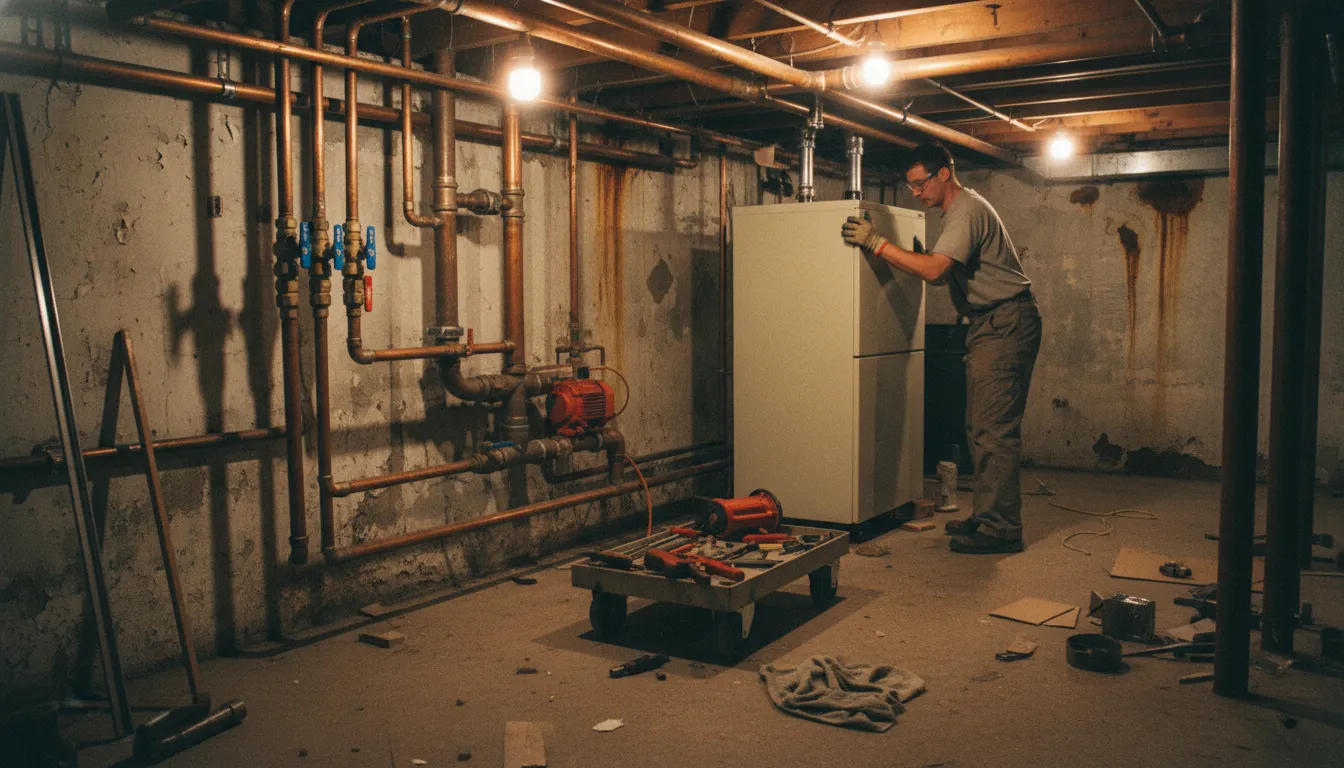
Find the Best Boiler Installation & Replacement Contractors for Your Business
No obligation • Fast responses • Nationwide coverage

Why you can trust HVAC Firms
HVAC Firms is a leading United States resource for evaluating HVAC service providers. Our team researches companies, checks credentials, and reviews customer feedback to present clear, unbiased information. Listings and rankings are based on merit, and companies cannot pay to change our editorial content.
Search providers near you
Top Boiler Installation & Replacement Contractors in Burlington, North Carolina Ranked
A new boiler installation or replacement is a significant investment in your home's comfort, efficiency, and safety. Whether you're upgrading an aging system, converting from another fuel source, or installing heating in a new build, understanding the process, costs, and local requirements is crucial. This guide provides essential information for Burlington homeowners, helping you navigate the options, regulations, and key considerations to make an informed decision and connect with qualified local professionals for your project.
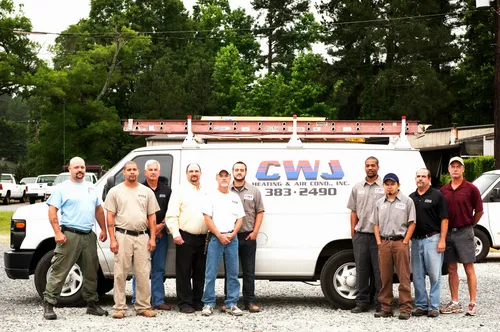
CWJ Heating & Air Conditioning
4901 Hillsborough Rd, Durham, NC 27705
CWJ Heating & Air Conditioning is a family-owned HVAC company serving Durham, NC. They offer a full range of heating and cooling services including air conditioning and boiler installation, repair, and maintenance, as well as indoor air quality solutions. With over 50 years of experience, their skilled technicians use industry-leading parts to ensure dependable service. Emergency services are available for urgent HVAC needs.

Aire Serv of Liberty
Greensboro, NC
Aire Serv of Liberty is a heating and air conditioning company serving Greensboro, NC. They provide a range of HVAC services including repair, installation, and maintenance for air conditioners, furnaces, heat pumps, and boilers. The company also offers indoor air quality improvements with air purification systems. Aire Serv of Liberty is known for its skilled professionals and commitment to customer satisfaction, backed by the Neighborly Done Right Promise®. They provide 24/7 customer service to ensure heating and cooling systems remain operational at all times.
Bud Matthews Services
545 Old Farrington Rd, Chapel Hill, NC 27517
Bud Matthews Services is a family-owned home improvement company serving Durham, NC, and surrounding counties including Orange and Chatham. Since 1981, they have provided a range of services including HVAC installation and repair for air conditioners, furnaces, heat pumps, and boilers. The company also offers appliance repair, plumbing, and home remodeling, with a focus on expert craftsmanship and customer care. Bud Matthews Services provides 24-hour emergency services to support homeowners whenever needed.
Lloyd Heating & Cooling, LLC
Greensboro, NC
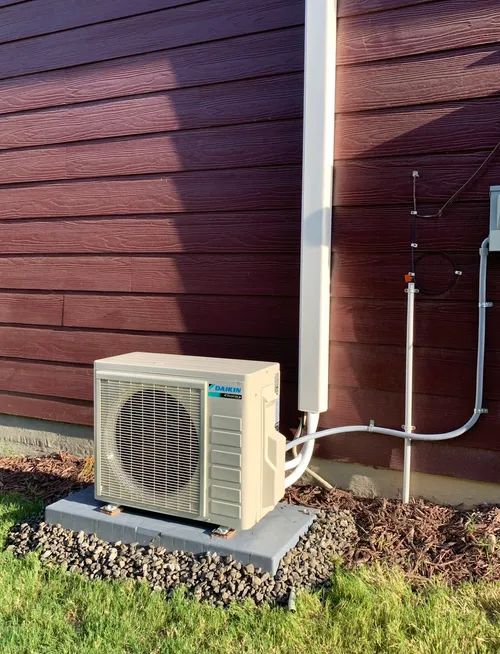
Lloyd Heating & Cooling, LLC is a family-owned HVAC contractor based in Greensboro, NC. With nearly two decades of experience, the company provides a range of services including repair and installation of air conditioning units, furnaces, heat pumps, boilers, mini splits, and full HVAC systems. Lloyd Heating & Cooling handles projects of all sizes, from minor repairs to large-scale installations, serving clients throughout the North Carolina area.
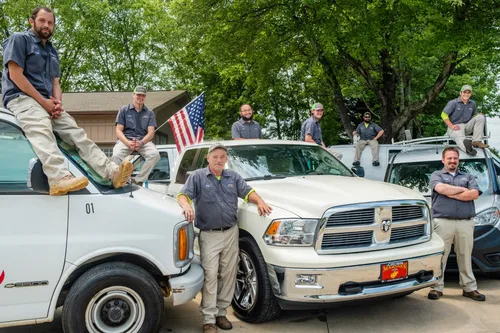
Southern Comfort Mechanical
504 Houston St, Greensboro, NC 27401
Southern Comfort Mechanical is an HVAC company based in Greensboro, NC, providing heating and air conditioning repair, installation, and maintenance services. They serve Greensboro and surrounding areas including High Point and Winston-Salem. Their services cover air conditioning repair and installation, furnace and heat pump repair and installation, boiler services, and HVAC tune-ups. The company emphasizes integrity and quality work, with certified technicians who handle both residential and commercial HVAC needs. They offer 24/7 emergency AC repair and maintain fully stocked trucks to ensure timely service. Southern Comfort Mechanical is locally owned and operated, with a strong focus on customer education and transparent pricing.
Understanding Your Boiler Options
Modern boiler technology offers several configurations, each with distinct advantages depending on your home's existing setup and your hot water needs. The right choice impacts your long-term energy bills and comfort.
Gas and Oil Condensing Boilers are the high-efficiency champions of modern hydronic heating. These units achieve Annual Fuel Utilization Efficiency (AFUE) ratings of 90% or higher by extracting extra heat from the combustion gases before they exit the flue. This makes them an excellent choice for reducing fuel consumption, especially when paired with modern radiator or baseboard systems. While the upfront cost is higher, the operational savings can be substantial over the boiler's lifespan.
Hydronic Heating Systems are the most common application for boilers in our region. These systems use hot water circulated through a network of pipes to radiators, baseboard heaters, or even in-floor tubing. A key consideration during a boiler replacement for an older hydronic system is the potential need for a system flush to remove sludge and corrosion, which can protect your new investment and improve performance.
Combi Boilers (combination boilers) are an increasingly popular space-saving option. They provide both space heating and domestic hot water (for showers, sinks, etc.) from a single, compact unit, eliminating the need for a separate water heater tank. This can be ideal for homes with limited mechanical space.
System and Conventional Boilers are more traditional setups. A system boiler works with a separate hot water storage cylinder, making it suitable for homes with higher simultaneous demand for hot water. A conventional (or regular) boiler requires both a cold water tank and a hot water cylinder, often found in older properties. Understanding your current configuration is the first step in planning a replacement.
Navigating Burlington and North Carolina Codes & Permits
Boiler work is highly regulated for safety reasons. In Burlington, installations and replacements must comply with the North Carolina State Building Code, and skipping proper permits and inspections is not an option.
Required Permits: Before any work begins, your licensed contractor must typically pull multiple permits. This usually includes a mechanical permit for the boiler itself, a plumbing permit for water and fuel line connections, and an electrical permit for the unit's controls and ignition system. These permits ensure the planned work is reviewed for code compliance.
Mandatory NCDOL Inspection: A critical and non-negotiable step in North Carolina is the inspection by the North Carolina Department of Labor (NCDOL). After installation but before the boiler is put into service, the installing contractor must arrange for a state inspector to examine the work. This inspection verifies that the installation meets all safety standards outlined in the state boiler code. Operating a boiler without this inspection is a violation.
Key Code Requirements: The specific rules are found in the NC Residential Code, particularly Chapter 20: Boilers and Water Heaters 1. Essential safety mandates include the installation of an ASME-certified pressure relief valve, proper provisions for combustion and ventilation air, correct flue (chimney) sizing and installation, and adherence to all manufacturer's installation instructions, which become part of the code compliance 1. Your installer's expertise in these details is paramount.
Investment and Cost Factors for Boiler Replacement
The total cost of a new boiler system in Burlington varies widely based on the equipment, your home's specifics, and the complexity of the installation. Here's a breakdown of what to expect.
Equipment Costs: The boiler unit itself is a major part of the budget. For a standard-efficiency replacement of a similar type and size, installed costs often range from $3,500 to $7,000 2. Upgrading to a high-efficiency condensing model involves a higher investment, typically between $6,000 and $11,000 or more for the complete installation 3. Combi-boilers often fall within the higher end of this range due to their dual functionality.
Ancillary Work and Add-Ons: The final price is heavily influenced by necessary supporting work. Key factors include:
- Fuel Line Work: Installing a new gas line can cost $15 to $50+ per linear foot. Switching from oil to gas involves significant new infrastructure costs.
- Oil Tank Considerations: For oil systems, a new storage tank installation can range from $1,200 to $4,600. If an old underground tank requires removal and environmental remediation, costs can escalate from $400 to over $3,400 4 5.
- System Upgrades: Modernizing an old hydronic system may require adding zoning controls, circulator pumps, or an expansion tank, which add to the project cost but improve comfort and efficiency.
Find the perfect boiler installation & replacement contractors for your needs
Get personalized recommendations and expert advice
Critical Pre-Installation Considerations
A successful boiler project starts with careful planning. Rushing into a purchase without these key steps can lead to an undersized, inefficient, or problematic system.
Professional Load Calculation is Non-Negotiable. The most important step is determining the correct boiler size, measured in BTU/hr output. This is not a guess based on your old unit's size. A qualified professional will perform a Manual J load calculation, which considers your home's square footage, insulation levels, window quality, air infiltration, and local climate data 6 7. An oversized boiler will short-cycle (turn on and off frequently), wasting fuel and causing wear, while an undersized one will struggle to keep your home warm.
Choosing the Right Fuel Source. Your existing fuel type often dictates the most cost-effective path. However, if you're considering a switch (e.g., from oil to natural gas), you must factor in the substantial cost of running new gas lines from the street or installing a propane tank system. Evaluate the long-term fuel costs and availability in Burlington alongside the conversion expense.
Selecting a Qualified Installer. This is perhaps the most critical decision. Always choose a licensed, insured, and experienced contractor who specializes in boiler work. They should be familiar with Burlington's permit process and NCDOL inspection requirements. Ask for references, verify their license with the state, and ensure they provide a detailed written estimate that includes all equipment, labor, permit fees, and a plan for the final inspection. A proper installation is essential for safety, efficiency, and warranty protection.
The Installation and Inspection Process
Knowing what to expect during the project helps ensure a smooth experience. A typical professional boiler replacement follows a structured sequence.
- Consultation and Estimate: A technician assesses your current system, discusses your needs, performs a load calculation, and provides a detailed proposal.
- Permit Procurement: Your contractor submits plans and applications to the local building department and the NCDOL to obtain the necessary permits 8.
- Equipment and Site Preparation: The old boiler is safely disconnected and removed. The area is prepped, and any new components (like piping or vents) are roughed in.
- New Boiler Installation: The new unit is set, connected to fuel, water, electrical, and venting systems according to strict code and manufacturer specifications 9.
- System Start-Up and Testing: The contractor fills and purges the system, fires the boiler, checks for leaks, and calibrates controls and safety devices.
- Final Inspections: The contractor requests inspections from both the local building department and the NCDOL 10 11. Only after passing the NCDOL inspection should the boiler be considered approved for regular use.
- Homeowner Orientation: A good contractor will walk you through the operation of your new system, explain basic maintenance, and provide all documentation.
Frequently asked questions
Sources
Footnotes
-
2024 North Carolina State Building Code: Residential Code - https://codes.iccsafe.org/s/NCRC2024V1.0/preface/NCRC2024V1.0-PREFACE-Chapter20BoilersAndWaterHeaters ↩ ↩2
-
How Much Does Boiler Installation and Replacement Cost? [2026 ... - https://www.angi.com/articles/how-much-does-boiler-installation-cost.htm ↩
-
Boiler Replacement and Installation - Modernize - https://modernize.com/hvac/heating-repair-installation/boiler ↩
-
Boiler Replacement Costs: Smart Budgeting and Planning ... - https://www.tcmemt.com/post/the-cost-of-boiler-replacement-expert-guide-to-smart-budgeting-and-installation-planning ↩
-
How Much Does a New Boiler Cost to Install or Replace? (2026) - https://homeguide.com/costs/boiler-replacement-cost ↩
-
How Do I Size a Boiler for My House? - Paul the Plumber - https://paultheplumbernh.com/how-do-i-size-a-boiler-for-my-house/ ↩
-
How To Choose the Right Boiler for Your Home | AHS - https://www.ahs.com/home-matters/quick-tips/how-to-choose-residential-boiler/ ↩
-
CHAPTER 20 BOILERS AND WATER HEATERS - https://codes.iccsafe.org/content/NCRC2018P2/chapter-20-boilers-and-water-heaters ↩
-
Installation, Operating and Service Instructions for RSA ... - http://s3.supplyhouse.com/product_files/Burnham%20-%207033501%20-%20Install%20Instructions.pdf ↩
-
North Carolina Boiler Laws: Rules, Regulations, & Inspection - https://www.wcrouse.com/blog/north-carolina-boiler-laws-rules-regulations-inspection/ ↩
-
Boiler-Book-2024.pdf - https://nclicensing.org/wp-content/uploads/2024/01/Boiler-Book-2024.pdf ↩