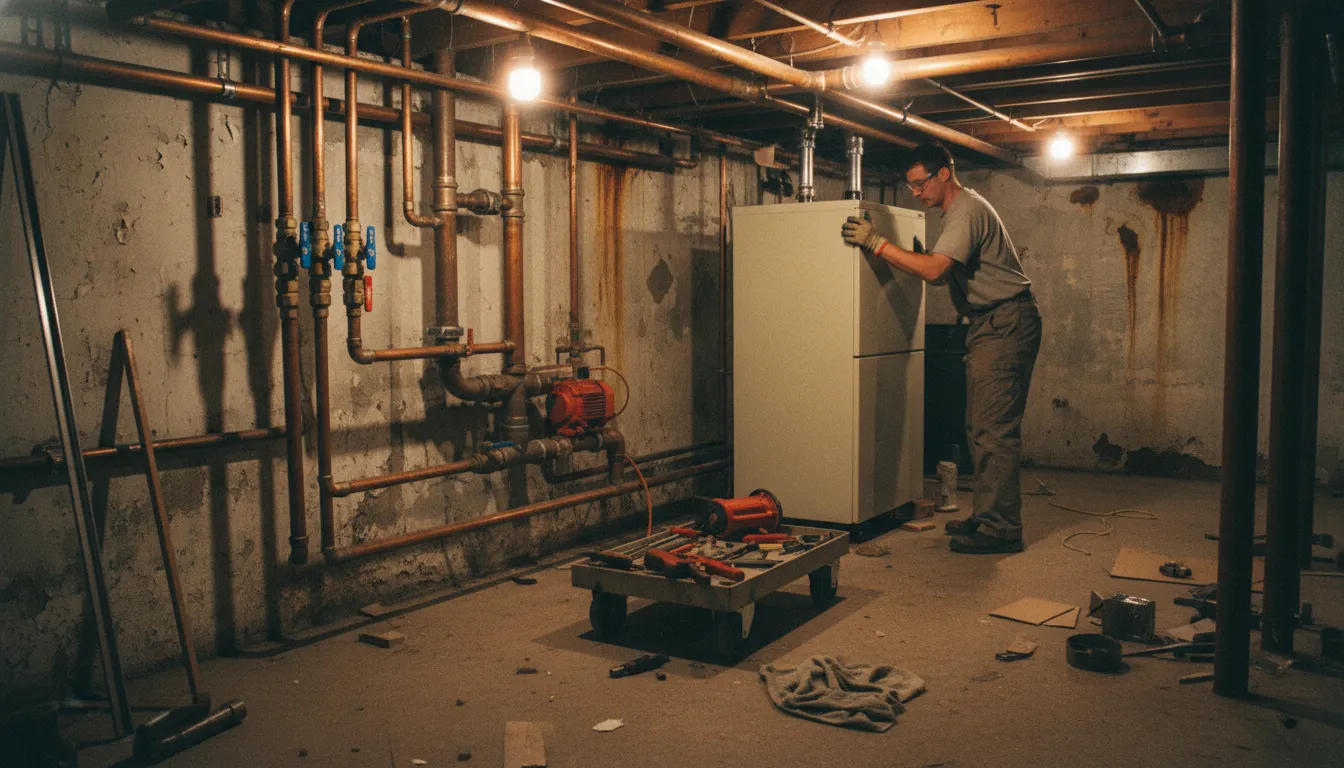
Find the Best Boiler Installation & Replacement Contractors for Your Business
No obligation • Fast responses • Nationwide coverage

Why you can trust HVAC Firms
HVAC Firms is a leading United States resource for evaluating HVAC service providers. Our team researches companies, checks credentials, and reviews customer feedback to present clear, unbiased information. Listings and rankings are based on merit, and companies cannot pay to change our editorial content.
Search providers near you
Top Boiler Installation & Replacement Contractors in Louisville, Kentucky Ranked
A new boiler installation or replacement is a significant investment in your home's comfort, safety, and energy efficiency. Whether you're upgrading an aging system, converting from another fuel source, or installing heating in a new build, the right boiler system provides reliable warmth for decades. This guide will help you understand the types of systems available, the local regulations in Louisville, and the key factors to consider when planning your project to find qualified local professionals.
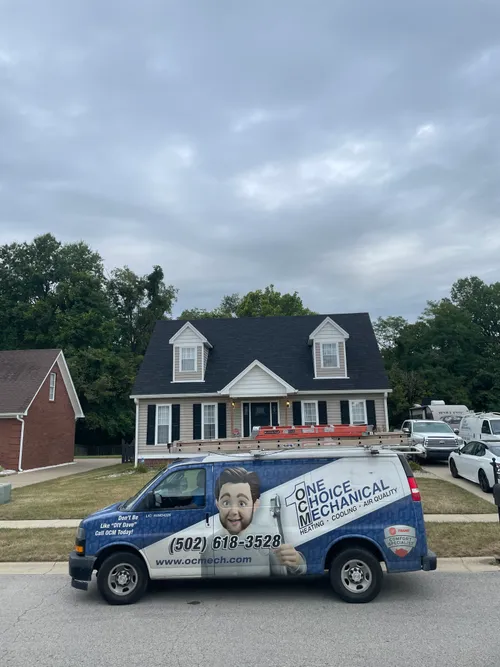
One Choice Mechanical
8611 National Tpke, Fairdale, KY 40118
One Choice Mechanical is an HVAC company serving Louisville, KY, offering a full range of heating and cooling services for residential and commercial clients. Their expertise includes installation, repair, and tune-ups for air conditioners, furnaces, heat pumps, boilers, mini splits, and geothermal heat pumps. Established in 2007, the company provides 24/7 emergency HVAC services to ensure reliable support whenever needed.
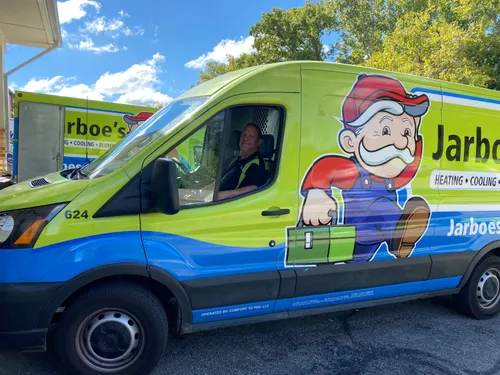
Jarboe's Heating Cooling Plumbing
2620 Gleeson Ln #4C, Jeffersontown, KY 40299
Jarboe's Heating Cooling Plumbing is a locally owned HVAC and plumbing company serving Louisville, KY. They provide a wide range of services including repair, installation, and maintenance for furnaces, heat pumps, air conditioners, boilers, mini splits, geothermal heat pumps, and duct cleaning. The company is known for its NATE-certified technicians and offers 24/7 emergency service to address heating, cooling, and plumbing issues promptly. With over 35 years of experience, Jarboe's specializes in HVAC system tune-ups, replacements, and indoor air quality improvements, ensuring homes stay comfortable year-round.
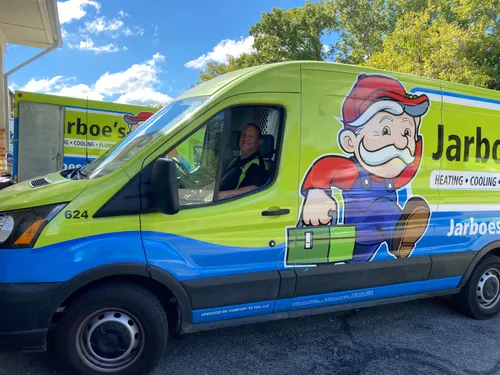
Jarboe's Plumbing, Heating & Cooling
503 Washburn Ave Suite 201B, Louisville, KY 40222
Jarboe's Plumbing, Heating & Cooling is a full-service HVAC and plumbing company serving Louisville, KY. They offer a wide range of services including repair, installation, and maintenance of air conditioners, furnaces, heat pumps, boilers, and duct cleaning. As a Carrier Factory Authorized Dealer, they provide expert installation of high-quality heating and cooling systems, including geothermal heat pumps and mini splits. With over 35 years of experience, Jarboe's is known for their NATE-certified technicians and 24/7 emergency repair availability to address urgent heating and cooling needs.
Allstate Mechanical
2815 Rockford Ln, Louisville, KY 40216
Allstate Mechanical is an HVAC company based in Louisville, KY, offering installation, repair, and maintenance services. They work on a variety of systems including boilers, furnaces, heat pumps, air handlers, chillers, and rooftop units. The company provides 24-hour service, seven days a week, ensuring availability for urgent HVAC needs.
Oeffinger Crone Heating & Cooling Inc.
1601 Beechwood Ave, New Albany, IN 47150
Oeffinger Crone Heating & Cooling Inc. is a family-owned HVAC company serving Louisville, KY, and the Kentuckiana area. Established in 1953, the company offers a full range of heating and air conditioning services, including installation, repair, and maintenance for furnaces, heat pumps, boilers, and air conditioning systems. Their team of licensed and insured professionals provides emergency repairs during evenings and weekends, ensuring comfort and safety year-round. They also focus on indoor air quality through preventative maintenance and offer a one-year parts and labor warranty with written guarantees on all work.
Understanding Your Boiler System Options
Boilers, also known as hydronic heating systems, heat your home by warming water or creating steam, which is then distributed through pipes to radiators, baseboard heaters, or radiant floor systems. Unlike forced-air furnaces, they provide a consistent, even heat and can improve indoor air quality by not blowing allergens around. In Louisville's climate, a well-chosen boiler is a cornerstone of winter comfort.
The two primary categories are hot water and steam boilers. Hot water boilers are the most common in modern residential installations. They heat water, which is then circulated by a pump through a closed loop of piping to terminal units like baseboards or panel radiators. Steam boilers are less common in newer homes but may be found in older Louisville properties. They boil water to create steam, which rises through pipes to radiators, condenses back to water, and returns to the boiler.
The most important advancement in boiler technology is the condensing boiler. These high-efficiency units capture heat from the exhaust gases that would otherwise be vented out, achieving Annual Fuel Utilization Efficiency (AFUE) ratings of 90% or higher 1. While they have a higher upfront cost, they can lead to substantial savings on your gas bills over the system's lifespan, making them a popular choice for replacement projects.
Louisville and Kentucky Regulations: Permits and Inspections
Installing or replacing a boiler in Louisville is not a simple DIY project; it is regulated to ensure safety and code compliance. The first step for any homeowner or contractor is to secure the proper permits.
A Louisville Metro HVAC/Mechanical permit is required for the installation, enlargement, alteration, or replacement of any boiler system 2. This permit process ensures the work plan meets local building code requirements. Furthermore, the Kentucky Department of Housing, Buildings and Construction (DHBC) has jurisdiction over boiler and pressure vessel safety. For many installations, especially those involving new pressure piping, a separate state installation permit from the DHBC is mandatory, and the work must be inspected by a state boiler inspector 3.
These inspections are crucial. They verify that the installation complies with the Kentucky Building Code, that all safety devices are properly installed, and that the system is safe to operate 4 5. Working with a licensed professional who is familiar with these dual layers of regulation-local Louisville Metro and state Kentucky codes-is essential to avoid fines, failed inspections, and potential safety hazards.
Cost Factors for Boiler Replacement and Installation
The total cost of a boiler project in Louisville varies widely based on the equipment, labor, and scope of work. Understanding these components helps in creating an accurate budget.
- Equipment Cost: The boiler unit itself typically ranges from $2,000 to $5,000, with high-efficiency condensing models at the higher end of that spectrum.
- Installation Labor: Professional installation labor generally costs between $1,500 and $2,500. This covers removing the old unit, installing the new boiler, connecting fuel and water lines, and integrating it with your existing distribution system (radiators, baseboards, etc.).
- Additional Project Costs: Remember to factor in permit fees (typically $50-$200), the cost of disposing of the old boiler ($500-$1,000), and any necessary upgrades to your flue or gas line.
This brings the typical total installed cost for a standard-efficiency boiler replacement to between $2,500 and $7,000 6. For a high-efficiency condensing boiler installation, which may require different venting materials and more complex setup, homeowners can expect to invest between $6,000 and $11,000 or more 6.
A major cost variable is a fuel conversion. If you are switching from an old oil-fired boiler to a new natural gas system, the project will require running a new gas line and possibly modifying the fuel storage area, which can add approximately $2,000 or more to the total project cost 7.
Find the perfect boiler installation & replacement contractors for your needs
Get personalized recommendations and expert advice
The Critical Importance of Correct Boiler Sizing
One of the most common and costly mistakes in boiler installation is incorrect sizing. A unit that is too large for your home will "short cycle"-turn on and off frequently-leading to uneven temperatures, higher wear and tear, and reduced efficiency. An undersized boiler will struggle to keep your home warm on the coldest Louisville days.
Proper sizing is not about the physical dimensions of the boiler but its heat output, measured in British Thermal Units (BTUs). A qualified installer will perform a Manual J load calculation, which is an industry-standard assessment that considers your home's square footage, insulation levels, window quality, air infiltration, and even local climate data 8 9. This calculation determines the exact BTU/hour requirement to heat your home efficiently. Never rely on a rule-of-thumb guess or simply matching the size of your old unit, especially if you've made home improvements like adding insulation or new windows.
Maximizing Your Investment: Efficiency and Lifespan
When evaluating boiler options, the AFUE rating is your key indicator of efficiency. Think of it like miles-per-gallon for your boiler. Modern standards require minimum AFUE ratings, but high-efficiency condensing models far exceed these minimums. Investing in a higher AFUE unit translates directly to lower monthly fuel bills, which can offset the higher purchase price over time.
The longevity of your system is a direct result of the quality of the installation and ongoing care. A well-installed and properly maintained boiler can serve your home for 15 to 30 years, with many homeowners considering replacement after the 20-year mark as efficiency declines and repair frequency increases 10.
Annual maintenance is non-negotiable for achieving this lifespan. A professional tune-up typically includes cleaning the burner and heat exchanger, checking all safety controls, testing water pressure, and inspecting the venting system. This not only ensures safe operation but also keeps the system running at peak efficiency, saving you money each heating season.
Choosing the Right Professional for the Job
Given the technical complexity and regulatory requirements, selecting the right contractor is the most important decision you'll make. Look for a licensed, insured professional with specific, proven experience in hydronic heating systems. They should be willing and able to pull the necessary Louisville Metro and Kentucky state permits. Ask for references from recent boiler installation projects and inquire about their process for performing a Manual J load calculation. A trustworthy provider will offer a detailed, written estimate that breaks down equipment, labor, and permit costs, and will clearly explain the advantages of different system types for your specific home.
Frequently asked questions
Sources
Footnotes
-
Boiler Installation & Repair | Clarksville, IN & Louisville, KY - https://www.servicebyshawnhvacin.com/boiler-installation-and-repair ↩
-
HVAC Permits | LouisvilleKY.gov - https://louisvilleky.gov/government/construction-review/hvac-permits ↩
-
INSTRUCTIONS - INSTALLATION PERMIT (Boiler, Pressure ... - https://dhbc.ky.gov/Documents/Installation%20Instructions.pdf ↩
-
Preparing for HVAC Installation: 2025 Guide for Louisville and ... - https://projecthvac.com/2025/08/02/preparing-for-hvac-installation-louisville-southern-indiana/ ↩
-
Boiler Inspections - https://dhbc.ky.gov/new_Docs.aspx?cat=167 ↩
-
Boiler Replacement Costs: Smart Budgeting and Planning ... - https://www.tcmemt.com/post/the-cost-of-boiler-replacement-expert-guide-to-smart-budgeting-and-installation-planning ↩ ↩2
-
Boiler Repair & Installation in Louisville, KY - Glanz Buffat - https://www.glanz-buffatphc.com/louisville-boiler-repair/ ↩
-
How Do I Size a Boiler for My House? - Paul the Plumber - https://paultheplumbernh.com/how-do-i-size-a-boiler-for-my-house/ ↩
-
What Size Boiler Do I Need for My House? A Complete Guide - https://greenenergymech.com/blog/what-size-boiler-need-for-house/ ↩
-
Louisville Residential Boiler Services - Jarboe's - https://jarboes.com/boilers/ ↩