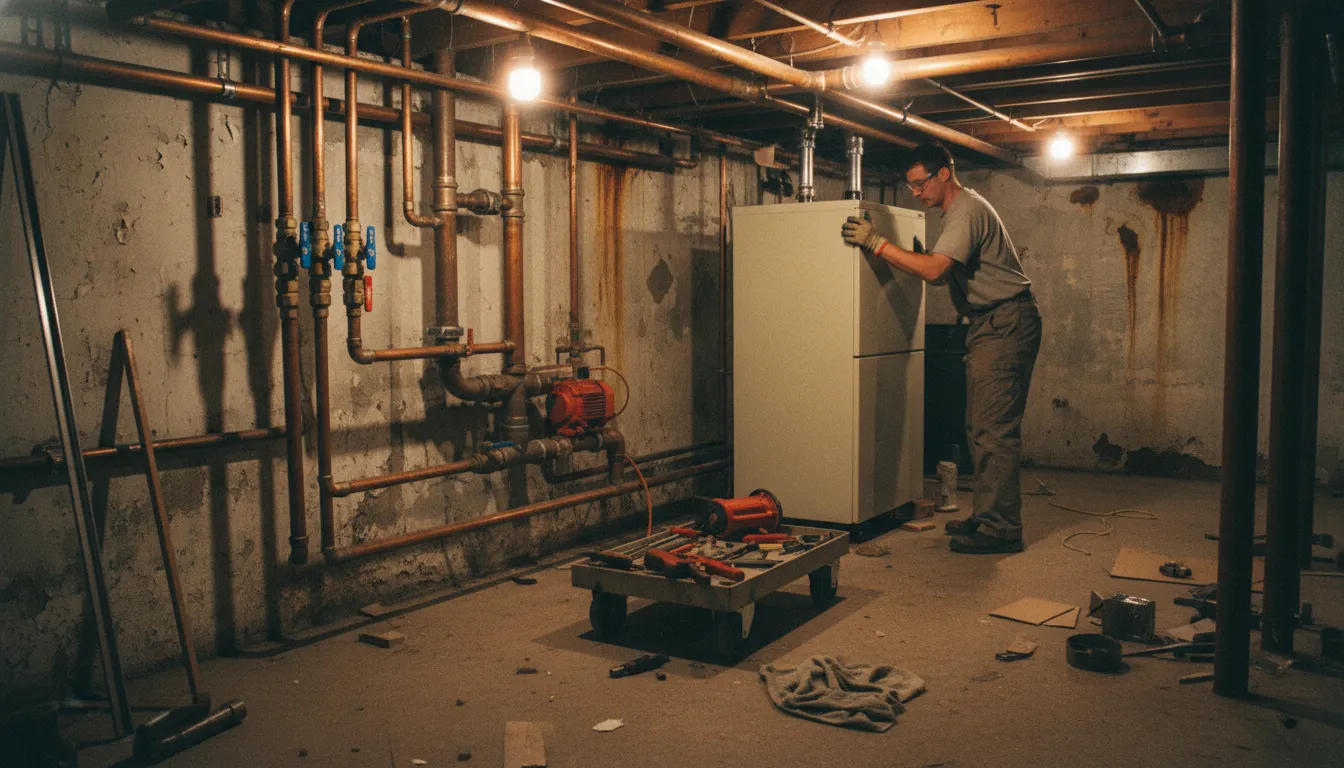
Find the Best Boiler Installation & Replacement Contractors for Your Business
No obligation • Fast responses • Nationwide coverage

Why you can trust HVAC Firms
HVAC Firms is a leading United States resource for evaluating HVAC service providers. Our team researches companies, checks credentials, and reviews customer feedback to present clear, unbiased information. Listings and rankings are based on merit, and companies cannot pay to change our editorial content.
Search providers near you
Top Boiler Installation & Replacement Contractors in Tampa, Florida Ranked
Replacing or installing a new boiler is a significant investment in your home's comfort, efficiency, and safety. In Tampa, this process involves navigating specific local permits, state safety regulations, and choosing the right equipment for our climate and your home's hydronic heating system. This guide is designed to help you understand the key considerations, from selecting between standard and high-efficiency models to ensuring your project complies with all City of Tampa and Florida codes, so you can confidently connect with qualified local professionals for your boiler project.
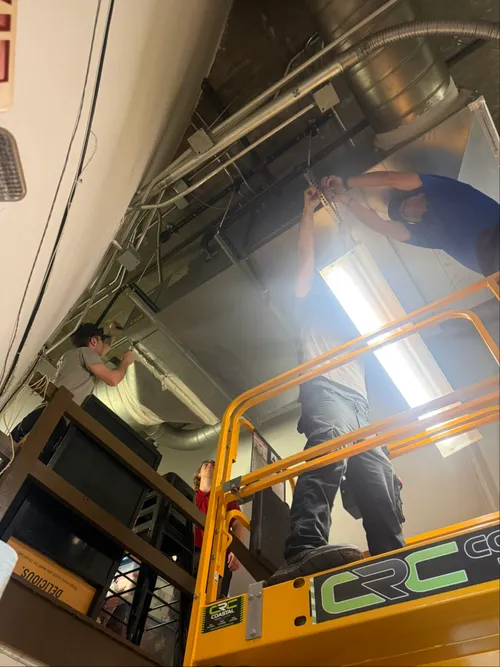
L&R Air Conditioning and Refrigeration Inc
1030 Chelsea Ln, Holiday, FL 34691
L&R Air Conditioning and Refrigeration Inc is a family-owned HVAC company serving Tampa, FL, and surrounding counties including Pasco, Hillsborough, and Pinellas. They provide a wide range of services such as air conditioning, heating, ventilation, refrigeration repair and installation, duct cleaning, and indoor air quality evaluation. The company is equipped to handle commercial refrigeration needs and offers specialized services like ductless split system installation and programmable thermostat setup. They are available 24/7 for emergency service and emphasize repair over replacement when possible to provide clear options to customers.
Anytime Air, Inc.
1565 S Missouri Ave, Clearwater, FL 33756
Anytime Air, Inc. is an HVAC company based in St Petersburg, FL, offering a full range of heating and cooling services. They provide installation, repair, and maintenance for air conditioners, furnaces, heat pumps, boilers, and general HVAC systems. With over 10 years of experience, the team is skilled in working with all major equipment brands and focuses on applying advanced technology and best practices to meet customer needs.

Air Titans
5310 56th Commerce Park Blvd, Tampa, FL 33610
Air Titans is an HVAC company serving Tampa, FL, and surrounding areas. They provide repair, installation, and maintenance services for air conditioners, furnaces, heat pumps, and boilers. Their offerings include indoor air quality solutions such as filtration, purification, humidity control, duct cleaning, and duct sealing to improve airflow and energy efficiency. Air Titans focuses on energy-efficient HVAC system design and installation tailored to customer needs. They have a history of serving the Tampa area with an emphasis on comfort and indoor air quality.
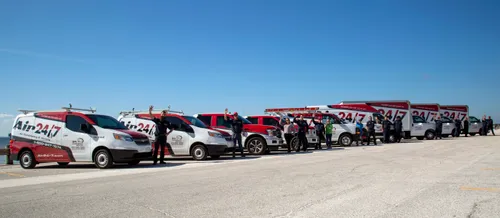
Air 24/7
3826 S 78th St, Tampa, FL 33619
Air 24/7 is an HVAC company based in Tampa, FL, serving the city and surrounding Bay Area with heating and cooling services. They offer repair, installation, and maintenance for air conditioners, furnaces, heat pumps, and boilers, along with indoor air quality solutions. The company uses technology-enhanced diagnostics and provides tailored equipment recommendations to improve energy efficiency and system performance. With over 30 years of experience, Air 24/7 is available 24/7 for emergency service, ensuring timely support for urgent HVAC needs.
Total Air Solutions
6625 Anderson Rd, Tampa, FL 33634
Total Air Solutions is an HVAC company serving Tampa, FL, and the surrounding Gulf Coast communities. Since 2003, they have provided heating, cooling, and indoor air quality services for residential, commercial, and industrial clients. Their offerings include installation, repair, and maintenance of air conditioners, furnaces, heat pumps, boilers, ductless mini-splits, and geothermal heat pumps. The company is equipped to handle advanced HVAC technologies such as smart thermostats and geothermal systems. Total Air Solutions also offers 24/7 emergency service to address urgent HVAC needs.
Understanding Your Boiler System
A boiler is the heart of a hydronic heating system, which uses heated water circulated through pipes to provide warmth. This hot water travels to various heat emitters in your home, such as traditional radiators, baseboard heaters, or modern radiant floor tubing. Unlike a furnace that heats air, a boiler heats water, making it an efficient and often quieter method for whole-home heating. In Tampa, while central air conditioning is paramount, an efficient boiler is essential for comfortable winters and can also be integrated with systems for domestic hot water.
The two primary types of boilers you'll encounter are standard (or conventional) and high-efficiency condensing models. The choice between them significantly impacts upfront cost, long-term energy savings, and installation requirements.
Standard Efficiency Boilers
Standard boilers are a common choice for straightforward replacements. They typically have an Annual Fuel Utilization Efficiency (AFUE) rating below 90%, meaning less than 90% of the fuel's energy is converted into heat for your home; the rest is lost through the exhaust flue. These units are generally less expensive to purchase and install because they can often use the existing metal flue venting system. They are a practical option if you are replacing a similar, functioning system and are working with a tighter initial budget.
High-Efficiency Condensing Boilers
Condensing boilers are the modern standard for efficiency, with AFUE ratings often exceeding 90% and reaching up to 98%. They achieve this by capturing heat from the exhaust gases that would otherwise be wasted, causing water vapor in the flue gas to condense. This process requires different venting materials, typically PVC or CPVC pipe, and a drain for the acidic condensate. While the equipment and installation costs are higher, the energy savings on your monthly utility bills can be substantial over the life of the unit, making them a cost-effective long-term investment for many Tampa homeowners.
Key Factors Influencing Boiler Replacement Cost
The total cost for a new boiler installation in Tampa can vary widely, typically ranging from $3,500 for a basic standard-efficiency replacement to $10,000 or more for a high-efficiency system in a larger home 1 2. Several core factors determine where your project will fall within this range.
- Boiler Type and Efficiency: As outlined, a high-efficiency condensing boiler unit itself costs more than a standard model. The installation may also be more complex.
- System Size (BTU Output): The boiler must be properly sized for your home's heat loss. An undersized unit will struggle, while an oversized one will cycle inefficiently. Larger homes require boilers with a higher BTU output, which increases cost.
- Fuel Type: Most Tampa systems use natural gas. If you are converting from an older oil-fired boiler, the project will include the cost of removing the old oil tank and potentially running a new gas line, which can add $2,000 or more to the total project cost 3.
- Labor and Complexity: Labor is a major component. Complexity increases-and so does cost-if the installation requires moving the boiler location, upgrading piping, or integrating with new zoning controls or indirect water heaters.
- Permits and Inspections: The City of Tampa requires permits for boiler work, with fees typically between $50 and $200. This cost is usually included in your contractor's quote 4.
Navigating Tampa's Permits and Safety Codes
Compliance with local and state regulations is not optional; it's a critical step for safety, insurance, and future home sales. A reputable installer will handle this process, but it's important for you to know what's required.
City of Tampa Permits
A Mechanical/Boiler permit is mandatory for the installation, replacement, or alteration of any boiler system within city limits. Your contractor must submit an application, provide details about the boiler (like its ASME stamp), and pay the associated fee. The work will then be subject to inspection by city officials to ensure it meets all code requirements.
Florida Building Code and ASME Standards
The installation must comply with the Florida Building Code, Mechanical (FBC-Mech). Chapter 10 of this code specifically covers boilers, water heaters, and pressure vessels, dictating requirements for installation, venting, combustion air, and safety controls 5. Furthermore, the boiler unit itself must be constructed and stamped in accordance with the American Society of Mechanical Engineers (ASME) Boiler and Pressure Vessel Code. The controls must also follow ASME CSD-1 standards 6.
State of Florida Boiler Safety Rules
The Florida State Fire Marshal's Bureau of Fire Prevention enforces boiler safety laws (Chapter 554, Florida Statutes, and Chapter 69A-51, Florida Administrative Code) 7 8. These rules cover registration, inspection cycles, and operational requirements for boilers. While a one- or two-family dwelling's boiler used exclusively for heating is typically exempt from annual state inspection, it must still be installed to these safety standards. Your installer must ensure the installation meets the State Fire Marshal's rules regarding clearances, pressure relief valves, and proper support 9 10.
Find the perfect boiler installation & replacement contractors for your needs
Get personalized recommendations and expert advice
The Installation Process: What to Expect
A professional boiler replacement is a multi-step process. Understanding it can help you prepare your home and ask the right questions.
- Initial Assessment and Quote: A qualified technician will visit your home to assess the existing system, calculate the necessary BTU load, discuss your efficiency goals, and evaluate any needed upgrades to gas lines, electrical service, or venting. You should receive a detailed written quote.
- System Removal and Preparation: The old boiler, and if applicable, the old oil tank, are safely disconnected and removed. The area is prepared for the new unit.
- Installation of New Components: The new boiler is positioned and secured. New gas lines, water connections, electrical wiring, and venting (especially critical for condensing models) are installed according to code and manufacturer specs.
- System Integration and Testing: The boiler is connected to your home's hydronic piping, expansion tank, circulator pumps, and controls. The entire system is filled, purged of air, and fired up. The technician will test for proper operation, check for leaks, and verify that all safety controls function correctly.
- Permit Finalization and Inspection: Your contractor will schedule the required city inspection. Once the installation passes, the permit is closed, providing you with a record of code compliance.
Choosing the Right Professional in Tampa
This is the most important decision you will make. A proper installation ensures safety, efficiency, and reliability.
- Verify Licensing and Insurance: Ensure the company holds an active HVAC or plumbing contractor's license from the state of Florida and carries both liability and worker's compensation insurance.
- Check for Local Experience: Choose a provider familiar with the City of Tampa's permit office and inspection process. They should know the local code officials and requirements intimately.
- Get Multiple Detailed Quotes: Obtain at least three written estimates. Compare them line-by-line, not just on bottom-line cost. Look for details on equipment model numbers, labor scope, permit fees, and warranty terms.
- Ask About Permits: A red flag is any contractor who suggests skipping permits to "save you money." Reputable professionals will always pull the required permits.
- Review References and Past Work: Ask for references from recent boiler replacement projects and, if possible, follow up with them.
Maximizing Your New Boiler's Lifespan and Efficiency
Once your new system is installed, proper maintenance is key to protecting your investment.
- Annual Professional Service: Have your boiler serviced annually, ideally before the heating season begins. A technician will clean components, check for soot or corrosion, test safety devices, and ensure the system is operating at peak efficiency.
- Monitor System Pressure: Keep an eye on the system's pressure gauge; most residential boilers operate between 12 and 25 psi. Significant drops could indicate a leak.
- Bleed Radiators (if applicable): If you have radiators, bleeding them at the start of the season removes trapped air, allowing hot water to fill them completely for even heat.
- Consider a Maintenance Plan: Many local HVAC companies offer annual maintenance plans that provide priority service and discounts.
Frequently asked questions
Sources
Footnotes
-
How Much Does Residential Boiler Installation Cost? - Aero Energy - https://www.aeroenergy.com/how-much-does-residential-boiler-installation-cost/ ↩
-
How Much Does Boiler Replacement Cost in 2026? Price by Type - https://modernize.com/hvac/heating-repair-installation/boiler ↩
-
Boiler Replacement Costs: Smart Budgeting and Planning ... - https://www.tcmemt.com/post/the-cost-of-boiler-replacement-expert-guide-to-smart-budgeting-and-installation-planning ↩
-
Mechanical/Boiler Permit Requirements - City of Tampa - https://www.tampa.gov/sites/default/files/document/migrated/p049mechanicalboiler.pdf ↩
-
Chapter 10 Boilers, Water Heaters and Pressure Vessels: 2023 FBC - https://up.codes/viewer/florida/fl-mechanical-code-2023/chapter/10/boilers-water-heaters-and-pressure-vessels ↩
-
Comprehensive Boiler Installation Guide - PlumbersStock - https://www.plumbersstock.com/how-to-hvac/boilers/comprehensive-installation-guide.html ↩
-
Boiler Safety Laws & Rules - https://www.myfloridacfo.com/docs-sf/state-fire-marshal-libraries/sfm-documents/bfp/boiler-safety/boiler-safety-laws-rules.pdf?sfvrsn=b37b6f62_0 ↩
-
The 2025 Florida Statutes - Online Sunshine - https://www.leg.state.fl.us/statutes/index.cfm?App_mode=Display_Statute&Search_String=&URL=0500-0599/0554/Sections/0554.108.html ↩
-
STATE OF FLORIDA: BOILER FAQ, LAWS, & RULES - Steiner-Atlantic - https://steineratlantic.com/2016/11/15/state-of-florida-boiler-faq-laws-rules/ ↩
-
Fla. Admin. Code Ann. R. 69A-51.060 | State Regulations - https://www.law.cornell.edu/regulations/florida/Fla-Admin-Code-Ann-R-69A-51-060 ↩