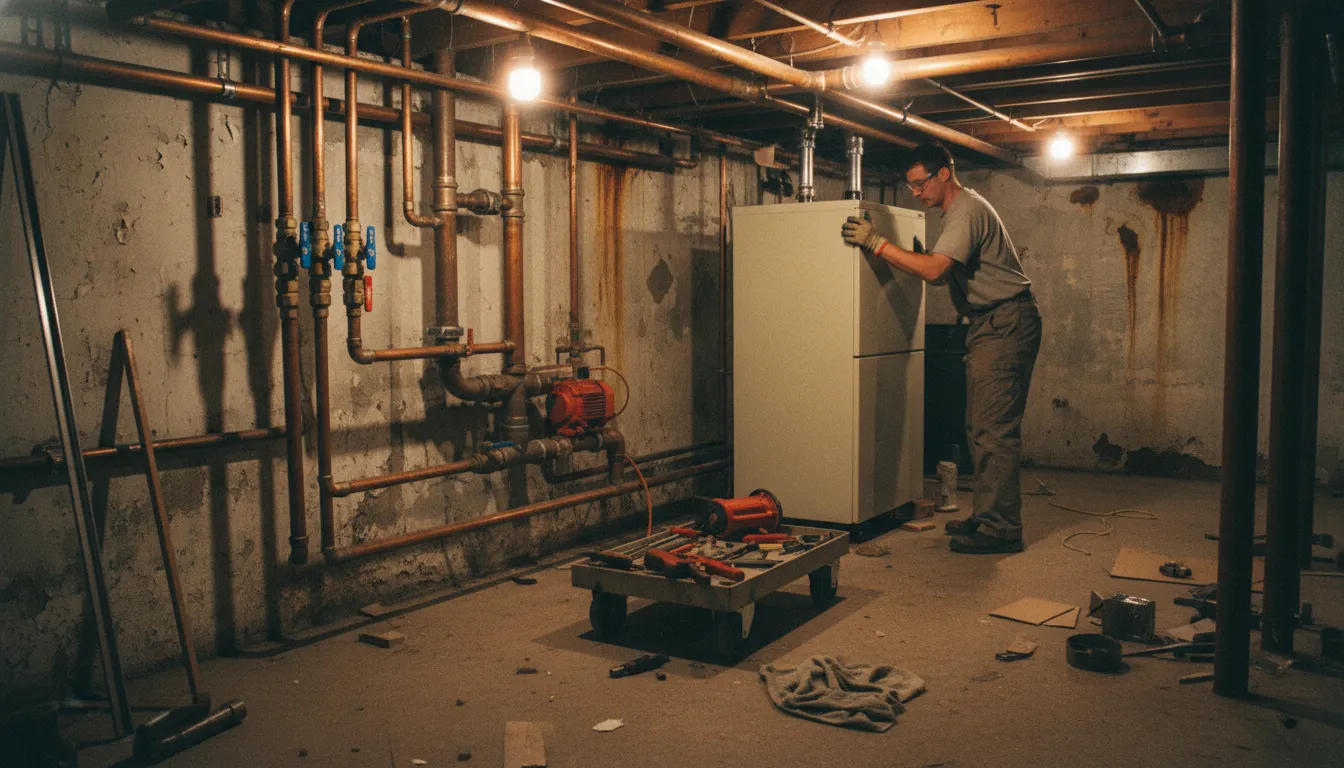
Find the Best Boiler Installation & Replacement Contractors for Your Business
No obligation • Fast responses • Nationwide coverage

Why you can trust HVAC Firms
HVAC Firms is a leading United States resource for evaluating HVAC service providers. Our team researches companies, checks credentials, and reviews customer feedback to present clear, unbiased information. Listings and rankings are based on merit, and companies cannot pay to change our editorial content.
Search providers near you
Best Boiler Installation & Replacement Contractors in Florida Ranked
Installing or replacing a boiler is a significant investment in your Florida home's comfort and efficiency. A properly installed boiler provides reliable heat and hot water, but the process involves navigating specific state codes, efficiency standards, and safety requirements. This guide explains the key regulations, costs, and best practices for boiler projects in Florida, helping you make informed decisions and connect with qualified local professionals for your installation or replacement needs.
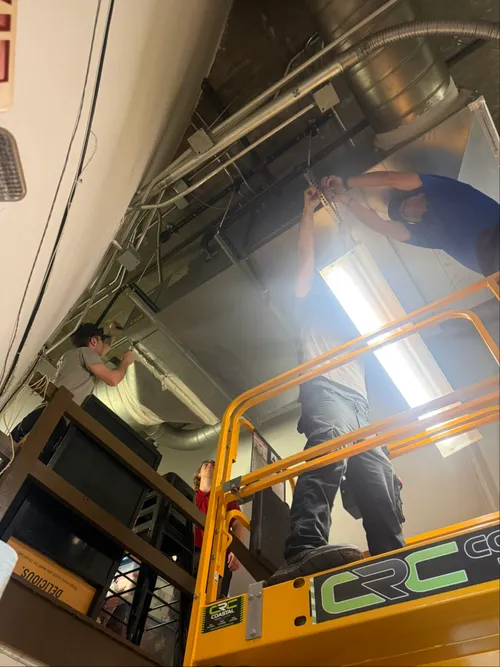
L&R Air Conditioning and Refrigeration Inc
1030 Chelsea Ln, Holiday, FL 34691
L&R Air Conditioning and Refrigeration Inc is a family-owned HVAC company serving Tampa, FL, and surrounding counties including Pasco, Hillsborough, and Pinellas. They provide a wide range of services such as air conditioning, heating, ventilation, refrigeration repair and installation, duct cleaning, and indoor air quality evaluation. The company is equipped to handle commercial refrigeration needs and offers specialized services like ductless split system installation and programmable thermostat setup. They are available 24/7 for emergency service and emphasize repair over replacement when possible to provide clear options to customers.
Peacock Electric Incorporated and Air Conditioning
474362 E State Rd 200, Fernandina Beach, FL 32034
Peacock Electric Incorporated and Air Conditioning is a family-owned HVAC and electrical service provider based in Jacksonville, FL. Serving the local community since 1987, they offer installation, repair, and maintenance for heating and air conditioning systems including air conditioners, heat pumps, furnaces, boilers, and mini-split systems. The company also specializes in indoor air quality solutions and thermostat installation. As a licensed contractor and Carrier® dealer, Peacock Electric provides 24-hour emergency service and preventative maintenance to help keep systems running efficiently year-round.
Anytime Air, Inc.
1565 S Missouri Ave, Clearwater, FL 33756
Anytime Air, Inc. is an HVAC company based in St Petersburg, FL, offering a full range of heating and cooling services. They provide installation, repair, and maintenance for air conditioners, furnaces, heat pumps, boilers, and general HVAC systems. With over 10 years of experience, the team is skilled in working with all major equipment brands and focuses on applying advanced technology and best practices to meet customer needs.
Benzah Vent Cleaning LLC
Orlando, FL
Benzah Vent Cleaning LLC is a full-service HVAC and duct cleaning company serving Orlando, FL. They specialize in duct cleaning, air conditioning repair and installation, heat pump and boiler services, and chimney sweeping. The company is certified in duct cleaning and emphasizes safety and thorough inspections to maintain system efficiency. Founded in 2019, Benzah Vent Cleaning LLC offers a range of HVAC services including maintenance and repairs, with a focus on affordable and reliable solutions.

Air Titans
5310 56th Commerce Park Blvd, Tampa, FL 33610
Air Titans is an HVAC company serving Tampa, FL, and surrounding areas. They provide repair, installation, and maintenance services for air conditioners, furnaces, heat pumps, and boilers. Their offerings include indoor air quality solutions such as filtration, purification, humidity control, duct cleaning, and duct sealing to improve airflow and energy efficiency. Air Titans focuses on energy-efficient HVAC system design and installation tailored to customer needs. They have a history of serving the Tampa area with an emphasis on comfort and indoor air quality.
Understanding Florida's Boiler Codes and Standards
Florida's building codes incorporate specific rules for boiler and water heater installations to ensure safety, durability, and efficiency. Adherence to these codes is not optional; it's required by law and enforced through local permitting and inspection processes.
Core Compliance Requirements:
- Manufacturer Instructions: The installation must strictly follow the manufacturer's guidelines for setup, controls, and clearances.
- ASME Standards: All boilers must be constructed and certified to meet the ASME Boiler & Pressure Vessel Code.
- Permits: A permit is required for the installation of a new boiler or the replacement of an existing one. This triggers necessary inspections to verify code compliance.
Critical Safety Installations:
- Pressure Relief Valve: Every boiler must have a properly rated and set pressure-relief valve. The discharge from this valve must be piped to an approved drain location to safely handle over-pressure events.
- Structural Support: Boilers require strong, rigid supports to prevent movement and vibration that could damage connections 1.
- Clearances: Required clearances from combustible materials, as specified on the boiler's listing and label, must be maintained. Some allowances exist for replacement units in existing spaces 2 3.
Ventilation, Combustion Air, and Condensate Management
Proper venting and air supply are non-negotiable for safe and efficient boiler operation. Florida codes have precise requirements in these areas.
Ventilation and Combustion Air: Adequate outside air must be provided for both combustion and ventilation of the equipment room. The code specifies methods for calculating the required air supply, which is crucial to prevent the dangerous buildup of carbon monoxide 4.
Condensate Drainage for High-Efficiency Units: Modern condensing boilers achieve high efficiency by extracting extra heat from flue gases, which produces acidic condensate. This condensate must be drained via approved, corrosion-resistant piping (like PVC, CPVC, or polypropylene) with a continuous minimum slope to an approved disposal point. Proper handling of condensate is a key marker of a quality installation.
Florida's Energy Efficiency Requirements
When replacing a boiler in Florida, you must comply with the state's energy conservation code. The goal is to reduce long-term energy consumption and utility costs.
- Annual Fuel Utilization Efficiency (AFUE): This rating measures a boiler's seasonal efficiency. For replacements, the new system must meet or exceed the minimum AFUE levels specified in the Florida Building Code 5 6. High-efficiency condensing models typically have AFUE ratings of 90% or higher, offering significant savings on fuel bills over time.
- Energy Performance Level (EPL): Builders and contractors are required to provide an EPL display card that shows the installed system's efficiencies, offering transparency about the home's energy performance.
Cost Breakdown for Boiler Replacement in Florida
The total cost of a boiler replacement in Florida varies widely based on equipment type, labor, and site-specific conditions. Understanding the components helps in budgeting.
Typical Installed Cost Ranges:
- Standard Efficiency Boiler: Starting around $3,500 or more installed.
- High-Efficiency Condensing Boiler: Typically between $6,000 and $8,500+ installed. While the upfront cost is higher, the superior efficiency (90%+ AFUE) provides better long-term energy savings 7.
Primary Cost Factors:
- Equipment: The boiler unit itself can range from $2,000 to $5,000+ depending on brand, capacity, and features.
- Labor: Professional installation labor generally costs between $1,500 and $2,500.
- Permits & Fees: Local permit fees typically add $50 to $200 to the project cost.
- Old Unit Removal: Disposing of the existing boiler and related components may cost $500 to $1,000.
- Fuel Conversion: Switching from an oil-fired system to a natural gas boiler adds significant cost for running a new gas line, which requires separate permitting and specialized labor.
Find the perfect boiler installation & replacement contractors for your needs
Get personalized recommendations and expert advice
How to Ensure a Quality Installation
Selecting the right equipment is only half the battle; a code-compliant, safe installation is paramount. Follow these steps to protect your investment.
- Hire Licensed Professionals: Always hire a contractor qualified to perform boiler work. In Florida, this typically requires proper licensing for gas fitting, plumbing, and mechanical systems. Verify their license is current and in good standing with the Florida Department of Business and Professional Regulation.
- Get the Required Permits: A reputable professional will always pull the necessary permits. Never agree to a "no-permit" installation, as it bypasses critical safety inspections and can void warranties, create liability issues, and cause problems when selling your home 8.
- Prioritize High-Efficiency Models: For most homes, a high-efficiency condensing boiler is the wisest choice. Focus on units with high AFUE ratings to maximize energy savings and potentially qualify for rebates.
- Verify Code Compliance: Discuss with your installer how they will address key code items: combustion air supply, proper venting, structural support, safety valve installation, and-for condensing units-correct condensate drainage 9 10 11.
Navigating Permits and Inspections
The permitting process is your assurance that the work meets minimum safety standards. Your contractor will usually handle the permit application with the local building department. Once the installation is complete, a municipal inspector will visit to verify:
- The boiler is listed and labeled correctly.
- Installation follows manufacturer instructions and code (supports, clearances, connections).
- Venting and combustion air provisions are correct.
- Safety devices like the pressure relief valve are properly installed.
- Gas line or fuel oil connections are sound (if applicable).
- For condensing boilers, the condensate drain is correctly installed. Passing this final inspection is necessary to officially close the permit.
Frequently asked questions
Sources
Footnotes
-
CHAPTER 3 GENERAL REGULATIONS - 2023 FLORIDA BUILDING ... - https://codes.iccsafe.org/content/FLMC2023P1/chapter-3-general-regulations ↩
-
2020 Florida Building Code, Residential, 7th Edition - M2001.1 ... - https://codes.iccsafe.org/s/FLRC2020P1/chapter-20-boilers-and-water-heaters/FLRC2020P1-Pt05-Ch20-SecM2001.1 ↩
-
CHAPTER 20 BOILERS AND WATER HEATERS - ICC Digital Codes - https://codes.iccsafe.org/content/FLRC2023P1/chapter-20-boilers-and-water-heaters ↩
-
Fla. Admin. Code Ann. R. 69A-51.060 | State Regulations - https://www.law.cornell.edu/regulations/florida/Fla-Admin-Code-Ann-R-69A-51-060 ↩
-
CHAPTER 4 RE RESIDENTIAL ENERGY EFFICIENCY - https://codes.iccsafe.org/content/FLEC2023P1/chapter-4-re-residential-energy-efficiency ↩
-
chapter 11 energy efficiency - Florida Building Code - http://www.floridabuilding.org/fbc/committees/energy/rule%209b-13/chapter%2011_08.pdf ↩
-
Boiler Replacement Costs: Smart Budgeting and Planning ... - https://www.tcmemt.com/post/the-cost-of-boiler-replacement-expert-guide-to-smart-budgeting-and-installation-planning ↩
-
CHAPTER 1 SCOPE AND ADMINISTRATION 2 - 2020 FLORIDA ... - https://codes.iccsafe.org/content/FLPC2020P1/chapter-1-scope-and-administration-2 ↩
-
CHAPTER 20 BOILERS AND WATER HEATERS - 2020 FLORIDA BUILDING CODE, RESIDENTIAL, 7TH EDITION - https://codes.iccsafe.org/content/FLRC2020P1/chapter-20-boilers-and-water-heaters ↩
-
2023 Florida Plumbing Code Updates & Compliance - https://nfmplumbing.com/revised-florida-building-code-for-plumbing/ ↩
-
CHAPTER 3 GENERAL REGULATIONS - 2023 FLORIDA BUILDING ... - https://codes.iccsafe.org/content/FLPC2023P1/chapter-3-general-regulations ↩