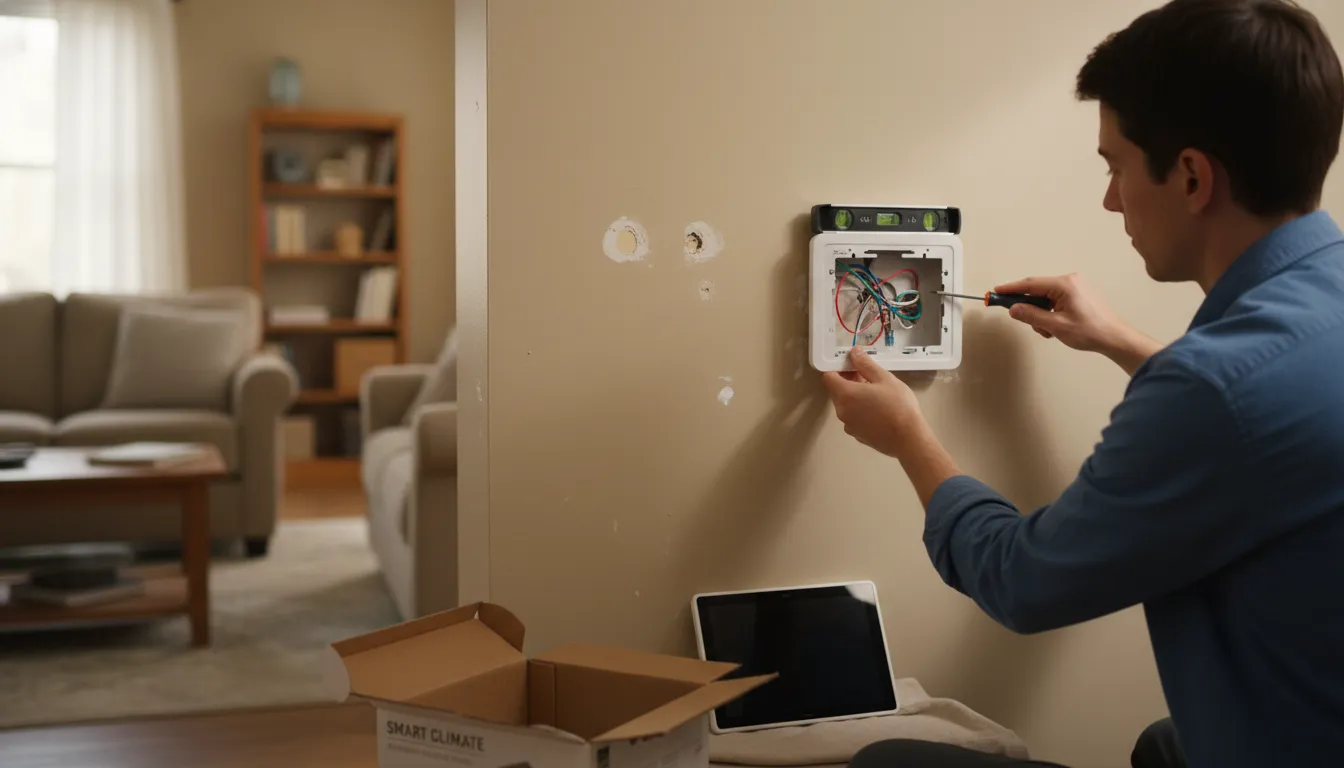
Find the Best Thermostat Installation & Repair Companies for Your Business
No obligation • Fast responses • Nationwide coverage

Why you can trust HVAC Firms
HVAC Firms is a leading United States resource for evaluating HVAC service providers. Our team researches companies, checks credentials, and reviews customer feedback to present clear, unbiased information. Listings and rankings are based on merit, and companies cannot pay to change our editorial content.
Search providers near you
Top Thermostat Installation & Repair Companies in Richardson, Texas Ranked
Maintaining a comfortable home in Richardson's climate requires a reliable HVAC system, and at the heart of that system is your thermostat. Proper thermostat installation and repair ensures your heating and cooling equipment responds accurately to your commands, maintaining efficiency and comfort. Whether you're upgrading to a smart model, troubleshooting a unit that won't turn on, or ensuring a new device is compatible with your existing HVAC system, local expertise is key. This guide explains how these devices work, common issues faced by Richardson homeowners, and how to connect with skilled professionals for your temperature control needs.
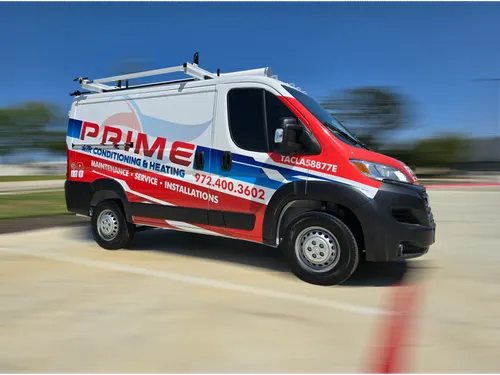
Prime AC and Heat
150 Valley Ridge Blvd Suite #102, Lewisville, TX 75057
Prime AC and Heat is a residential HVAC company serving Dallas, TX, and the wider DFW metroplex, including Lewisville, Flower Mound, and surrounding areas. They offer a full range of home comfort services such as air conditioning repair and replacement, furnace installation and repair, heat pump service, duct cleaning, thermostat installation, and indoor air quality solutions. The company provides 24/7 emergency service with same-day appointments to address urgent HVAC needs. Prime AC and Heat is known for its licensed technicians, A+ BBB rating, and transparent pricing without hidden fees.
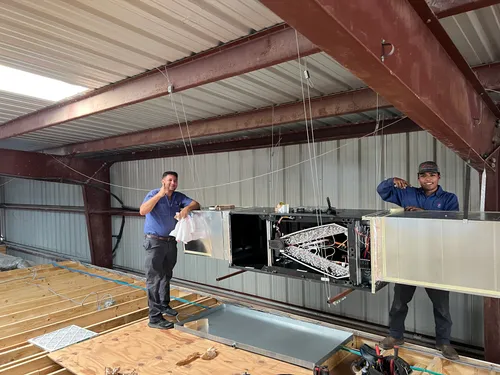
Aircons Heat & Better Air Inc
220 Commercial St, Garland, TX 75040
Aircons Heat & Better Air Inc is an HVAC company based in Dallas, TX, offering a wide range of heating and cooling services. They provide air conditioning and furnace repair, installation of heat pumps and geothermal systems, duct cleaning, thermostat installation, and indoor air quality solutions for both residential and commercial clients. The company is a certified Trane dealer and has over 15 years of experience in the industry. Their team is trained to handle all major HVAC brands and systems. Aircons Heat & Better Air Inc also offers financing options and is available for service calls day and night.
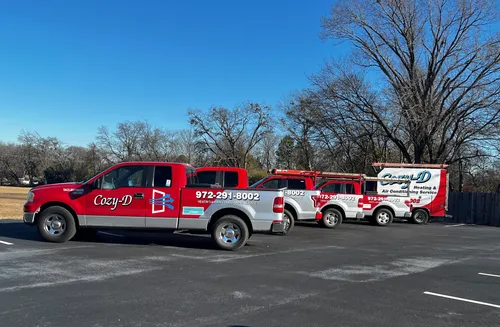
Cozy - D Heating & A/C LLC
117 Elston Dr, Dallas, TX 75232
Cozy - D Heating & A/C LLC is an HVAC company based in Dallas, TX, serving the Dallas-Fort Worth metroplex. They provide heating, ventilation, and air conditioning services including installation, repair, and maintenance of systems such as furnaces, heat pumps, central air systems, and ductless mini-splits. With over 27 years in business since 1997, Cozy - D offers comprehensive HVAC solutions and emphasizes quality workmanship. Their technicians are drug tested and background checked, and they provide support six days a week.
Dragon Air Services LLC
4420 Tradition Trail #105, Plano, TX 75093
Dragon Air Services LLC is an HVAC company based in Plano, TX, offering a range of air conditioning and heating services. They specialize in AC and furnace installation, repair, and diagnostics, focusing on American Standard products known for their durability and efficiency. Their services include thorough inspections and repairs of HVAC systems, including duct and thermostat installation. Dragon Air Services has served Plano and surrounding Collin County areas for several years, providing reliable HVAC solutions tailored to homeowners' needs.
JARIC AC and Heating Co.
825 Watters Creek Blvd #250, Allen, TX 75013
JARIC AC and Heating Co. is an HVAC company serving Plano, TX, and the surrounding areas. They provide a range of services including air conditioning and furnace repair, HVAC installation, thermostat installation, and indoor air quality solutions. With over 53 years of experience, JARIC is known for straightforward pricing and servicing all makes and models of heating and cooling equipment. They emphasize honest service without commission-based sales tactics and offer free estimates and second opinions on equipment replacement.
How Your Thermostat Controls Comfort
A thermostat is more than just a temperature dial on the wall; it's the command center for your home's climate. It works through a continuous cycle of sensing, comparison, and signaling 1.
- Sensing Temperature: Inside the thermostat, a sensor-often a bimetallic strip or a digital thermistor-constantly measures the ambient room temperature.
- Comparing to Setpoint: The device compares this measured temperature to your desired setting (the setpoint).
- Sending a Signal: If the room is too cold, it sends a low-voltage electrical signal to your furnace or heat pump to activate. If it's too warm, it signals your air conditioner to start cooling 2.
- Cycling for Consistency: This process repeats, turning equipment on and off to maintain a steady, comfortable environment.
Understanding this basic operation is the first step in diagnosing issues or planning an upgrade to a more advanced temperature control system.
Common HVAC Systems in Richardson Homes
Choosing the right thermostat begins with knowing what type of HVAC system it needs to communicate with. Most homes in the Richardson area use one of these central systems:
- Forced-Air Systems: This is a very common setup, pairing a gas furnace for heating with a central air conditioner for cooling. They use the same network of ducts to distribute air.
- Heat Pumps: An efficient option for Texas climates, a heat pump provides both heating and cooling from a single unit by transferring heat between your home and the outdoors.
A critical factor for thermostat compatibility, especially with modern Wi-Fi models, is your system's staging and wiring. Many smart thermostats require a constant 24-volt power source, typically provided by a common wire (C-wire), which may not be present in older installations 3. A professional can assess your system's wiring and staging (single-stage, multi-stage, or heat pump with auxiliary heat) to ensure a new thermostat will function correctly.
The Professional Installation Process
While some may attempt a DIY install, professional thermostat installation ensures safety, compatibility, and optimal performance. Here's what a qualified technician typically does:
- System Assessment: The technician will first examine your existing HVAC equipment and wiring to determine compatibility with your new or replacement thermostat.
- Selection Guidance: They can advise on the best model-whether a basic programmable unit or a feature-rich smart thermostat-based on your system, home layout, and goals like energy savings.
- Safe Wiring & Mounting: After turning off power to the HVAC system, the old thermostat is carefully removed. The new unit is wired according to manufacturer and system specifications, then securely mounted to the wall.
- Configuration & Testing: The technician will configure initial settings, connect the device to your home Wi-Fi if applicable, and perform tests to ensure it correctly activates your heating and cooling equipment.
This process helps avoid common pitfalls like shorted wires, incorrect settings for heat pump systems, or a lack of power that can leave you without climate control.
Diagnosing Common Thermostat Problems
When your home isn't heating or cooling properly, the thermostat is a logical first place to check. Here are frequent issues and their potential causes:
- No Power / Blank Screen: This can be caused by dead batteries (in battery-only models), a tripped circuit breaker for the HVAC system, or a loose or missing C-wire connection that provides constant power 4.
- System Not Turning On/Off: Incorrect wiring, a faulty thermostat relay, or a mismatch between the thermostat settings and your HVAC system type (e.g., setting "O" vs. "B" for a heat pump) can prevent proper operation 5.
- Inaccurate Temperature Readings: A thermostat located in direct sunlight, near a heat-producing appliance, or in a drafty hallway can give false readings. Internally, dust accumulation or sensor calibration drift can also cause inaccuracies.
- Short Cycling: If your system turns on and off too frequently, it could be due to a thermostat placed too close to a supply vent, improper calibration, or an anticipator setting that needs adjustment.
Find the perfect thermostat installation & repair companies for your needs
Get personalized recommendations and expert advice
Upgrading to a Smart or Programmable Thermostat
Upgrading from a manual thermostat is one of the most effective home improvements for comfort and efficiency. Modern temperature controls offer significant advantages:
- Energy Savings: By allowing precise scheduling and geofencing (adjusting temperature based on your phone's location), smart thermostats can help reduce wasted energy. Some models claim savings of up to 10% on annual heating and cooling bills.
- Enhanced Comfort & Control: Adjust your home's temperature from your smartphone from anywhere, create daily or weekly schedules that align with your routine, and receive maintenance alerts.
- System Insights: Many smart models provide detailed energy usage reports, helping you understand your consumption patterns and when your HVAC system is working hardest.
Before purchasing, it's essential to verify compatibility with your specific heating and cooling equipment. An HVAC professional in Richardson can perform this check and handle the installation, which may involve running a new C-wire or installing an accessory power module 6.
Understanding Service and Repair Costs
The cost for thermostat services in Richardson varies based on the job's complexity, the type of unit, and the professional's labor rates.
- Basic Replacement (Unit & Labor): For a straightforward swap of a like-for-like basic or programmable model, homeowners can expect average costs in the range of $114 to $264 7.
- Smart Thermostat Installation: Installing a new smart thermostat, especially if it requires adding a C-wire or configuring complex heat pump settings, can increase the total cost, sometimes reaching $500 or more for the unit and professional installation 8.
- Labor Rates: Skilled HVAC technicians in the area typically charge between $65 and $100+ per hour for their labor 9.
- Repair Costs: Simple repairs, like recalibrating a sensor or securing loose wires, will be on the lower end of the labor scale. Replacing internal components of the thermostat may cost more.
While price is a factor, the expertise of a certified technician ensures the job is done correctly, protecting your more expensive HVAC equipment from potential damage due to incorrect wiring or settings.
Finding Local Thermostat Expertise
For residents of Richardson, seeking out local HVAC companies that specialize in thermostat services is the best path to a reliable installation or repair. Look for providers who explicitly offer "thermostat installation," "thermostat repair," or "smart thermostat upgrades" 10. A qualified professional will have the tools and knowledge to diagnose wiring issues, ensure compatibility with Texas-common systems like heat pumps, and configure your new device for maximum efficiency and comfort.
Frequently asked questions
Sources
Footnotes
-
How Does a Thermostat Work? | Understanding HVAC Controls - https://www.bryant.com/en/us/products/controls-thermostats/how-they-work/ ↩
-
Thermostat: Control Heating Costs - https://mucciaplumbing.com/your-thermostat-the-easiest-way-to-control-heating-costs/ ↩
-
Guide to HVAC Repair, Installation & Maintenance in Texas - https://classicairconditioningandheating.com/the-ultimate-guide-to-hvac-repair-installation-replacement-and-preventive-maintenance-in-texas/ ↩
-
4 Steps for Troubleshooting Your Thermostat - Comfort Technology - https://www.comforttechnologyinc.com/make-the-most-of-the-season-by-following-these-simple-guidelines ↩
-
Smart Thermostat Compatibility: Common Issues & Fixes - https://harmonmechanical.com/smart-thermostat-compatibility-issues/ ↩
-
The Complete Guide for Installing Smart Thermostats - https://www.libertyhomeguard.com/blog/home-maintenance/installing-smart-thermostats/ ↩
-
How Much Does Thermostat Installation or Replacement Cost? - https://www.homeadvisor.com/cost/heating-and-cooling/install-a-thermostat/ ↩
-
The Role of Smart Thermostats in Efficient AC Installation - Trilogy AC - https://www.trilogyac.com/blog/the-role-of-smart-thermostats-in-efficient-ac-installation/ ↩
-
Occupational Outlook Handbook: : U.S. Bureau of Labor Statistics - https://www.bls.gov/ooh/installation-maintenance-and-repair/heating-air-conditioning-and-refrigeration-mechanics-and-installers.htm ↩
-
Thermostats Installation & Repair in Texas | Smart Climate ... - https://unitedstateshomeservices.com/thermostats/ ↩