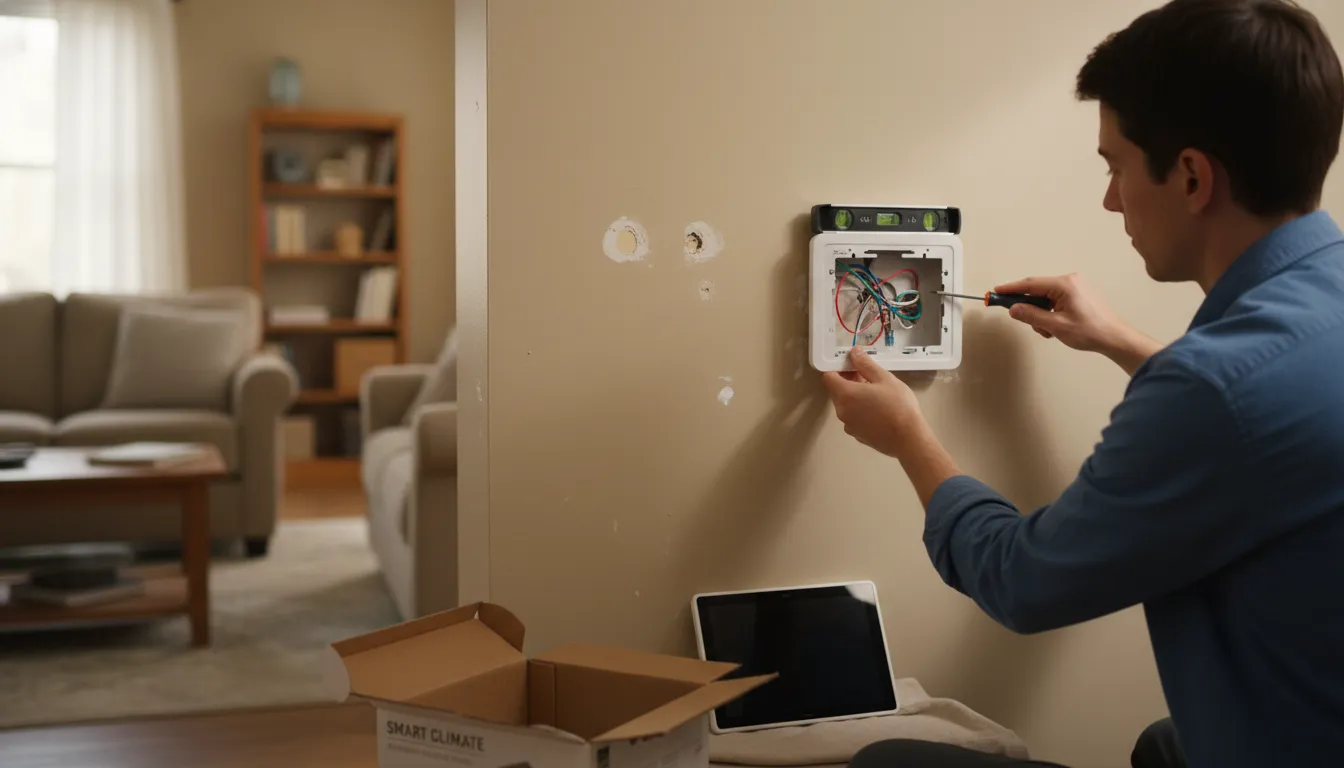
Find the Best Thermostat Installation & Repair Companies for Your Business
No obligation • Fast responses • Nationwide coverage

Why you can trust HVAC Firms
HVAC Firms is a leading United States resource for evaluating HVAC service providers. Our team researches companies, checks credentials, and reviews customer feedback to present clear, unbiased information. Listings and rankings are based on merit, and companies cannot pay to change our editorial content.
Search providers near you
Top Thermostat Installation & Repair Companies in Wake Forest, North Carolina Ranked
Your thermostat is the command center for your home's heating and cooling, translating your comfort preferences into action for your HVAC system. In Wake Forest's climate, where humidity and seasonal temperature swings are common, having a properly installed and functioning temperature control device is essential for home comfort and energy efficiency. This guide will help you understand the key aspects of thermostat services, from selecting the right model to ensuring a professional setup, so you can confidently connect with skilled local technicians.
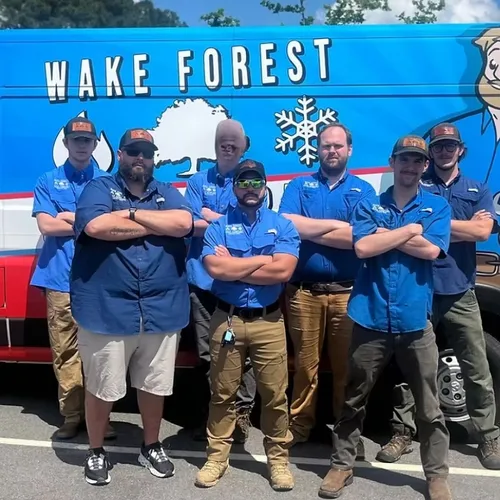
Wake Forest HVAC Company
107 E Young St, Rolesville, NC 27571
Wake Forest HVAC Company provides heating and cooling services in Raleigh, NC, and nearby areas including Rolesville, Wake Forest, and Youngsville. They offer a range of HVAC services such as air conditioning repair and installation, furnace and heat pump repair, thermostat installation, and regular maintenance tune-ups. Their preventative maintenance program includes two comprehensive visits annually to inspect and service HVAC systems, ensuring efficient operation. The company emphasizes professionalism, communication, and integrity in their work and supports their local community.
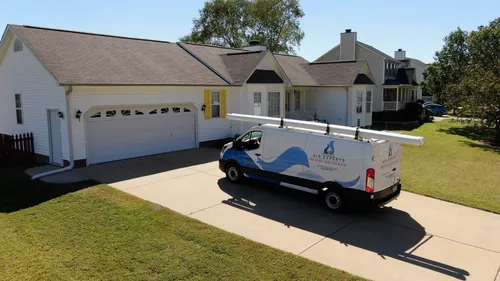
Air Experts Heating & Cooling
7 Rupert Rd, Raleigh, NC 27603
Air Experts Heating & Cooling is a comprehensive HVAC and plumbing service provider based in Raleigh, NC. Serving the Triangle region, they offer heating, air conditioning, heat pump, and mini split installation and repair, along with indoor air quality solutions such as air purifiers, duct sealing, and humidity control. With over 35 years of experience since 1986, Air Experts provides 24/7 emergency service to ensure year-round comfort and safety for residential customers.
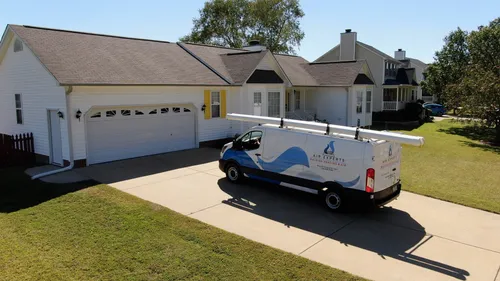
Air Experts Heating, Cooling and Plumbing
2730 Rowland Rd Suite 101, Raleigh, NC 27615
Air Experts Heating, Cooling and Plumbing is a full-service HVAC and plumbing company serving Raleigh, NC. They provide heating and air conditioning repair, installation, and maintenance, as well as indoor air quality solutions like air purifiers and duct sealing. Their plumbing services include leak detection, water heater installation, and water filtration system installation. With over 35 years of experience in the Triangle region, Air Experts offers 24/7 emergency service to ensure reliable home comfort year-round.
Alternative Aire Inc
3156 Hillsborough Rd, Durham, NC 27705
Alternative Aire Inc is a locally owned heating and air conditioning company based in Durham, NC. They provide a range of HVAC services including AC repair, furnace repair, heat pump repair, AC and furnace installation, ductless mini split service, and scheduled maintenance. Their licensed and insured team serves Durham and nearby areas such as Chapel Hill, Cary, Morrisville, Hillsborough, and West Raleigh. The company offers same-day diagnostics and clear pricing, with NATE-certified technicians who perform load calculations, airflow setup, and post-install verification to ensure proper system performance. Alternative Aire Inc also supports commercial HVAC needs with repair, maintenance, and replacement services. The company emphasizes thorough diagnostics and repair of common cooling issues like refrigerant leaks, compressor failures, and thermostat problems. They provide seasonal maintenance plans to help extend equipment life and manage energy costs. Alternative Aire Inc backs their workmanship with a satisfaction guarantee and serves a wide range of neighborhoods throughout Durham and the Triangle region.
Call Dad
8810 Westgate Park Dr STE 114, Raleigh, NC 27617
Call Dad is an HVAC contractor based in Raleigh, NC, offering a wide range of heating, cooling, and indoor air quality services. Their expertise includes installation, maintenance, and repair of air conditioners, furnaces, heat pumps, ductless mini splits, and smart thermostats. They provide comprehensive HVAC solutions with a one-year warranty on labor and parts. Established as a 24/7/365 service provider, Call Dad supports customers with emergency and after-hours services throughout Raleigh and surrounding areas.
Understanding Your Home's Climate Control
At its core, a thermostat is a temperature-activated switch. It senses the ambient air temperature in your home and sends a signal to your furnace, air conditioner, or heat pump to turn on or off to maintain your desired set point. In Wake Forest homes, this simple function becomes critical for managing indoor humidity levels and achieving consistent comfort year-round. Modern units, especially smart and programmable models, build on this basic operation by allowing for automated schedules and remote adjustments, which can lead to significant energy savings.
The Role of Proper Placement
A common issue affecting thermostat performance is incorrect placement. For accurate temperature readings, your device must be installed on a suitable interior wall, away from direct sunlight, drafts, doorways, heat-producing appliances, or supply vents. A local professional understands how your home's unique layout and the local climate can impact sensor accuracy and will choose an optimal location during installation to ensure your HVAC system responds correctly to real living conditions.
Choosing the Right Thermostat for Your System
Not all thermostats work with all HVAC systems. Compatibility is the most crucial factor when upgrading or replacing your temperature control. Installing an incompatible unit can lead to system inefficiency, a lack of functionality, or even damage.
System Types and Compatibility
Wake Forest homes utilize a variety of HVAC setups, each with specific wiring and control requirements:
- Standard Heating & Air Conditioning: Traditional systems with a separate furnace and air conditioner.
- Heat Pumps: Common in our region, these systems provide both heating and cooling. They require a thermostat specifically designed to manage their unique reversing valve and auxiliary heat operation.
- Dual-Fuel Systems: These combine a heat pump with a gas furnace for optimal efficiency in colder weather. They need a compatible thermostat capable of intelligently switching between the two heat sources based on outdoor temperature.
A technician will assess your existing wiring and system type to recommend compatible models, whether you're interested in a basic digital unit, a programmable model, or a Wi-Fi-enabled smart thermostat.
The Importance of Wiring
Your HVAC system communicates with the thermostat through a series of low-voltage wires, each designated by a letter (e.g., R, G, Y, W, C). Many newer smart thermostats require a constant 24v power supply, provided by a "C" or common wire, to operate their displays and Wi-Fi chips. A professional installer will check for this wire and can often install one if needed, ensuring your new device functions reliably without draining batteries or causing system short-cycling.
Professional Installation and Calibration Process
Hiring a qualified technician for thermostat installation or replacement is about more than just connecting wires. It's a process that ensures long-term performance and system harmony.
What a Professional Installation Involves
A standard installation by a Wake Forest technician typically follows these steps:
- System Assessment: Verifying HVAC system type, checking existing wiring, and discussing homeowner needs.
- Mounting & Wiring: Securing the new thermostat baseplate and connecting wires correctly according to manufacturer and system specifications.
- Configuration & Programming: Setting up system parameters (e.g., heat pump type, fan control), calibrating the temperature sensor, and programming schedules for programmable or smart models.
- System Testing: Powering on the system and testing all modes (heat, cool, fan) to ensure the thermostat correctly commands the HVAC equipment 1.
This process generally takes a few hours and concludes with the technician walking you through the basic operations of your new control device.
Find the perfect thermostat installation & repair companies for your needs
Get personalized recommendations and expert advice
Diagnosing and Repairing Thermostat Issues
When your HVAC system isn't responding correctly, the thermostat is often the first place to check. Some problems are simple fixes, while others indicate a need for professional repair.
Common Thermostat Problems
- No Power or Blank Display: Often caused by dead batteries in battery-operated models or a tripped circuit breaker. For hardwired units, it could indicate a blown fuse on the furnace control board or a disconnected "C" wire.
- Inaccurate Temperature Readings: Can result from poor placement (e.g., in sunlight), a dirty interior, or a failing sensor. This leads to short-cycling or your home not reaching the set temperature.
- System Not Turning On/Off: May be due to incorrect settings (e.g., system switched to "OFF"), a programming error, internal component failure, or wiring issues 2.
- Short Cycling: When the system turns on and off too frequently, it can sometimes be traced to a thermostat that is miscalibrated or placed in a drafty location.
The Repair Process
A technician's repair visit starts with diagnostics. They will typically:
- Check and replace batteries.
- Inspect wiring connections at the thermostat and sometimes at the HVAC equipment.
- Verify system settings and recalibrate the temperature sensor.
- Use a multimeter to test for proper voltage 3. Simple repairs like recalibration or battery replacement can often be completed in under an hour. More complex issues involving wiring or internal component replacement will take longer.
Smart Thermostats and Advanced Features
Upgrading to a smart thermostat is a popular choice for Wake Forest homeowners seeking greater control and efficiency. These devices learn your schedule, allow remote control via smartphone, and provide energy usage reports.
Professional Installation is Key
While some smart thermostats are marketed as DIY-friendly, professional installation is highly recommended. A technician ensures:
- Compatibility: Confirms the model works seamlessly with your specific HVAC system (especially important for heat pumps) 4.
- Proper Power: Installs a "C" wire if necessary to prevent power-stealing issues that can cause system malfunctions 5.
- Optimal Setup: Configures advanced settings for local climate considerations, like humidity control integration, and ensures all smart features are activated and connected to your home Wi-Fi 6.
Understanding Service Costs
Investing in professional thermostat services involves both parts and labor. In the Wake Forest area, general cost ranges include:
- Smart Thermostat Installation: Typically ranges from $150 to $400+, which includes the cost of the thermostat unit and professional installation labor 7 8.
- Thermostat Repairs: Generally range from $100 for simple fixes to $300 or more for complex wiring diagnostics and repairs 9. These are estimated ranges, and the final cost depends on the specific job complexity, the thermostat model selected, and the service provider. Always request a detailed quote from a local technician for your exact situation.
Frequently asked questions
Sources
Footnotes
-
HVAC Post-Installation Testing Checklist - Blue Collars - https://bluecollars.com/hvac-post-installation-testing-checklist/ ↩
-
Air Conditioner Troubleshooting: First Steps for Techs - IHACI - https://www.ihaci.org/blog/what-should-a-technician-check-first-if-an-air-conditioner-does-not-work ↩
-
Occupational Outlook Handbook: : U.S. Bureau of Labor Statistics - https://www.bls.gov/ooh/installation-maintenance-and-repair/heating-air-conditioning-and-refrigeration-mechanics-and-installers.htm ↩
-
Heat Pump Thermostats: Smart Control & Efficiency Guide - Bryant - https://www.bryant.com/en/us/products/controls-thermostats/for-heat-pump/ ↩
-
How to Know If Your Thermostat and HVAC System Are Compatible - https://environmentmasters.com/how-to-know-if-your-thermostat-and-hvac-system-are-compatible/ ↩
-
How Does a Thermostat Work? | Understanding HVAC Controls - https://www.bryant.com/en/us/products/controls-thermostats/how-they-work/ ↩
-
Wake Forest Heating Services | Mechanical HVAC Services - https://www.mechanicalhvacservices.com/heating-services/ ↩
-
Wake Forest Smart Thermostat Installation | Air Works - https://www.airworksnc.com/smart-thermostats/ ↩
-
Thermostat Repair | Harnett & Wake Counties - https://www.superiorhvacnc.com/thermostat-repair ↩