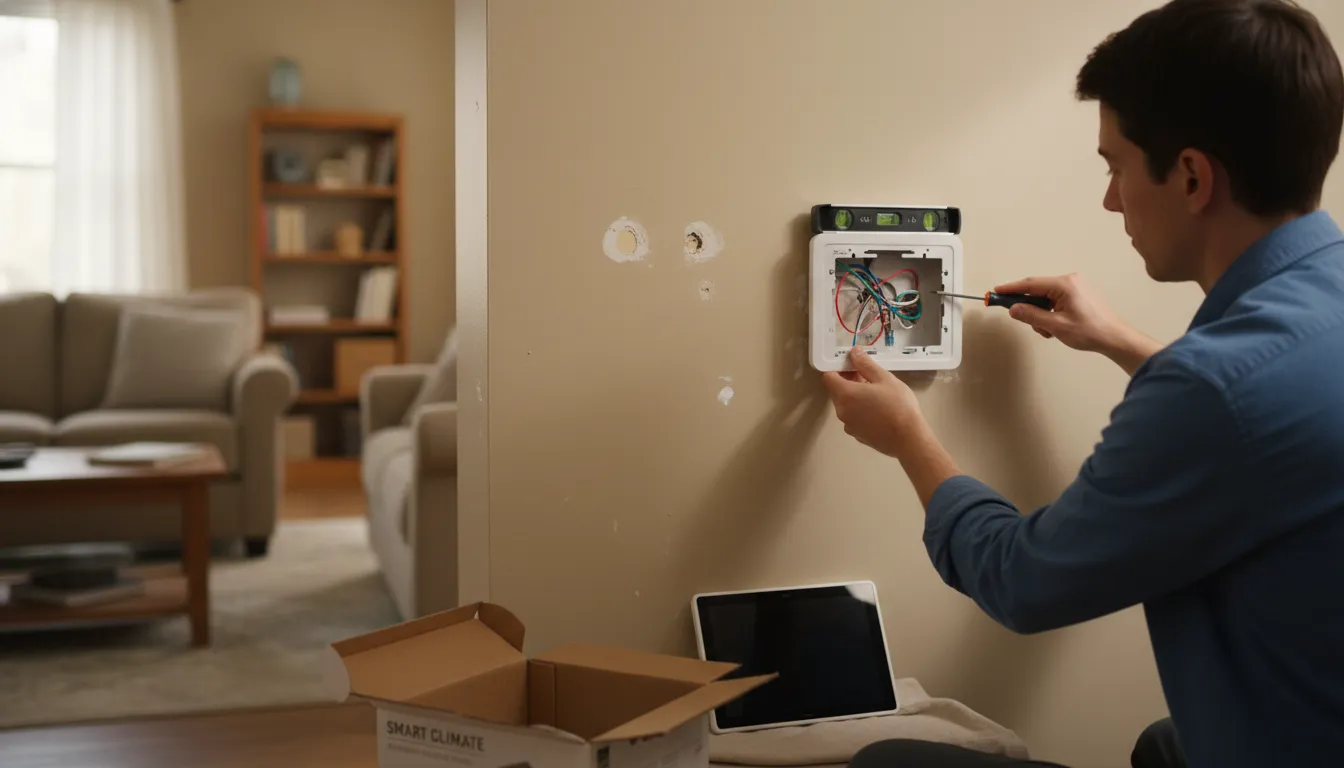
Find the Best Thermostat Installation & Repair Companies for Your Business
No obligation • Fast responses • Nationwide coverage

Why you can trust HVAC Firms
HVAC Firms is a leading United States resource for evaluating HVAC service providers. Our team researches companies, checks credentials, and reviews customer feedback to present clear, unbiased information. Listings and rankings are based on merit, and companies cannot pay to change our editorial content.
Search providers near you
Best Thermostat Installation & Repair Companies in North Carolina Ranked
A properly functioning thermostat is the command center for your home's heating and cooling system, directly impacting your comfort, energy bills, and HVAC equipment's lifespan. In North Carolina's varied climate-from humid summers to chilly winters-ensuring your thermostat is correctly installed, calibrated, and up-to-date is essential for maintaining an efficient and reliable indoor environment. This guide provides clear, practical information on thermostat types, compatibility with common North Carolina HVAC systems, optimal settings for energy savings, and what to expect from professional installation and repair services to help you make informed decisions for your home.
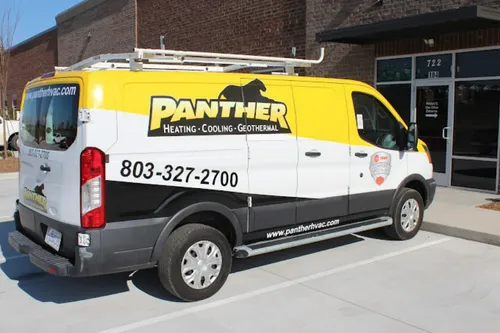
Panther Heating and Cooling
722 Corporate Blvd Suite 105, Rock Hill, SC 29730
Panther Heating and Cooling is an HVAC company based in Charlotte, NC, offering a full range of heating and cooling services including installation, repair, and maintenance of furnaces, air conditioners, heat pumps, and mini-split systems. They also provide indoor air quality solutions and smart thermostat installations. The company serves Charlotte and surrounding areas such as Rock Hill, Tega Cay, Fort Mill, Indian Land, York, Clover, Matthews, and Waxhaw. Panther Heating and Cooling emphasizes skilled, certified technicians and offers 24/7 emergency HVAC services to address urgent needs promptly.
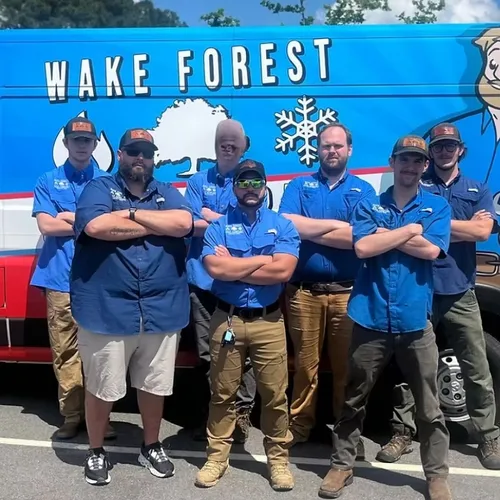
Wake Forest HVAC Company
107 E Young St, Rolesville, NC 27571
Wake Forest HVAC Company provides heating and cooling services in Raleigh, NC, and nearby areas including Rolesville, Wake Forest, and Youngsville. They offer a range of HVAC services such as air conditioning repair and installation, furnace and heat pump repair, thermostat installation, and regular maintenance tune-ups. Their preventative maintenance program includes two comprehensive visits annually to inspect and service HVAC systems, ensuring efficient operation. The company emphasizes professionalism, communication, and integrity in their work and supports their local community.
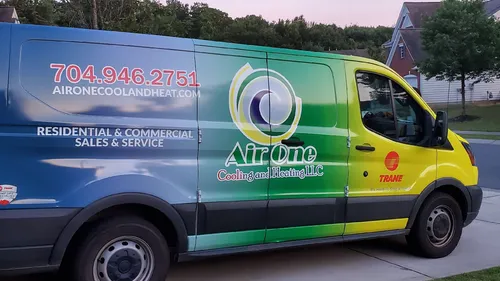
Air One Cooling & Heating, LLC
16507-A Northcross Dr #107, Huntersville, NC 28078
Air One Cooling & Heating, LLC is an HVAC company based in Charlotte, NC, providing residential and commercial heating and air conditioning services. They offer installation, replacement, maintenance, and repair for systems including air conditioners, heat pumps, furnaces, boilers, geothermal systems, and ductless mini splits. As a certified Preferred Partner of Piedmont Natural Gas and a Trane dealer, they provide expertise in indoor air quality products and emergency service available 24/7. The company is known for customized solutions and extended service agreements to maintain system efficiency.
Total Heating and Cooling
Charlotte, NC
Total Heating and Cooling is a locally owned HVAC company serving Charlotte, NC, and nearby areas. They provide a range of heating and cooling services including installation, repair, and maintenance of furnaces, air conditioners, heat pumps, and smart thermostats. The company also offers indoor air quality solutions and ductwork services. With over a decade of experience, they serve both residential and light commercial clients. Total Heating and Cooling provides 24/7 emergency HVAC repairs to ensure comfort regardless of the hour.

David & Goliath HVAC
711 Willis Rd, Dallas, NC 28034
David & Goliath HVAC is a heating and cooling company serving Charlotte, NC. They provide a range of services including AC repair, furnace repair, HVAC installation, thermostat installation, duct cleaning, and indoor air quality improvement. Their expertise includes air filter replacement and maintaining heating systems to ensure energy efficiency and comfort throughout the year. The company focuses on optimizing indoor climate control for both residential and commercial clients.
Understanding Thermostat Types
Modern thermostats have evolved far beyond simple dials. Choosing the right type depends on your lifestyle, HVAC system, and goals for comfort and efficiency.
- Manual (Non-Programmable) Thermostats: These are simple, basic units with on/off and temperature adjustment controls. They are common in older homes and require you to manually change the temperature setting whenever you want to adjust your comfort level 1. While inexpensive, they offer no automated energy-saving features.
- Programmable Thermostats: These devices allow you to set daily or weekly schedules for heating and cooling. You can program lower temperatures for when you're asleep or away, saving energy without sacrificing comfort when you're home. They require initial setup and manual adjustments if your schedule changes.
- Smart (Wi-Fi/Learning) Thermostats: The most advanced option, smart thermostats learn your habits over time and create automatic schedules. They can be controlled remotely via smartphone apps, provide detailed energy usage reports, and often integrate with other smart home systems. Features like geofencing (adjusting temperature based on your phone's location) and compatibility with voice assistants make them a powerful tool for maximizing comfort and efficiency.
Thermostat Compatibility with North Carolina HVAC Systems
Before purchasing a new thermostat, it's crucial to ensure it works with your existing heating and cooling equipment. Most homes in North Carolina use specific system types.
- Standard Ducted Systems: The vast majority of North Carolina homes use ducted central HVAC systems, such as a furnace paired with an air conditioner or a heat pump 2. These systems typically use low-voltage (24V) wiring, making them compatible with a wide range of standard thermostats.
- Heat Pumps: Heat pumps are extremely common in North Carolina's climate as they provide both heating and cooling 3. It is vital to select a thermostat specifically designed for heat pumps, as it must properly control the reversing valve (often via an 'O/B' wire) that switches the system between heating and cooling modes 4.
- Ductless Mini-Split Systems: These increasingly popular systems use individual indoor air handlers mounted on walls or ceilings. They typically come with their own dedicated remote controls or specialized thermostats and may not be compatible with standard third-party smart thermostats without additional interface modules.
- Zoned Systems: For larger homes or those with uneven temperatures, a zoned HVAC system uses multiple thermostats to control different areas (zones) separately via motorized dampers in the ductwork. This prevents over-conditioning unused spaces and can significantly improve comfort and efficiency.
Optimizing Settings for North Carolina's Climate
Using your thermostat strategically is one of the easiest ways to manage energy costs in the Tar Heel State.
- Recommended Temperature Setpoints: For optimal efficiency, the U.S. Department of Energy and Energy Star recommend setting your thermostat to approximately 78°F for cooling in summer and 68°F for heating in winter when you are at home and awake 5 6. Adjusting the temperature by 7-10 degrees for 8 hours a day (e.g., when you're at work or asleep) can save up to 10% annually on heating and cooling 7.
- The Power of Smart Thermostats: These devices are particularly effective for savings because they automate temperature setbacks based on your schedule and can make subtle adjustments to optimize HVAC runtime 8. Their energy reports also help you understand your consumption patterns.
- Avoid Constant "Hold" or "Manual" Mode: Keeping your thermostat at a single, constant temperature (e.g., 72°F year-round) forces your system to work harder and more frequently, leading to higher utility bills and more wear on equipment 9. Utilizing programmable schedules or smart features is key to real savings.
Find the perfect thermostat installation & repair companies for your needs
Get personalized recommendations and expert advice
Professional Installation & Repair: What to Expect
While some may attempt a DIY thermostat swap, professional installation ensures correct wiring, system compatibility, and optimal configuration. Here's what the process typically involves and associated costs in North Carolina.
The Installation Process: A professional technician will first verify compatibility between your new thermostat and your HVAC system. They will carefully label and transfer wires from the old unit to the new one, ensuring connections like the crucial "C-wire" (common wire) for power are correctly established for smart thermostats. For zoned systems or complex setups, they may need to install or configure zoning control panels. Finally, they will power up the system, calibrate the thermostat, connect it to your Wi-Fi if applicable, and walk you through its features.
Common Repair Scenarios: Repairs often address issues like unresponsive displays, incorrect temperature readings, or a system that won't turn on. A technician might:
- Check for and tighten loose wiring connections.
- Clean a dirty internal temperature sensor.
- Replace old batteries in non-smart models.
- Update firmware or software in a smart thermostat.
- Diagnose if the problem is actually with the thermostat or elsewhere in the HVAC system.
Cost Guide for North Carolina: Costs vary based on the device, labor, and system complexity.
- Minor Repair or Cleaning: $100 - $200 for issues like loose wires or sensor cleaning.
- Basic Programmable Thermostat Installation: $150 - $300, covering the device and professional labor 10.
- Smart Thermostat Installation: $200 - $400 is a common range. The price can increase if a new C-wire needs to be run from the HVAC equipment to the thermostat location 11 12.
- Complex or Zoned System Installation: $400 - $800+, as this may involve installing new wiring, zoning control panels, and multiple thermostats 13.
Repair vs. Replacement: Making the Right Choice
Knowing whether to fix your current thermostat or upgrade to a new one depends on several factors.
Consider Repair If:
- The issue is simple, like dead batteries, a loose wire, or a dirty sensor.
- Your thermostat is relatively new (less than 5-7 years old).
- You are satisfied with its basic features and are not seeking energy-saving schedules or smart controls.
Consider Replacement If:
- The thermostat is old, unreliable, and requires frequent repairs.
- You are upgrading your HVAC system, and the old thermostat cannot support its new capabilities.
- You want to access the energy savings, remote control, and convenience of a programmable or smart thermostat. The upgrade cost can often be offset by utility bill savings over time.
Frequently asked questions
Sources
Footnotes
-
Types of Thermostats - Constellation Energy Blog - https://blog.constellation.com/2022/06/06/thermostat-types/ ↩
-
What Is the Most Commonly Used HVAC System? - https://premiercomfortac.com/what-is-the-most-commonly-used-hvac-system/ ↩
-
Residential HVAC Services in Charlotte - Rudy Cools - https://www.rudycools.com/residential/ ↩
-
How to Know If Your Thermostat and HVAC System Are Compatible - https://environmentmasters.com/how-to-know-if-your-thermostat-and-hvac-system-are-compatible/ ↩
-
Recommended Thermostat Settings For Summer and Winter - Carrier - https://www.carrier.com/residential/en/us/homeowner-resources/hvac-basics/what-temperature-should-i-set-my-thermostat.html ↩
-
Should You Really Set Your Thermostat to 78 in the Summer? - https://www.trane.com/residential/en/resources/blog/should-you-really-set-your-thermostat-to-78-in-the-summer/ ↩
-
Smart Thermostats | ENERGY STAR - https://www.energystar.gov/products/smart_thermostats ↩
-
Comparing 8 Common Types of HVAC Systems - BigRentz - https://www.bigrentz.com/blog/types-of-hvac-systems ↩
-
Home Temperature Constant Costs - J.A. Bertsch Heating & Cooling - https://jabertsch.com/blog/home-temperature-constant-costs/ ↩
-
Choosing Thermostats and Types - HVAC Tips - https://www.stramowski.com/hvac-tips/choosing-thermostats-different-types/ ↩
-
Best Air Conditioner Brands of 2025: Costs, SEER Ratings, and More! - https://modernize.com/hvac/best-air-conditioner-brands ↩
-
Smart Thermostat Installation Guide - https://www.hvac.com/expert-advice/smart-thermostat-installation-guide/ ↩
-
Thermostat repair and replacement in North Carolina during ... - https://www.plumbingserviceco.com/blog/2024/august/thermostat-repair-and-replacement-in-north-carol/ ↩