Find the Best Mini-Split Installers for Your Business
No obligation • Fast responses • Nationwide coverage

Why you can trust HVAC Firms
HVAC Firms is a leading United States resource for evaluating HVAC service providers. Our team researches companies, checks credentials, and reviews customer feedback to present clear, unbiased information. Listings and rankings are based on merit, and companies cannot pay to change our editorial content.
Search providers near you
Top Mini-Split Installers in Everett, Washington Ranked
Ductless mini-split systems provide a modern, efficient solution for heating and cooling homes and businesses in Everett. These systems are ideal for creating zoned comfort, allowing you to control the temperature in individual rooms or areas independently. This guide will help you understand the process, benefits, and key considerations for installing a ductless system, connecting you with the information needed to find qualified local professionals for your project.
Energy Saver Solutions Inc - HVAC & Insulation W Seattle
4402 40th Ave SW, Seattle, WA 98116
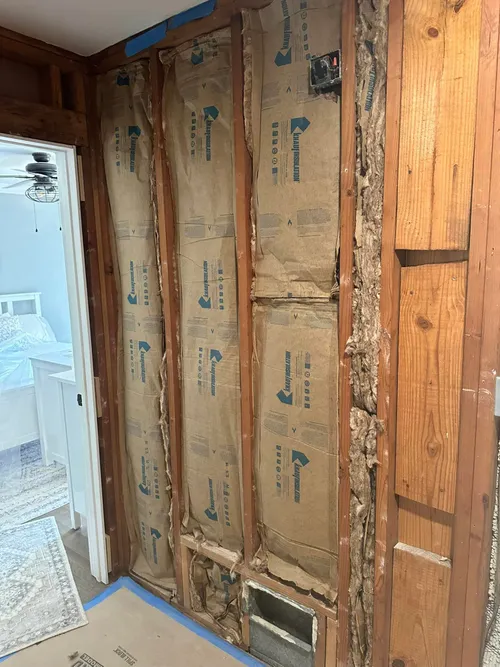
Energy Saver Solutions Inc - HVAC & Insulation W Seattle provides a range of HVAC services in Seattle, WA. They specialize in air conditioning repair, HVAC installation, boiler and mini split installation, as well as indoor air quality services. The company offers expert attic and crawl space insulation to improve energy efficiency and comfort. With over 30 years of industry experience, Energy Saver Solutions also performs carbon monoxide checks to ensure safety. They provide 24/7 emergency service and are available year-round to support heating and cooling needs in all weather conditions.
Progressive Comfort Solutions
129 NW 85th St Ste B, Seattle, WA 98117
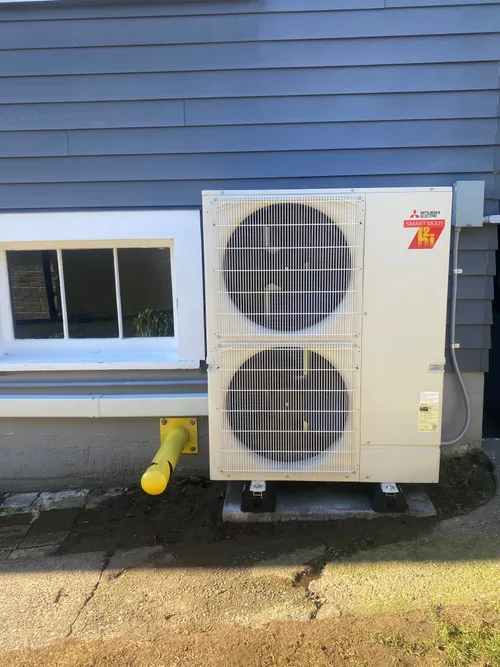
Progressive Comfort Solutions is a Seattle-based contractor specializing in the design and installation of energy-efficient heat pump systems. Serving Seattle, WA, they focus on Mitsubishi Electric heat pump products, including ductless mini-splits and ducted systems, tailored for residential and commercial properties. Established in 2010, the company operates with a fully in-house technical team and offers personalized system designs to improve comfort and reduce energy use. They provide flexible scheduling and assist customers with financing options and available rebates.

All Climate Heating & Air Conditioning
22313 70th Ave W Suite L7C, Mountlake Terrace, WA 98043
All Climate Heating & Air Conditioning is a family-owned HVAC company serving Seattle, WA, and the Greater Eastside areas since 1993. They provide a full range of heating and cooling services, including installation, repair, maintenance, and duct cleaning. As a Bryant authorized dealer, they offer energy-efficient heating and cooling equipment and employ NATE-certified technicians to ensure expert service. The company emphasizes careful workmanship and adherence to all codes and standards, with a lifetime workmanship warranty and extended factory warranties available on most equipment.
Energy Saver Solutions Inc - HVAC & Insulation Redmond WA
6917 132nd Pl NE, Redmond, WA 98052
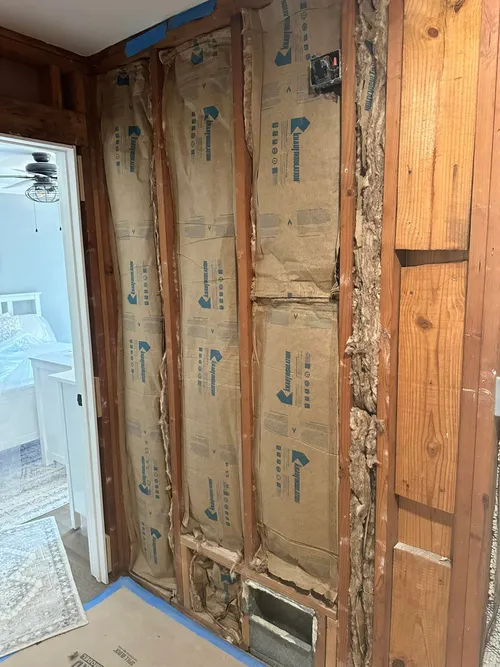
Energy Saver Solutions Inc - HVAC & Insulation Redmond WA provides a range of HVAC services in Seattle, WA, including air conditioning repair, boiler and mini split installation, indoor air quality services, and insulation solutions for attics and crawl spaces. The company specializes in energy-saving strategies and offers carbon monoxide checks to ensure safety. With over 30 years of industry experience, they serve both residential and commercial clients. Their technicians are available 24/7, including holidays, to address urgent heating and cooling needs.
Eagle Pipe Heating & Air
5634 NE Minder Rd Suite C-102, Poulsbo, WA 98370
Eagle Pipe Heating & Air is an HVAC and plumbing company serving Seattle, WA, and the broader Pacific Northwest. They offer a range of services including installation, repair, and maintenance of heating and cooling systems such as furnaces, air conditioners, heat pumps, boilers, and ductless mini splits. The company also provides indoor air quality solutions, gas piping, and water heater services, including tankless and heat pump water heaters. Known for custom duct design and oil-to-gas conversions, Eagle Pipe Heating & Air focuses on energy-efficient and safe home comfort solutions. Their maintenance plan includes a 37-point checklist to help extend equipment life and reduce repairs. The company has established a strong presence in the region with a commitment to customer satisfaction and a comprehensive service offering.
Understanding Ductless Mini-Split Systems
A ductless mini-split, often simply called a ductless system, consists of an outdoor condenser unit connected to one or more indoor air-handling units. Unlike traditional central HVAC that uses ductwork, these systems use a small conduit to carry refrigerant lines, power, and a condensate drain line between units. This design makes them perfect for homes without existing ducts, room additions, or for supplementing heating and cooling in specific areas like garages or sunrooms. The primary advantage is zoning; you can heat or cool only the rooms you're using, which can lead to significant energy savings compared to running a whole-house system.
Common Applications in Everett Homes
Ductless installations are versatile and solve specific climate control challenges common in the Everett area.
- Single-Room Solutions: This is the most straightforward application. A single-zone system is perfect for a new addition, a finished garage, a converted attic, or an older home that never had ductwork installed. It provides independent, efficient heating and cooling for that one space without the need to extend your existing HVAC system.
- Whole-Home & Multi-Zone Systems: For complete home comfort, a multi-zone ductless setup can be installed. One outdoor condenser can connect to multiple indoor units (often called "heads"), allowing you to control the temperature in bedrooms, living areas, and kitchens separately. This provides tailored comfort and can be more efficient than a single central system, especially if household schedules vary.
Types of Indoor Units
Choosing the right style of indoor unit is crucial for both performance and aesthetics. The main types include:
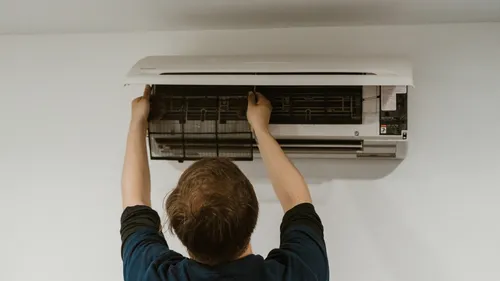
- Wall-Mounted Units: This is the most common and cost-effective type. They are mounted high on an interior wall, are relatively unobtrusive, and provide excellent airflow distribution. They are suitable for most rooms, including bedrooms and living areas 1.
- Ceiling Cassette Units: These units are recessed into the ceiling, with only a sleek grille visible. They are ideal for central areas like great rooms or hallways where a wall-mounted unit might be visually obtrusive. They distribute air in four directions for even coverage.
- Floor-Mounted or Low-Wall Units: Designed for spaces where wall or ceiling mounting isn't feasible, such as rooms with extensive glass walls, limited wall space, or high ceilings. They are installed near the floor and blow air upward, making them a good solution for unique architectural features.
Key Installation Considerations
Professional installation is critical for the performance, efficiency, and longevity of your mini-split system. Key technical steps and considerations include:
- Unit Placement and Clearance: Both indoor and outdoor units require specific clearances for proper airflow and service access. The outdoor condenser must be placed on a stable, level concrete pad or a wall-mounted bracket, away from debris and with adequate space around it as per manufacturer specifications. Indoor heads must be placed where airflow is not obstructed by furniture or drapes.
- Line Set Installation: A small hole (typically about 3 inches in diameter) is drilled through the exterior wall to run the refrigerant lines, electrical wiring, and condensate drain line from the outdoor unit to the indoor unit(s). This line set must be properly sealed and insulated.
- Drainage: As the indoor unit cools, it removes humidity from the air, creating condensate water. This water must be drained away, usually via a gravity-fed drain line. In situations where gravity drainage isn't possible, a condensate pump will be required, which adds to the installation complexity and cost 2.
- Electrical Requirements: Ductless systems require a dedicated electrical circuit. A single-zone system may only need a standard 110/120V circuit, but larger multi-zone systems often require a 220/240V circuit. If your home's electrical panel is near capacity, installing a new system may necessitate a subpanel or panel upgrade, which is a significant factor in the overall project cost 3.
Find the perfect mini-split installers for your needs
Get personalized recommendations and expert advice
Cost Factors for Mini-Split Installation
The cost of a ductless mini-split installation in Everett varies widely based on the system's scope and specifications. It's important to view this as an investment in long-term comfort and efficiency.
- System Size and Zones: The number of indoor units (zones) is the primary cost driver.
- Single-Zone System (1 room): $3,000 - $8,000. The higher end of this range typically includes premium brands or high-efficiency models 4.
- Multi-Zone System (2-3 zones): $5,500 - $12,000+. This is a common range for whole-home solutions in smaller homes or for conditioning key living areas 5 6.
- Large Multi-Zone System (4+ zones): $8,000 - $15,000+. These systems are designed for larger homes where each major room or zone receives its own indoor unit 7 8.
- Brand and Efficiency: Brands like Mitsubishi and Fujitsu are often considered premium and command a higher price for their reliability, features, and efficiency ratings. The SEER2 (Seasonal Energy Efficiency Ratio) rating indicates cooling efficiency; a higher SEER2 rating means lower operating costs but a higher upfront equipment cost.
- Installation Complexity: Costs increase with the complexity of the job. Factors include long refrigerant line runs, the need for a condensate pump, significant carpentry work to install ceiling cassettes, or upgraded electrical work like installing a new subpanel 9 10.
The Professional Installation Process
A proper ductless mini-split installation follows a meticulous sequence to ensure safety, efficiency, and reliability.
- Site Evaluation and Planning: A technician will assess your home to determine the optimal placement for indoor and outdoor units, check electrical capacity, and plan the routing for lines and drains.
- Mounting the Units: The outdoor condenser is secured on its pad or bracket. The indoor head(s) are mounted on the wall or ceiling according to the planned layout.
- Drilling and Running Lines: A hole is carefully drilled for the line set conduit. The refrigerant lines, drain line, and communication/power cables are run between the units.
- Making Electrical Connections: The system is connected to your home's electrical supply, either to an existing dedicated circuit or a new one installed for this purpose.
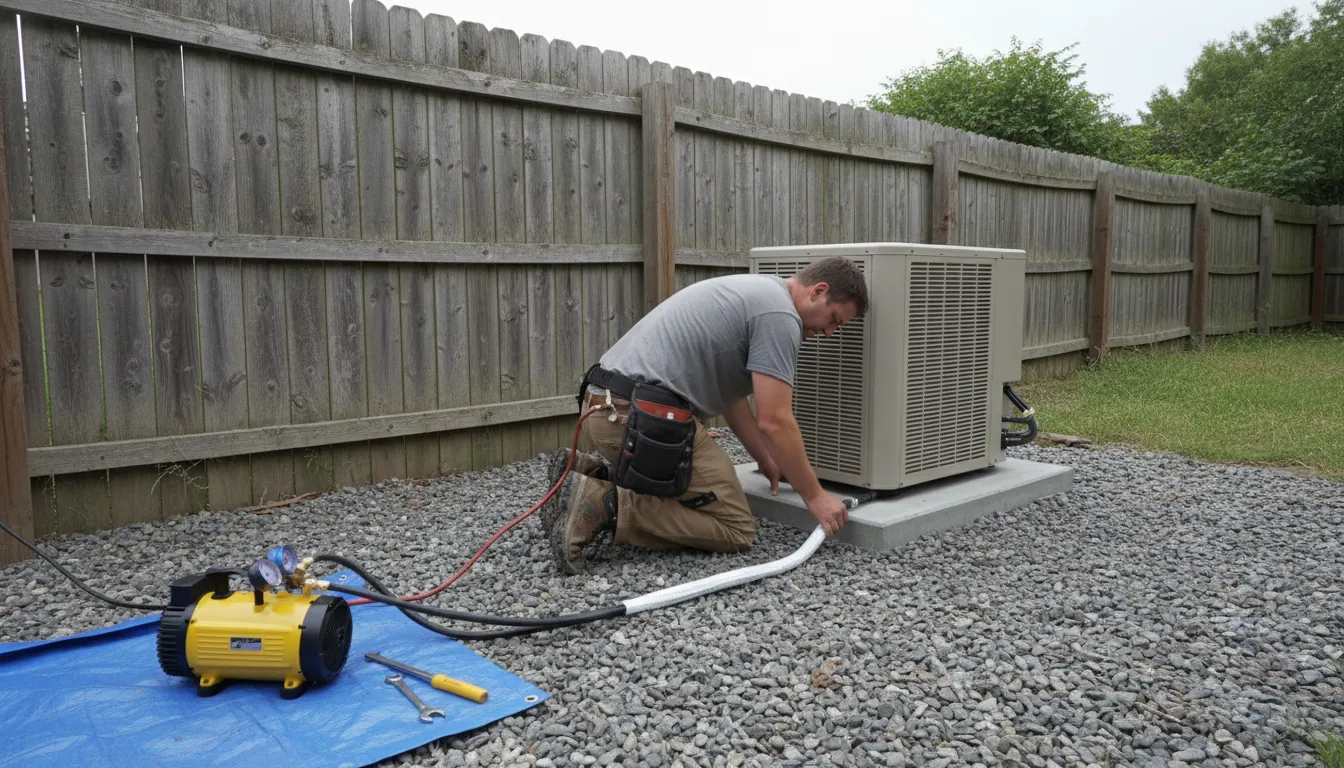
- Evacuation and Charging: This is a critical step. A vacuum pump is used to remove all air and moisture from the refrigerant lines before the system is charged with refrigerant. This ensures peak efficiency and prevents damage.
- System Testing and Commissioning: The installer will test the system in both heating and cooling modes, check for leaks, verify drainage, calibrate the thermostats, and demonstrate operation.
Benefits for Everett Residents
Investing in a ductless mini-split installation offers several compelling benefits tailored to the local climate and housing stock.
- Energy Efficiency and Zoning: By allowing you to condition only occupied spaces, ductless systems avoid the energy waste associated with heating or cooling an entire home, which can lead to lower utility bills.
- Ideal for Homes Without Ducts: For older Everett homes, sunrooms, garage conversions, or attic apartments where extending ductwork is impractical or prohibitively expensive, a ductless system provides a perfect climate control solution.
- Supplemental Heating and Cooling: If you have a room that's always too hot or too cold, a single-zone mini-split can supplement your existing system, solving comfort issues without replacing the entire HVAC system.
- Quiet Operation and Improved Air Quality: Modern ductless systems operate very quietly. Since there are no ducts, there's no place for dust, allergens, and mold to accumulate and circulate throughout your home, which can benefit those with allergies 11.
Frequently asked questions
Sources
Footnotes
-
Everett, WA Ductless Mini-Split Installation | CM Heating - https://cmheating.com/everett/ductless-mini-split-installation/ ↩
-
Whole House Ductless Mini Split Walk Through - https://www.youtube.com/watch?v=lDwutt_ywsA&t=2 ↩
-
Mini-Split Installation in Everett & Seattle Area | Better Air NW - https://www.betterairnw.com/mini-split-installation ↩
-
How Much Does It Cost to Install a Mini Split System? - https://elementairco.com/how-much-does-it-cost-to-install-a-mini-split-system/ ↩
-
Ductless Mini-Splits: A Complete Guide To Cost, Benefits, And ... - https://petermanhvac.com/about-us/blog/mini-splits-complete-guide/ ↩
-
How much to install mini split? - Mr. Good Guy HVAC - https://mrgoodguyhvac.com/how-much-to-install-mini-split/ ↩
-
Ductless Mini-Split Installation Cost in 2025: Full Breakdown - https://osborneheatingncooling.com/ductless-mini-split-installation-cost/ ↩
-
How Much Does it Cost to Install a Ductless Mini Split? - https://ballardnaturalgas.com/cost-of-a-ductless-mini-split/ ↩
-
Ductless Mini-Splits: A Comprehensive Cost Breakdown - https://www.myfivestarhomeservices.com/ductless-mini-splits-a-comprehensive-cost-breakdown/ ↩
-
Ductless Mini Split Setup: An Ultimate Guide - Airflow Heating & Air - https://www.goairflow.com/blog/ductless-mini-split-installation/ ↩
-
Ductless mini-split installation: Cool 2025 Guide - Southern Air - https://www.southern-air.com/blog/ductless-mini-split-installation ↩