Find the Best Mini-Split Installers for Your Business
No obligation • Fast responses • Nationwide coverage

Why you can trust HVAC Firms
HVAC Firms is a leading United States resource for evaluating HVAC service providers. Our team researches companies, checks credentials, and reviews customer feedback to present clear, unbiased information. Listings and rankings are based on merit, and companies cannot pay to change our editorial content.
Search providers near you
Top Mini-Split Installers in Franklin, Tennessee Ranked
A ductless mini-split system is a versatile heating and cooling solution that provides zoned comfort for homes and businesses without the need for extensive ductwork. This technology is especially valuable for older homes in Franklin, room additions, sunrooms, or any space where extending traditional HVAC ducts is impractical or too costly. Finding a qualified local specialist for your ductless installation is crucial, as professional expertise ensures your system operates efficiently, complies with local codes, and maintains its manufacturer warranty. This guide will help you understand the process, options, and key considerations for installing a mini-split in Franklin.
True Blue Heating And Cooling
2509 Cayer Ln suite b, Columbia, TN 38401
True Blue Heating And Cooling is an HVAC company serving Columbia, TN, offering a wide range of heating and cooling services. They specialize in HVAC repair, replacement, and installation, including air conditioning, furnaces, heat pumps, ductless systems, and indoor air quality solutions. Their licensed contractors design and install systems suited to the local climate, ensuring energy efficiency and comfort throughout the year. True Blue Heating And Cooling also provides emergency HVAC repair and maintenance services to keep systems running reliably in extreme weather conditions.
PrimeTime Heat & Air
228 Wellington Way, Smyrna, TN 37167
PrimeTime Heat & Air is a locally owned HVAC company serving Nashville, TN, and surrounding areas. They provide a full range of heating and cooling services including repair, installation, and maintenance for air conditioners, furnaces, heat pumps, ductless systems, and indoor air quality solutions. The company is EPA certified, licensed, bonded, and insured, ensuring professional and compliant service. With expertise in ductwork, zoning systems, and air purification technologies like UV lights and air scrubbers, they address various comfort and air quality needs. PrimeTime Heat & Air emphasizes building lasting customer relationships and offers flexible appointment availability to meet client needs.

C & M Heating & Cooling
106 Beasley Dr, Franklin, TN 37064
C & M Heating & Cooling is an HVAC company serving Nashville, TN, and the surrounding Middle Tennessee area. They provide a range of services including air conditioning, furnace, heat pump, and mini split installation and repair, as well as HVAC tune-ups, duct cleaning, and thermostat installation. Established in 1976, C & M Heating & Cooling has over four decades of experience in the industry. Their team is known for thorough diagnostics and repairs, including parts replacement and system maintenance, with a focus on honest communication and customer care.
Premier Heating & Air
78 Fesslers Ln, Nashville, TN 37210
Premier Heating & Air is an HVAC company based in Nashville, TN, offering a range of services including air conditioning, heating, heat pump, and mini split installation and repair. They also provide duct cleaning, indoor air quality solutions, and home performance evaluations. The company serves both residential and commercial clients, with capabilities such as installing ductless systems, central air conditioners, and modular rooftop heat pump systems. With over 20 years in business, Premier Heating & Air employs EPA-certified technicians and maintains an A+ rating with the Better Business Bureau.
Center Air Solutions LLC
5959 Foothills Dr, Murfreesboro, TN 37129
Center Air Solutions LLC is an HVAC company based in Nashville, TN, offering a variety of heating and cooling services. Their work includes air conditioning and furnace repair, installation of new HVAC units and ductwork, mini split installation, and preventative maintenance. The company has over 15 years of experience in the industry and provides 24/7 availability for service calls.
What is a Ductless Mini-Split System?
Often called a ductless heat pump or simply a mini-split, this system consists of two main components: an outdoor condenser/compressor unit and one or more indoor air-handling units. Refrigerant lines and electrical wiring connect the outdoor and indoor units through a small, inconspicuous hole in the wall, eliminating the need for large, invasive ductwork. This setup allows for "zoned" climate control, meaning you can heat or cool individual rooms or areas independently of others, leading to significant energy savings by avoiding conditioning unoccupied spaces.
These systems are an ideal ductless solution for many Franklin homes, particularly historic properties, converted attics or basements, and standalone structures like garages or workshops. They provide both heating and cooling from a single, quiet system, making them a comprehensive year-round comfort solution.
The Professional Installation Process
While DIY kits exist, professional installation of a ductless mini-split is strongly recommended and often required to validate the equipment warranty. A certified technician handles the complex and regulated aspects of the job, ensuring safety, efficiency, and compliance.
The standard installation process involves several key steps:
- Assessment and Planning: A technician evaluates your space to determine the optimal location for indoor and outdoor units, calculates the correct system capacity (BTUs), and plans the refrigerant line path.
- Mounting the Indoor Unit: The indoor air handler is securely mounted on an interior wall, ceiling (for cassette units), or near the floor, ensuring it has proper clearance for airflow.
- Drilling and Line Set Installation: A small hole (typically about 3 inches) is drilled through the exterior wall to connect the indoor and outdoor units. The copper refrigerant lines, condensate drain line, and electrical wiring are run through a protective conduit called a line hide.
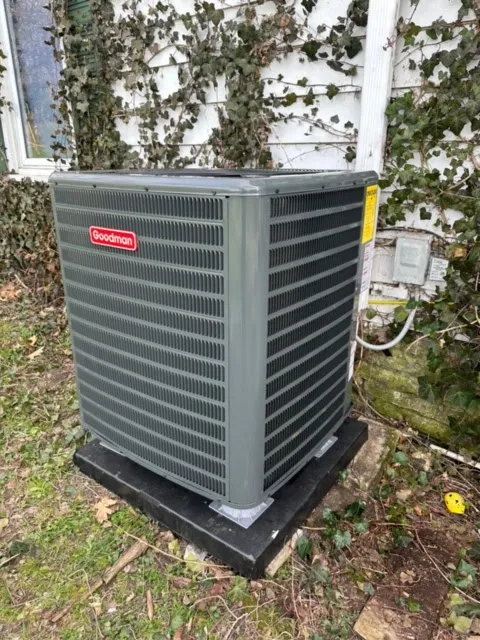
- Placing the Outdoor Condenser: The outdoor unit is placed on a stable, level surface-such as a concrete pad or specialized brackets-with ample clearance (usually 1-2 feet) on all sides for airflow and service access 1.
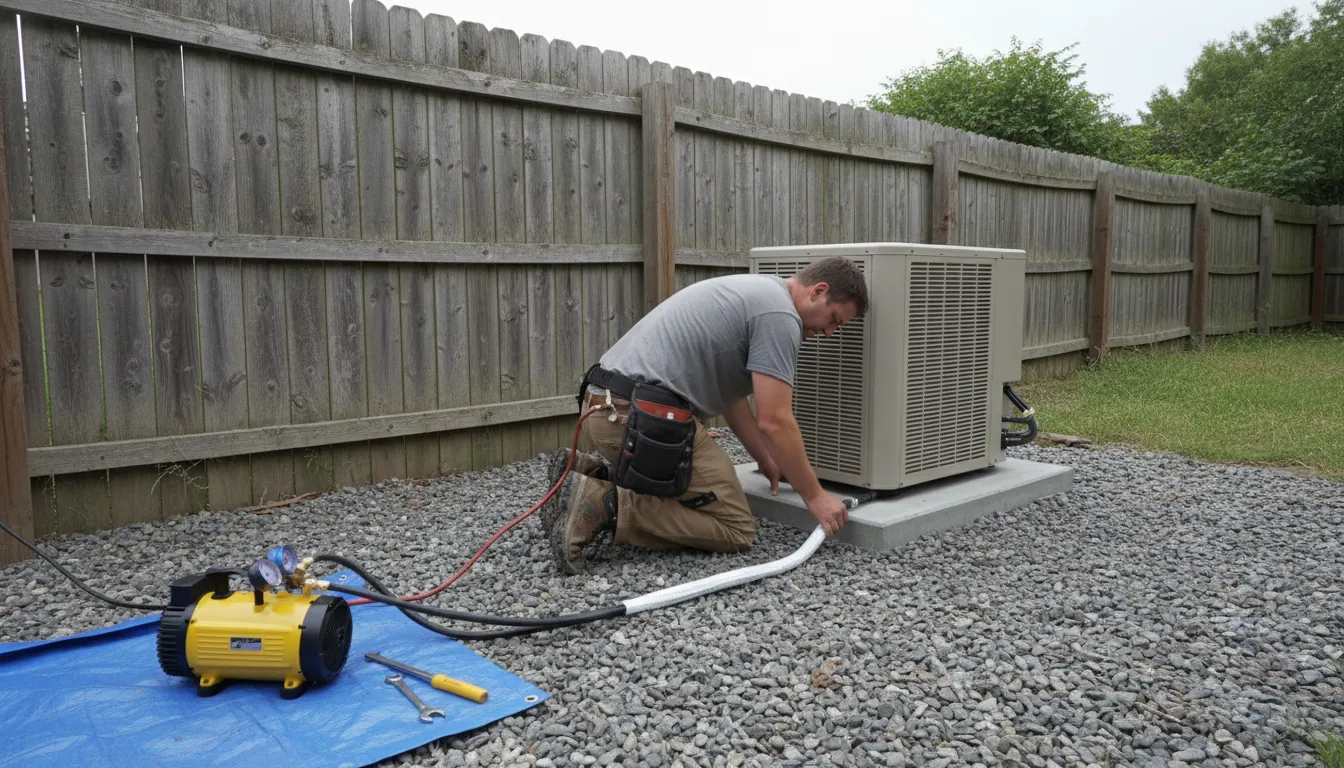
- Making Connections and Evacuation: The technician connects the refrigerant lines, performs a critical vacuum evacuation process to remove moisture and air from the lines, and then charges the system with refrigerant.
- Electrical and Final Testing: The system is connected to your home's electrical panel, which may require an upgrade or new circuit. Finally, the system is tested across all modes to ensure proper operation, efficiency, and that the condensate drains correctly 2.
This entire process typically requires permits from local Franklin authorities, which a professional installer will secure on your behalf.
Choosing the Right System Configuration: Zones and Unit Types
One of the biggest advantages of a ductless system is its flexibility. You can choose a configuration that matches your specific comfort needs and budget.
Single-Zone Systems: This is the most basic setup, consisting of one outdoor condenser connected to one indoor air handler. It's perfect for conditioning a single room, such as a new home office, a nursery, or a sunroom 3.
Multi-Zone Systems: A single outdoor unit can be connected to multiple indoor air handlers (typically 2 to 5). This allows you to create customized climate zones throughout your home-for example, keeping bedrooms cool at night while maintaining a different temperature in the living area. Multi-zone systems offer greater whole-home comfort efficiency than multiple single-zone units 4.
Whole-Home Systems: For homes without any existing ductwork, a comprehensive multi-zone system can be designed to cover the entire house. This involves strategically placing indoor units in key living areas to provide complete, zoned comfort, effectively replacing a traditional central HVAC system 5.
Indoor Unit Styles:
- Wall-Mounted: The most common and cost-effective type, installed high on a wall for optimal air circulation 6.
- Floor-Mounted: Installed low on a wall, often used in rooms with high ceilings, under windows, or where wall space is limited.
- Ceiling Cassette: Recessed into the ceiling for a discreet, flush appearance. Installation is more complex but offers a minimal visual impact 7.
Find the perfect mini-split installers for your needs
Get personalized recommendations and expert advice
Understanding Installation Costs in Franklin
The cost for ductless mini-split installation in Franklin can vary widely based on the system's complexity, size, and efficiency. The primary cost driver is the number of zones.
- Single-Zone System: For one indoor unit cooling/heating one room, homeowners can expect costs generally ranging from $2,000 to $5,000+ 8.
- Multi-Zone System (2-3 Zones): Installing a system with two or three indoor handlers typically falls in the range of $5,500 to $8,500+ 9 10.
- Whole-Home or 4+ Zone System: For comprehensive coverage of a larger home, costs can range from $8,000 to $15,000+, with complex projects reaching $20,000 or more 11 12.
Several factors influence these price ranges:
- Equipment Efficiency: Systems with higher SEER2 (Seasonal Energy Efficiency Ratio) ratings for cooling and HSPF (Heating Seasonal Performance Factor) for heating cost more upfront but offer lower long-term operating costs.
- Labor and Complexity: Longer refrigerant line runs, difficult wall penetrations (like stone or brick), and the need for ceiling cassette installations increase labor time and cost.
- Electrical Work: Many installations require a new dedicated electrical circuit. If your home's electrical panel is full or outdated, a panel upgrade will add significant cost.
- Additional Components: The need for a concrete pad or specialty brackets for the outdoor unit, extensive line hide conduit for aesthetics, or Wi-Fi thermostats for smart control will add to the total.
Key Considerations for Franklin Homeowners
Before moving forward with a ductless mini-split installation, keep these local factors in mind:
Permits and Codes: Franklin and Sussex County have specific building and electrical codes that must be followed. A professional installer will manage the permit process, ensuring your installation is legal and safe 13.
Winter Performance: Modern ductless heat pumps are highly effective at heating, even in cold New Jersey winters. However, it's important to select a model with a high HSPF rating and a low-temperature operating capability to ensure efficient heat production on the coldest Franklin days.
Existing Heating Systems: Ductless systems are excellent as primary heating/cooling for homes without ducts or as supplemental systems. Many homeowners use them to efficiently condition new additions while keeping their existing furnace or boiler for the main house.
Maintenance: Like any HVAC system, ductless mini-splits require regular maintenance. This primarily involves cleaning the filters in the indoor units monthly during peak seasons and ensuring the outdoor condenser coil is free of leaves and debris. An annual professional check-up is also recommended.
Frequently asked questions
Sources
Footnotes
-
Is a Ductless Mini-Split Installation a DIY Project A Complete Guide - https://www.heating-ac.com/blog/is-a-ductless-mini-split-installation-a-diy-project-a-complete-guide ↩
-
Ductless Mini Split Setup: An Ultimate Guide - Airflow Heating & Air - https://www.goairflow.com/blog/ductless-mini-split-installation/ ↩
-
Ductless mini-split installation: Cool 2025 Guide - https://www.southern-air.com/blog/ductless-mini-split-installation ↩
-
A comprehensive guide to Mini Split System Cost - https://alwaysonhvac.com/a-comprehensive-guide-to-mini-split-system-cost/ ↩
-
Ductless Mini Split Installation | One Hour® of South Jersey - https://www.onehourheatandair.com/south-jersey/services/air-conditioning/ductless-mini-split-installation/ ↩
-
How Much Does a Mini-Split Installation Cost? - Taskrabbit Blog - https://www.taskrabbit.com/blog/mini-split-installation-cost/ ↩
-
Ductless Mini-Splits: A Comprehensive Cost Breakdown - https://www.myfivestarhomeservices.com/ductless-mini-splits-a-comprehensive-cost-breakdown/ ↩
-
Ductless Mini Split Installation & Repair Services - Air Group - https://airgroupllc.com/ductless-mini-split/ ↩
-
Premier Ductless Mini Split Systems Installation in Lyndhurst, NJ 07071 - https://www.richaircomfort.com/service-area/ductless-mini-split-in-lyndhurst-nj-07071/ ↩
-
Average Cost of Ductless Heating and Cooling Installation in NJ - https://kriseservices.com/cost-of-ductless-cooling-installation-nj/ ↩
-
Ductless Mini-Split Installation Cost in 2025: Full Breakdown - https://osborneheatingncooling.com/ductless-mini-split-installation-cost/ ↩
-
Understanding Mini Split Installation Costs A Complete Guide - https://armusmech.net/understanding-mini-split-installation-costs-a-complete-guide/ ↩
-
Ductless mini-split installation: Cool 2025 Guide - Southern Air - https://www.southern-air.com/blog/ductless-mini-split-installation ↩