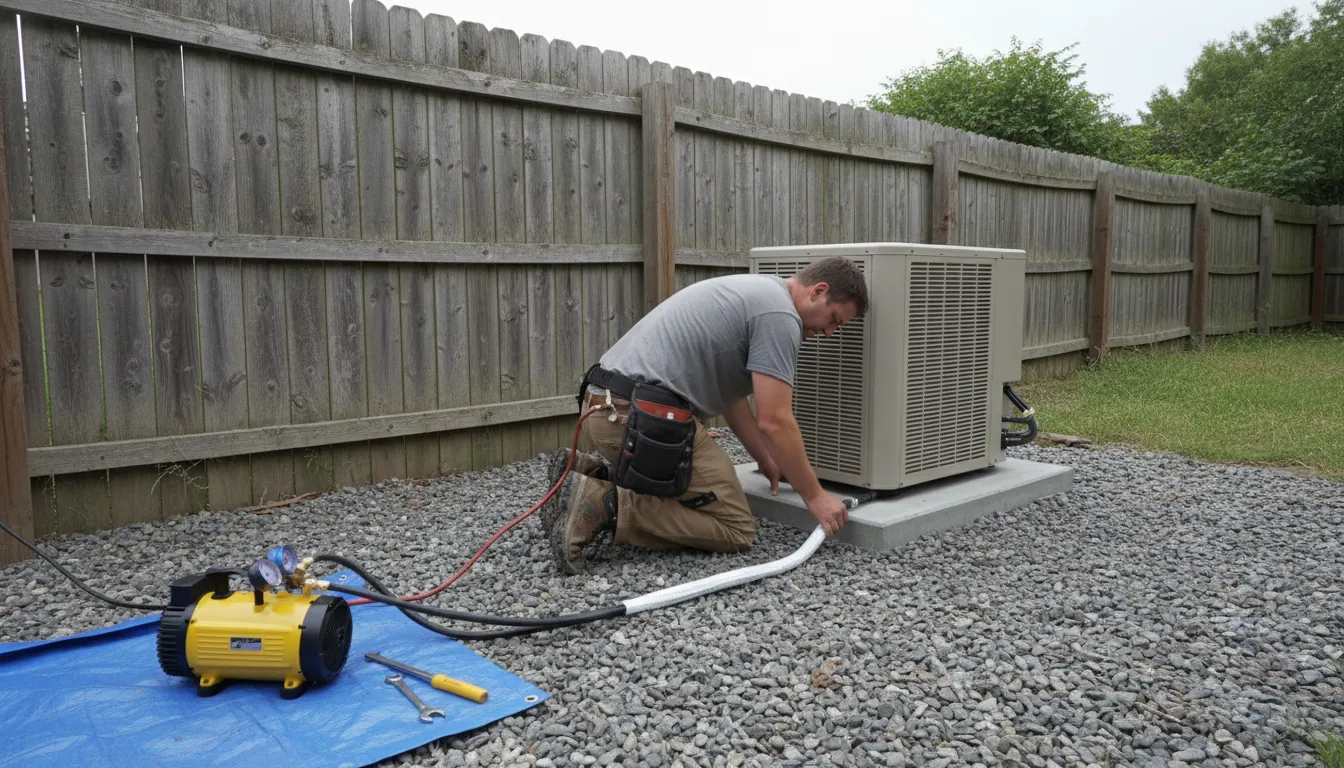
Find the Best Mini-Split Installers for Your Business
No obligation • Fast responses • Nationwide coverage

Why you can trust HVAC Firms
HVAC Firms is a leading United States resource for evaluating HVAC service providers. Our team researches companies, checks credentials, and reviews customer feedback to present clear, unbiased information. Listings and rankings are based on merit, and companies cannot pay to change our editorial content.
Search providers near you
Top Mini-Split Installers in Providence, Rhode Island Ranked
A ductless mini-split system is a versatile and efficient solution for heating and cooling homes and businesses, especially in areas without existing ductwork. These systems provide zoned comfort, allowing you to control the temperature in individual rooms or areas, which can lead to significant energy savings. For Providence residents considering an upgrade or addition to their climate control, understanding the options, benefits, and local considerations for ductless AC and heat pump installation is key to making an informed decision. This guide will help you navigate the process of finding qualified local professionals for your project.
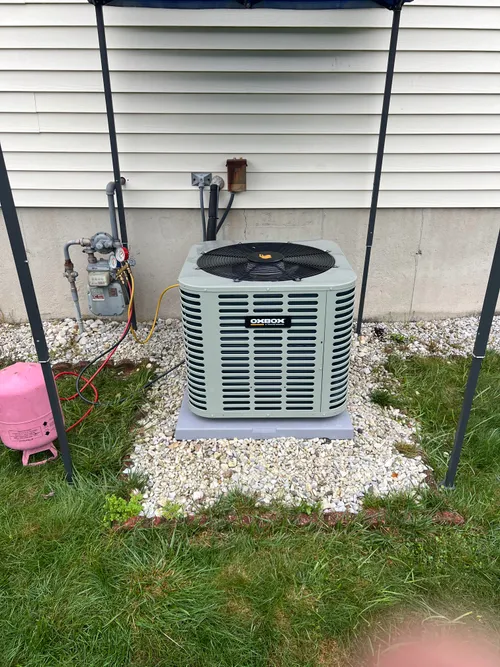
Accurate LLC
5 Millhouse Ave, Randolph, MA 02368
Accurate LLC is a veteran-owned HVAC contractor based in Boston, MA, specializing in residential and commercial installation services. Since 2004, they have provided installation of HVAC systems, gas furnaces, mini splits, and heat pumps. The company offers 24/7 emergency services to address urgent HVAC needs promptly. Accurate LLC is committed to energy efficiency and sustainable practices as a member of Northeast Energy Efficiency Partnerships (NEEP).
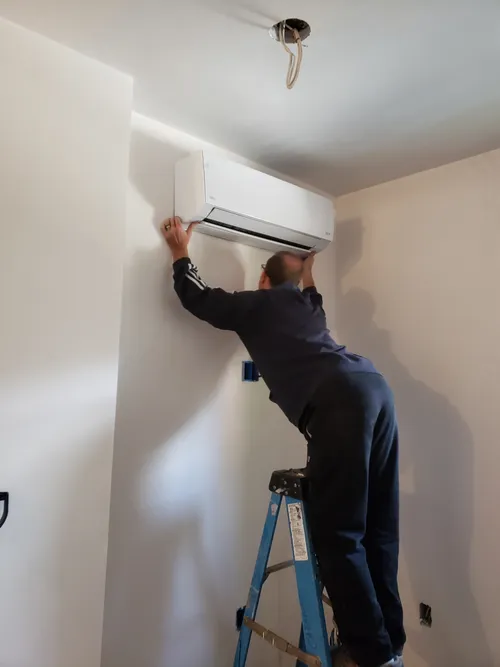
Girvan Mechanical
Boston, MA
Girvan Mechanical is an HVAC company based in Boston, MA, offering a full range of heating and cooling services. They specialize in the installation, repair, and maintenance of furnaces, boilers, heat pumps, air conditioners, and ductless mini-split systems. The company also provides duct cleaning and indoor air quality services, including fog systems that eliminate mold, allergens, and mildew spores in ductwork. Girvan Mechanical serves both residential and commercial customers with expertise in complete HVAC system installations and preventative maintenance.
Understanding Ductless Mini-Split Systems
A ductless mini-split system consists of two main components: an outdoor condenser/compressor unit and one or more indoor air handlers. These are connected by a small conduit that houses refrigerant lines, power cables, and a condensate drain line, typically run through a small, three-inch hole in an exterior wall 1 2. This design eliminates the need for extensive, invasive ductwork, making it an ideal choice for older Providence homes with plaster walls, room additions, or spaces where extending central air is impractical or too costly.
The primary benefit is zoned control. Instead of cooling or heating your entire home to one temperature, you can set different temperatures for different zones-like keeping the living room comfortable during the day and the bedrooms cooler at night. This targeted approach avoids wasting energy on unoccupied spaces, which is a major advantage for energy-conscious homeowners. Furthermore, modern ductless systems are exceptionally quiet and boast high efficiency ratings (SEER2 for cooling, HSPF for heating), which directly translates to lower utility bills 3.
Ideal Applications for Providence Homes
Ductless technology shines in specific scenarios common in the Providence area. Its flexibility makes it a perfect fit for the city's diverse housing stock.
- Room Additions and Renovations: Adding a sunroom, finishing a basement, or converting an attic? Extending existing ductwork can be complex and expensive. A mini-split provides a dedicated, efficient climate control solution for the new space without impacting the rest of your home's system.
- Supplemental Heating and Cooling: Does your master bedroom get too hot in summer or a home office stay chilly in winter? A single-zone mini-split can supplement your central system, providing precise comfort where you need it most, improving overall home comfort without replacing your entire HVAC system.
- Whole-Home Solutions: For homes without any existing ductwork-such as many historic properties, converted multi-families, or radiant-heat homes-a multi-zone ductless system can serve as the primary heating and cooling system. Multiple indoor units connected to one or more outdoor condensers can efficiently manage the climate throughout the entire house.
Types of Mini-Split Systems
Choosing the right system configuration is crucial for meeting your comfort needs and budget.
- Single-Zone Systems: This is the most common and affordable entry point. It involves one outdoor unit connected to one indoor unit, perfect for conditioning a single room, apartment, or addition. It's a straightforward solution for targeted comfort.
- Multi-Zone Systems: A single outdoor condenser can be connected to multiple indoor air handlers (typically 2 to 5). This allows you to independently control different rooms or "zones" from one powerful outdoor unit. Multi-zone systems offer greater whole-home coverage and flexibility but come at a higher initial cost than single-zone setups.
Indoor Unit Styles and Placement
The indoor air handler, often called the "head," comes in several styles to suit different room layouts and aesthetic preferences.
- Wall-Mounted Units: The most common and cost-effective type. They are installed high on an exterior wall, providing excellent airflow distribution. This is the standard choice for most residential rooms 4 5.
- Ceiling Cassette Units: These are recessed into the ceiling, with only a sleek vent panel visible. They provide four-way airflow and a very discreet appearance, making them popular for finished basements, main living areas, and commercial spaces. Installation is more complex and expensive than wall-mounted units 6.
- Floor-Mounted Units: Installed low on a wall, near the floor. This style is ideal for rooms with high, sloped ceilings (like in attic conversions), rooms with extensive glass walls, or spaces where wall or ceiling mounting isn't feasible. They are also a good option for accessibility reasons.
Find the perfect mini-split installers for your needs
Get personalized recommendations and expert advice
Outdoor Unit Considerations
Proper placement of the outdoor condenser is vital for performance, efficiency, and longevity.
- Space and Clearance: The unit needs ample clear space around it-typically at least 1-2 feet on all sides-for proper airflow and to allow technicians access for maintenance and repairs. It should be placed away from dense shrubbery, decks, or other obstructions that could restrict airflow or clog the coils with debris.
- Mounting Options: The most common method is placing the condenser on a stable, level concrete or composite pad. For saving ground space, it can also be securely mounted on a wall bracket. While roof mounting is possible, it is less common due to added installation complexity, potential for vibration transmission, and maintenance accessibility challenges 7.
Understanding Installation Costs in Providence
The cost of a ductless mini-split installation in Providence can vary widely based on system scope and specifications. Here's a general breakdown:
- Single-Zone System: For a basic, high-efficiency system, homeowners can expect costs generally ranging from $3,000 to $7,000 8.
- Multi-Zone Systems: For systems with 2-3 indoor zones, costs often range from $5,500 to $8,500. Larger systems with 4 or more zones can range from $8,000 to over $20,000, depending on the home's layout and requirements.
Several key factors influence the final price:
- System Capacity and Zones: The size (measured in BTUs) and the number of indoor units are the primary cost drivers.
- Brand and Efficiency: Premium brands like Mitsubishi and Fujitsu often command a higher price but may offer advanced features and reliability. Higher SEER2 and HSPF ratings indicate greater efficiency and usually come with a higher upfront cost.
- Installation Complexity: Factors like the length of the refrigerant line sets, the need for new electrical circuits, the difficulty of running lines through walls, and the type of indoor units (standard wall vs. ceiling cassette) all impact labor costs 9.
Financial Incentives and Rebates
A significant advantage for Rhode Island residents is the availability of financial incentives that can substantially reduce the net cost of a high-efficiency system.
- Rhode Island Energy Rebates: The local utility, Rhode Island Energy, offers rebates for the installation of qualifying ductless heat pumps. Rebates can be as high as $1,500 per indoor unit, making a multi-zone system much more affordable 10.
- Federal Tax Credits: The federal government offers a tax credit for energy-efficient home improvements. You may be eligible for a credit of 30% of the project cost, up to $2,000, for installing a qualifying ductless mini-split heat pump system 11 12.
These incentives make investing in a high-efficiency ductless system not only a smart choice for comfort but also a financially savvy home upgrade. A qualified local installer will be familiar with these programs and can help you navigate the application process.
Frequently asked questions
Sources
Footnotes
-
Mini Split AC Installation Rhode Island | Ductless AC Providence - https://www.martelplumbingri.com/hvac/mini-splits/ ↩
-
Ductless mini-split installation: Cool 2025 Guide - Southern Air - https://www.southern-air.com/blog/ductless-mini-split-installation ↩
-
Ductless Mini-Split Installation | RI & MA - GEM Plumbing - https://askgem.com/air-conditioning/ductless/installation/ ↩
-
How Much Does a Mini-Split Installation Cost? - Taskrabbit Blog - https://www.taskrabbit.com/blog/mini-split-installation-cost/ ↩
-
How Much Does a Mini Split Installation Cost? (2026) - HomeGuide - https://homeguide.com/costs/ductless-mini-split-ac-cost ↩
-
Can a Mini Split Indoor Unit Be Installed on an Interior Wall? - https://gotductless.com/blogs/how-tos/can-a-mini-split-indoor-unit-be-installed-on-an-interior-wall ↩
-
Where Can You Install A Ductless Mini-Split - https://gunthers.com/where-can-you-install-a-ductless-mini-split/ ↩
-
How Much Does It Cost To Install A Ductless Mini Split? | RI - https://oceanstateair.com/does-it-cost-to-install-a-ductless-mini-split/ ↩
-
A comprehensive guide to Mini Split System Cost - https://alwaysonhvac.com/a-comprehensive-guide-to-mini-split-system-cost/ ↩
-
AC Installation Narragansett RI | Central Air vs Mini Split Systems ... - https://ugnasons.com/uncategorized/the-ultimate-guide-to-air-conditioning-installation-for-narragansett-homeowners-central-air-vs-mini-splits/ ↩
-
Ductless Mini-Split Installation Cost in 2025: Full Breakdown - https://osborneheatingncooling.com/ductless-mini-split-installation-cost/ ↩
-
Mini Split Installation Cost in RI & SE MA | Armus Mechanical - https://armusmech.net/mini-split-installation-cost-everything-rhode-island-southeastern-ma-homeowners-need-to-know/ ↩