Find the Best Mini-Split Installers for Your Business
No obligation • Fast responses • Nationwide coverage

Why you can trust HVAC Firms
HVAC Firms is a leading United States resource for evaluating HVAC service providers. Our team researches companies, checks credentials, and reviews customer feedback to present clear, unbiased information. Listings and rankings are based on merit, and companies cannot pay to change our editorial content.
Search providers near you
Best Mini-Split Installers in Rhode Island Ranked
Installing a ductless mini-split system is a smart way to add efficient, zoned heating and cooling to your Rhode Island home. These systems are ideal for older homes without ductwork, room additions, or for targeting specific areas for comfort. This guide explains the key steps, from permits and professional installation to available rebates, helping you understand the process and connect with qualified local experts to ensure a successful project.
Understanding Mini-Split Systems
A ductless mini-split system consists of an outdoor compressor/condenser unit connected by refrigerant lines to one or more indoor air-handling units. This setup provides targeted climate control without the need for extensive ductwork, making it a versatile solution for many Rhode Island properties. The primary advantage is zoned comfort, allowing you to heat or cool only the rooms you're using, which can lead to significant energy savings.
For homeowners in the Ocean State, these systems are particularly appealing for upgrading heating in drafty older homes, adding air conditioning to spaces that never had it, or creating a comfortable environment in finished basements or sunrooms. The efficiency of modern heat pump mini-splits means they provide effective heating even during Rhode Island's chilly winters, often at a lower operating cost than traditional electric resistance or oil heat.
The Professional Installation Process
A successful ductless installation relies on professional expertise. The process typically involves a site evaluation, system design, permitting, the physical installation, and final inspection.
- Initial Consultation & Load Calculation: A qualified professional will assess your home's layout, insulation, and existing systems. Most importantly, they will perform a Manual J load calculation to determine the precise heating and cooling capacity (in BTUs) needed for each zone. Correct sizing is critical; an oversized unit will short-cycle, reducing efficiency and comfort, while an undersized unit will struggle to maintain temperature.
- System Design & Unit Placement: The installer will design the system layout, deciding on the number of indoor heads and their locations. Indoor units should be placed on an exterior wall for easy line-set routing, centrally within the zone for optimal airflow, and away from direct sunlight or heat sources. The outdoor unit requires a stable, level pad, clearances for airflow, and a location away from windows and pedestrian areas to minimize noise.
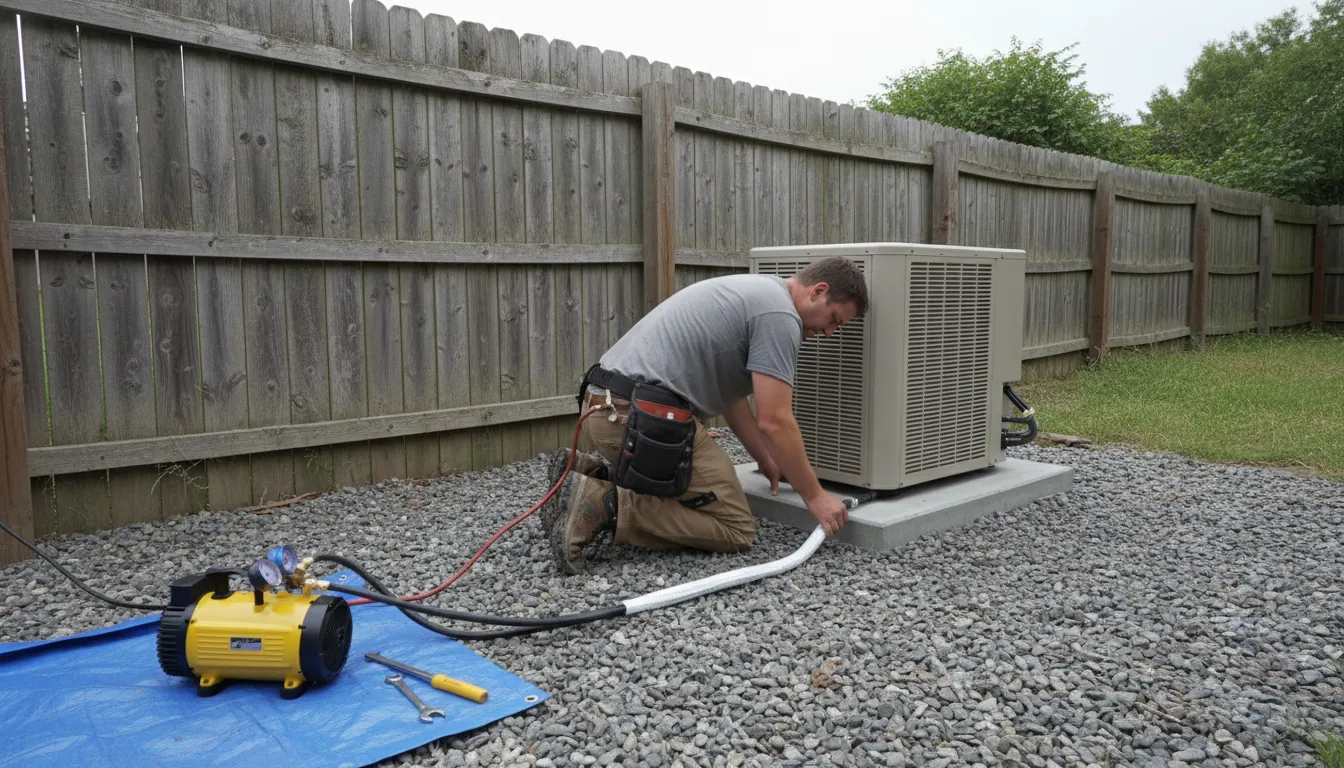
- The Installation: The technician will mount the indoor and outdoor units, drill a small hole for the refrigerant lines, electrical conduit, and condensate drain line, and connect everything. A vacuum is pulled on the refrigerant lines to remove moisture and air before the system is charged. All electrical connections must be made to code.
- Testing & Commissioning: Once installed, the system is tested in both heating and cooling modes to ensure proper operation, refrigerant charge, and drainage. The installer should explain the basic functions of the remote control or thermostat.
Permits, Codes, and Licensing in Rhode Island
Adhering to local regulations is not just a formality; it ensures safety, efficiency, and eligibility for rebates.
- Permits Are Required: In nearly all Rhode Island municipalities, installing a mini-split system requires a building or mechanical permit from your local building department. The permit process ensures the installation will be inspected to verify it meets state and local codes.
- Rhode Island Mechanical Code: Installations must comply with the state mechanical code. Key requirements include proper support for refrigerant lines, correct sizing of electrical components, and, crucially, the installation of a proper condensate drainage system. The code specifies requirements for drain line traps and check valves to prevent air infiltration and ensure condensate water drains effectively.
- Professional Licensing: While Rhode Island does not have a specific "HVAC" license, the work involved often falls under electrical and plumbing scopes. Installers should hold appropriate credentials, such as being a licensed electrician for the electrical work. Hiring a licensed and insured professional protects you and ensures the work meets legal standards.
Find the perfect mini-split installers for your needs
Get personalized recommendations and expert advice
Financial Considerations: Costs and Incentives
The investment in a mini-split system varies, but several financial incentives can make it more affordable for Rhode Island residents.
- Installation Cost Factors: The total cost depends on the system's complexity. A single-zone system for one room typically ranges from $3,000 to $7,000 or more. Multi-zone systems, which use one outdoor unit to serve multiple indoor heads, have a higher overall cost but a lower cost per additional zone. Other factors include the brand and efficiency of the equipment, the difficulty of the installation (e.g., running lines to a second floor), and whether your home's electrical service requires an upgrade 1 2 3.
- Utility Rebates (RI Energy/National Grid): Rhode Island's primary utilities offer rebates for installing high-efficiency, ENERGY STAR® certified air-source heat pumps (which include mini-splits). These rebates are often tiered based on the system's efficiency ratings (SEER and HSPF). You must use a participating contractor and the rebate is typically processed by them 4.
- Clean Heat RI Program: This state-administered program offers direct rebates for air-source heat pump installations. Rebates can range from $350 to over $700 per ton of capacity, with additional bonuses for income-qualified households. Applications are submitted by approved contractors 5 6.
- Federal Tax Credits (Inflation Reduction Act): The federal government offers a tax credit worth 30% of the project cost, up to $2,000, for qualified heat pump installations. This credit applies to both equipment and labor costs for systems that meet specific efficiency requirements. There are also provisions for point-of-sale rebates in the future 7.
Key Recommendations for Homeowners
To ensure a smooth and successful mini-split installation, keep these best practices in mind.
- Prioritize Proper Sizing: Insist on a detailed load calculation. Do not let a contractor simply estimate based on room size. Proper sizing is the foundation of efficiency and comfort 8.
- Verify Credentials and Experience: Choose a contractor with specific experience installing ductless mini-split systems. Ask for proof of insurance, relevant licenses (electrical), and check references. Membership in professional organizations is a good sign 9.
- Understand the Permit Process: A reputable installer will handle pulling the necessary permits and scheduling the required inspections. If a contractor suggests skipping permits to "save money," it is a major red flag that could void warranties and rebates, and create safety issues 10.
- Focus on the Drain Line: In Rhode Island's climate, proper condensate management is vital. Discuss with your installer how the drain line will be run and trapped to prevent freezing or backup, as required by code 11.
- Secure Incentives in Writing: Before signing a contract, confirm which rebates and tax credits your project qualifies for. Have the contractor detail the expected rebate amounts and their process for securing them. Note that some rebates, like those from Clean Heat RI, may require a pre-approval or energy audit.
Maximizing Your System's Performance
After installation, a few simple steps can help you get the most from your mini-split.
- Regular Maintenance: Schedule annual maintenance with your installer. This includes cleaning the filters and indoor coils, checking the outdoor unit for debris, and verifying system pressures and operation.
- Smart Operation: Use the system in "Auto" mode when possible, and avoid drastic temperature setbacks. Keep doors closed to the conditioned zones to maintain efficiency. Clean the reusable filters in the indoor units monthly during peak seasons.
- Complementary Home Upgrades: To maximize efficiency and potentially qualify for the best rebates, ensure your home is well-weatherized. Adding insulation, sealing air leaks, and upgrading windows can reduce the overall heating and cooling load, allowing you to install a smaller, less expensive system that still keeps you comfortable 12.
Frequently asked questions
Sources
Footnotes
-
How Much Does It Cost To Install A Ductless Mini Split? | RI - https://oceanstateair.com/does-it-cost-to-install-a-ductless-mini-split/ ↩
-
Mini Split Installation Cost in RI & SE MA - Armus Mechanical - https://armusmech.net/mini-split-installation-cost-everything-rhode-island-southeastern-ma-homeowners-need-to-know/ ↩
-
Ductless Mini-Split Installation Cost in 2025: Full Breakdown - https://osborneheatingncooling.com/ductless-mini-split-installation-cost/ ↩
-
Save energy at home- residential cooling rebates - https://www1.nationalgridus.com/files/AddedPDF/POA/Rhode_Island_Residential_Cooling_Rebate_Application.pdf ↩
-
Clean Heating & Cooling Incentives | Rhode Island Office of Energy Resources - https://energy.ri.gov/heating-cooling/clean-heating-cooling-incentives ↩
-
Incentives - Clean Heat Rhode Island - https://cleanheatri.com/resources/incentives/ ↩
-
What's in the Inflation Reduction Act for RI Homeowners - carjon - https://www.carjon.com/blog/whats-inflation-reduction-act-rhode-island-homeowners ↩
-
Ductless Mini Split Setup: An Ultimate Guide - Airflow Heating & Air - https://www.goairflow.com/blog/ductless-mini-split-installation/ ↩
-
2025 Rhode Island General Contractor License Requirements - https://pro.houzz.com/pro-learn/blog/startup-guide-residential-construction-general-contractor-licensing-requirements-rhode-island ↩
-
Do Mini Splits Need Permits? Installation Requirements Guide - https://www.greecomfort.com/news-and-events/do-mini-splits-need-permits/ ↩
-
Chapter 3 General Regulations: Rhode Island Mechanical Code 2019 - https://up.codes/viewer/rhode_island/ri-mechanical-code-2019/chapter/3/general-regulations ↩
-
Residential electric heating and cooling rebates - https://www.rienergy.com/site/-/media/rie-jss-app/home/ways-to-save/rebates-and-savings-programs/heating-and-cooling/ri_electric_heating-cooling_form.ashx ↩