Find the Best Mini-Split Installers for Your Business
No obligation • Fast responses • Nationwide coverage

Why you can trust HVAC Firms
HVAC Firms is a leading United States resource for evaluating HVAC service providers. Our team researches companies, checks credentials, and reviews customer feedback to present clear, unbiased information. Listings and rankings are based on merit, and companies cannot pay to change our editorial content.
Search providers near you
Top Mini-Split Installers in Cranston, Rhode Island Ranked
Ductless mini-split systems provide a flexible and efficient solution for heating and cooling specific areas of your home. These systems are particularly valuable in Cranston for adding comfort to new additions, retrofitting older homes without ductwork, or creating personalized climate zones. This guide will help you understand the process, benefits, and key considerations for installing a ductless system, empowering you to find qualified local professionals for your project.
Why Consider a Ductless System in Cranston?
Cranston's mix of historic homes and modern renovations makes ductless mini-splits an ideal choice for many homeowners. These systems offer zoned climate control, meaning you can heat or cool individual rooms as needed, which improves comfort and can significantly reduce energy waste compared to running a central system for the entire house. They are a perfect fit for home additions, sunrooms, finished basements, or rooms that are consistently too hot or cold 1. For older Cranston residences that lack the space for ductwork, a ductless installation provides a modern comfort solution without the need for invasive and expensive remodeling to install ducts.
Types of Ductless Mini-Split Systems
Understanding the configuration options is the first step in planning your installation.
- Single-Zone Systems: This setup involves one outdoor condenser unit connected to a single indoor air handler. It's the most common and cost-effective choice for cooling a specific area like a new master suite, home office, or garage conversion.
- Multi-Zone Systems: A single outdoor unit can connect to multiple indoor units (typically 2 to 4 or more). This is an excellent solution for whole-home comfort in a ductless property or for targeting several specific rooms, such as multiple bedrooms or a main living area and a kitchen.
- Indoor Unit Styles: The indoor component isn't one-size-fits-all. The most common is the high-wall mount, which is discreet and provides good air circulation. For spaces with limited wall space, ceiling cassette units are recessed into the ceiling. Floor-mounted units are another option, ideal for rooms with high ceilings or where wall mounting isn't feasible 2.
The Installation Process: What to Expect
A professional installation is crucial for performance, efficiency, and warranty protection. Here's a general overview of what the process entails for a Cranston home.
- Site Evaluation & Planning: A certified technician will assess your home to determine the optimal location for both the indoor and outdoor units, calculate the required heating and cooling capacity (BTUs), and plan the routing for refrigerant lines and electrical wiring.
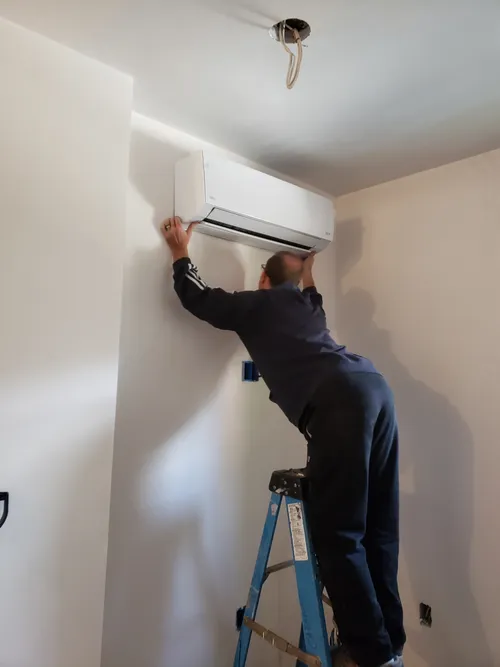
- Mounting the Units: A sturdy bracket is securely mounted to an interior wall for the indoor unit. The outdoor condenser is placed on a stable, level pad or mounting bracket outside, with ample clearance for airflow and maintenance.
- Creating the Line Set Penetration: A small hole (typically 3 inches or less) is drilled through the exterior wall to connect the indoor and outdoor units. This is where the insulated copper refrigerant lines, condensate drain line, and electrical conduit will pass through.
- Making Electrical Connections: A dedicated electrical circuit, often 240-volt, must be run to the outdoor unit. This work should always be performed by a licensed electrician to ensure it meets local Cranston and Rhode Island codes 3.
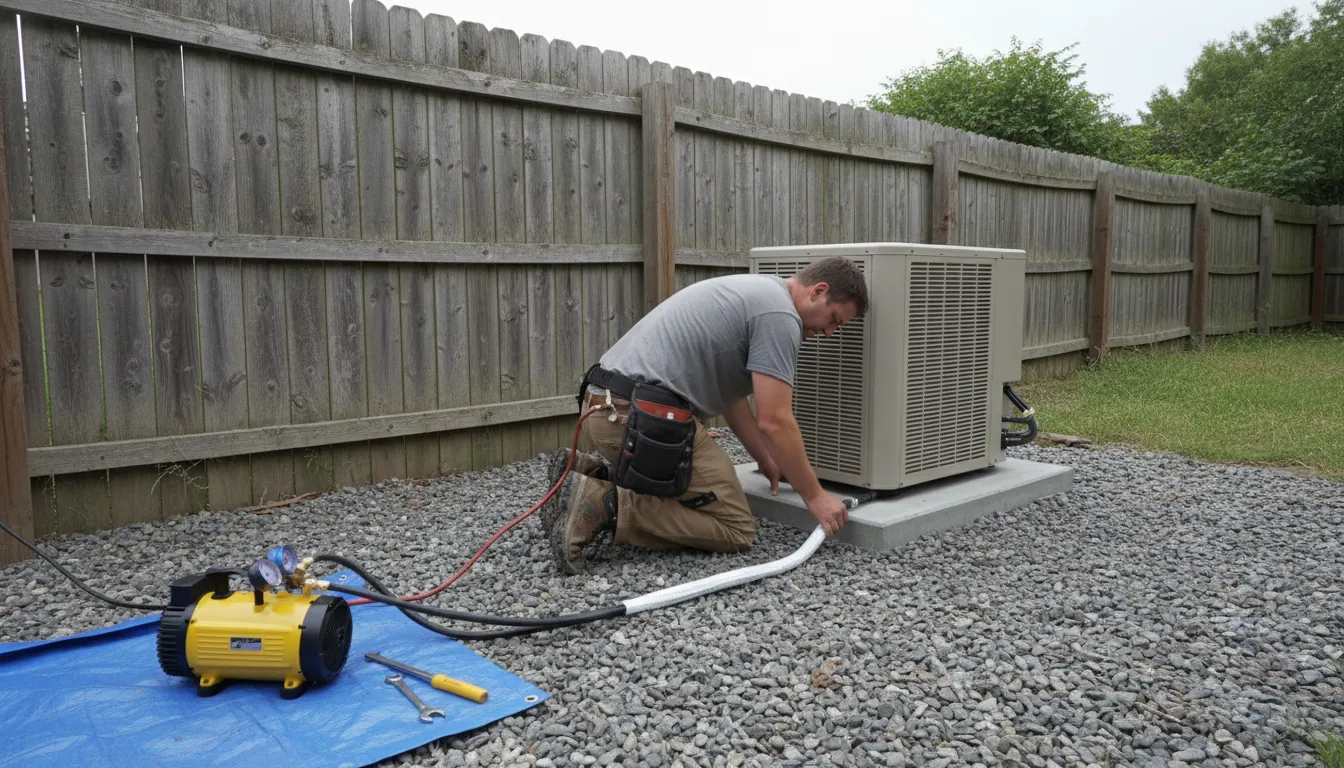
- Connecting & Testing: The refrigerant lines are connected, and a vacuum pump is used to remove all air and moisture from the system-a critical step for efficiency and longevity. Finally, the system is charged with refrigerant, activated, and thoroughly tested for proper operation in both heating and cooling modes 4.
Key Factors Influencing Cost in Cranston
The total investment for a ductless mini-split installation in Cranston can vary widely based on several factors. Understanding these will help you interpret estimates from local providers.
- System Size and Capacity: The required BTU output for your space is a primary cost driver. An undersized unit will struggle, while an oversized one will cycle inefficiently.
- Number of Zones: A single-zone system for one room is the entry point, while adding multiple indoor units to create a multi-zone system increases the cost proportionally.
- Equipment Efficiency and Brand: Units with higher SEER2 (Seasonal Energy Efficiency Ratio) ratings, such as those above 20, and ENERGY STAR® certification cost more upfront but offer greater long-term savings on utility bills 5. Brand reputation and features also affect price.
- Installation Complexity: The difficulty of running linesets, the need for new electrical service, and the accessibility of installation sites (e.g., a second-story room or a far-away condenser pad) all impact labor costs.
- Permits: Proper permitting through the City of Cranston is typically required and will be a part of the overall project cost.
As a general range, homeowners in the area can expect a single-zone ductless system installation to cost between $3,000 and $7,000. For a multi-zone system with 2-4 or more indoor units, costs often range from $8,000 to over $20,000 6 7 8.
Find the perfect mini-split installers for your needs
Get personalized recommendations and expert advice
Maximizing Your Investment: Efficiency and Placement
To get the most from your new system, careful planning is key.
Efficiency Matters: When selecting a unit, prioritize inverter-driven technology and a high SEER2 rating. Inverter compressors adjust their speed to match the exact demand, maintaining a steady temperature and using far less energy than traditional systems that simply turn on and off at full power. This is where significant energy savings are realized over the lifespan of the unit.
Strategic Indoor Unit Placement: Proper placement of the indoor air handler is essential for comfort and performance.
- Mount high on an interior wall for the best air distribution.
- Avoid placing it directly above heat-producing appliances or electronics.
- Ensure no furniture, curtains, or decor will obstruct the airflow from the unit.
- Consider the path of sunlight in the room, as direct sun on the unit's thermostat sensor can cause it to misread the room's temperature 9 10.
Outdoor Unit Considerations: The outdoor condenser needs a stable, level base like a concrete pad. It should be positioned with sufficient clearance (usually 1-2 feet) on all sides for unimpeded airflow and easy access for maintenance. Consider drainage and try to place it in a location where the noise will not disturb household members or neighbors.
Long-Term Care and Maintenance
One of the advantages of a ductless system is its relatively simple maintenance, which is vital for sustaining efficiency.
- Regular Filter Cleaning: The air filters in each indoor unit should be cleaned every 4-6 weeks during peak usage. This is a simple task homeowners can do: gently remove the filter, vacuum or wash it with mild soap and water, let it dry completely, and reinsert it. Clean filters maintain air quality and prevent strain on the system.
- Annual Professional Check-up: While filter cleaning is a DIY task, scheduling an annual maintenance visit from a qualified technician is recommended. They will check refrigerant levels, inspect electrical connections, clean the outdoor coil, and ensure all components are operating correctly, helping to prevent costly repairs and extend the system's life.
Frequently asked questions
Sources
Footnotes
-
Ductless Mini-Split Systems in RI & MA - GEM Plumbing - https://askgem.com/air-conditioning/ductless/ ↩
-
Ductless Mini-Splits: A Complete Guide To Cost, Benefits, And ... - https://petermanhvac.com/about-us/blog/mini-splits-complete-guide/ ↩
-
How to Install a Mini Split System - https://www.youtube.com/watch?v=J2nkLRbhfPY&t=99 ↩
-
Ductless Mini Split Setup: An Ultimate Guide - Airflow Heating & Air - https://www.goairflow.com/blog/ductless-mini-split-installation/ ↩
-
Ductless mini-split installation: Cool 2025 Guide - Southern Air - https://www.southern-air.com/blog/ductless-mini-split-installation ↩
-
Ductless Mini-Split Installation Cost in 2025: Full Breakdown - https://osborneheatingncooling.com/ductless-mini-split-installation-cost/ ↩
-
Mini Split Installation Cost in RI & SE MA | Armus Mechanical - https://armusmech.net/mini-split-installation-cost-everything-rhode-island-southeastern-ma-homeowners-need-to-know/ ↩
-
How Much Does It Cost To Install A Ductless Mini Split? | RI - https://oceanstateair.com/does-it-cost-to-install-a-ductless-mini-split/ ↩
-
Mini Split Systems Narragansett RI | Coastal Home Cooling Solutions - https://ugnasons.com/air-conditioning/beat-the-summer-heat-in-narragansett-why-mini-split-systems-are-perfect-for-rhode-island-coastal-homes/ ↩
-
How Much Does a Mini-Split Installation Cost? - Taskrabbit Blog - https://www.taskrabbit.com/blog/mini-split-installation-cost/ ↩