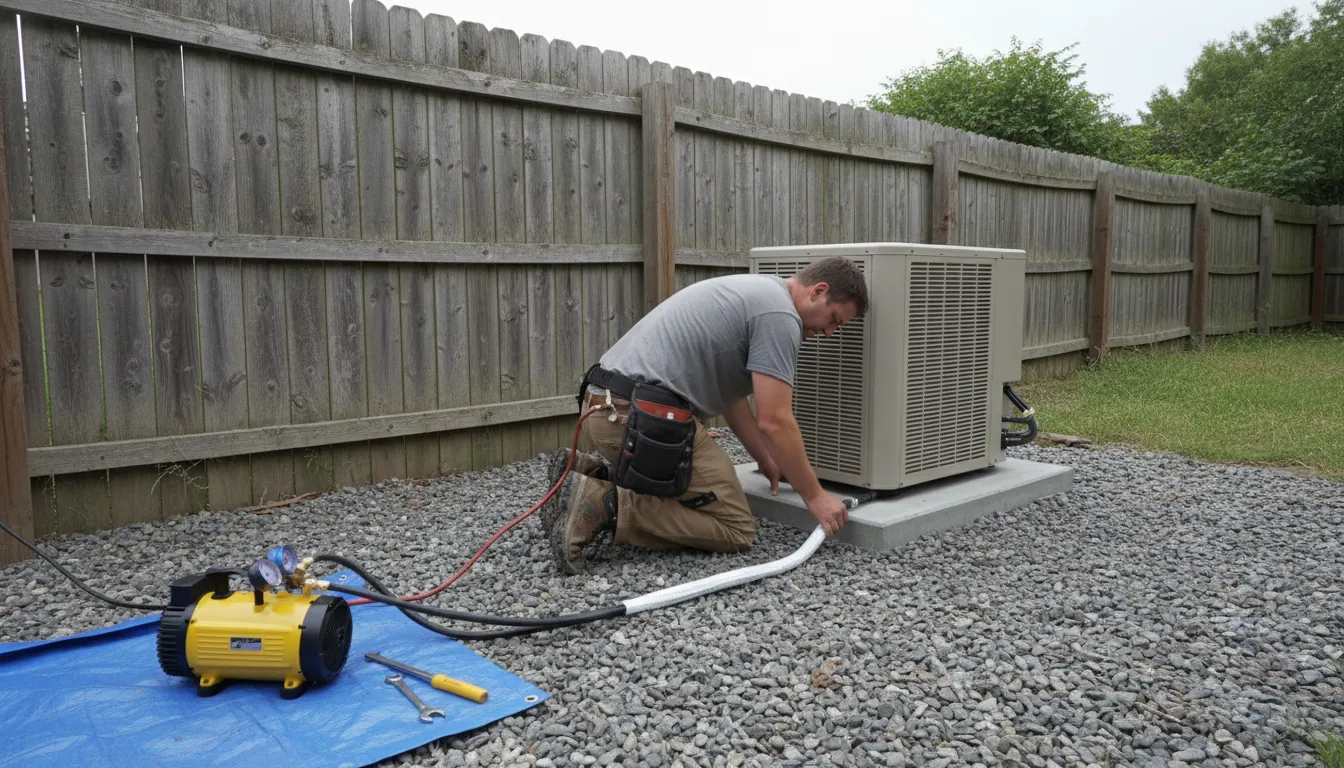
Find the Best Mini-Split Installers for Your Business
No obligation • Fast responses • Nationwide coverage

Why you can trust HVAC Firms
HVAC Firms is a leading United States resource for evaluating HVAC service providers. Our team researches companies, checks credentials, and reviews customer feedback to present clear, unbiased information. Listings and rankings are based on merit, and companies cannot pay to change our editorial content.
Search providers near you
Top Mini-Split Installers in Tulsa, Oklahoma Ranked
A ductless mini-split system provides targeted heating and cooling for specific areas of your home, offering a versatile and energy-efficient solution for Tulsa residents. This type of installation is particularly valuable for homes without existing ductwork, for room additions, or for creating personalized comfort zones. By connecting one or more indoor air handlers to a single outdoor compressor, you gain precise control over the temperature in individual rooms. This guide will help you understand the key considerations, from placement and installation to costs, so you can effectively evaluate local service providers for your project.
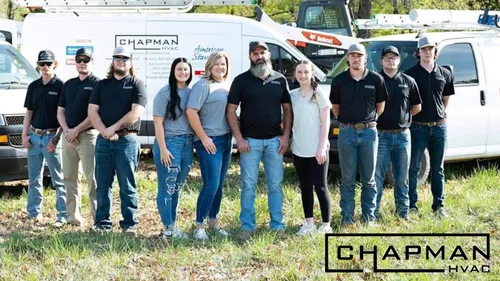
Chapman HVAC
51321 S 36400 Rd, Cleveland, OK 74020
Chapman HVAC is a licensed and insured HVAC company serving Tulsa, OK, and surrounding areas including Cleveland, Mannford, and Sand Springs. They provide a wide range of residential and commercial heating and air conditioning services, including repair, installation, and maintenance of furnaces, heat pumps, mini splits, geothermal systems, and refrigeration equipment. Their team is equipped to handle both heating and cooling needs with expertise in commercial air conditioning and heating solutions. Chapman HVAC offers 24/7 emergency HVAC services to ensure reliable comfort for their customers. With years of experience in the Cleveland area, they focus on delivering dependable HVAC solutions tailored to the specific needs of each client.
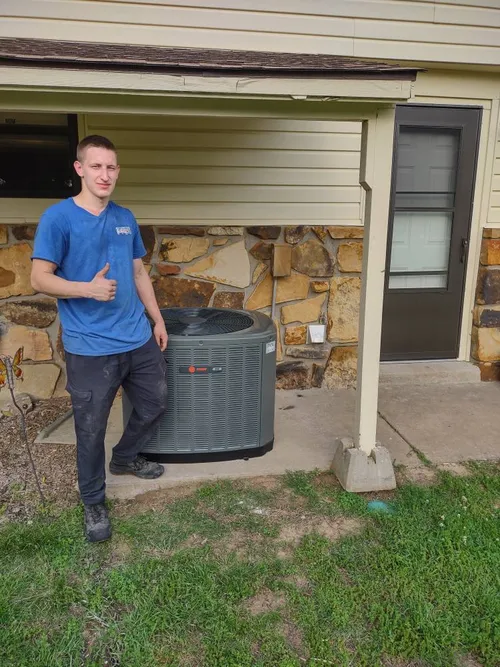
TemperaturePro
10404 E 55th Pl Suite Y, Tulsa, OK 74146
TemperaturePro is a locally owned and family-operated HVAC company serving Tulsa, OK. They provide comprehensive heating and cooling services including installation, repair, and maintenance for systems such as air conditioners, furnaces, heat pumps, boilers, and ductless mini splits. Their technicians also specialize in indoor air quality solutions, including air scrubbers and filtration systems. TemperaturePro offers 24/7 emergency service and supports a wide range of brands including Trane, Goodman, and Daikin. They emphasize transparent pricing and honest service to help customers maintain comfortable and efficient HVAC systems year-round.
Keystone Air
48 S Dogwood Dr, Cleveland, OK 74020
Keystone Air is a family-owned HVAC company serving Tulsa, OK, and surrounding communities near Keystone Lake. With over twenty years of experience, they offer a range of services including air conditioning and furnace repairs, mini-split and ductless unit installations, thermostat services, HVAC system maintenance, and indoor air quality improvements. Their licensed technicians focus on creating cleaner, healthier living spaces through thorough HVAC cleaning and efficient system tune-ups. Keystone Air serves multiple nearby towns and emphasizes quality workmanship and customer satisfaction.
Route 66 HVAC
501 N Mission St, Sapulpa, OK 74066
Route 66 HVAC is a family-owned heating and air conditioning company serving Tulsa, OK, and the surrounding Northeast Oklahoma region. With over 35 years of combined field and classroom experience, they provide a wide range of HVAC services including installation, repair, and maintenance of air conditioners, furnaces, heat pumps, mini splits, and geothermal systems. They also offer indoor air quality solutions, thermostat installation, and emergency repair services available day and night. Their expertise includes high-efficiency HVAC systems and advanced HVAC testing to ensure optimal performance and energy savings. Route 66 HVAC honors its deep heritage connected to the historic Route 66 and offers special discounts for veterans and first responders.
Chill Out Heating & Cooling
11670 E 51st St, Tulsa, OK 74146
Chill Out Heating & Cooling is a locally owned HVAC company serving Tulsa, OK, with over 20 years of experience. They provide installation, maintenance, and repair services for heating and cooling systems, including furnaces, heat pumps, mini split/ductless units, and indoor air quality solutions. Their team focuses on energy-efficient systems that reduce allergens and pollutants to improve home comfort and air quality year-round.
Understanding Ductless Mini-Split Systems
A ductless mini-split, often simply called a ductless system, is a highly efficient heating and cooling solution that operates without the need for extensive ductwork. At its core, the system consists of an outdoor compressor/condenser unit and one or more indoor air handling units. These components are connected by a small conduit that houses refrigerant lines, power cables, and a condensate drain, which only requires a small hole (typically about 3 inches) through an exterior wall.
The primary advantage of this setup is zoned comfort. Unlike a traditional central HVAC system that conditions the entire house, a ductless installation allows you to heat or cool only the rooms you are using. This can lead to significant energy savings, as you avoid the energy losses associated with ductwork, which can account for more than 30% of energy consumption in a forced-air system 1 2. For Tulsa homes, this means enhanced comfort in specific problem areas-whether it's a sunroom that gets too hot, a basement that's too cold, or a new garage workshop-without overburdening your existing system.
Ideal Applications for Tulsa Homes
Ductless technology is not a one-size-fits-all solution, but it is perfect for several common scenarios in the Tulsa area. Identifying if your home is a good candidate is the first step.
- Homes Without Ductwork: This is the classic application. If you live in an older home, a historic property, or a house that was never equipped with central air conditioning and heating ducts, a mini-split system offers a much less invasive alternative to installing all-new ductwork.
- Room Additions and Finished Spaces: Adding a ductless unit to a new sunroom, garage apartment, finished basement, or attic conversion is often more cost-effective and efficient than extending your existing duct system. It provides dedicated, controllable comfort for the new space.
- Solving Hot or Cold Spots: Do you have a home office that never gets cool enough in the summer or a master bedroom that's always chilly? Installing a single-zone mini-split in that specific room can solve the problem directly, improving overall home comfort.
- Supplemental Heating and Cooling: For homes with a primary HVAC system, a ductless unit can serve as a backup or supplement. It can efficiently heat a commonly used living area during mild winter days without firing up the whole-house furnace, saving on energy costs.
Indoor Unit Styles and Placement
Choosing the right type of indoor unit and its location is crucial for both performance and aesthetics. Professional installers in Tulsa will help you select the best option for your room's layout and your personal preferences.
- Wall-Mounted Units: The most common and generally most affordable option. These slim units are mounted high on an interior wall, allowing for good air circulation across the room. They are relatively unobtrusive and come in various sizes and styles to match your decor.
- Ceiling Cassette Units: These are recessed into the ceiling, with only a sleek vent panel visible. This is an excellent choice for a discreet look, particularly in rooms with drop ceilings, media rooms, or commercial spaces. They distribute air evenly in four directions.
- Floor-Mounted Units: Ideal for rooms with sloped ceilings, limited wall space (like rooms with extensive windows or glass walls), or where wall mounting isn't feasible. They deliver comfort at floor level and are often used in sunrooms or additions 3.
Proper placement is more than just picking a spot. Installers must ensure there is adequate clearance around the unit for airflow (usually at least 6 inches from the ceiling and several feet of unobstructed space in front), avoid directing airflow directly at seating or sleeping areas, and consider the path for the conduit to the outdoor unit 4 5.
Outdoor Unit Placement and Clearance Requirements
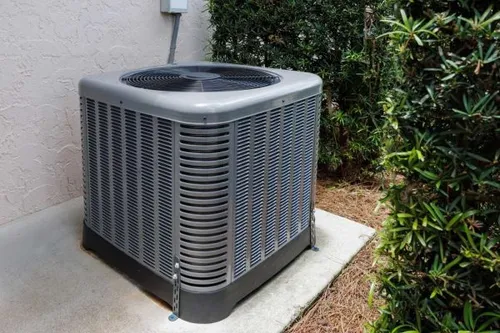
The outdoor compressor is the heart of the system, and its placement is critical for efficiency, longevity, and noise management. Tulsa installers will assess your property to find the optimal location.
A solid, level concrete or composite pad is required to support the unit and prevent vibration. More importantly, the unit needs ample space for airflow. Manufacturers specify minimum clearances-typically 12-24 inches on the sides and 48-60 inches above-to ensure the coil can effectively expel heat in summer and absorb it in winter 6.
The unit should be placed:
- Away from bedroom windows, patios, or decks to minimize noise disturbance.
- In a location with good drainage and not prone to flooding or excessive debris (like under a heavily shedding tree).
- With consideration for the shortest, most direct route for the refrigerant lines to the indoor unit(s), as longer line sets can impact efficiency and increase cost 7.
Find the perfect mini-split installers for your needs
Get personalized recommendations and expert advice
The Professional Installation Process
While DIY kits exist, professional installation is strongly recommended and often required to maintain the manufacturer's warranty. The process involves handling high-voltage electricity and refrigerant, both of which require licensed, EPA-certified technicians. A typical installation for a single-zone system by a qualified Tulsa contractor can often be completed in one day 8.
The key steps include:
- Site Evaluation and Load Calculation: A technician will assess your space to determine the correct system size (measured in BTUs), avoiding units that are too large or too small.
- Mounting the Indoor Unit: Securely attaching the bracket and air handler to an interior wall or ceiling.
- Drilling the Conduit Hole: Creating a small, precisely sloped hole through the exterior wall for the lineset.
- Placing the Outdoor Unit: Setting the compressor on its pad and ensuring it is perfectly level.
- Connecting the Lineset: Connecting the pre-charged refrigerant lines, electrical wiring, and drain line between the indoor and outdoor units. This is followed by a vacuum process to remove any moisture and air from the lines.
- System Testing and Commissioning: The technician will power up the system, check for leaks, test all functions (heating, cooling, fan modes), and show you how to use the remote control or thermostat.
Cost Considerations for Tulsa Homeowners
The cost of a ductless mini-split installation in Tulsa varies widely based on system complexity, efficiency, and brand. It's important to view this as a long-term investment in comfort and energy savings.
- Single-Zone Systems: For one indoor unit connected to one outdoor compressor, total installed costs typically range from $3,000 to $5,000 9 10. This is a popular choice for a garage, sunroom, or single-room solution.
- Multi-Zone Systems: For a system with one outdoor compressor serving two to four (or more) indoor units, costs generally start around $6,000 and can reach $12,000 or more11 12 13. This is cost-effective for conditioning multiple rooms or an entire floor without ducts.
Several factors influence the final price:
- Number of Zones: Each additional indoor unit adds to the equipment and labor cost.
- System Efficiency: Units with higher SEER2 (Seasonal Energy Efficiency Ratio) ratings for cooling and HSPF2 (Heating Seasonal Performance Factor) ratings for heat pumps cost more upfront but offer lower operating costs.
- Equipment Brand: Premium brands like Mitsubishi, Daikin, or Fujitsu often command a higher price than standard brands.
- Installation Complexity: Factors like the need for new electrical circuits, difficult wall constructions (like brick), long refrigerant line runs, or complex mounting can increase labor time and cost 14.
Benefits of a Ductless Mini-Split System
Choosing a ductless installation comes with a host of advantages tailored to Tulsa's climate and diverse housing stock.
- Energy Efficiency: By eliminating duct losses and allowing for zoned control, homeowners can see a significant reduction in their heating and cooling bills. You only condition the spaces you use.
- Flexible Installation: The small lineset conduit makes installation possible in places where running ducts would be impractical, expensive, or structurally damaging.
- Improved Indoor Air Quality: Traditional ducts can accumulate dust, pollen, and allergens that are then circulated. Ductless systems have multi-stage filters that trap particulates, and without ducts, there's no ductwork to clean.
- Quiet Operation: The loudest component-the compressor-is located outside. Indoor units operate very quietly, often on a "whisper" mode.
- Both Heating and Cooling: Most ductless systems are heat pumps, providing efficient electric heating even in Tulsa's milder winter temperatures, making them a true year-round comfort solution 15.
Frequently asked questions
Sources
Footnotes
-
Ductless mini-split installation: Cool 2025 Guide - Southern Air - https://www.southern-air.com/blog/ductless-mini-split-installation ↩
-
Mini-Split Installation & Replacement in SW Oklahoma - https://robinsonairhvac.com/hvac/ductless-systems/mini-split-installation/ ↩
-
How Much Does a Mini Split Installation Cost? (2026) - HomeGuide - https://homeguide.com/costs/ductless-mini-split-ac-cost ↩
-
Best Place to Install a Ductless Mini Split System - https://jacobsheating.com/blog/mini-split-placement/ ↩
-
How to Pick the Perfect Mini Split Wall Mounted Indoor Unit - eComfort - https://www.ecomfort.com/stories/1318-How-to-Pick-the-Perfect-Mini-Split-Wall-Mounted-Indoor-Unit.html ↩
-
Mini-Split Installation Tips for Homeowners - https://www.delcohvac.com/blog/expert-tips-for-installing-a-mini-split-in-your-home/ ↩
-
Aircon Mini Split Installation: Save $ in 3 Steps - Comfort Temp - https://comforttemp.com/aircon-mini-split-installation/ ↩
-
How to Install a Mini Split - The Home Depot - https://www.homedepot.com/c/ah/how-to-install-a-mini-split/9ba683603be9fa5395fab90c887a9dd ↩
-
Ductless Mini Split Setup: An Ultimate Guide - Airflow Heating & Air - https://www.goairflow.com/blog/ductless-mini-split-installation/ ↩
-
Understanding Mini Split Installation Costs A Complete Guide - https://armusmech.net/understanding-mini-split-installation-costs-a-complete-guide/ ↩
-
Ductless Mini-Split Installation Cost in 2025: Full Breakdown - https://osborneheatingncooling.com/ductless-mini-split-installation-cost/ ↩
-
How Much Does It Cost to Install a Mini Split System? - https://elementairco.com/how-much-does-it-cost-to-install-a-mini-split-system/ ↩
-
Ductless Mini Split Installation Costs in 2026 - Carrier - https://www.carrier.com/residential/en/us/products/ductless-mini-splits/ductless-mini-split-installation-cost/ ↩
-
Ductless Mini Split Installation Costs in 2026 - Carrier - https://www.carrier.com/residential/en/ca/products/ductless-mini-splits/ductless-mini-split-installation-cost/ ↩
-
Ductless Mini Splits in Tulsa, OK - ProThermal Heating and Cooling - https://www.prothermalhvac.com/air-conditioning/ductless-mini-split/ ↩